
Table of Contents
- Common Signs of Hail Damage on Your Vehicle
- How to Document Vehicle Hail Damage for Your Insurance Claim
- The Hail Damage Insurance Claim Process: Step by Step
- Hail Damage Deductible Explained: ACV vs. RCV
- Working With the Insurance Adjuster
- Paintless Dent Repair Insurance Coverage: What Policies Typically Pay
- How 888 PDR Manages Your Hail Damage Claim Process
- Conclusion
Last Updated: August 18, 2026
Common Signs of Hail Damage on Your Vehicle
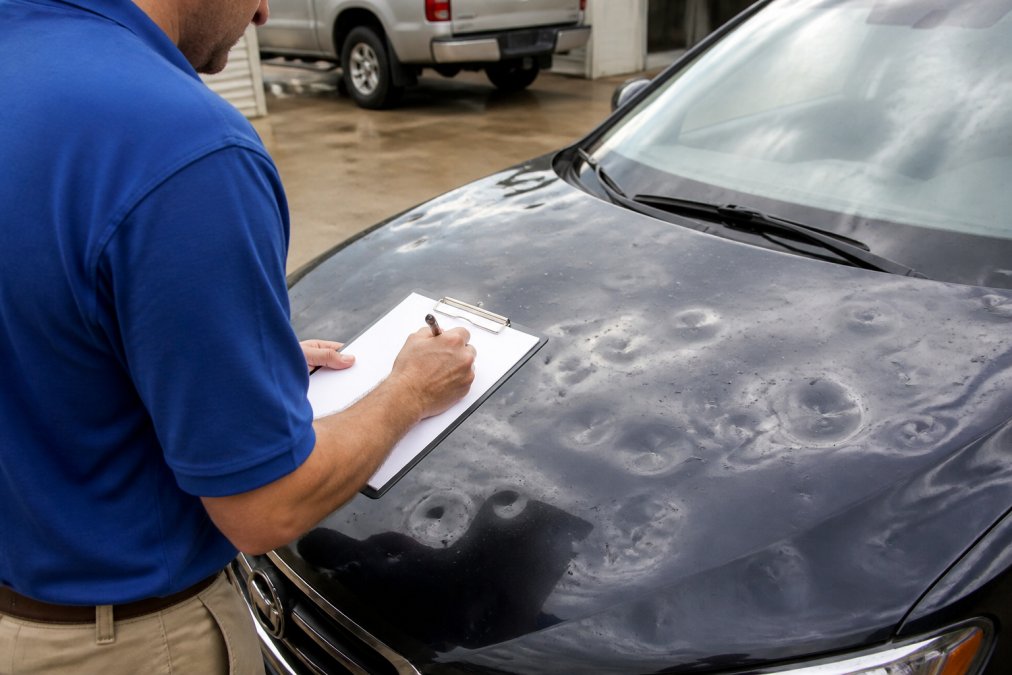
Hail damage is deceptive. What looks like a minor cosmetic issue after a storm can quietly erode your vehicle's structural integrity and resale value. At 888 PDR, we've seen hundreds of vehicles where owners underestimated the extent of damage, costing them in the claim process.
The hail damage insurance claim process 2026 starts the moment you walk outside and assess your car.
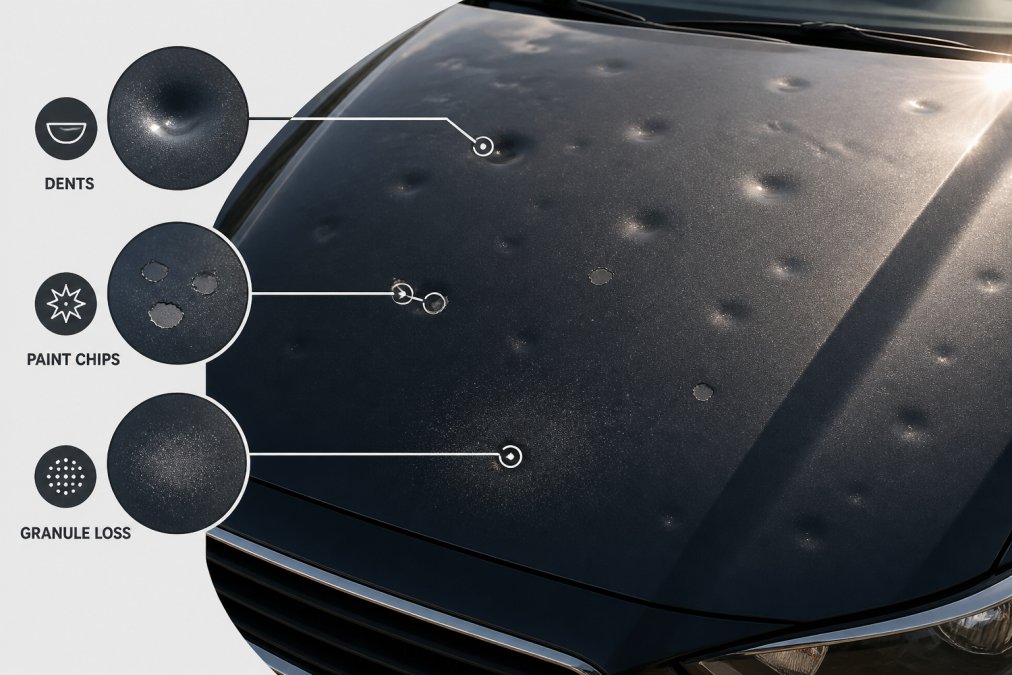
Here's what to look for:
- Dents on horizontal surfaces: The hood, roof, trunk lid, and rear deck absorb the most impact from vertically falling hailstones.
- Shingle bruising patterns on paint: Circular depressions with or without paint cracking. Smaller hailstones leave shallow impressions; larger stones crack clear coat.
- Granule loss on paint: Broken clear coat exposing base coat or primer indicates functional damage.
- Cracked or shattered glass: Windshields, sunroofs, and mirrors are vulnerable. Even hairline cracks count.
- Damaged trim and moldings: Plastic trim pieces crack on impact and matter to your insurer.
- Dented side mirrors: Often overlooked during initial assessment.
Functional Damage vs. Cosmetic Damage: Why the Distinction Matters
Functional damage compromises the vehicle's performance, safety, or structural integrity, cracked windshields, broken seals allowing water intrusion, or dents affecting panel alignment. Most policies cover functional damage without argument.
Cosmetic damage refers to dents and dings affecting appearance but not operation. The critical issue: some insurance policies exclude purely cosmetic hail damage. If your policy contains a cosmetic damage exclusion clause, your insurer may deny coverage for dents that didn't crack the paint.
Review your declarations page carefully. The Insurance Information Institute guidance on auto policy coverage explains these exclusions and what policyholders should watch for. If uncertain whether your policy contains this clause, call your insurer before filing.
How to Document Vehicle Hail Damage for Your Insurance Claim
Most denied or underpaid claims trace back to inadequate documentation. Photographic evidence is your single most important asset in the hail damage insurance claim process.
Document within 24-48 hours of the storm, before weather changes affect the evidence.
Your Documentation Checklist
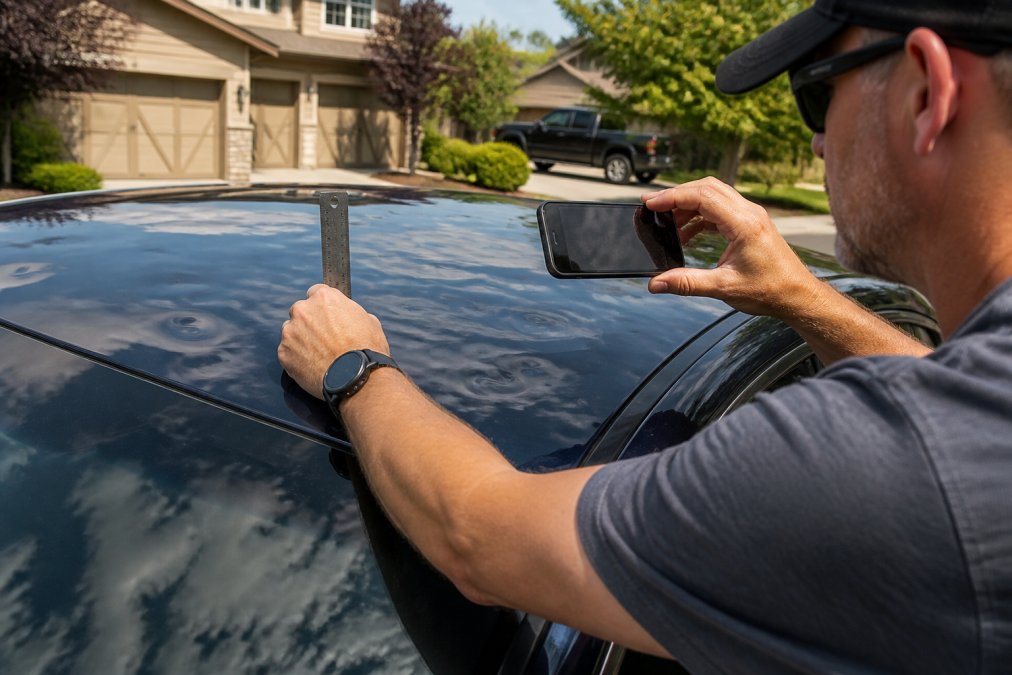
- Photograph every damaged panel from multiple angles, including straight-on and 45 degrees to show depth
- Use a ruler or coin for scale next to individual dents so adjusters can gauge hailstone size
- Capture close-ups and wide shots to establish context and document individual impact points
- Record a video walkthrough narrating what you observe as you circle the vehicle
- Note the date, time, and location in writing, not just phone metadata
- Save weather records by screenshotting local weather service reports confirming the storm event
- Document all damaged glass, including small cracks in windshield or sunroof
- Photograph interior water intrusion if seals failed and moisture entered the cabin
- Keep all repair estimates before the adjuster visits
The National Weather Service storm event database reliably confirms storm dates and hailstone sizes. Adjusters use it too; having this data ready demonstrates preparedness.
The Hail Damage Insurance Claim Process: Step by Step
The hail damage insurance claim process follows a predictable sequence where details matter at every stage.
Step 1: Assess and document, Complete your documentation checklist before moving the vehicle.
Step 2: Review your policy, Confirm coverage type (Actual Cash Value vs. Replacement Cost Value), deductible, and any cosmetic damage exclusions.
Step 3: Contact your insurer, File promptly using the 24-hour claims line or mobile app. Report the date of loss, storm event, and damage nature.
Step 4: Receive your claim number, Document this for all future communications.
Step 5: Schedule the adjuster inspection, Your insurer will assign an adjuster for in-person or virtual inspection.
Step 6: Get an independent contractor estimate, A qualified paintless dent repair specialist can identify damage the adjuster may miss.
Step 7: Review the settlement offer, Compare the insurer's estimate against your contractor estimate. Negotiate if there's a significant gap or file a supplemental claim.
Step 8: Authorize repairs, Once you agree on settlement, authorize your repair shop to begin work.
Step 9: Verify completed repairs, Inspect the vehicle thoroughly before signing off.
| Step | Action | Who's Responsible |
|---|---|---|
| 1 | Document all damage | Vehicle owner |
| 2 | Review policy coverage | Vehicle owner |
| 3 | File the claim | Vehicle owner |
| 4 | Inspect the vehicle | Insurance adjuster |
| 5 | Provide repair estimate | Contractor |
| 6 | Review and negotiate settlement | Both parties |
| 7 | Authorize and complete repairs | Contractor |
Deadlines and Statutes of Limitations for Filing
Most auto insurance policies require you to report a claim "promptly" or within 30 to 60 days from the date of loss. Each state has a statute of limitations for insurance disputes. According to the National Association of Insurance Commissioners consumer resources, missing these deadlines can permanently bar your claim.
File as soon as the storm passes. Waiting weeks to assess whether damage is "worth it" is one of the most costly mistakes vehicle owners make.
Hail Damage Deductible Explained: ACV vs. RCV
Understanding how your deductible interacts with your settlement type determines how much money you actually receive.
Actual Cash Value (ACV) is what your vehicle is worth at the time of loss, accounting for depreciation. On older vehicles, the ACV payout will be lower than actual repair costs. The insurer calculates current market value and pays out based on that figure, minus your deductible.
Replacement Cost Value (RCV) covers the cost to repair or replace damaged components at current market prices, without deducting for depreciation. RCV policies typically cost more in premiums but pay out significantly more after a loss.
If hail damages your roof panels, an ACV policy subtracts depreciation from the repair cost before paying out. An RCV policy pays the full repair cost. The gap between those two numbers can be substantial on an older vehicle.
Working With the Insurance Adjuster
The insurance adjuster is not your adversary, but their job is to assess damage efficiently on behalf of the insurer. Adjusters handling large-scale storm events often process dozens of claims per day. Thorough documentation on your part ensures a complete, accurate assessment.
Before the adjuster arrives:
- Have your documentation organized and ready to share
- Be present during the inspection if possible
- Point out every area of damage; don't assume they'll find it
- Ask for a written copy of their damage assessment before they leave
If the adjuster's estimate seems low compared to your contractor's estimate, request a re-inspection or submit a supplemental claim with additional documentation.
What to Do If Your Hail Damage Claim Is Denied
Claim denials happen. Common reasons include: damage classified as cosmetic under a policy exclusion, missed filing deadline, or insurer arguing pre-existing damage.
If your claim is denied:
- Request the denial in writing, You're entitled to a written explanation.
- Review the denial against your policy language, Identify exactly which clause the insurer cites.
- File a formal appeal, Submit with additional photographic evidence, contractor estimate, and weather documentation.
- Request an independent appraisal, Many policies include an appraisal clause allowing both parties to hire independent appraisers.
- File a complaint with your state insurance commissioner, If the insurer acts in bad faith, your state's insurance regulatory body can investigate.
- Consult a public adjuster or attorney, For significant claim amounts, professional representation protects your interests.
Paintless Dent Repair Insurance Coverage: What Policies Typically Pay
Paintless dent repair (PDR) removes dents using specialized tools that reshape metal from behind, without sanding, filling, or repainting. It preserves the original factory finish and is widely recognized by insurers as the preferred hail damage repair method.
Most comprehensive auto insurance policies cover paintless dent repair for hail damage when:
- Your policy includes comprehensive coverage (collision coverage does not apply to hail)
- The damage meets your policy's coverage threshold
- Repairs are performed by a qualified shop
PDR is generally less expensive than traditional bodywork. For vehicle owners concerned about resale value, PDR is the clear choice, traditional body filler and repainted panels are detectable during pre-purchase inspections and reduce resale value.
The insurer's estimate may be based on traditional repair methods. If a PDR specialist can complete the work for less, the insurer typically approves it. If the PDR estimate is higher due to damage extent, submit it as part of a supplemental claim.
How 888 PDR Manages Your Hail Damage Claim Process
The part vehicle owners dread most about the hail damage insurance claim process 2026 is the paperwork and back-and-forth with the insurer. That's where 888 PDR takes over.
888 PDR is a family-owned paintless dent repair specialist serving the Dallas-Fort Worth area and Scottsbluff, NE. The team manages the entire insurance claim process from initial documentation through final settlement, handling communication with the insurer directly so vehicle owners don't coordinate between multiple parties.
Key features of the 888 PDR process:
- Full insurance claim management, 888 PDR works directly with your insurer, submits documentation, and follows up on your behalf
- Specialized paintless dent repair, No fillers, no repainting; factory finish preserved
- Lifetime warranty on all repairs, Every repair is backed for the life of the vehicle
- Vehicle pickup and delivery, No need to arrange transportation or take time off work
- Rental vehicle assistance, Help coordinating a rental while your vehicle is being repaired
With more than 3,500 customers served, 888 PDR has the capacity to handle large-scale storm events without delays. The team communicates directly with you throughout the process, eliminating surprise bills and uncertainty about claim status.
Frequently Asked Questions
How soon after a hailstorm should I file my insurance claim?
File as soon as possible, ideally within 24 to 48 hours of the storm. Most auto insurance policies require you to report damage promptly, and many states set a statute of limitations of one to two years for property damage claims. Waiting too long gives insurers grounds to question whether the damage actually came from the reported storm, which can complicate or delay your settlement.
Is it worth filing an insurance claim for minor hail damage?
It depends on your deductible and the extent of the damage. If repair costs are only slightly above your deductible, paying out of pocket avoids a potential premium increase at renewal. However, widespread denting across panels, hood, and roof typically justifies a claim because repair costs can far exceed what looks minor at first glance. A free inspection from a qualified paintless dent repair specialist gives you a realistic repair estimate before you decide.
Will filing a hail damage claim raise my insurance premiums?
A single comprehensive claim for weather-related hail damage is less likely to trigger a rate increase than an at-fault collision claim, because hail is considered a no-fault event. That said, multiple claims in a short period can affect your premium at renewal. Check your policy's claims history provisions and ask your insurer directly before filing if you are on the fence about a borderline repair cost.
What is the difference between ACV and RCV on a hail damage claim?
Actual Cash Value (ACV) pays what your vehicle is worth at the time of the loss, after depreciation. Replacement Cost Value (RCV) covers the full cost to restore the vehicle without a depreciation deduction. Most standard comprehensive policies pay ACV. If your policy includes a RCV endorsement, you recover more of the repair cost. Always confirm which basis your policy uses before accepting a settlement offer from your insurer.
Does paintless dent repair count as a covered repair under comprehensive insurance?
Yes. Paintless dent repair (PDR) is a widely accepted repair method for hail damage under comprehensive coverage. Insurers often prefer it because it costs less than conventional bodywork and preserves the vehicle's original factory finish. A reputable PDR shop will work directly with your insurer, submit a detailed estimate, and handle the supplemental claim process if additional damage is found during the repair.
What should I avoid saying to an insurance adjuster after hail damage?
Avoid speculating about the cause of pre-existing damage or admitting uncertainty about when specific dents occurred. Do not accept a verbal settlement offer before receiving a written estimate. Never describe damage as 'just cosmetic' without a professional inspection, what looks minor can affect structural components. Stick to factual descriptions of what you observed after the storm and let your documented photographic evidence speak for itself.
Hail season creates a backlog of claims, and insurers move faster on well-documented, professionally managed submissions. 888 PDR handles the documentation, the adjuster coordination, the supplemental claims, and the repair, all under one roof. Get a free quote from 888 PDR and put the hail damage insurance claim process behind you.
This article was written using GrandRanker