
Last Updated: October 28, 2026
Quick Summary
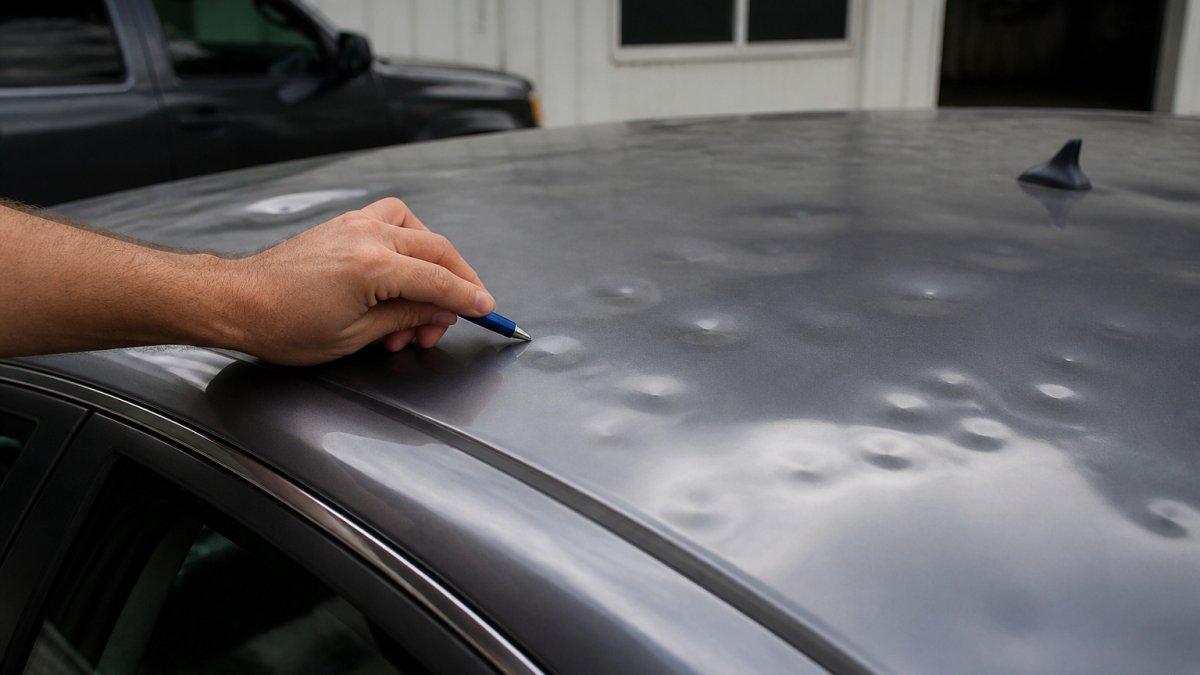
Hidden hail damage on a car roof shows up as small, shallow dents that are easiest to spot with a flashlight held at a low angle across the panel. Wash and dry the roof first, scan in overlapping strips, then confirm each suspect dent by dragging two fingers lightly across it.
- Hold a bright light low and close, about 6 to 12 inches from the roof, and sweep it slowly.
- Scan in overlapping strips about 12 inches wide, from front to back and side to side.
- Real dents feel like a shallow dip under your fingertips and do not wipe away with a damp cloth.
- Photograph each dent with a coin or ruler for scale, and map their locations on paper.
- Never climb on the roof; use a sturdy step stool or platform and keep both feet off the car.
Table of Contents
- Why Hail Damage on a Car Roof Is Easy to Miss
- How to Check for Car Hail Damage With a Light
- Step-by-Step Roof Inspection Procedure
- Telling Hail Dents Apart From Dirt, Water Spots, and Wear
- Checking the Headliner, Glass, and Paint Safely
- What to Document and How the Hail Damage Insurance Claim Process Starts
- Does Hail Damage Affect Car Resale Value?
- Booking Your Free Inspection With 888 PDR
- Frequently Asked Questions
Why Hail Damage on a Car Roof Is Easy to Miss
Hail damage is often hidden in plain sight. Small dents on a car roof can look like shadows, dust, or ordinary wear until you change the angle of the light.
Hail dents are usually round and shallow. Many are smaller than a quarter. Some sit in clusters, while others are spaced out in an uneven pattern. Because the paint often stays intact, the metal can look fine from a normal viewing distance.
That is why a careful check matters.
How to Check for Car Hail Damage With a Light
Light is the most useful tool you have for finding hidden dents. Flat, even daylight hides small dents. Angled light reveals them.
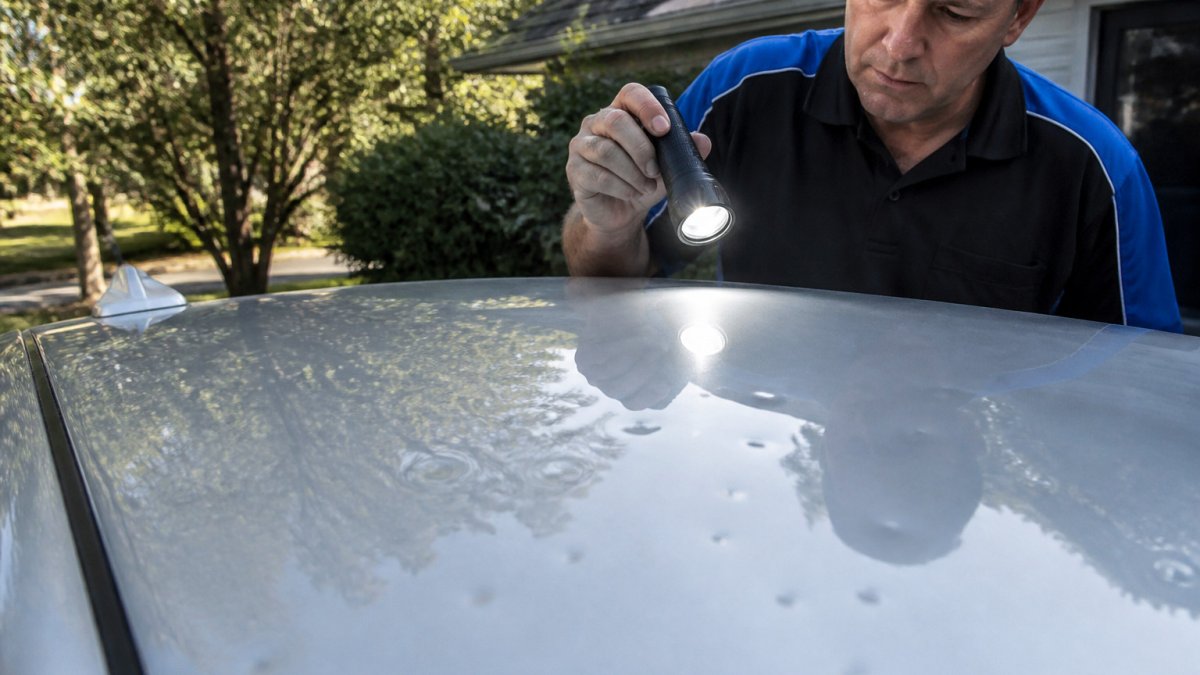
A person checking a car roof with a flashlight held at a low angle, showing small dents in the reflection on a sunny afternoon. | section:How to Check for Car Hail Damage With a Light
Setting Up Angled and Reflected Light
Use one of these light sources:
- A bright flashlight held low and close to the surface
- A phone flashlight with the beam angled across the panel
- Open shade on a sunny day, with the car turned so the sun reflects off the roof
Move the light slowly across the panel. Dents show up as small bright or dark spots in the reflection. Shade alone is not enough, so keep moving the light until you see the metal's shape.
Scanning the Roof in a Methodical Pattern
Work in strips from one side of the roof to the other. Keep your light at the same low angle as you move. Check the hood, trunk lid, and body panels the same way.
A simple routine helps:
- Start at the front edge of the roof
- Move in overlapping strips about 12 inches wide
- Stop and check each dent you find before moving on
Step-by-Step Roof Inspection Procedure
A roof is the hardest panel on a car to inspect because you cannot see it from eye level and you should not stand on it. The sequence below is built for a roof-first check you can do from the ground or a stable platform, and it produces a record you can hand to an insurer or a repair shop.
- Pick the right conditions. Overcast daylight or open shade works best. Direct midday sun flattens the reflections you need. If you must work in sun, turn the car so the sun rakes across the roof from the side rather than straight down.
- Wash and dry the roof. Dust, pollen, tree sap, and dried water spots all mimic dents under a flashlight. A clean, dry panel removes the most common false positives before you start.
- Set your light low and close. Hold a bright flashlight or phone light almost parallel to the surface, about 6 to 12 inches away, and sweep it slowly. The beam should skim the paint, not point down at it.
- Scan in overlapping strips. Work front to back in strips about 12 inches wide, then repeat side to side. Overlap each pass by a few inches so you do not create blind spots between strips.
- Read the reflection, not the paint. A dent shows up as a distortion in the reflected light, a bright crescent next to a dark crescent, or a spot where a straight reflection line bends. If the reflection stays flat and unbroken, you are probably looking at a high spot, a dirt speck, or a clear-coat texture, not a dent.
- Confirm with a fingertip. Once you spot a suspect, lay two fingers flat and drag them lightly across the area. A true dent has a shallow dip you can feel as a slight catch or hollow. Do not press; dragging is enough.
- Mark and photograph each find. Flag every confirmed dent with painter's tape or a washable marker, then photograph it with a coin or ruler for scale and a wide shot showing the pattern across the roof.
- Repeat from the opposite side. Walk around the car and scan again from the other side. Dents that vanish from one angle often appear from the other, and a second pass catches the shallow ones the first pass missed.
A common pattern in roof inspections is clusters of small, shallow dents spaced a few inches apart, mixed with a few isolated deeper ones.
Telling Hail Dents Apart From Dirt, Water Spots, and Wear
Not every mark is hail. Dirt and water spots can look like dents at first glance. Ordinary wear can also cause surface marks.
Hail dents have a few clear traits:
- They are round or oval indentations you can feel with your fingertips
- They change shape and brightness when you shift the light
- They do not wipe away with a damp cloth
Water spots and dirt sit on top of the paint. Wipe the area and check again. If the mark is still there and the surface dips slightly, you are likely looking at a dent.
Checking the Headliner, Glass, and Paint Safely
A roof check is not complete without a look inside and at the glass, but this is also where DIY inspection reaches its limit. The goal here is to gather evidence, not to diagnose structural damage.
Headliner
Sit inside the car and look up with a flashlight held at a low angle. What you are looking for:
- Soft spots or sagging where the fabric has pulled away from the roof skin, a sign that something pushed the metal inward from above.
- Water stains or tide lines that suggest a seam or sunroof drain has leaked, which can happen after a storm even without a visible dent.
- Creases or dimples in the fabric itself, which can telegraph a dent in the roof skin above it.
Do not press hard on the headliner or try to peel it back. The fabric and its backing board tear easily, and on many vehicles the headliner also houses side-curtain airbag routing. Removing or disturbing it is a job for a technician, not a driveway check.
Glass
Check the windshield, sunroof glass, rear window, and any fixed quarter glass. Hail chips are often tiny, smaller than a pencil eraser, and easiest to see with light held at a low angle across the glass rather than straight through it.
- Look for crescent-shaped chips, star breaks, and short cracks near the top edge of the windshield and around the sunroof, which take the most direct hits.
- Run a fingernail lightly across a suspect chip. If your nail catches, it is a real chip, not a smudge.
- Note any chip in the driver's line of sight, and ask your carrier how it handles glass before you assume how a repair will be covered.
Paint
Paint damage is where a visual check gives you the most useful early warning. Look for:
- Chipped or cracked clear coat at the center of a dent, which is where the paint stretches and fails first.
- Spiderweb cracks radiating from an impact point.
- Dull or hazy spots where the clear coat has bruised without breaking.
Any break in the paint is a rust risk. A chipped spot on a roof can trap moisture and start corrosion that spreads under the paint, so note every paint break even if the dent itself looks minor.
What a Visual Check Cannot Tell You
Be realistic about the limits. A flashlight-and-fingertip inspection can confirm that dents exist and roughly how many, but it cannot tell you:
- Whether the roof skin has separated from its structural adhesive or supporting ribs.
- Whether a dent has cracked the paint from underneath, which may not show on the surface for months.
- Whether the damage has affected a sunroof track, drain tube, or antenna mount.
Those are judgments a trained technician makes with a dent gauge, a reflection board, and hands-on experience. If your inspection turns up more than a few dents, any paint break, or anything that feels soft or loose under the headliner, that is the point to book a professional inspection rather than keep guessing.
What to Document and How the Hail Damage Insurance Claim Process Starts
Good records make the next steps easier. Before you call your insurer or a repair shop, gather:
- Photos of each dent, with a ruler or coin for scale
- A wide photo of each panel showing the overall pattern
- The date and location where the car was parked during the storm
Once you have your records, your insurance claim process usually starts with a call to your carrier. Once an estimate is written, you may encounter a supplement on a hail claim, which corrects the estimate after a shop inspection.
If you want to understand how a claim affects your premium, the Insurance Information Institute guide to auto claims is a useful starting point.
Does Hail Damage Affect Car Resale Value?
Yes, hail damage can lower resale value, especially when dents are visible or the paint is damaged. Buyers and dealers often discount cars with visible storm marks.
Hidden or unrepaired damage can also cause problems over time. If the car may be declared a total loss, see how total loss versus repairable outcomes affect hail-damaged vehicles in Texas.
Paintless dent repair is often a good option for preserving value. It removes dents without filler or repainting, which helps keep the factory finish intact. Consumer Reports guidance on used car value and condition explains how condition affects what a buyer will pay.
Booking Your Free Inspection With 888 PDR
If you think your car has hidden hail damage, a professional inspection gives you a clear answer. Beyond hail, maintaining a sharp eye for irregularities helps you spot hidden vehicle damage that might otherwise compromise the long-term integrity of your car.
Call us at (469) 284-0336 or request a free quote today to get your car checked and your next steps planned.
Frequently Asked Questions
Can you see hail damage on a car roof without special lighting?
Sometimes, but often not reliably. Large dents may be visible in direct daylight, while small, shallow dents usually only show up when light is angled across the surface. Standing in open shade or using a handheld flashlight held low against the panel makes the surface irregularities stand out. If you cannot confirm damage by eye, a free inspection with a technician using proper lighting is the most dependable way to know what is there.
Is it worth filing an insurance claim for minor hail damage?
It depends on the total repair cost compared with your comprehensive deductible, and on whether the damage is spread across the roof, hood, and trunk. Many small dents can add up to a repair that exceeds a typical deductible. Filing a claim also creates a record that can matter later. Get an inspection first so you can compare the estimated repair cost with your deductible before deciding.
What are the long-term effects of unrepaired hail damage on a vehicle?
Dents that go unrepaired can eventually crack or chip the paint, especially where the metal has been stretched. Once paint is broken, moisture can reach bare metal and begin surface rust over time. Hail damage can also reduce the appeal of the vehicle when you sell or trade it in. Addressing dents early, while the paint is still intact, generally keeps repair options simpler.
Does a hail damage claim show up on CarFax?
Whether a claim appears on a vehicle history report depends on how it was handled and reported. If you are concerned about history reports, ask your insurer and repair shop how the claim will be documented before work begins.
