
Last Updated: October 29, 2026
Quick Summary
Multiple hail claims can raise your premium, cost you a claims-free discount, or prompt an underwriting review at renewal, because insurers count claims by storm event and look at claim frequency. A single comprehensive hail claim is often absorbed with little or no surcharge, while a pattern of claims in a short window is what moves the needle.
- Insurers usually count hail claims by event, so one storm is typically one claim.
- Claim frequency matters more to underwriters than the dollar amount of each claim.
- Two claims in a short window can trigger a surcharge or remove a claims-free discount.
- Nonrenewal and mid-term cancellation are different outcomes, governed by state rules.
- Ask your agent how a second claim will be recorded and priced before you file.
Table of Contents
- How Insurers Count Multiple Hail Claims
- Does Filing a Hail Claim Raise Insurance Rates?
- Claim History, Underwriting, and Renewal Risk
- Hail Damage Insurance Deductible: Is Filing Worth It?
- How to Document Hail Damage for Insurance
- Step-by-Step: Deciding on a Second Hail Damage Claim
- Booking Your Hail Damage Inspection at 888 PDR
- Frequently Asked Questions
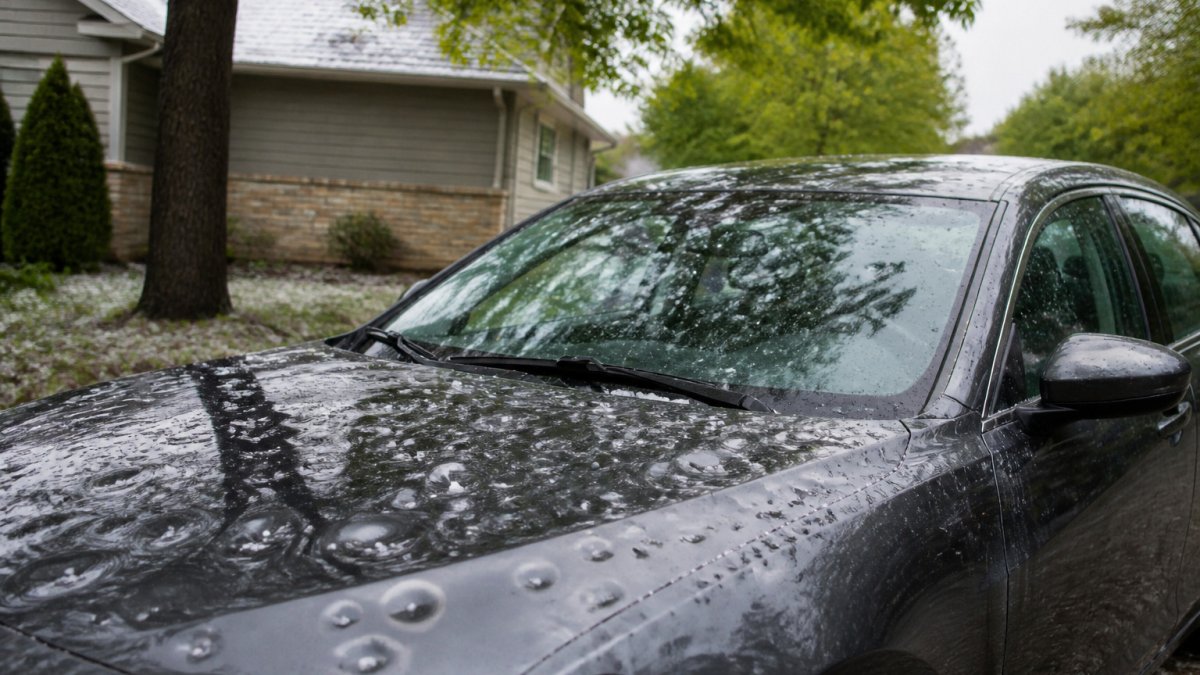
Hail season in Dallas-Fort Worth can leave a single storm with a long list of claims, and many drivers wonder what happens to their policy after they file the first one.
Insurers do not treat every hail claim the same way. They look at how many claims you have filed, how recently they happened, and whether each came from a separate storm.
How Insurers Count Multiple Hail Claims
Insurers usually count claims by event, not by the number of dents on your vehicle. A single storm that damages your car is typically one claim, even if it leaves dozens of marks.
What Counts as a Separate Storm Event
A separate storm event usually means a different hail date or a different weather system. Two hailstorms weeks apart will often appear as two claims in your history. Insurers check the date of loss and the weather record to confirm this.
- One storm, one claim: most carriers group all damage from the same event together
- Two storms, two claims: each new hail date typically creates a new entry
- Supplements: additional damage found after the first estimate usually attaches to the original claim
Weather-Related Versus At-Fault Claims
Hail damage is a weather-related claim, different from an at-fault accident (Auto Insurance Basics). Comprehensive coverage handles hail and generally does not assign blame the way a collision claim does. Still, the claim is recorded in your history, and underwriters read that record.
Does Filing a Hail Claim Raise Insurance Rates?
Filing a hail claim can raise what you pay at renewal, but the outcome is not automatic or uniform across carriers. Hail is covered under the comprehensive portion of an auto policy (and the dwelling portion of a homeowners policy), and insurers treat comprehensive claims differently from at-fault collision claims when pricing risk. A single comprehensive claim is often absorbed with little or no surcharge; a pattern of claims is what moves the needle.
The mechanism: how a hail claim reaches your premium
Insurers price auto policies using a combination of rating factors. Your claim history is one of them. When a comprehensive claim is paid, it is recorded in your loss history and shared through the claims databases carriers use to underwrite and rate policies. At renewal, the carrier re-scores your risk. Three things can happen:
- No change. Many carriers apply a claims-free discount and do not surcharge a first comprehensive loss, especially a weather event that hit a wide area.
- A surcharge or loss of a discount. A second or third claim in a short window can trigger a claims surcharge or remove a safe-driver or claims-free discount, which raises the effective premium even if the base rate does not move.
- An underwriting review. Repeated claims can prompt an underwriting review, where the insurer decides how to handle renewal.
Exact thresholds vary by carrier and state, so ask your agent how your specific policy treats repeated weather claims.
Premium increase vs. nonrenewal vs. cancellation, they are not the same
These three outcomes get used interchangeably in casual conversation, but they are legally and practically different:
- Premium increase. The insurer renews the policy but charges more, or removes a discount. This is the most common consequence of repeated weather claims.
- Nonrenewal. The insurer declines to renew at the next anniversary. State rules govern nonrenewal notice requirements, so check your renewal notice and state notices for the timing that applies to you.
- Cancellation. The insurer ends the policy mid-term. This is rarer and more tightly regulated; most states limit mid-term cancellation to specific reasons such as nonpayment or fraud, and weather claims alone usually are not grounds for it.
How claim frequency is scored
Underwriters look at frequency (how many claims) more than severity (how much each cost) for weather perils, because hail is not a driver-behavior risk. Two $3,000 hail claims in 18 months read worse than one $9,000 claim, because frequency suggests the policy is being used as a maintenance tool rather than for catastrophic loss.
State rules and policy language set the boundaries
There is no single national rule for how a hail claim affects your rate. States regulate rating factors, notice requirements, and nonrenewal, and each carrier files its own rating plan. Your policy's declarations page and state-specific notices are the authoritative source. Before you file a second claim, ask your agent directly: *Is this claim surchargeable under my policy?
Homeowners vs. auto: the rate effect is not the same
On a homeowners policy, a hail claim is a property claim tied to the dwelling and rated against the property's loss history, not the driver's. On an auto policy, the claim is tied to the vehicle and the named insured's loss history. A homeowners carrier may weigh roof age, prior roof claims, and the property's claim history, while an auto carrier weighs the driver's overall claims record.
Claim History, Underwriting, and Renewal Risk
Your claim history is one of the things underwriters review before they renew or price your policy. A clean record with one comprehensive claim often reads very differently from a long string of claims.
Before you file, it helps to ask your agent a few direct questions:
- How will this claim be recorded in my history?
- Will it affect my renewal rate, and by how much?
- Could multiple claims from this season lead to nonrenewal?
Hail Damage Insurance Deductible: Is Filing Worth It?
The deductible is usually the deciding factor in whether a hail claim is worth filing, but the math is more than "repair estimate minus deductible." How the deductible is applied, whether a prior claim already consumed part of it, and whether the new damage is a separate event all change the answer.
The basic math, done properly
On an auto policy, the comprehensive deductible is subtracted from the covered repair cost. If your deductible is $500 and the repair estimate is $2,400, the insurer pays $1,900 (less any betterment or prior-damage adjustments).
Whether a claim is worth filing depends on your carrier and state, so compare the net payout against the likely rate and renewal risk before you file.
Why a second claim is different math
A second hail claim is not a fresh start. Three things change the calculation:
- Prior payout. If the first claim already paid for repairs, the second covers only new damage. If repairs from the first claim were incomplete, the new estimate may overlap with work already paid for, and the insurer will deduct for prior damage.
- Deductible application. Most auto policies apply the deductible per claim, per event. Two separate storms generally mean two deductibles. A supplemental claim on the same event usually does not trigger a second deductible, it attaches to the original claim.
- Claim history. The second claim is the one that most affects frequency scoring. The marginal rate risk of claim two is higher than claim one, even if the dollar amount is similar.
Separate events, supplemental claims, and reopened claims, count them correctly
Before you decide, classify the damage:
- Separate storm event. A different hail date or weather system. Typically a new claim with a new deductible.
- Supplemental claim. Additional damage found on the same event after the first estimate. Usually attaches to the original claim; no new deductible in most policies.
- Reopened claim. A closed claim reopened because damage was missed or repairs fell short. Treated as part of the original claim in most cases.
Getting this classification wrong is the most common way policyholders accidentally create a duplicate or overlapping claim, and duplicate claims are exactly what underwriters flag.
A concrete decision sequence for a second claim
- Document the new damage separately. Photograph the new dents with a date reference and keep them distinct from prior claim photos.
- Get a written estimate from a repair shop that separates new damage from pre-existing or prior-claim damage.
- Confirm the event. Check the storm date and location against weather records so you can show it is a separate event.
- Ask your agent three questions: Will this be a new claim or a supplement? What deductible applies? How will it be recorded in my loss history?
- Run the math. Net payout after deductible vs. the likely rate and renewal risk. If the payout is small relative to the deductible, pay out of pocket.
- Decide and document. If you file, report promptly and keep every estimate, photo, and adjuster communication. If you pay out of pocket, keep the receipts, they help show the damage was addressed and support a future claim if a later storm causes new damage.
If repairs from a prior hail claim are still incomplete when a new storm hits, tell the adjuster up front. Coordinating the two inspections prevents the insurer from treating old damage as new, or new damage as old, and avoids a duplicate-claim flag.
When paying out of pocket is the better call
Paying out of pocket makes sense when the net payout is small, when the damage is cosmetic and you can live with it, or when you are close to a renewal and want to protect a claims-free discount. Filing makes sense when the repair cost is well above the deductible, when the damage affects safety or resale value, and when you have not filed a claim in several years.
The deductible is usually the deciding factor, and a second claim changes the math in several ways.
| Damage type | How it's handled | Deductible effect |
|---|---|---|
| Separate storm event | New claim, new entry | Usually a new deductible |
| Supplemental claim | Attaches to original claim | Usually no new deductible |
| Reopened claim | Treated as part of original | Generally no new deductible |
| Different insured property | Separate claim on separate policy | Applies on its own policy |
How to Document Hail Damage for Insurance
Good documentation helps any claim, first or second. For a full walkthrough of which photos to take and records to keep, see the guide on documenting hail damage for insurance.
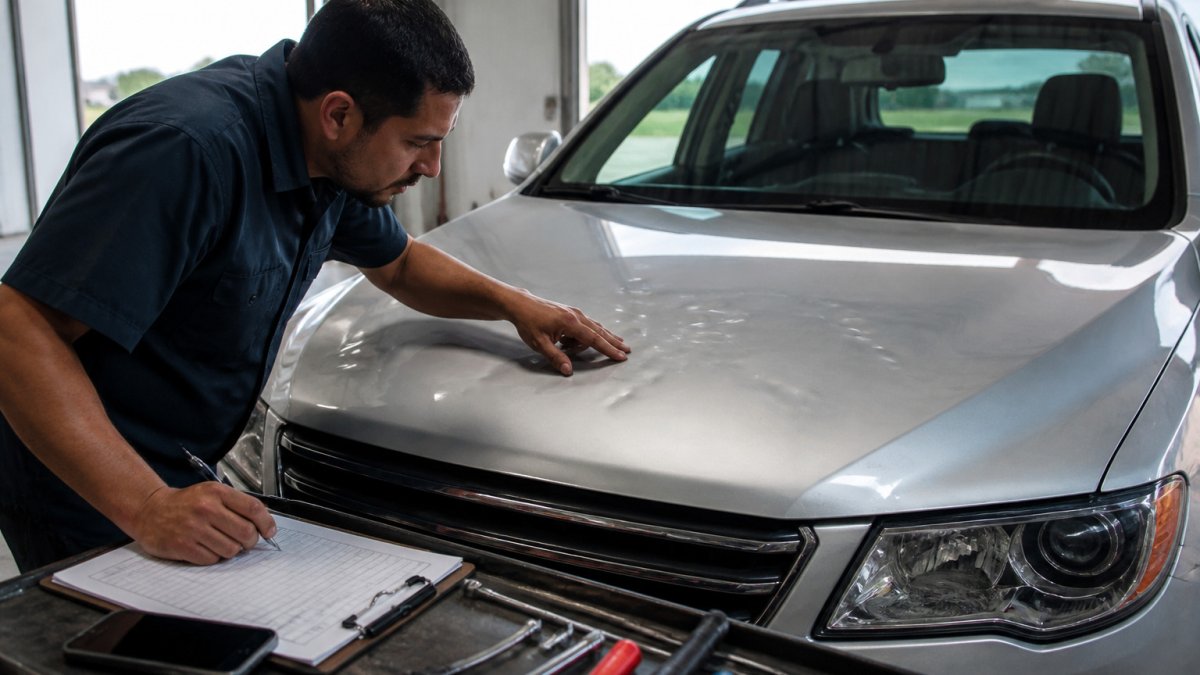
Strong documentation usually includes:
- Wide photos showing the whole vehicle from each side
- Close-up photos of each dent, with a coin or ruler for scale
- The date and location of the storm
Documentation matters even more when you may file a second claim. Clear records show which damage came from which storm, which helps prevent overlapping or duplicate claims.
Step-by-Step: Deciding on a Second Hail Damage Claim
If your car has been hit by hail before and you are facing a second storm, work through these steps:
- Get a written repair estimate for the new damage.
- Compare that estimate to your deductible.
- Ask your agent how a second claim will affect your renewal.
- Check whether the new damage is from a separate storm event.
- Decide whether the payout justifies the possible rate change.
If the numbers favor filing, document everything carefully and report the claim promptly. If they do not, paying out of pocket may be the better choice.
Booking Your Hail Damage Inspection at 888 PDR
Whether you file or pay out of pocket, a free inspection helps you know what the damage will cost to fix. At 888 PDR, we inspect hail-damaged vehicles, document the damage, and handle the insurance paperwork from first notice of loss through final payment. Our paintless dent repair keeps your factory finish intact, and every repair carries our lifetime warranty. Call (469) 284-0336 to schedule your free inspection and get a clear picture before you decide.
Frequently Asked Questions
Can multiple hail claims raise my insurance premium?
Yes, repeat hail claims can raise premiums, especially when several claims are filed within a short period. Insurers view frequent claims as a sign of higher risk in your area or on your vehicle or home. The increase depends on your insurer, your state's rules, and your claim history. Some carriers apply surcharges only to at-fault or non-weather claims, so ask your agent how your specific policy treats weather-related losses before filing.
Will filing a second hail claim affect my policy renewal?
It can. Repeated claims may lead an insurer to raise your rate at renewal, or in some cases to nonrenew the policy. Insurers look at claim history during underwriting, and a pattern of storm claims can signal elevated risk. Before filing a second claim, review your renewal notice and call your agent to ask how the company treats additional weather-related losses.
How can I tell whether new hail damage is separate from an earlier claim?
Compare the dates of each storm event, the locations of the dents, and the damage already documented from the prior claim. Hail from a different storm will usually leave new impact marks, often with different sizes and patterns. Ask a repair shop to inspect the vehicle and note which damage was previously repaired. A clear, dated inspection report helps prevent overlapping claims and shows the insurer exactly what is new.
Should I get a repair estimate before filing another hail claim?
Yes. A written estimate shows the cost of the new damage and helps you decide whether the claim exceeds your deductible. Compare the estimate against your deductible and your expected out-of-pocket costs. An estimate also gives you documentation to support the claim and to dispute any undervaluation. Many shops offer free inspections, so you can review the numbers before committing.
