Table of Contents
- Rental Vehicle Assistance vs. Insurance Claims: What's the Real Difference?
- How Rental Reimbursement Coverage Explained
- Understanding Collision Damage Waiver and Loss of Use Fees
- Does PDR Affect Vehicle Resale Value?
- How to File an Auto Hail Damage Claim
- Direct Claim Management: Minimizing Stress and Administrative Burden
- Choosing the Right Approach for Your Situation
- Frequently Asked Questions
Last Updated: September 30, 2026
Rental Vehicle Assistance vs. Insurance Claims: What's the Real Difference?
When your car gets damaged, you must choose between rental vehicle assistance insurance claims and traditional insurance claims, a decision that affects both your timeline and stress level.
Rental vehicle assistance prioritizes speed and simplicity, while insurance claims prioritize long-term cost control. The best choice depends on your priorities.
Here's what separates them.
How Rental Reimbursement Coverage Explained
Rental reimbursement coverage is an add-on to your personal auto insurance policy that covers the daily cost of a rental vehicle while yours is being repaired. You maintain mobility during repairs without interrupting your commute or work.
Rental reimbursement covers only the rental cost itself, not loss of use fees or administrative charges.
The real advantage emerges when you combine rental reimbursement with a repair shop that handles insurance claims directly. The shop coordinates with your insurer and rental company, eliminating back-and-forth calls and paperwork.
Understanding Collision Damage Waiver and Loss of Use Fees
A Collision Damage Waiver (CDW) is what rental companies offer at the counter: pay an extra daily fee, and the rental company waives your financial responsibility for vehicle damage during the rental period.
How CDW actually works, and why it matters for your primary vehicle.
A CDW shifts responsibility from you to the rental company. If you decline it and damage the rental, your personal auto insurance kicks in and you pay your deductible. If you purchase CDW, you pay the daily fee instead.
The real problem with CDWs is the claims history impact on your primary vehicle. When you file a claim against your personal auto insurance for rental damage, that claim becomes part of your driving record. Multiple claims over time signal higher risk to insurers and increase your rates. You also use up your deductible, reducing protection if your own vehicle is damaged later.
Loss of use fees are charged when your vehicle is in the shop and you need a replacement. They stack on top of the daily rental rate.
The critical gap: Pre-rental inspection and damage documentation.
The most important step is documenting the rental vehicle's condition before you drive it off the lot. When you pick up a rental, the rental company provides a damage checklist listing pre-existing damage. If you don't carefully document this checklist and photograph the vehicle, you're vulnerable to being charged for damage you didn't cause.
Without photographic evidence of the vehicle's condition when you picked it up, you have no proof if the rental company charges you for pre-existing damage. This is entirely preventable.
Pre-rental inspection checklist: The stress-prevention step.
Before you drive a rental vehicle off the lot, perform this inspection:
-
Exterior damage assessment
- Walk around the entire vehicle in daylight
- Photograph all four sides, the roof, and the undercarriage (if visible)
- Note and photograph any existing dents, scratches, or paint damage
- Check all windows, mirrors, and lights for damage
- Photograph the odometer reading to establish mileage
- Photograph the fuel gauge to confirm fuel level
-
Interior condition check
- Photograph the dashboard and steering wheel for damage or stains
- Check seats for tears, stains, or damage
- Photograph the floor mats and carpet
- Test all controls (wipers, lights, climate control) to confirm functionality
- Note any unusual odors or mechanical issues
-
Damage checklist review
- Request the rental company's official damage checklist
- Walk through each item with the rental agent
- Ensure every pre-existing damage is documented on the checklist
- Do not accept a blank or incomplete checklist
- Get a copy of the signed checklist for your records
-
Documentation and communication
- Email yourself the photos immediately (creates a timestamped record)
- Keep the damage checklist in your vehicle during the rental period
- If you cause any damage during the rental, report it to the rental company immediately (don't hide it)
- Take photos of the vehicle's condition when you return it
Why this matters for your primary vehicle's value.
If you cause damage to a rental vehicle and file a claim against your personal auto insurance, that claim becomes part of your insurance history and can affect your rates. By preventing rental disputes through pre-rental inspection, you avoid claims against your personal insurance entirely and preserve your insurance profile.
CDW vs. personal insurance: The decision framework.
Given all this, here's when to buy CDW and when to decline it:
Buy CDW if: you're a frequent renter, uncomfortable with your driving in unfamiliar vehicles, or renting in heavy traffic. Decline CDW if: your deductible is $500 or less, you're a confident driver, or you want to keep your claims history clean.
Loss of use fees: Negotiation and insurance coverage.
Loss of use fees are often negotiable, especially if your vehicle's repair is covered by insurance. Before accepting a loss of use fee from a rental company, ask your insurance company whether your policy covers it. Many policies do, and the rental company should bill your insurance, not you.
Does PDR Affect Vehicle Resale Value?
Paintless dent repair (PDR) preserves your vehicle's resale value because it removes dents without repainting or using filler, leaving the factory finish intact. Traditional repairs create a repair record that future buyers see in the vehicle's history. PDR leaves no trace and preserves full resale value.
How to File an Auto Hail Damage Claim
Step 1: Document the damage immediately, before the weather clears.
Take photos of all visible dents from multiple angles within 24 hours of the hail event, including wide shots of the overall damage pattern and close-ups of individual dents. Include your odometer and license plate to establish vehicle identity. Adjusters rely on photos to estimate damage scope and repair cost. Photograph immediately, hail damage is permanent until repaired.
Step 2: Contact your insurance company within 24-48 hours.
Contact your insurance company within 24-48 hours with your policy number, the date and time of the hail event, and a brief description of damage. Ask for a claim number and the adjuster's direct contact information. Always confirm receipt and document the claim number.
Step 3: Schedule an insurance adjuster inspection and prepare for it.
Schedule an adjuster inspection within 3-5 days of filing the claim. Before the adjuster arrives, park your vehicle in good lighting, have your policy documents and photographic documentation ready, and note any pre-existing damage. Attend the inspection and provide photos to ensure an accurate estimate.
Step 4: Get a repair estimate from your chosen shop and understand supplements.
Contact your repair shop and provide a copy of the adjuster's estimate. The shop will generate its own estimate. When estimates don't match, the shop files a "supplement", a formal request for additional payment backed by detailed photos and documentation. An experienced shop knows how to file supplements that get approved on the first submission.
Step 5: Authorize repairs and coordinate with insurance for payment.
Once the claim is approved, repairs begin. The shop coordinates with insurance for payment. Confirm payment arrangements before repairs begin, most insurers issue payment directly to the repair shop, not to you. Selecting a facility that prioritizes clear communication regarding these financial workflows often highlights the broader independent repair benefits that ensure your vehicle receives focused attention throughout the restoration process.
The stress multiplier: Managing this alone vs. having professional coordination.
When a repair shop manages the claim directly, you make one phone call to report the damage.
Direct Claim Management: Minimizing Stress and Administrative Burden
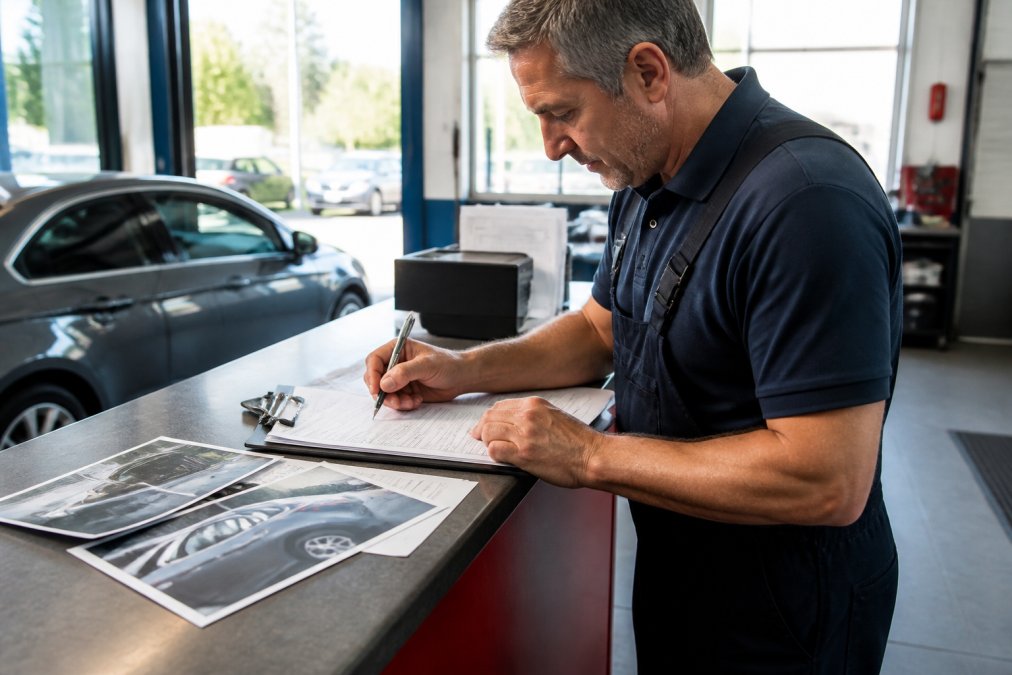
Direct claim management means the repair shop handles rental vehicle assistance insurance claims communication between you, your insurer, and the rental company. This eliminates the administrative burden that makes insurance claims stressful.
Choosing the Right Approach for Your Situation
The best approach depends on three factors: your priority, your vehicle's age, and your tolerance for administrative work.
Frequently Asked Questions
What is the difference between rental assistance and loss of use coverage?
Rental assistance covers the daily cost of a loaner or rental vehicle while your car is being repaired, allowing you to maintain your routine. Loss of use is a fee the rental company charges for the vehicle being unavailable during repair. Rental assistance reimburses you for the rental expense itself, while loss of use is a separate administrative charge. Understanding this distinction helps you evaluate whether your personal auto policy, credit card benefits, or rental counter insurance actually covers both components of your out-of-pocket costs.
Does rental reimbursement coverage affect my insurance premiums?
The key is that if you use rental assistance through your personal policy rather than purchasing collision damage waivers at the rental counter, you avoid multiple daily fees that would accumulate quickly. However, if you file a claim that involves the rental vehicle, that claim may influence your future premium. Choosing the right coverage strategy upfront can help preserve your claims history and keep premiums stable.
How does paintless dent repair help maintain my vehicle's resale value?
Paintless dent repair preserves your vehicle's original factory finish, which is a critical factor in resale value. Traditional dent repair involving filler and repainting can compromise the structural integrity of the paint layer and create a noticeable color mismatch or texture difference that buyers detect during inspection. When you use PDR, the repair is invisible to future buyers and their inspectors, meaning your vehicle retains its original factory condition. This is especially important for newer vehicles where resale value depends heavily on maintaining the manufacturer's original finish and avoiding any history of repainting.
Why is preserving the factory finish important for vehicle value?
The factory finish is applied under controlled manufacturing conditions with multiple layers of primer, paint, and clear coat that are difficult to replicate perfectly in a shop environment. Buyers and professional inspectors check for paint overspray, thickness variations, and color shifts as indicators of previous damage and repair history. A vehicle with an intact factory finish commands higher resale value because it signals no prior damage claims. PDR maintains that factory finish by removing dents without disturbing the paint, which is why it's the preferred repair method for owners who prioritize preserving vehicle value and avoiding the diminution of value that comes with traditional repainting.
Does using a professional PDR service simplify the insurance claim process?
Yes. When you work with a repair shop that manages the entire claim directly with your insurance carrier, you avoid the stress of navigating paperwork, damage assessments, and payment disputes yourself. The shop handles the initial inspection, communicates damage findings to the insurer, manages supplement requests if additional damage is discovered, and coordinates the final payment. This direct relationship between the repair facility and your insurance company eliminates delays caused by miscommunication and reduces the risk of claim denials due to incomplete documentation.