

Table of Contents
- What to Do Immediately After an Accident
- How to Document Vehicle Damage for Insurance
- Contacting Your Insurance Provider
- Understanding the Hail Damage Insurance Claim Process 2026
- Auto Insurance Claim Settlement Timeline
- Choosing a Paintless Dent Repair Shop for Your Claim
- Handling Claim Denials and Low Settlement Offers
- Frequently Asked Questions
Last Updated: September 27, 2026
What to Do Immediately After an Accident
Prioritize safety immediately after a collision: move vehicles to a secure location, turn on hazard lights, and call emergency services if anyone is injured. Document the scene with photos and video from multiple angles.
Call police for an incident report (required for insurance documentation). Exchange contact information with the other driver: name, phone, address, email, insurance details, license plate, vehicle make, model, and year.
Photograph vehicle damage, road conditions, and traffic signs from multiple angles. Collect contact information from any witnesses, their statements carry significant weight in claims investigation.
Call your insurance provider promptly (most policies require it). When filing auto insurance claims, provide basic accident details but avoid admitting fault or speculating about causes.
How to Document Vehicle Damage for Insurance
Take clear, well-lit photos of all visible damage before repairs begin, photograph the entire vehicle from multiple angles, then zoom in on specific areas.
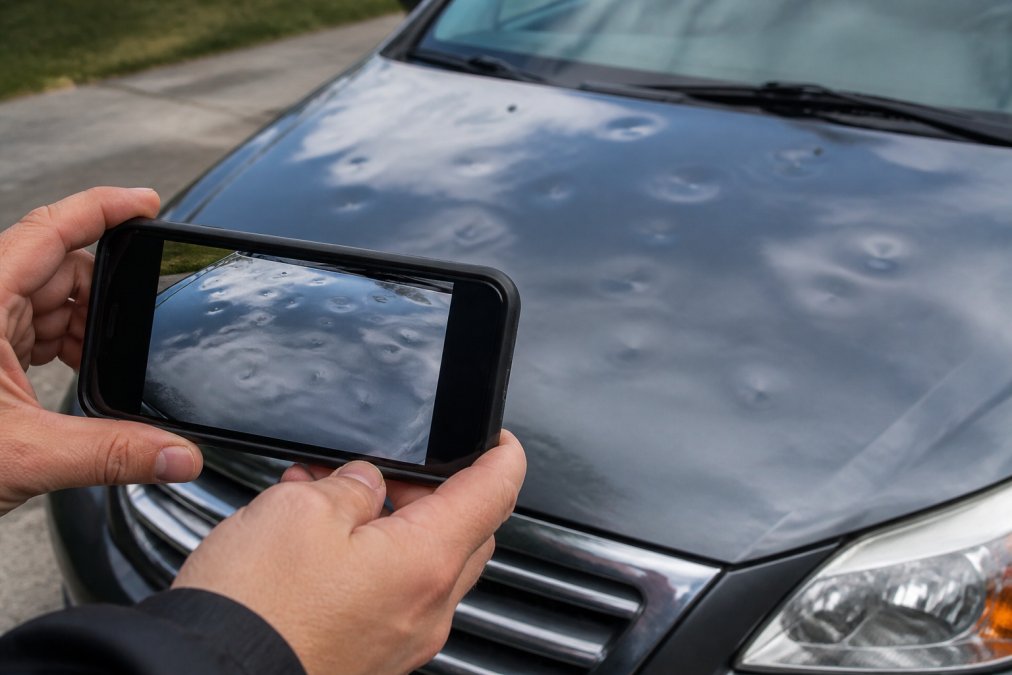
Verify your photos are timestamped (most phones do this automatically). For subtle damage, photograph in different lighting conditions, overcast daylight reveals dents better than direct sunlight.
For hail damage, photograph each affected panel with both wide-angle shots (showing extent) and close-ups (showing severity) to prevent disputes over pre-existing damage.
Keep all receipts for accident-related expenses: rental cars, towing, medical treatment. Create a timeline of when damage occurred, when you reported it, and when repairs began.
Write down your account of the accident while details are fresh, including weather, traffic patterns, visibility, and your actions before impact.
Contacting Your Insurance Provider
Have your policy number ready before calling your insurance provider. Provide your name, policy number, accident date/time, and a brief description of what happened.
Stick to facts you observed directly, avoid admitting fault or speculating about cause. Let the investigation determine liability.
Get your claim number immediately and reference it in all future communications. Request the adjuster's direct contact information and preferred communication method.
Ask about your deductible, policy limits, and which coverages apply (collision, comprehensive, medical payments).
Ask about the claims timeline: investigation duration, coverage determination timeline, and next steps if the other driver's insurance is involved.
Understanding the Hail Damage Insurance Claim Process 2026
Hail damage claims typically fall under comprehensive coverage (which covers weather events) rather than collision coverage.
File your auto insurance claims immediately after the storm and photograph all damage. Early filing helps your claim move through the queue faster.
During inspection, the adjuster evaluates damage severity and determines whether it meets your policy's coverage threshold (some policies require damage above a certain amount).
The adjuster prepares a damage estimate that becomes your settlement offer. If you disagree, you can request an independent appraisal (most policies include this right).
Once coverage is approved, choose your repair shop. Paintless dent repair shops preserve your factory finish and resale value, ideal for hail damage.
Auto Insurance Claim Settlement Timeline
Claim timelines vary by state regulations, jurisdiction type (no-fault vs. at-fault), and claim complexity. Understanding these factors helps you set realistic expectations.
Standard Timeline for Straightforward Claims
Days 1-3: Call your insurer, provide accident details, receive claim number. Insurer verifies policy is active and coverage applies.
Days 4-10: Adjuster schedules and completes vehicle inspection, photographs damage, and prepares preliminary estimate.
Days 11-21: Adjuster sends settlement offer specifying repair cost estimate, deductible, and net payment amount.
Days 22-45: Repairs completed (2-4 weeks depending on parts availability) and final payment issued.
Total: 30-45 days from initial claim to final payment.
How No-Fault vs. At-Fault States Affect Timeline
Your state's insurance system fundamentally changes claim processing speed and complexity.
At-Fault States (38 states plus D.C.): The at-fault driver's insurance pays for damage. If you're at-fault, your collision coverage pays (minus deductible) within 30-45 days. If you're not-at-fault, you file against the other driver's liability insurance, adding 7-14 days as two insurers coordinate (total: 45-60 days).
No-Fault States (12 states): Your Personal Injury Protection (PIP) covers medical expenses and lost wages regardless of fault. Vehicle damage claims still file against the at-fault driver's liability insurance. Medical claims process faster because liability determination isn't required. Michigan's "pure no-fault" system eliminates property damage liability disputes but has a complex PIP system that can slow medical claims.
How Claim Complexity Extends Timeline
Multiple-vehicle accidents: Timeline extends to 60-90 days as adjusters coordinate. Disputed liability: Detailed investigation extends timeline to 90+ days. Injuries involved: Medical claims process separately; property damage typically settles in 30-45 days. Total loss: Timeline extends to 45-60 days for salvage valuation and title transfer. Specialty vehicles: Extended timelines for specialized parts or labor; insurer pays in 30-45 days but repairs may take 60+ days. Complex scenarios often require a deeper understanding of non-fault accident procedures to ensure that your rights remain protected throughout the extended settlement process.
Regulatory Requirements by State
Most states require insurers to acknowledge claims within 5-10 business days and make coverage decisions within 15-30 days (though actual processing often takes longer). Check your state's insurance department website for specific requirements and your rights.
Accelerating Your Claim
Speed up processing by: submitting complete documentation immediately, responding to adjuster requests within 24 hours, scheduling inspections quickly, choosing a repair shop experienced with insurance claims, and requesting expedited processing if you have serious injuries or mounting rental expenses.
When a Claim Is Moving Too Slowly
If your claim hasn't progressed within the expected timeline, contact your adjuster to identify delays. If the delay is unreasonable (60+ days with no settlement offer), file a complaint with your state's insurance commissioner.
Choosing a Paintless Dent Repair Shop for Your Claim
Paintless dent repair removes dents without fillers or repainting, preserving your factory finish and resale value, ideal for hail damage.
Verify the repair shop works directly with insurance carriers and handles paperwork efficiently to prevent delays and disputes.
Ask about the shop's warranty (reputable shops offer one year to lifetime coverage).
Handling Claim Denials and Low Settlement Offers
A claim denial means the insurer refuses coverage entirely; a low settlement offer means they've approved coverage but underestimated repair costs.
When Your Claim Is Denied
When Your Settlement Offer Is Too Low
Negotiating Without Formal Appraisal
When to Accept a Settlement vs. Push Back
Frequently Asked Questions
What are the first steps I should take after an auto accident?
Move to safety if possible, check for injuries, and call emergency services if needed. Turn on hazard lights, exchange information with other drivers, and take photos of the accident scene and vehicle damage. Document witness contact information and police report details. Do not admit fault or discuss the accident with anyone except police and your insurance company. Contact your insurance provider within 24 hours to report the claim.
How long does the auto insurance claim settlement timeline typically take?
Most auto insurance claims are resolved within 2-4 weeks, though complex cases may take longer. The timeline depends on claim complexity, damage assessment, repair estimates, and whether coverage is disputed. Your claims adjuster will provide an estimated resolution date. Hail damage claims may move faster if you use a shop experienced with your insurer. Stay in regular contact with your adjuster to avoid delays.
What should I avoid telling my insurance company?
Do not admit fault, speculate about the cause, or exaggerate damage. Avoid discussing settlement amounts before your adjuster completes their evaluation. Do not accept a settlement offer without reviewing it thoroughly or consulting a professional if you disagree. Never provide recorded statements without understanding your rights. Stick to factual information: date, time, location, parties involved, and documented damage. Let the investigation determine liability and coverage.
Can I choose my own repair shop for my auto insurance claim?
In most states, you have the right to select your repair shop. Your insurance company cannot force you to use their preferred network. However, using an insurer-approved shop may simplify the claims process. When choosing a paintless dent repair shop, verify they have experience with your insurance carrier, understand your policy limits, and offer transparency on repair timelines and warranty coverage. Confirm they handle insurance paperwork directly with your insurer.
What is the difference between at-fault and no-fault insurance claims?
In at-fault states, the responsible party's liability coverage pays for damages. In no-fault states, your own personal injury protection or medical payments coverage covers your injuries regardless of fault, though property damage claims still follow liability rules. No-fault states limit your ability to sue for pain and suffering. Understanding your state's system affects your claim strategy and potential premium increases. Your insurance agent can clarify which system applies to your situation.
What happens if my insurance claim is denied?
Review the denial letter carefully to understand the reason. Common reasons include policy exclusions, coverage limits, or dispute over fault. You can appeal by submitting additional evidence, repair estimates, or witness statements. Contact your state's insurance commissioner if you believe the denial is unfair. For hail damage claims, a detailed damage assessment from a qualified repair shop can support your appeal. Consider consulting an insurance attorney if the claim amount is substantial.
How do I handle a low settlement offer from my insurance company?
Request a detailed breakdown of how the settlement was calculated. Obtain independent repair estimates from qualified shops to compare against the insurer's estimate. Document all damage with photos and written descriptions. If estimates differ significantly, ask your adjuster to explain the discrepancy. You can request a re-evaluation or hire an independent appraiser. Provide evidence of your vehicle's condition before the incident. Negotiation is normal; insurers often adjust offers when presented with credible evidence.
What documents do I need to file an auto insurance claim?
Gather your policy number, driver's license, vehicle registration, and proof of insurance. Collect photos of damage, accident scene, and vehicle condition before repair. Keep the police report number, witness statements, and contact information. Save all repair estimates, invoices, and receipts. Document any medical expenses or rental vehicle costs. Maintain written records of all communication with your insurance company, adjuster, and repair shop. Organize these documents chronologically for easy reference during the claims process.