Table of Contents
- What Is Paintless Dent Repair and How It Works
- Why Paintless Dent Repair Is Ideal for New Vehicles
- Does Paintless Dent Repair Void Your Car Warranty
- Types of Damage PDR Can Repair on New Cars
- How to Choose a Certified Luxury Car Dent Specialist
- Paintless Dent Repair Cost Estimate and Insurance Coverage
- Turnaround Time and Lease Return Implications
- DIY vs. Professional PDR: Why Professional Matters for New Cars
- Frequently Asked Questions
Last Updated: August 31, 2026
What Is Paintless Dent Repair and How It Works
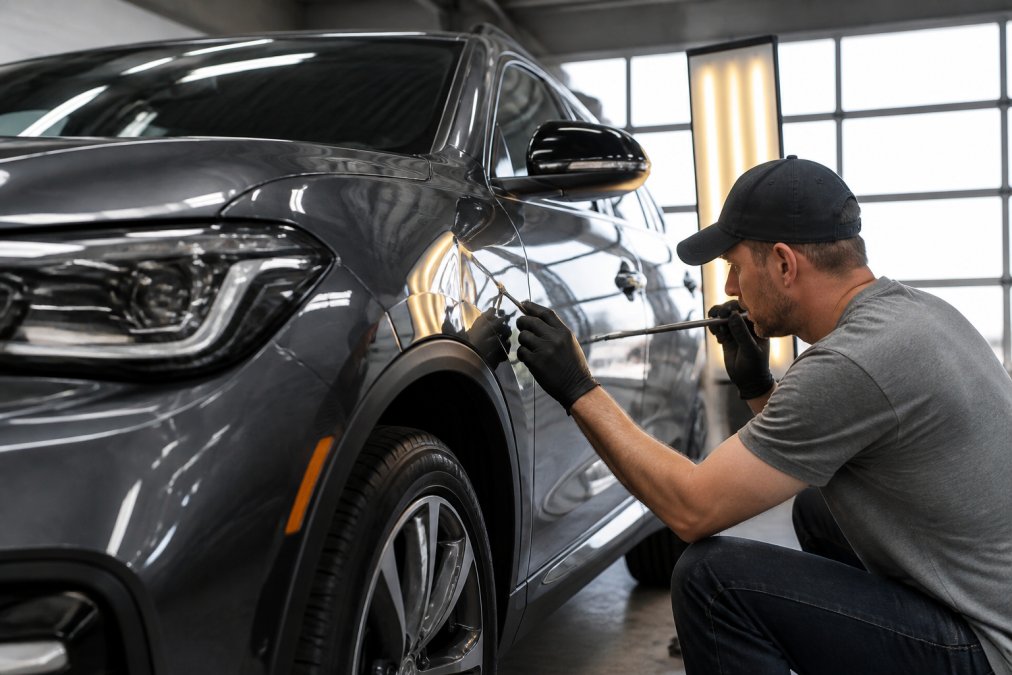
Paintless dent repair for new cars is a specialized technique that removes dents, dings, and creases without sanding, filling, or repainting the vehicle's surface. PDR technicians use precision tools to reshape the metal from behind the panel, restoring original contours while preserving every layer of the original paint.
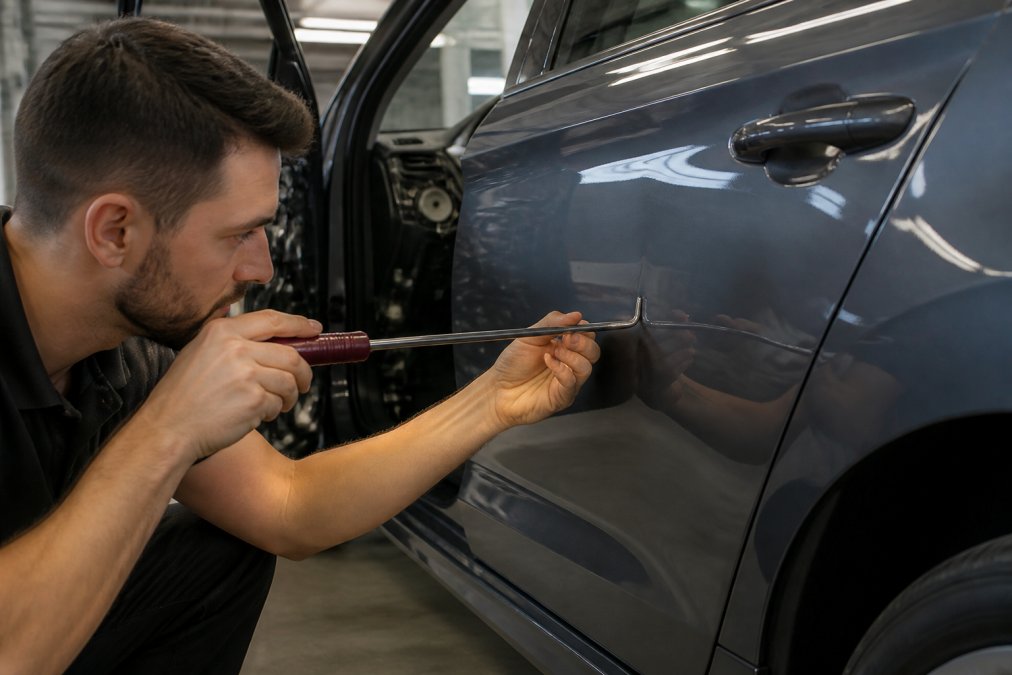
This approach matters most for new vehicle owners. The factory finish includes multiple protective layers: base coat, clear coat, and underlying metal treatment (sae.org). Traditional body shop repairs compromise that finish, starting a clock on accelerated oxidation and rust. Paintless dent repair keeps factory protection intact.
The PDR Process: Metal Reshaping Without Fillers
PDR relies on understanding how metal deforms and reversing that deformation without damaging the clear coat. Technicians access the dent from behind the panel by removing trim, lights, or interior components, then use specialized tools to apply pressure at precise points.
The work involves three core mechanics: identifying pressure points and mapping deformation, using rod tools or glue pulling systems to gradually push metal back to original shape, and using specialized lighting and measuring equipment to ensure the panel matches factory specifications. Most door dings take 30 minutes to two hours. Hail damage requires significantly more time. Unlike traditional repair, no sanding, body filler, or repainting occurs, the metal is reshaped and paint stays intact.
888 PDR specializes in this precision work, using advanced PDR techniques to restore new vehicles without compromising factory finish or resale value.
Why Paintless Dent Repair Is Ideal for New Vehicles
New cars represent a significant financial commitment with steepest depreciation in the first few years. Any damage requiring traditional body shop repair accelerates that curve because it signals to future buyers that the vehicle has been in an accident or required significant cosmetic work.
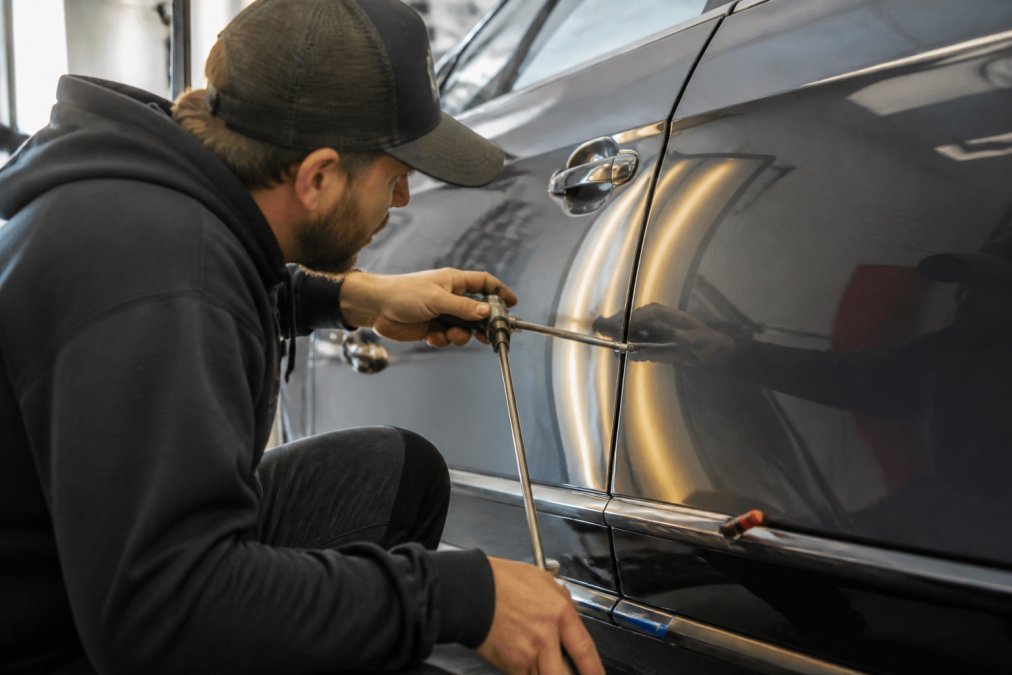
Paintless dent repair sidesteps this problem entirely. Because factory paint and clear coat remain untouched, there's no evidence of repair in the vehicle's history. A new car repaired with PDR looks identical to one that never had damage.
Preserving Structural Integrity and Resale Value
The structural integrity of a new vehicle depends on the factory paint system working as designed. The clear coat protects the base coat from UV damage, oxidation, and contaminants. When traditional body shops remove paint and apply filler, they break that protection chain.
Even high-quality repainting introduces variables. New paint may not perfectly match factory color under certain lighting. Clear coat thickness may differ slightly. Over time, these differences become visible. Insurance adjusters and dealerships notice. Studies on vehicle depreciation consistently show that accident history, even minor cosmetic repairs, reduces resale value by 10-15% or more (peer-reviewed research).
Paintless dent repair eliminates these concerns. The factory finish remains factory, and resale value stays closer to what it would have been without damage.
Avoiding Body Filler and Repainting Damage
Body filler doesn't bond to metal the way paint does. It can crack, shrink, or separate over time, especially in climates with temperature fluctuations. Repainting requires sanding surrounding areas to blend new paint, which removes factory clear coat protection.
For a new vehicle, these risks aren't worth taking. PDR avoids them entirely by keeping the factory finish intact and metal in its original state.
Does Paintless Dent Repair Void Your Car Warranty
Paintless dent repair for new cars does not void your manufacturer warranty when performed by a qualified technician. Your manufacturer warranty covers defects in materials and workmanship. PDR is neither a defect nor poor workmanship, it's a repair method. As long as PDR work doesn't cause additional damage, the warranty remains in effect for all other covered components.
Manufacturer Warranty Protection with PDR
The key to maintaining warranty coverage is documentation. Get a detailed receipt showing what was repaired, the method used, and the technician's credentials. This documentation proves the repair was legitimate and performed professionally.
Manufacturers understand that dents happen. Many dealerships use PDR themselves for pre-delivery vehicle preparation and addressing minor damage during the sales process. If concerned about warranty coverage, contact your dealership or manufacturer directly. They can confirm that PDR won't affect coverage because it's an industry-standard repair method that doesn't compromise vehicle integrity.
Extended Warranties and Coverage Clarity
Extended warranties are separate from manufacturer coverage. Some extended warranty contracts specifically exclude cosmetic repairs or damage from external causes like hail. Read your contract carefully. When purchasing an extended warranty, ask the provider explicitly whether PDR is covered and get the answer in writing.
Types of Damage PDR Can Repair on New Cars
Paintless dent repair works on a specific range of damage types. Understanding what PDR can and cannot repair helps you make the right decision when your vehicle is damaged.
Door Dings, Hail Damage, and Minor Creases
Door dings are PDR's bread and butter. A shopping cart hit, car door opening into your panel, or minor parking lot collision creates localized dents that PDR handles efficiently in 30 minutes to an hour.
Hail damage is more complex but still ideal for PDR. Each dent is individually reshaped using PDR techniques. Every panel retains its factory finish. The disadvantage is that hail damage repair takes time, sometimes several days for extensive damage, because each dent requires individual attention.
Minor creases from objects sliding along the panel are also good PDR candidates. PDR cannot repair sharp creases or damage that has broken the paint. If clear coat is cracked or base coat is exposed, traditional repair is necessary because exposed metal will oxidize. PDR also struggles with damage in extremely limited-access areas. professional paint restoration.
Aluminum and Steel Panel Considerations
Most new vehicles use a mix of steel and aluminum panels. Both materials respond well to PDR, but techniques differ slightly. Steel panels have more elasticity and can be reshaped repeatedly. Aluminum is more brittle and can crack if reshaped too aggressively.
For new vehicles with aluminum panels, choose a technician with experience working on aluminum. 888 PDR works on both steel and aluminum panels, using material-specific techniques to ensure the best results for each vehicle type.
How to Choose a Certified Luxury Car Dent Specialist
Not all PDR technicians are equally skilled. The difference between a certified specialist and an untrained operator can mean the difference between a perfect repair and one that creates new problems.
Technician Certification and Training Standards
The most recognized PDR certification requires documented training hours, skill assessments, and ongoing education. A certified technician has completed formal training and passed evaluations demonstrating competency.
Look for technicians who can provide proof of certification and ask which certification body they're certified through. Experience with your specific vehicle type matters. A technician experienced with luxury vehicles may use different approaches than one who primarily works on standard models. Ask about their experience with your vehicle's make and model and how many similar repairs they've completed.
Evaluating Insurance Claim Management Expertise
If filing an insurance claim, your technician's ability to manage that claim becomes crucial. Ask potential technicians about their insurance claim process. Do they submit estimates directly to insurers? Do they handle supplements if the adjuster finds additional damage? Can they explain how they handle situations where the insurance estimate is lower than their actual cost?
The best PDR shops have established relationships with insurance companies and understand how adjusters evaluate damage. 888 PDR manages insurance claims directly, handling everything from initial estimate through final payment, which eliminates stress for customers and ensures the claim is handled correctly.
Paintless Dent Repair Cost Estimate and Insurance Coverage
Cost is a major consideration for any repair, and understanding what affects pricing helps you evaluate quotes accurately.
What Affects PDR Pricing for New Vehicles
Several factors influence paintless dent repair cost. The extent of damage matters, a single door ding costs far less than hail damage affecting multiple panels. Location of damage affects cost; hard-to-access areas require more time and skill. Vehicle material composition, dent depth and shape, and technician experience level and certifications all influence pricing.
For specific pricing on your repair, contact 888 PDR for a free inspection and estimate. Pricing varies based on specific damage and vehicle type.
Insurance Claims and Deductible Handling
When filing an insurance claim, your deductible typically applies. Many insurance policies have special provisions for hail damage, and some allow the deductible to be waived under certain circumstances. A skilled PDR technician can help navigate these nuances and explain your coverage.
Some technicians will work with you on deductible management, helping you understand options for minimizing out-of-pocket cost.
Turnaround Time and Lease Return Implications
For many new car owners, turnaround time is critical. Most door dings and minor damage can be repaired within a day or two. Hail damage typically takes 3-7 days depending on the number of dents and shop workload. PDR is inherently faster than traditional repair because there's no waiting for paint to dry or filler to cure.
Many PDR shops offer vehicle pickup and delivery. 888 PDR includes pickup and delivery service, so customers can continue their day without disruption.
Lease-End Inspections and Excess Wear and Tear
If leasing your vehicle, lease-end inspections are critical. Lease companies charge fees for damage beyond normal wear and tear. Paintless dent repair solves this problem. Because factory finish is preserved and there's no evidence of repair in vehicle history, lease-end inspections are less likely to result in charges. The vehicle looks like it was never damaged.
DIY vs. Professional PDR: Why Professional Matters for New Cars
While DIY dent repair videos show people using suction cups and heat guns, these methods carry significant risks for new vehicles.
Specialized Tools and Technician Skill Requirements
Professional PDR requires specialized tools that aren't available to consumers. Rod tools, glue pulling systems, and precision lighting equipment cost thousands of dollars. Using these tools correctly requires training and experience that PDR technicians develop over months or years.
When attempting DIY dent repair, you're working without this expertise. You might succeed on very shallow dings but risk creating new damage, cracking the clear coat, or creating misshapen panels. For a new vehicle, professional PDR costs less than traditional repair and takes only a few hours. DIY attempts that go wrong can result in needing traditional repair anyway, which costs significantly more.
Risks of DIY Attempts on Factory Paint
The factory paint on a new car is precious. Once damaged, restoring it requires repainting, which compromises resale value and warranty coverage.
DIY dent removal methods carry multiple risks. Suction cups can damage clear coat if applied incorrectly. Heat guns can cause paint to bubble or peel. Improvised tools can slip and create new dents. A professional technician has insurance and warranty. If something goes wrong, you have recourse. With DIY repair, you're responsible for damage costs.
| Consideration | DIY Approach | Professional PDR |
|---|---|---|
| Specialized equipment | Not available | Professional-grade tools |
| Training and skill | Minimal to none | Certified technician expertise |
| Clear coat risk | High | Minimal with proper technique |
| Warranty coverage | Potentially voids | Maintains warranty |
| Cost if repair fails | Expensive repainting needed | Covered by warranty |
| Turnaround time | Unpredictable | Fast and reliable |
| Resale value impact | Potential damage | Factory finish preserved |
Protecting your new vehicle's factory finish is protecting your investment. Paintless dent repair for new cars preserves original paint, maintains warranty coverage, and keeps resale value intact. When damage occurs, professional PDR is the fastest, safest, and most cost-effective solution.
888 PDR specializes in protecting new vehicles through expert paintless dent repair. With a lifetime warranty on all repairs, direct insurance claim management, and vehicle pickup and delivery service, we handle the entire process so you don't have to. Learn more about protecting your vehicle's factory finish. Get a free inspection and estimate, call (469) 284-0336 or request a quote online. Your new car deserves protection from the specialists who understand what makes factory paint irreplaceable.
Frequently Asked Questions
How much does paintless dent repair cost for a new car?
Paintless dent repair pricing for new cars depends on the extent of damage, panel location, vehicle make and model, and whether hail damage involves multiple dents. Rather than estimate costs, request a free inspection and quote. Many insurance policies cover PDR with your deductible, and some shops handle full claim management so you may not pay out of pocket.
Does paintless dent repair void your car's factory warranty?
No. Paintless dent repair does not void your manufacturer's warranty because PDR preserves the original factory paint and does not involve welding, repainting, or structural alterations. Professional PDR shops often provide their own lifetime warranty on repairs, giving you additional protection beyond the manufacturer's coverage.
Is paintless dent repair better than traditional body shop repair for new cars?
Yes, for minor to moderate dents on new vehicles. PDR preserves your factory finish and original paint thickness, protecting resale value and maintaining structural integrity. Traditional body shops use body filler, sanding, and repainting, which can affect paint quality and future repairs. PDR is also faster and more cost-effective for hail damage, door dings, and creases.
Will insurance pay for paintless dent repair on a new car?
Most insurance carriers cover paintless dent repair, especially for hail damage claims. Coverage depends on your policy and deductible. Professional PDR shops typically manage the entire insurance claim process, handling first notice of loss, supplements, and final payment. Contact your insurer or a certified PDR specialist to confirm coverage and discuss deductible options.
This article was written using GrandRanker