
Table of Contents
- Why Fort Worth Hail Season Sends Thousands of Cars to the Shop
- What Auto Hail Repair in Fort Worth Actually Involves
- The Hail Damage Insurance Claim Process in Texas
- How Long Does PDR Take for Hail Damage?
- Benefits of Paintless Dent Repair vs Body Shop Repairs
- Choosing an Auto Hail Repair Shop in Fort Worth
- Frequently Asked Questions
Last Updated: September 16, 2026
Why Fort Worth Hail Season Sends Thousands of Cars to the Shop
Fort Worth sits in the heart of one of the most hail-prone corridors in the United States, and every spring the same scene plays out across Tarrant County: parking lots full of dimpled hoods, shattered windshields, and drivers staring at damage they never saw coming. At 888 PDR, we've watched this pattern repeat for years, and the volume of cars needing auto hail repair Fort Worth wide is not a fluke. It's geography, storm timing, and the way North Texas weather systems collide over the metroplex.
The National Weather Service tracks severe hail events across the region each year, and Texas consistently ranks among the states with the highest number of large-hail reports, per NOAA Storm Prediction Center severe weather data. Fort Worth's position between the dry line to the west and Gulf moisture to the southeast creates the exact atmospheric setup that produces golf-ball and baseball-sized hail. When those storms roll through, they don't discriminate. They hit dealership lots, apartment complexes, and residential driveways alike.
That's the part most guides skip. Hail season isn't a single event you plan around. It's a months-long window where your car is exposed every time you park it outside.
What Auto Hail Repair in Fort Worth Actually Involves
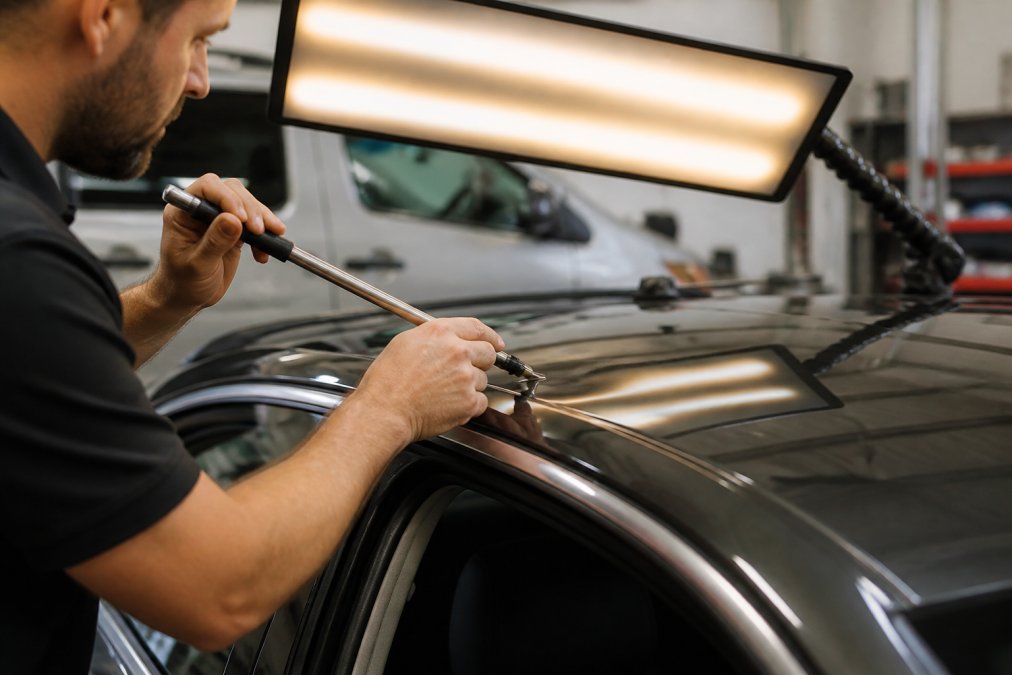
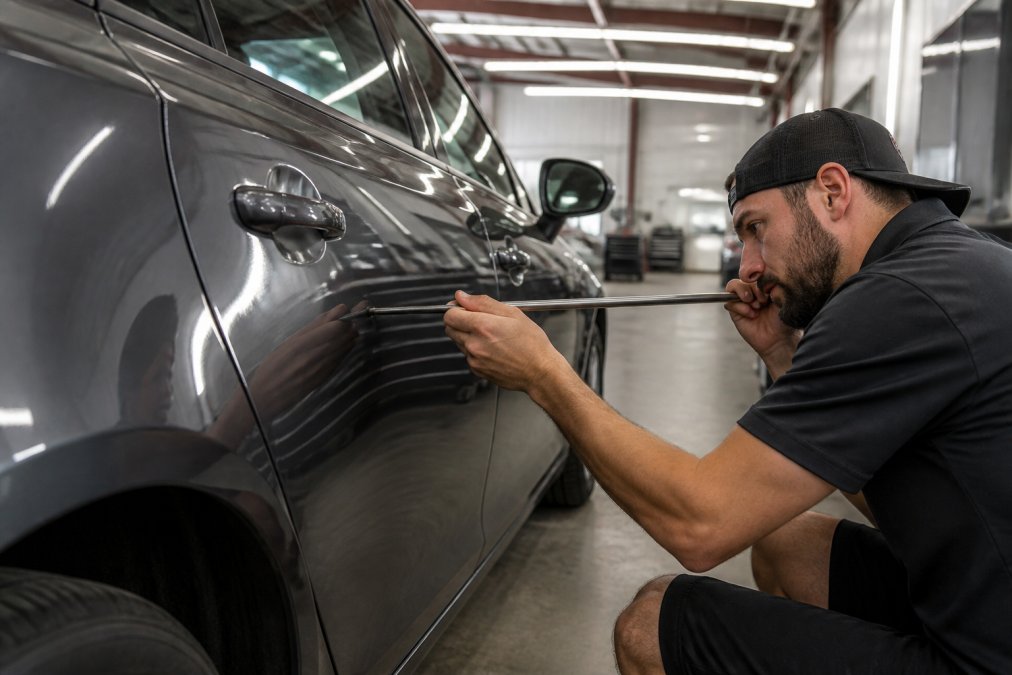
Auto hail repair is the process of removing dents caused by falling hail from a vehicle's body panels, roof, hood, and trunk without replacing or repainting those panels. The most common method is paintless dent repair (PDR), which uses specialized rods and tools to massage the metal back to its original shape from behind the panel.
The PDR Process, Step by Step
The PDR workflow follows a consistent sequence, and understanding it helps you know what you're paying for:
- Damage assessment - Every panel is inspected under specialized lighting to map each dent
- Access preparation - Technicians remove interior trim or use access points to reach behind panels
- Dent mapping - Each dent is marked and categorized by size, depth, and location
- Metal manipulation - Rods push the metal from behind while a technician works the surface
- Finishing - Precise tapping and blending brings the panel back to factory contour
- Final inspection - The vehicle is checked under the same lighting used for the initial assessment
A common mistake is assuming all dents are equal. A shallow dent on a flat door panel might take minutes. A sharp dent on a body line or near a seam can take considerably longer because the metal has stretched and the structure is more complex.
When PDR Is Not Enough
PDR works on the majority of hail damage, but it has limits. Panels with cracked paint, severely stretched metal, or damage along sharp creases may require conventional bodywork. The same applies when hail has punctured the metal or when the dent sits directly on a structural seam.
The Hail Damage Insurance Claim Process in Texas
The hail damage insurance claim process Texas drivers navigate starts with a single phone call to your carrier. From there, the sequence is predictable:
- File a first notice of loss with your insurer
- Schedule an adjuster inspection, either at your home or a shop
- Receive the initial estimate, which covers visible damage
- Authorize repairs once you agree with the scope
- Let the shop file a supplement if hidden damage is found during teardown
That last step is where claims go wrong. The initial adjuster estimate only covers what's visible from the outside. Once panels come apart, technicians often find additional dents, broken clips, or damage behind trim that wasn't in the original write-up. A supplement request documents that additional damage and asks the insurer to cover it.
At 888 PDR, we handle this entire sequence for our customers, from the first notice of loss through the final supplement and payment. That matters because supplement paperwork is where most delays happen, and a shop that doesn't manage claims directly leaves you stuck in the middle.
How Long Does PDR Take for Hail Damage?
Most hail damage repairs take between one and five days, depending on the number of dents and the size of the vehicle. A light hit with a dozen dents on a sedan might be finished in a single day. A severe storm that pelted every panel on an SUV can take a week or more, especially during peak season when shops are backed up.
Here's the part nobody tells you: timing depends as much on shop capacity as on your car. After a major hailstorm, every repair facility in the metroplex fills up within days. The shops that deploy additional crews and work extended hours clear their backlog faster. If turnaround speed matters to you, ask upfront how many vehicles are ahead of yours and whether the shop brings in storm response teams.
Benefits of Paintless Dent Repair vs Body Shop Repairs
The core advantage of PDR over traditional bodywork comes down to one thing: your factory finish stays intact. Traditional repair involves sanding, filling, priming, and repainting the damaged panel. PDR skips all of it by working the metal from behind.
| Factor | Paintless Dent Repair | Traditional Body Shop |
|---|---|---|
| Factory finish | Preserved | Sanded and repainted |
| Resale value | Maintained | Commonly flagged on inspection |
| Turnaround time | 1-5 days typical | Often 1-2 weeks |
| Filler used | None | Body filler and primer |
| Paint matching risk | None | Possible color mismatch |
| Best for | Hail dents, door dings, creases | Cracked paint, stretched metal, collision damage |
Choosing an Auto Hail Repair Shop in Fort Worth
Picking a shop is where most drivers make their biggest mistake. They call the first number they see, hand over the keys, and hope for the best. The better approach is to treat it like hiring anyone else to work on something expensive.
What to Ask Before You Hand Over Your Keys
Run through this checklist before committing to any shop:
- Do you handle the insurance claim from start to finish, including supplements?
- Is your warranty written, and what does it cover?
- Do you offer vehicle pickup and delivery?
- How many cars are currently ahead of mine?
- Will you provide a rental or arrange rental assistance?
- Can I see the facility and meet the technicians?
- Is the estimate free, and is it binding?
888 PDR operates a 25,000 sq ft facility on LBJ Freeway in Dallas, serves the entire DFW metroplex including Fort Worth, and backs every repair with a lifetime warranty. We've handled claims for more than 3,500 customers, and we work directly with all insurance carriers so you're not chasing paperwork on your own.
Frequently Asked Questions
Does insurance cover hail damage in Fort Worth?
Yes, if you carry comprehensive coverage on your policy. Comprehensive coverage is what pays for hail damage, not collision coverage, and Texas requires insurers to offer it. Most Fort Worth drivers file a claim, pay their deductible, and the insurer covers the rest of the auto hail repair cost. A shop that handles the hail damage insurance claim process in Texas from first notice of loss through final payment removes most of the paperwork burden from you.
How long does PDR take for hail damage?
It depends on dent count and panel access. A handful of dents can be finished in a few hours, while a car with hundreds of dents across the roof, hood, and trunk may take several days to a week. Larger storms create backlogs at every shop, so scheduling matters. Ask for a written timeline during your free inspection, and confirm whether rental assistance is available while your car is in the bay.
Will hail damage affect my car's resale value?
Unrepaired hail damage will. Dents show up in a buyer's inspection and in vehicle history reports if a claim was filed, which gives buyers room to negotiate down. Paintless dent repair preserves your factory finish because no filler or repainting is involved, so the panels stay original. That original finish is one of the benefits of paintless dent repair vs body shop work, and it protects resale value far better than a repainted panel.
Is it worth fixing minor hail dents on my car?
Small dents are usually worth repairing, especially on newer vehicles. Hail dents on the roof and hood are the first thing a buyer or trade-in appraiser notices, and they can rust if the paint has cracked. PDR costs less than conventional bodywork for the same damage and keeps your panels original. Get a free inspection first so you know the dent count before deciding.
Hail damage is stressful, and the repair process shouldn't add to it. If you're staring at a dimpled hood and dreading the insurance back-and-forth, 888 PDR takes that off your plate. We manage the claim from first notice of loss through final payment, preserve your factory finish with paintless dent repair, and offer vehicle pickup, delivery, and rental assistance so your schedule doesn't grind to a halt. Get started with 888 PDR and get your car back looking like the storm never happened.