Table of Contents
- What Is Paintless Dent Repair?
- How Traditional Bodywork Works
- PDR vs Body Filler and Painting: Key Technical Differences
- Paintless Dent Repair Cost 2026: What You'll Actually Pay
- How Long Does Paintless Dent Repair Take?
- When to Choose PDR vs Traditional Bodywork
- Impact on Resale Value and Factory Finish
- Conclusion
Last Updated: August 29, 2026
What Is Paintless Dent Repair?
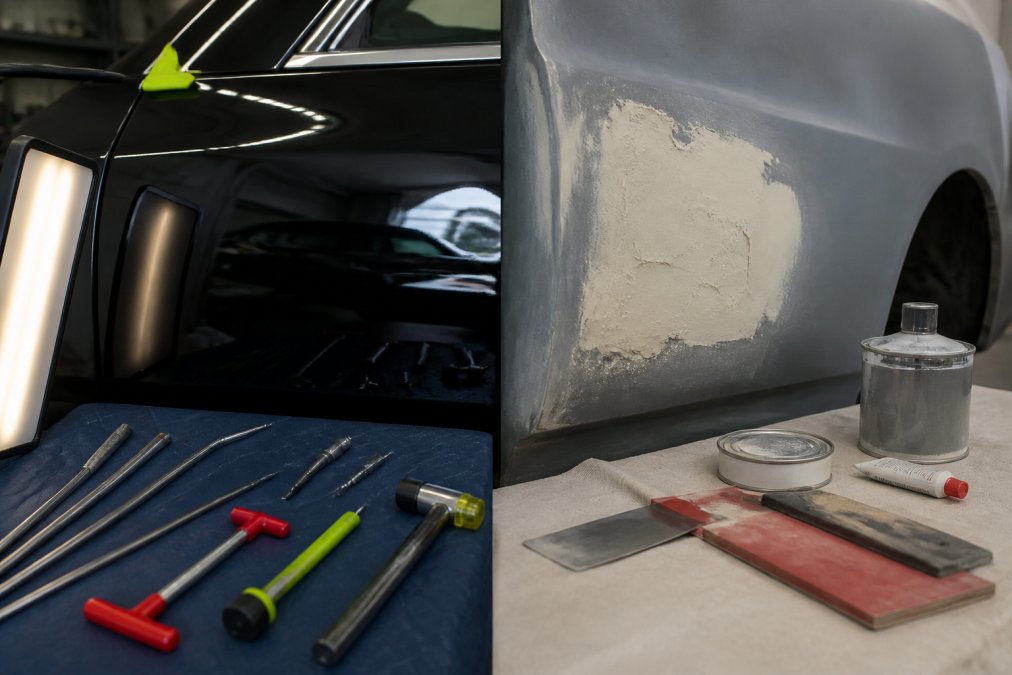
Paintless dent repair is a technique that removes dents, dings, and creases from a vehicle's body without using fillers, sanding, or repainting. Instead of filling damage with body filler and applying new paint, PDR specialists use precision tools, rods, hooks, and specialized equipment, to gently massage the metal back into its original shape. The process relies on metal memory, the natural ability of automotive steel and aluminum to return to its original form when properly manipulated.
At 888 PDR, we've perfected this approach to preserve your vehicle's factory finish and resale value. The technique works best on shallow dents, door dings, hail damage, and creases where the paint hasn't been broken. Because no paint is applied, the original factory coating remains intact, a critical advantage for vehicle owners concerned about long-term durability and resale.
The core advantage of paintless dent repair is speed and cost-effectiveness compared to traditional bodywork. A typical door ding or small hail dent can often be repaired in hours rather than days. The process also eliminates the environmental impact of paint overspray and chemical waste generated by traditional repair methods.
How Traditional Bodywork Works
Traditional bodywork involves filling dents with body filler (commonly called Bondo), sanding the repair smooth, and then repainting the affected area to match the factory finish. The process begins with removing any loose material and preparing the damaged surface. A technician then applies body filler, a lightweight compound that hardens quickly, directly into and over the dent.
Once the filler hardens, typically within minutes to hours depending on the product used, the technician sands it down to match the contour of the surrounding panel (peer-reviewed research). This step requires precision and experience to ensure a seamless transition between the repair and the original surface. After sanding, the area is primed and painted to match the vehicle's factory color and finish.
The challenge with traditional bodywork lies in paint matching. Modern vehicles use complex clear coat systems and specialized pigments that can be difficult to replicate exactly. Even a skilled painter may struggle to achieve a perfect match, especially on metallic or pearl finishes. Additionally, the repaired area often has a different texture or sheen than the surrounding factory paint, which can be visible under certain lighting conditions.
Traditional bodywork is necessary when damage is too severe for PDR, deep creases, frame damage, or any situation where the paint has been broken or the metal has been stretched beyond its ability to return to original shape. This method also works on materials like plastic bumpers and composite panels where PDR isn't applicable.
PDR vs Body Filler and Painting: Key Technical Differences
The fundamental difference between paintless dent repair vs traditional bodywork comes down to how damage is corrected. PDR works with the metal's natural properties; traditional bodywork works against them by adding material and covering the original surface.
In PDR, technicians access the back side of the damaged panel whenever possible, using specialized rods and hooks to apply precise pressure from behind. This approach gradually coaxes the metal back into shape without stretching or weakening it. The metal memory of automotive steel and aluminum allows the material to return to its original form when manipulated correctly (asme.org). The factory finish, the clear coat and paint applied at the manufacturer, remains completely untouched.
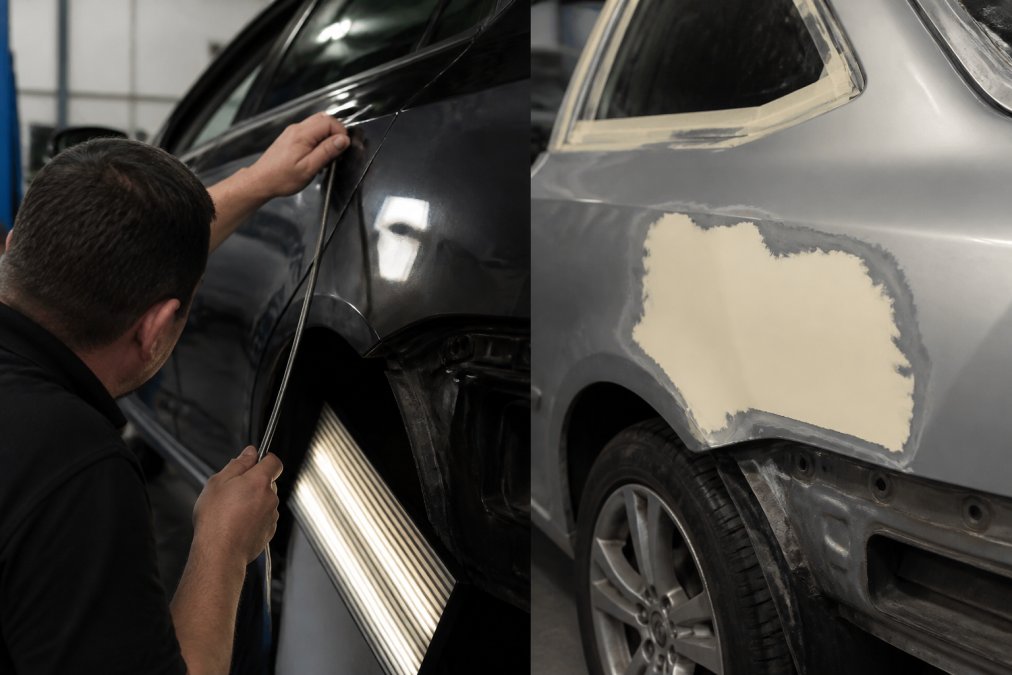
Traditional bodywork, by contrast, adds material to the damaged area. Body filler bonds chemically to the original surface and must be sanded smooth to match the panel's contour. This creates a composite repair, part original metal, part filler compound. The repair is then covered with primer and paint, which means the original factory finish is completely replaced on that panel.
The structural integrity of each method differs significantly. PDR maintains the original metal structure without compromise. Traditional bodywork creates a repair that depends on the adhesion between filler and metal, the quality of the sanding job, and the durability of the paint system applied over it. If any of these elements fail, the repair can deteriorate.
From a resale perspective, paintless dent repair preserves the vehicle's original factory finish, which buyers and appraisers value highly. Traditional bodywork repairs, while sometimes invisible to the naked eye, are documented in the vehicle's history and may lower resale value because they indicate previous damage and non-original components.
Paintless Dent Repair Cost 2026: What You'll Actually Pay
Paintless dent repair pricing depends on several factors: the size and depth of the dent, the location on the vehicle, the material (steel vs. aluminum), and the extent of damage. Small, shallow dents typically cost less than large creases or multiple hail impacts. Aluminum panels, common on newer vehicles and trucks, sometimes require different techniques and may cost more to repair than steel.
For a single door ding or small parking lot dent, many shops charge a flat rate or hourly labor. Hail damage, which involves dozens or hundreds of small dents across multiple panels, is typically quoted based on the total damage assessment. Insurance claims often cover paintless dent repair, especially for hail damage, which means your out-of-pocket cost may be limited to your deductible.
Traditional bodywork costs significantly more because of the labor-intensive process and materials involved. Body filler, primer, paint, and the time required for sanding, painting, and curing all add to the final bill. A single-panel repair requiring traditional bodywork can easily cost two to three times more than a PDR repair for similar-sized damage (aaa.com).
When comparing costs, consider the long-term value. PDR preserves your factory finish, which maintains resale value. Traditional bodywork repairs, while sometimes necessary, create a permanent record that may affect how future buyers or dealers appraise your vehicle.
How Long Does Paintless Dent Repair Take?
One of the most compelling advantages of paintless dent repair is speed. A single door ding or small hail dent can often be repaired in one to two hours. Larger areas with multiple dents may take a full day, but the work is still significantly faster than traditional bodywork.
The timeline for PDR depends on accessibility, dent complexity, and the technician's experience. Some dents are easily accessible from the back of the panel, allowing quick repair. Others require more time because the technician must work around structural components or use creative access points. Hail damage, which involves many small dents across a large area, takes longer but is still typically completed within a few days rather than weeks.
Traditional bodywork requires considerably more time. After the initial damage assessment, the repair process includes removing damaged components, filling and sanding the area, applying primer, painting, and allowing time for curing between each step. A single-panel repair can take a week or longer, depending on the shop's schedule and the complexity of paint matching.
For vehicle owners who need their car back quickly, whether for work, daily commuting, or travel, paintless dent repair offers a significant advantage. 888 PDR offers vehicle pickup and delivery service, which means you don't lose time arranging transportation while your vehicle is being repaired.
When to Choose PDR vs Traditional Bodywork
Choosing between paintless dent repair vs traditional bodywork depends on the type and severity of damage, your priorities regarding factory finish preservation, and your timeline.
Choose PDR when:
- Damage is shallow to moderate and the paint is not broken
- You have hail damage, door dings, or creases
- Preserving the factory finish and resale value is a priority
- You need the repair completed quickly
- You want to avoid the environmental impact of paint overspray and chemical waste
Choose traditional bodywork when:
- The paint is cracked, chipped, or broken
- The dent is too deep for metal memory to correct
- The metal has been stretched or warped beyond repair
- The damage involves multiple layers or structural components
- The vehicle has pre-existing paint damage in the same area
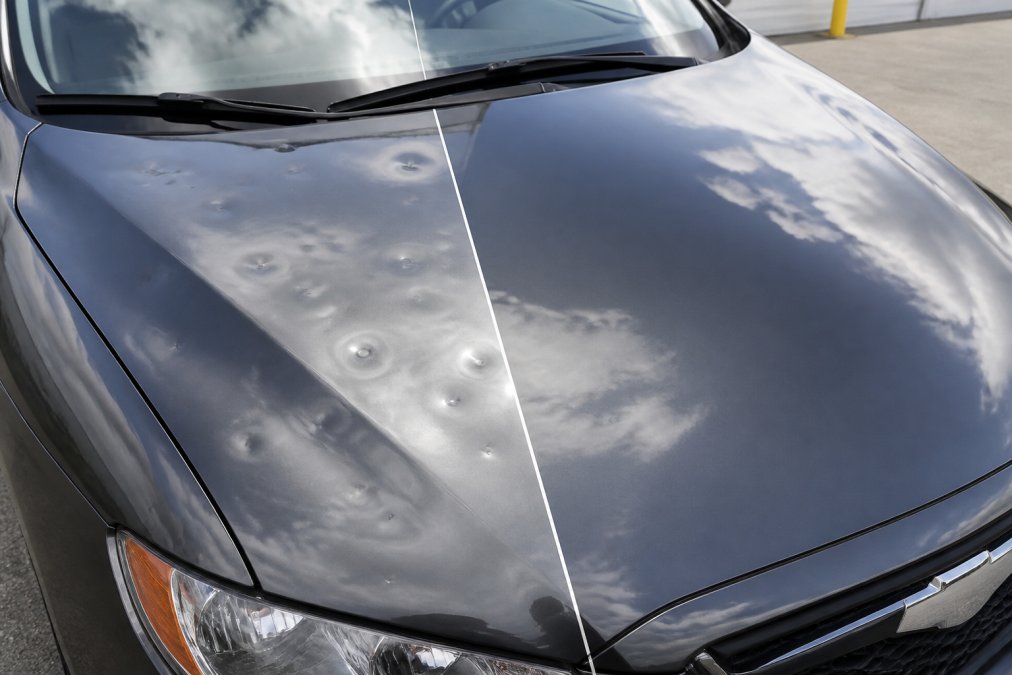
A professional inspection is the best way to determine which method suits your specific damage. Many shops, including 888 PDR, offer free inspections where a technician assesses the damage and recommends the most appropriate repair method. This ensures you're not paying for unnecessary work or choosing a method that won't fully address the problem.
:::warning Attempting DIY paintless dent repair without proper training and tools can cause more damage. The precision required to manipulate metal safely is significant, and improper technique can crack the paint, stretch the metal further, or create new dents. Professional equipment and experience matter.
Impact on Resale Value and Factory Finish
The resale value of a vehicle is heavily influenced by its condition and history. A car with original factory paint and no documented repairs commands a premium in the used car market. Buyers and dealerships recognize that original factory finishes indicate the vehicle has been well-maintained and hasn't undergone significant damage.
Paintless dent repair preserves this advantage because it leaves the factory finish completely intact. From a resale perspective, a PDR repair is invisible, there's no documentation of damage, no record of non-original paint, and no concerns about future durability. The vehicle retains its original factory finish and the value that comes with it.
Traditional bodywork repairs, while sometimes necessary, create a permanent record. When a vehicle is appraised or inspected by a potential buyer, evidence of previous repairs can lower the estimated value. Even a perfectly executed traditional repair may be viewed with skepticism because it indicates the vehicle has sustained damage and been rebuilt. Insurance companies and dealership appraisers factor this into their valuations.
For vehicle owners planning to keep their car long-term, this distinction may seem less important. But for those who trade in or sell within a few years, the resale impact can be substantial. A vehicle with multiple traditional bodywork repairs may lose thousands in resale value compared to one with PDR repairs or no damage history.
The factory finish also has practical durability advantages. Original OEM paint systems are applied in controlled factory environments with precise specifications. Repainted areas, no matter how skillfully done, are applied in shop conditions and may not achieve the same durability or UV protection. Over time, this can lead to fading, peeling, or corrosion in the repaired area.
Conclusion
Paintless dent repair and traditional bodywork serve different purposes based on damage severity and your priorities. PDR excels at preserving factory finishes, maintaining resale value, and providing fast, cost-effective repairs for shallow to moderate damage. Traditional bodywork becomes necessary when damage is too severe, the paint is broken, or the metal has been compromised beyond PDR's capability.
For vehicle owners in the Dallas-Fort Worth area or Scottsbluff, Nebraska, with hail damage, door dings, or creases, 888 PDR provides specialized paintless dent repair with full insurance claim management, lifetime warranty coverage, and vehicle pickup and delivery service. Get a free inspection and damage assessment to determine the best repair approach for your specific situation. Our team handles all communication with insurance carriers, manages supplements and final payments, and ensures your vehicle is restored without the stress or hassle of traditional repair shop coordination.
Frequently Asked Questions
Is paintless dent repair cheaper than traditional bodywork?
Paintless dent repair typically costs less than traditional bodywork for shallow dents, dings, and hail damage because it skips the labor-intensive steps of body filler application, sanding, and repainting. Traditional bodywork requires more materials, equipment, and time, which increases overall cost. However, pricing depends on damage severity, vehicle type, and location. For deep creases or structural damage, traditional repair may be your only option, so total cost comparison varies case by case. Request a free inspection to get an accurate quote for your specific damage.
Does paintless dent repair affect resale value?
No, paintless dent repair actually preserves resale value better than traditional bodywork. PDR maintains your vehicle's original factory finish and OEM paint, which buyers and appraisers value highly. Traditional bodywork involves repainting, which can create color-matching inconsistencies and raises questions about the vehicle's history. When you keep the factory finish intact, your car retains its authenticity and appeal to future buyers, making PDR the smarter choice if resale value matters to you.
When is traditional bodywork necessary instead of paintless dent repair?
Traditional bodywork becomes necessary when damage is severe: deep creases that metal memory cannot restore, paint damage or scratches, frame damage, or dents in areas PDR tools cannot access. If the clear coat is compromised or the panel has sharp creases rather than shallow deformations, body filler and repainting are required. A professional technician can assess your damage and recommend the right method. Some vehicles with aluminum panels or complex geometry may also require traditional repair depending on dent location and depth.
How does repair time compare between paintless dent repair and traditional bodywork?
Paintless dent repair is significantly faster. Minor door dings and shallow dents typically take hours, while hail damage on a full vehicle may take a few days. Traditional bodywork takes substantially longer because it involves multiple stages: dent filling with body filler like Bondo, sanding, priming, painting, and curing time for paint. A traditional repair that takes weeks for PDR might take weeks for traditional methods. If you need your vehicle back quickly, PDR is the clear winner for eligible damage types.
Will my insurance company cover paintless dent repair?
Most insurance companies cover paintless dent repair for hail damage, door dings, and collision damage. Many insurers actually prefer PDR because it costs less and preserves your vehicle's original finish. Your deductible still applies, but PDR often comes in below or near your deductible amount, especially for minor damage. When you file a claim, your insurer will typically send an adjuster to assess the damage and approve the repair method. Working with a shop that handles insurance claims directly can simplify the process and ensure your claim is managed correctly from start to finish.
This article was written using GrandRanker