

Table of Contents
- Why You Might Owe a Deductible When the Damage Isn't Your Fault
- The Hail Damage Insurance Claim Process 2026: Where Deductibles Apply
- Legal Way #1: Subrogation and Getting Your Deductible Back
- Legal Way #2: Paintless Dent Repair Insurance Coverage and Deductible Waivers
- Waiving Insurance Deductible Legalities: What Shops Can and Can't Do
- When It's Smarter to Skip the Claim Entirely
- How to Avoid Paying Car Insurance Deductible: Your Action Plan
- Conclusion: Get Professional Help With Your Claim
- Frequently Asked Questions
Last Updated: September 8, 2026
A car insurance deductible is the amount you pay out of pocket before your collision or comprehensive coverage pays for the rest of a claim. You can often avoid paying car insurance deductible costs entirely through legal avenues like subrogation and specific policy provisions.
Who pays the deductible depends on the type of claim, the state you live in, and whether your insurer can recover costs from another party.
Why You Might Owe a Deductible When the Damage Isn't Your Fault
In a collision where the other driver is clearly at fault, their liability insurance should cover your repairs, and your deductible typically does not apply. However, when damage comes from hail, a falling tree limb, or a hit-and-run, you file under your own comprehensive coverage, which almost always carries a deductible.
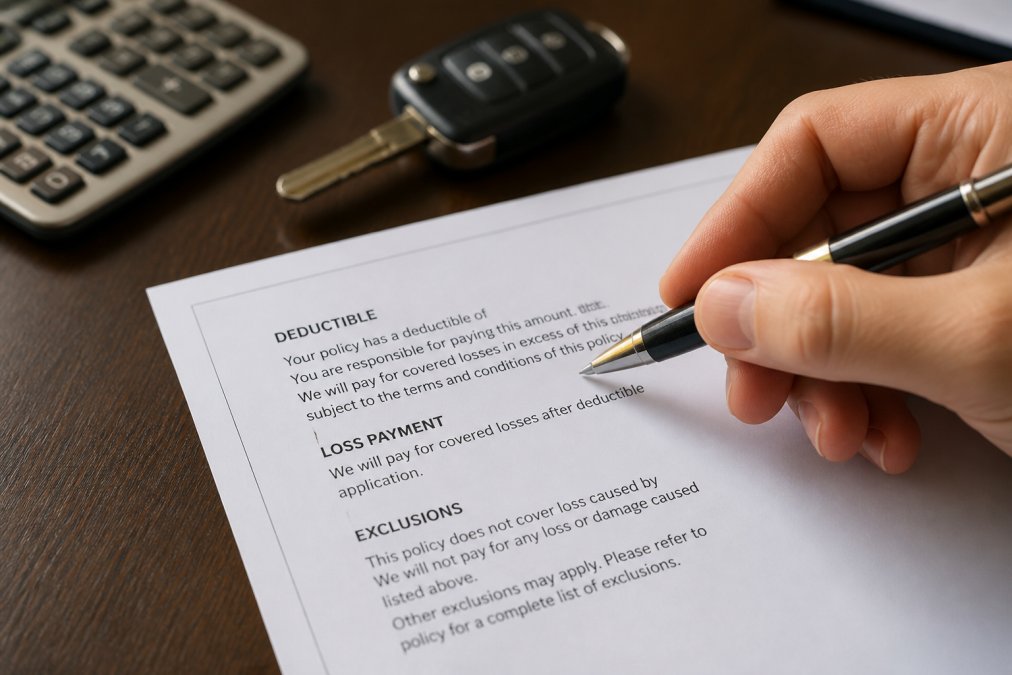
Because there is no other driver's insurance to tap, your insurer looks to you for the deductible amount first. The same logic applies to collision coverage when you are at fault.
The Hail Damage Insurance Claim Process 2026: Where Deductibles Apply
The hail damage insurance claim process 2026 follows a predictable path, and the deductible applies at the payment stage, not the filing stage.
The hail damage insurance claim process 2026 includes several points where that amount can be reduced or recovered. One path is a deductible waiver, which some insurers offer for windshield and glass damage under specific state laws.
Legal Way #1: Subrogation and Getting Your Deductible Back
Subrogation is the legal process where your insurance company pursues the at-fault party's insurer to recover the money it paid on your claim. When subrogation succeeds, your deductible is often returned to you.
How Subrogation Actually Works
When you file a claim under your own collision coverage, your insurer pays for your repairs minus your deductible. Your insurer then has the legal right to "step into your shoes" and pursue the at-fault driver's insurance company to recover the full amount it paid, including your deductible.
The process follows a predictable timeline:
- Day 1-7: Claim filed and investigation begins. Your insurer contacts the at-fault party's insurer, exchanges police reports, and gathers evidence.
- Day 7-30: Liability determination. The at-fault insurer either accepts or disputes liability. If they accept, the subrogation process moves forward. If they dispute, it can go to arbitration.
- Day 30-90: Payment and reimbursement. Once liability is accepted, the at-fault insurer issues payment to your insurer. Your insurer then issues a separate check to you for your deductible portion.
According to the Insurance Information Institute's guide on subrogation, the process can take weeks or months, but policyholders who stay engaged with their claims adjuster see faster resolutions. The average subrogation claim resolves in 30 to 60 days when liability is clear, but can stretch to six months or more when the other driver disputes fault.
Your Role in the Subrogation Process
Your cooperation directly affects the outcome. Here's what you must do to protect your deductible recovery:
- Report the accident promptly. Report within 24 hours if possible.
- Provide complete documentation. This includes the police report number, the other driver's insurance information, photos of the damage, and contact information for any witnesses.
- Give a recorded statement if requested. Refusing to cooperate can delay or jeopardize the subrogation claim.
- Respond to your adjuster's questions quickly. Every day you delay responding is a day the other insurer can use to dispute liability.
- Ask about your deductible recovery status. At the 30-day mark, call your adjuster and ask specifically: "Has subrogation been initiated, and when can I expect my deductible to be reimbursed?"
What Happens When the At-Fault Driver Is Uninsured or Underinsured?
If the at-fault driver has no insurance, your uninsured motorist (UM) coverage steps in. Rules vary significantly by state:
- In some states, your UM coverage has its own deductible, which may be different from your collision deductible.
- In other states, UM coverage pays your collision deductible as part of the claim.
- In a few states, UM coverage is not available for property damage at all, leaving you to pursue the driver directly in small claims court.
If the at-fault driver is underinsured, your underinsured motorist coverage may cover the gap. Your insurer may still pursue subrogation against the at-fault driver's policy, but recovery is limited to their policy limits.
The Hit-and-Run Problem
If the other driver is never identified, you cannot pursue subrogation. Your claim falls under your collision coverage (if the car was struck) or comprehensive coverage (if it was vandalism). Your deductible applies and is not recoverable.
Some states have specific provisions for hit-and-run accidents under uninsured motorist coverage, treating the hit-and-run driver as an uninsured motorist. Check your policy declarations page to see if you have UM coverage and what its deductible is.
Small Claims Court: The Last Resort
If your insurer's subrogation fails because the at-fault driver's insurer disputes liability, you have one more option: file a claim in small claims court directly against the at-fault driver. Most states have small claims limits between $2,500 and $10,000, which covers most deductible amounts.
To succeed, you'll need the police report showing the other driver was cited, photos of the damage, your repair estimate or receipt, and a copy of your insurance claim showing your deductible amount. A judgment in your favor gives you a legal claim against the driver, though collecting can be difficult if they have no assets.
State-Specific Subrogation Rules
Subrogation rules vary by state, and some states have specific protections for policyholders:
- No-fault states (Florida, New York, Michigan, and others) have different subrogation rules because each party's insurer pays their own policyholder's damages regardless of fault. In these states, your deductible may not be recoverable through subrogation unless your damages exceed a certain threshold.
- Comparative fault states (California, Texas, and most others) allow subrogation only to the extent the other driver was at fault. If you were 20% at fault, you may only recover 80% of your deductible.
Subrogation is not automatic. It requires your active participation, clear documentation, and a willingness to ask the right questions.
Legal Way #2: Paintless Dent Repair Insurance Coverage and Deductible Waivers
Paintless dent repair insurance coverage is a specialized area where deductibles can sometimes be avoided entirely. Many PDR shops work directly with insurance carriers.
When a shop submits a supplement showing the actual repair cost exceeds the initial estimate, the additional approved amount can sometimes cover the deductible portion, dropping your out-of-pocket expense to zero.
Ask your repair shop directly whether they will submit a supplement to cover your deductible. Shops that handle hundreds of hail claims per year know exactly how to phrase the request to get approval. If the shop hesitates or gives a vague answer, that is a red flag.
Waiving Insurance Deductible Legalities: What Shops Can and Can't Do
Waiving insurance deductible legalities are stricter than most consumers realize. In many states, a repair shop cannot simply "eat" your deductible as a marketing tactic, because that practice constitutes insurance fraud.
What shops can legally do is negotiate the repair price down to a level where the deductible becomes irrelevant. They can also identify additional damage during the repair process and file a supplement, which is a legitimate adjustment to the claim. The line between legal negotiation and fraud comes down to whether the insurer is charged more than the actual repair cost. For a clear explanation of these rules, the National Association of Insurance Commissioners' consumer resources outline what constitutes proper claim handling versus fraudulent activity.
When It's Smarter to Skip the Claim Entirely
Sometimes the smartest financial move is not filing a claim at all. The decision isn't just about whether the repair cost exceeds your deductible, it's about the total long-term cost of that claim, including the very real possibility of a premium increase at renewal.
The Out-of-Pocket Threshold: A Simple Calculation
To determine if you should file a claim, calculate your personal out-of-pocket threshold:
- Estimate your potential premium increase. A common rule of thumb is to expect a 20% to 40% increase on your collision and comprehensive coverage for three to five years after an at-fault claim. For a policy costing $1,200 per year, that's an extra $240 to $480 per year, or $720 to $2,400 over three years.
- Add your deductible to that number. This gives you the true total cost of filing a claim.
- Compare that total to the repair cost. If the repair cost is lower than the total cost of filing, you should pay out of pocket.
For example, if your deductible is $1,000 and your repair estimate is $1,200, filing a claim means you pay $1,000 out of pocket anyway. Over three years, that claim could cost you $1,720 to $2,440 in total. Paying the $1,200 repair bill directly saves you $520 to $1,240.
The Claim-Free Discount Factor
Beyond the base premium increase, consider your claim-free discount. Most major insurers offer a discount of 10% to 25% for policyholders who have been accident-free for three to five years. A single claim resets that clock.
Consider this scenario: You have a $500 deductible and a $600 repair bill. You've had no claims in five years and receive a 20% claim-free discount on your $1,500 annual premium, saving you $300 per year. Filing this claim means you pay $500 out of pocket and lose that $300 discount for the next three to five years, a total cost of $1,400 to $2,000. Paying the $600 repair bill directly is clearly the smarter move.
A Practical Decision Framework
A practical rule is to get a repair estimate before contacting your insurer. Most PDR shops offer free inspections, so you can learn the actual damage cost without any obligation.
| Repair Cost vs. Deductible | Recommended Action | Why |
|---|---|---|
| Repair cost is less than your deductible | Pay cash, skip the claim | Filing a claim means you pay the full repair cost anyway, plus you risk a premium increase. |
| Repair cost is 1x to 2x your deductible | Get a written estimate and run the numbers | Calculate your potential premium increase over 3-5 years. If it exceeds the difference, pay cash. |
| Repair cost is more than 2x your deductible | File the claim | Your out-of-pocket cost is capped at the deductible, and the claim payout will likely exceed any premium increase. |
| Damage is not your fault (other driver identified) | File the claim | Your deductible should be recoverable through subrogation, so you're not truly paying it. |
The Hidden Cost of Multiple Claims
There's another factor most guides miss: the compounding effect of multiple claims. Your first claim might increase your rate by 15%, but a second claim within a short period can push you into a higher-risk tier, increasing your rate by 40% or more.
This is why the out-of-pocket threshold isn't just about the current repair. It's about protecting your entire insurance history. A single small claim can have a ripple effect that costs you thousands of dollars over the next five years. According to consumer guidance from the Federal Trade Commission on auto insurance, policyholders should weigh the long-term cost of a premium increase against the immediate benefit of a claim payout. The math almost always favors skipping the claim when the repair cost is less than double your deductible.
When You Should Always File a Claim
There are exceptions where filing is always the right move, regardless of the math:
- The damage exceeds your state's total-loss threshold. If your car is declared a total loss, your insurer pays you the actual cash value minus your deductible. Skipping the claim means you get nothing.
- Another driver is at fault and identified. File the claim. Your insurer will handle the repairs and pursue subrogation to recover your deductible.
- The damage affects your vehicle's safety or drivability. A compromised frame or airbag deployment is not something to ignore. File the claim and get the car properly repaired.
The out-of-pocket threshold isn't a fixed number. It depends on your deductible, your repair estimate, your current premium, your claim-free discount, and your insurer's specific rate increase policies.
How to Avoid Paying Car Insurance Deductible: Your Action Plan
To avoid paying car insurance deductible costs, follow this action plan before you sign anything or authorize repairs.
- Get a free damage inspection from a shop that specializes in your type of damage, whether hail, dents, or collision. Ask for a written estimate.
- Compare the estimate to your deductible. If the estimate is below your deductible, pay cash and skip the claim. If it is above, proceed to step three.
- File your claim and request a specific shop. You have the right to choose where your car is repaired, and your insurer cannot force you to a particular shop.
- Ask the shop to handle the claim end to end. A shop that manages the adjuster appointment, the estimate, and the supplement process reduces the chance of errors that leave you paying more.
- Request a supplement review. If the shop finds additional damage during teardown, it files a supplement with the insurer. This is where deductibles often get covered.
- Confirm the final out-of-pocket amount in writing before the repair begins.
| Step | Action | Best Outcome |
|---|---|---|
| 1 | Free inspection and written estimate | Know the real repair cost |
| 2 | Compare estimate to deductible | Decide whether to file |
| 3 | File claim, choose your shop | Keep control of repair quality |
| 4 | Shop manages the claim process | Fewer errors, faster payment |
| 5 | Supplement filed for hidden damage | Deductible may be covered |
| 6 | Get final cost in writing | No surprise bills |
Conclusion: Get Professional Help With Your Claim
The difference between paying your deductible and keeping that money often comes down to who handles your claim. A shop that understands paintless dent repair insurance coverage, knows how to document damage thoroughly, and has working relationships with insurance adjusters can legally reduce your out-of-pocket cost to zero.
At 888 PDR, we manage the hail damage insurance claim process from first notice of loss through supplement and final payment. Our team works directly with all insurance carriers, provides a lifetime warranty on repairs, and offers vehicle pickup and delivery. If you are facing a deductible you cannot afford, get a free inspection and let us show you what is legally possible before you pay anything out of pocket.
Frequently Asked Questions
What if I can't afford to pay my deductible?
If you cannot afford your car insurance deductible after hail damage, ask your repair shop about payment plans or financing options. Some shops work with third-party financing companies. You can also ask your insurer about a reduced deductible for using their preferred repair shop, though this is not always available. Never skip paying the deductible to save money, as this can delay your claim settlement or result in a denied claim. A reputable paintless dent repair shop can explain your options before work begins.
Why am I paying a deductible if I'm not at fault for the damage?
Your car insurance deductible applies to claims under your own comprehensive or collision coverage, regardless of fault. If a hailstorm damages your car, you file under comprehensive coverage and your deductible applies. However, if another driver caused the damage, their liability coverage should pay, and subrogation can recover your deductible. Your insurer pursues the at-fault driver's insurance company to reimburse you. Keep all documentation and ask your adjuster about the subrogation process.
Is it ever possible to legally waive a car insurance deductible?
Yes, in specific situations. Some states prohibit repair shops from waiving deductibles because it is considered insurance fraud. However, a deductible can be waived legally if your policy includes a waiver endorsement, often for windshield repair. Some insurers waive deductibles for glass damage because replacing a windshield costs less than processing a claim. For hail damage, a shop cannot legally absorb your deductible in most states. Always verify the waiving insurance deductible legalities in your state before agreeing to any arrangement.
How does paintless dent repair affect my insurance deductible?
Paintless dent repair (PDR) does not change your deductible amount, but it can affect your out-of-pocket costs overall. If the damage exceeds your deductible, your insurer pays the claim settlement minus your deductible.
What happens if I don't pay my insurance deductible?
If you do not pay your car insurance deductible, your insurer will not release payment to the repair shop, and your claim will not move forward. The repair shop cannot complete work without final payment from the insurance company. Your claim may eventually be closed as inactive, and you would need to reopen it to proceed. You remain responsible for the deductible under your policy contract. Talk to your adjuster or repair shop about payment options if you are struggling to cover the amount.