
Table of Contents
- Document Your Hail Damage Immediately
- File Your Hail Damage Claim Within the Filing Deadline
- Understanding Your Insurance Claim Deductible for Hail Damage
- How to Deal with Insurance Adjusters for Hail Damage
- Paintless Dent Repair and Insurance Coverage
- Navigating Claim Denials and Appeals
- Dos and Don'ts Throughout Your Hail Insurance Claim
- Conclusion
- Frequently Asked Questions
Last Updated: September 4, 2026
A hailstorm can leave your car looking like a golf ball in minutes, and the confusion that follows often makes the damage worse. Managing a hail insurance claim effectively comes down to timing, documentation, and knowing exactly what your policy covers before you sign anything. At 888 PDR, we handle insurance hail claims daily for vehicle owners across the Dallas-Fort Worth metroplex, and we have seen the same mistakes cost people hundreds of dollars. This guide walks through the entire process, from the first photo you take to the final settlement check, so you can manage hail insurance claims with confidence and avoid leaving money on the table.
The most important thing to understand is that your insurance company is not your adversary, but they also are not looking out for your interests. The policy is a contract, and the claims process is an exercise in proving your loss. The better your documentation and the clearer your understanding of terms like actual cash value versus replacement cost, the smoother your claim will go. Below, we break down each phase of the process and show you exactly what to do, what to say, and where most people stumble.
Document Your Hail Damage Immediately
Start documenting the damage the moment it is safe to go outside, and do not wait for the storm to pass completely before assessing your vehicle. Comprehensive documentation is the foundation of every successful hail damage claim because it creates a timestamped record that supports your version of events. Take photos and videos of every dented panel, the roof, the hood, the trunk lid, and all glass surfaces in bright, natural daylight, and capture close-ups that show the size and depth of each dent.
A common mistake is photographing only the most obvious damage. Hail damage often appears as subtle dimples on horizontal surfaces like the roof and hood, while vertical panels like doors may escape damage entirely. Walk around the entire vehicle systematically and capture every angle, including shots that show the overall scope of damage alongside your license plate for verification. If you have a newer vehicle with a factory finish, emphasize in your photos how the paint is intact, since this matters for paintless dent repair eligibility.
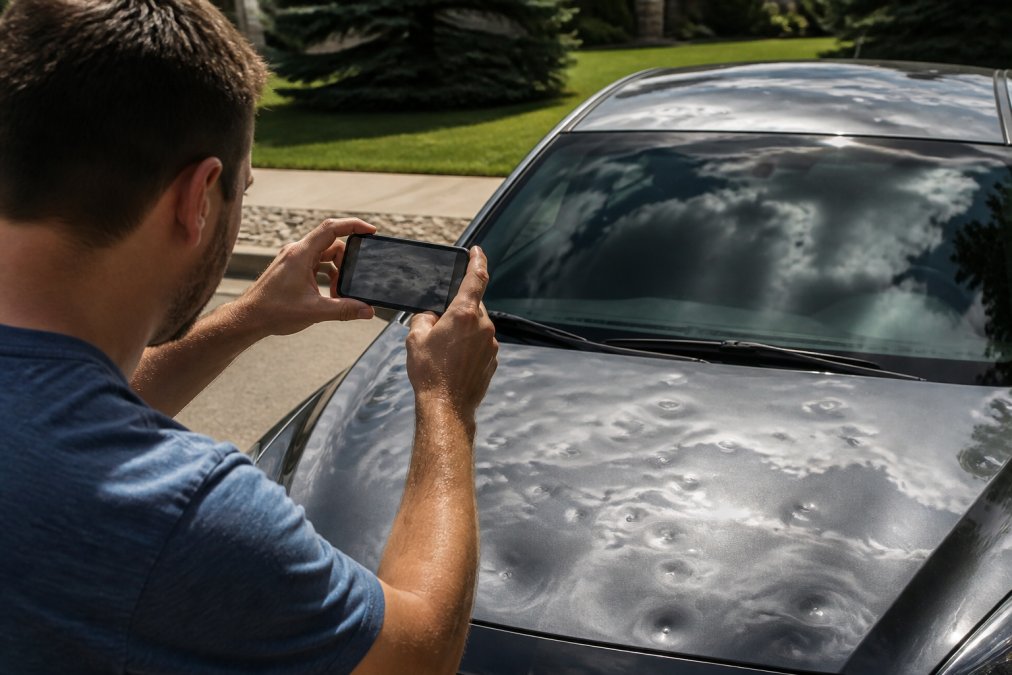
Your photo evidence also protects you during the adjuster's inspection. When the insurance adjuster arrives, they will conduct their own damage assessment, and having your own documentation lets you point out damage they might miss or undervalue. Keep your photos backed up in the cloud and note the date and time of the storm, since most policies require you to report damage within a specific window after the event.
File Your Hail Damage Claim Within the Filing Deadline
Hail damage claim filing deadlines are not negotiable, and missing yours can void your coverage entirely. Most standard auto insurance policies require you to report hail damage within a specific timeframe, often ranging from a few days to a year after the storm, depending on your carrier and state regulations (naic.org). Check your policy documents immediately after the storm to identify your exact deadline, and do not assume you have unlimited time to decide whether to file.
The National Association of Insurance Commissioners advises policyholders to report claims promptly and to keep records of all communications with their insurer. When you call to file your first-party claim, have your policy number ready, describe the date and location of the storm, and state clearly that you have comprehensive coverage for hail damage. The representative will assign you a claim number and schedule an inspection with an insurance adjuster, so write down the claim number and the name of every person you speak with.
A critical consideration is whether filing a claim is worth it given your deductible. If your deductible is high and the damage is minor, you may choose to pay for repairs out of pocket to avoid a potential premium increase. However, if the damage is extensive and the repair cost clearly exceeds your deductible, filing promptly protects your right to coverage. When in doubt, get a free damage estimate from a reputable repair shop before deciding.
Understanding Your Insurance Claim Deductible for Hail Damage
Your insurance claim deductible for hail damage is the amount you pay out of pocket before your insurance coverage kicks in, and it directly affects how much you receive from your settlement. Comprehensive coverage deductibles typically range from $250 to $2,500, and you chose this amount when you purchased your policy. The insurer subtracts your deductible from the total repair cost, so if repairs cost $4,000 and your deductible is $1,000, your payout covers $3,000.
Many vehicle owners do not realize that some repair shops can help reduce or waive the deductible through negotiation with the insurer, though this practice varies by state and carrier. What matters most is understanding the difference between replacement cost and actual cash value, since this determines your payout amount. Replacement cost coverage pays to repair or replace your vehicle with a comparable new one, while actual cash value deducts depreciation based on your vehicle's age and condition before the storm.
Your deductible applies per claim, not per repair, so if your vehicle and home were both damaged in the same storm, you will pay separate deductibles for each policy. Ask your insurance agent to explain exactly how your deductible applies before you authorize any repairs, and get the answer in writing if possible.
How to Deal with Insurance Adjusters for Hail Damage
Dealing with insurance adjusters for hail damage requires preparation, honesty, and a clear understanding of your policy's language. The adjuster's job is to assess the damage and determine what the insurance company will pay, and they are trained to minimize payouts while remaining within policy terms. Your job is to present your documentation clearly and know your policy coverage well enough to push back when the assessment falls short.
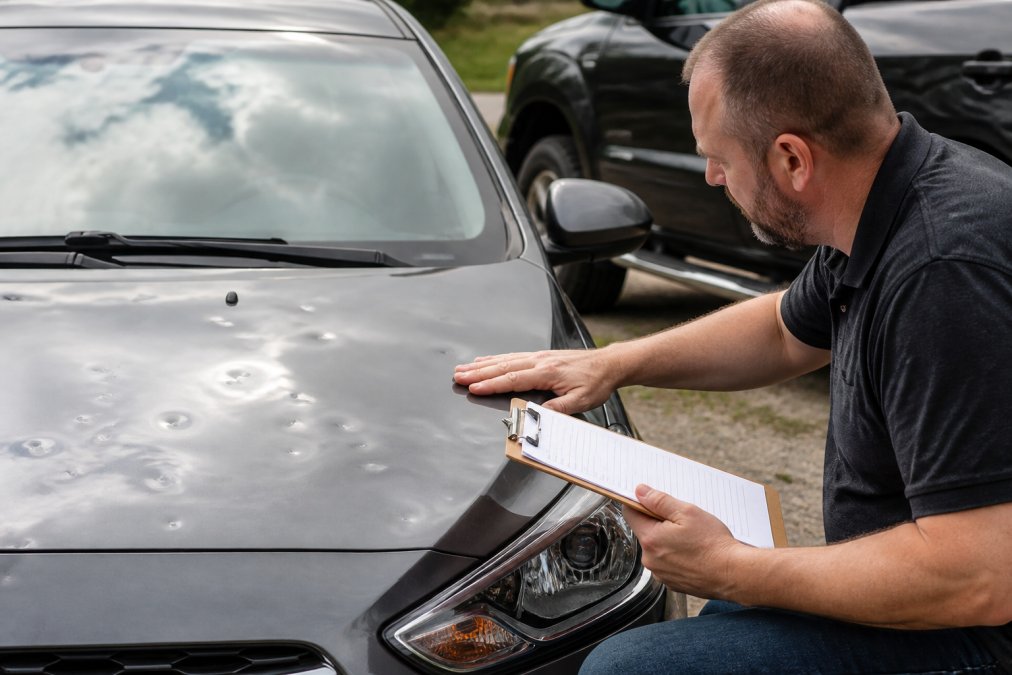
Before the adjuster arrives, wash your vehicle so the damage is visible, and have your photos and any independent repair estimates ready to share. During the inspection, walk around the vehicle with the adjuster and point out every area of damage you documented. Ask questions about how they calculate their estimate, what labor rates they use, and whether the estimate includes the cost of blending paint or the full refinishing of damaged panels.
A crucial distinction to understand is cosmetic versus functional damage. Cosmetic damage includes dents and dings that do not affect how the vehicle operates, while functional damage affects windows, mirrors, sensors, or the structural integrity of the vehicle. Some policies limit coverage for cosmetic damage, so knowing which category your damage falls into helps you anticipate the settlement amount and negotiate effectively. handle insurance adjusters.
Paintless Dent Repair and Insurance Coverage
Paintless dent repair insurance coverage is widely accepted by major carriers, and choosing a PDR specialist can preserve both your factory finish and your claim value. Paintless dent repair is a technique that removes dents and dings by carefully massaging the metal from behind the panel, without fillers, body filler, or repainting. Because the original factory paint remains intact, the repair preserves your vehicle's resale value and avoids the color-matching issues that plague traditional body shops.
Most insurance companies cover paintless dent repair when the damage qualifies, since it is typically faster and less expensive than conventional bodywork. However, not every dent is a candidate for PDR. If the hail impact cracked the paint or creased the metal sharply, traditional repair may be necessary. A qualified PDR technician can assess your vehicle and tell you whether the damage is repairable without repainting, and this assessment can be shared with your adjuster.
When choosing a repair shop, verify that they have experience working directly with insurance carriers and managing the claim process end to end. A shop that handles the paperwork, communicates with the adjuster, and submits supplements on your behalf saves you significant time and stress. Look for a lifetime warranty on repairs and ask whether the shop provides vehicle pickup and delivery and rental assistance while your car is in the shop.
Navigating Claim Denials and Appeals
A claim denial is not the end of the road, and understanding the appeal process can help you recover the coverage you are entitled to receive. Insurance companies deny hail claims for several common reasons: the damage is deemed pre-existing, the policy excludes hail, the filing deadline passed, or the adjuster classified the damage as cosmetic when your policy covers functional damage. Read the denial letter carefully to identify the specific reason, since your appeal strategy depends on it.
If your claim is denied, you have the right to appeal the decision with your insurer, and most policies outline a formal appeals process in the policy documents. Gather any additional evidence that supports your claim, including independent repair estimates, photos from other angles, and documentation of the storm date from local weather records. Submit a written appeal that addresses each reason for denial with specific evidence, and keep copies of everything you send.
State insurance department resources can help you understand your policyholder rights and file a complaint if your insurer is not acting in good faith. If the appeal is unsuccessful, you may also consider hiring a public adjuster who works on your behalf rather than the insurer's, though they typically charge a percentage of the settlement. In cases involving significant damage or clear bad faith by the insurer, consulting an attorney who specializes in first-party claims may be justified.
Dos and Don'ts Throughout Your Hail Insurance Claim
The claims process has a rhythm, and following a clear set of dos and don'ts keeps you protected from common pitfalls that delay or reduce your settlement. Do report the damage promptly, document everything in writing, and get multiple repair estimates before agreeing to a settlement. Do keep a log of every phone call, including the date, time, and name of the person you spoke with, and request written confirmation of any promises made verbally.
Don't sign a release or accept a settlement check before you are satisfied with the repair estimate, since signing often waives your right to additional payment. Don't let the adjuster rush you into a decision, and don't throw away damaged parts or have repairs started before the adjuster completes their inspection. Don't assume the first estimate you receive is the final word, since supplements are a normal part of the process when additional damage is discovered.
| Step | Action | Common Mistake | Impact of Mistake |
|---|---|---|---|
| Immediate response | Photograph and video all damage | Only capturing obvious dents | Missed damage reduces settlement |
| Filing | Report claim within deadline | Waiting to decide | Claim denial for late filing |
| Deductible review | Confirm your comprehensive deductible | Ignoring policy terms | Surprised by out-of-pocket costs |
| Adjuster inspection | Present your documentation | Accepting first estimate silently | Underpaid claim with no recourse |
| Repair selection | Choose a PDR specialist | Picking cheapest option | Poor repair quality, lost resale value |
| Settlement | Review before signing release | Cashing check immediately | Waives right to supplemental payment |
A final consideration is the long-term impact on your premium. Filing a hail claim can result in a premium increase at renewal, even though hail damage is typically considered an act of nature outside your control. Ask your agent how a claim will affect your rates before you file, and weigh that cost against your out-of-pocket repair expense. For many vehicle owners, the protection of a professional repair and the preservation of factory finish outweigh the risk of a modest premium increase.
Conclusion
Managing a hail insurance claim does not have to be overwhelming, but it does require organization, patience, and knowledge of your policy. Document the damage immediately, file within your deadline, understand your deductible, and push back respectfully when the adjuster's estimate falls short of the actual repair cost. Choosing a repair shop that handles the insurance paperwork for you removes the biggest source of stress from the process.
At 888 PDR, we manage hail claims from first notice of loss through supplement and final payment, working directly with all insurance carriers so you do not have to. Our family-owned shop offers a free inspection, lifetime warranty on repairs, vehicle pickup and delivery, and rental assistance to keep you moving while we restore your car's factory finish. Get a free quote today and let our team handle the paperwork while you get back to your day.
Frequently Asked Questions
What should I avoid saying to an insurance adjuster after hail damage?
Never admit fault, exaggerate damage, or accept the first settlement offer without review. Avoid vague statements like 'I'm not sure what's damaged', instead, provide specific details and documented evidence. Don't discuss other repairs or unrelated vehicle issues. Stick to facts about the hail event and visible damage. If you're unsure about something, say you'll follow up rather than guessing. Keep all communication professional and factual to protect your claim's integrity.
How long after hail damage can you make an insurance claim?
Most insurers require claims to be filed within 1 to 3 years of the hail event, though specific deadlines vary by state and policy. Some states enforce a statute of limitations of 2 to 6 years for property damage claims. Filing promptly, within days or weeks of the hail damage, strengthens your claim by providing fresh documentation and preventing disputes about when damage occurred. Delays can complicate proof of loss and may result in denial. Check your policy and contact your insurer immediately after a hail event to confirm your filing deadline.
How does a deductible affect the total payout for a hail damage claim?
Your deductible is the amount you pay out of pocket before your insurance coverage kicks in. If your hail damage repair costs $3,000 and your deductible is $500, you pay $500 and insurance covers $2,500. Higher deductibles lower your premium but increase your out-of-pocket cost when you file a claim. Some policies offer separate, lower deductibles for comprehensive coverage (which covers hail). Review your policy to understand your exact deductible and consider whether waiver-of-deductible programs apply to your situation.
What documentation is required to support a hail damage insurance claim?
Gather photos and video of all visible damage taken from multiple angles in daylight. Provide your insurance policy details, proof of loss (itemized list of damaged areas), weather reports confirming the hail event, repair estimates from qualified contractors, and receipts for any emergency mitigation (like temporary tarping). Keep records of all communication with your insurer, including claim numbers, adjuster names, and dates. If your vehicle is newer, include the VIN and purchase documentation. Original factory finish condition (for vehicles claiming resale value impact) may also support your claim.
This article was written using GrandRanker