Table of Contents
- What Hail Damage Really Does to Your Vehicle
- How the Hail Damage Repair Process Works with PDR
- Benefits of PDR for Factory Finish and Resale Value
- Auto Hail Damage Insurance Claim Process Explained
- Paintless Dent Repair Cost: What Drives the Price
- Hail Damage Repair Timeline: How Long Will It Take?
- What to Expect from 888 PDR's Full-Service Experience
- Conclusion
Last Updated: August 20, 2026
Hail storms across North Texas strike fast and leave thousands of dollars in vehicle damage. At 888 PDR, we've worked with vehicle owners throughout the Dallas-Fort Worth area to navigate hail damage repair from inspection through final insurance payment. This guide covers the complete hail damage repair process, including how paintless dent repair preserves your factory finish, how to work your insurance claim correctly, and what separates a smooth repair experience from a nightmare one.
Hail season in North Texas runs roughly from March through June, though late-summer storms are common. A single storm can drop golf ball-sized hailstones that leave dozens of dents across a hood, roof, and trunk, affecting your vehicle's resale value and, in some cases, its structural integrity.
What Hail Damage Really Does to Your Vehicle
Hail damage is more than cosmetic. Each impact creates a pressure point in the sheet metal that, left untreated, can compromise the paint film. Once the paint cracks or chips, moisture reaches bare metal and corrosion begins.
The severity depends on hailstone size, storm velocity, and impact angle. Roofs, hoods, and trunk lids absorb the most direct hits, while door panels and fenders take side-impact damage that produces sharper, more defined dents.
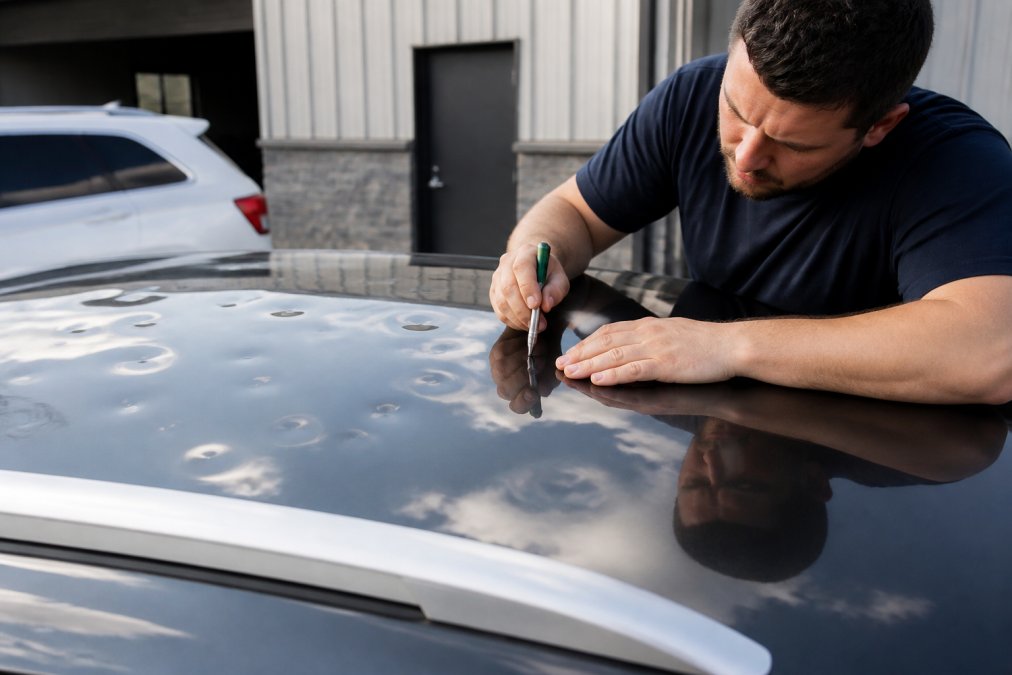
A proper assessment evaluates every panel systematically using specialized lighting, including fluorescent light bars and reflective boards, to reveal dents invisible under standard shop lighting. A thorough inspection by a certified technician is the only reliable way to document the full extent of damage before filing an insurance claim. Insurance adjusters work from a written estimate, and if damage is missed during the initial appraisal, it requires a supplement claim to recover those costs later.
How the Hail Damage Repair Process Works with PDR
Paintless dent repair is the industry standard for auto hail damage. PDR removes dents by manipulating the metal from behind the panel, restoring it to its original shape without touching the paint surface. No filler, no repainting, no color-matching guesswork.
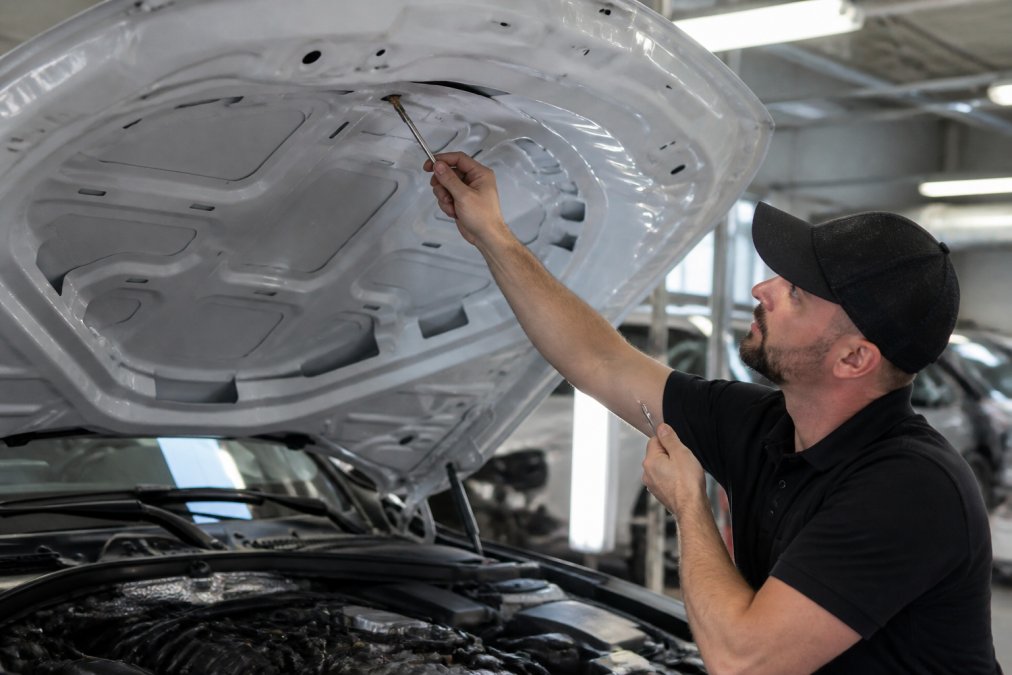
The technique requires access to the back side of each damaged panel. Technicians route specialized tools through existing access points, door jambs, and factory openings. For panels where rear access is limited, glue-pulling tools attach to the front of the dent and draw the metal outward. The process is methodical and time-intensive, which is why repair quality varies significantly between shops.
Free Inspection and Damage Assessment
The repair process starts with a free inspection. A certified technician examines every exterior panel under proper lighting and documents each dent by location, size, and depth. This documentation becomes the basis for your insurance repair estimate. At 888 PDR, we conduct a full vehicle appraisal before any claim is filed, so the estimate reflects the actual damage.
The PDR Technique Step by Step
Here is what happens during a professional PDR repair:
- Panel access: The technician identifies access points behind each damaged panel. Door panels require removing interior trim. Hood and trunk repairs access the underside directly.
- Tool placement: A specialized metal rod is positioned behind the dent, contacting the lowest point of the depression.
- Pressure and massage: The technician applies slow, controlled upward pressure while monitoring the panel surface under reflected light.
- Glue pulling (where needed): For panels without rear access, a glue tab is bonded to the dent surface and a pulling tool draws the metal back toward its original position.
- Final leveling: Shallow high spots are carefully knocked down with a tap-down tool to restore a perfectly flat surface.
- Quality inspection: The repaired panel is re-examined under lighting to confirm the factory contour is fully restored.
The entire process preserves the factory paint finish. No primer, no paint, no clear coat.
Benefits of PDR for Factory Finish and Resale Value
Traditional auto body repair for hail damage involves sanding, body filler, primer, paint, and clear coat. Every repainted panel is a flag on a vehicle history report. For anyone who plans to sell or trade their vehicle, repainted panels reduce perceived value.
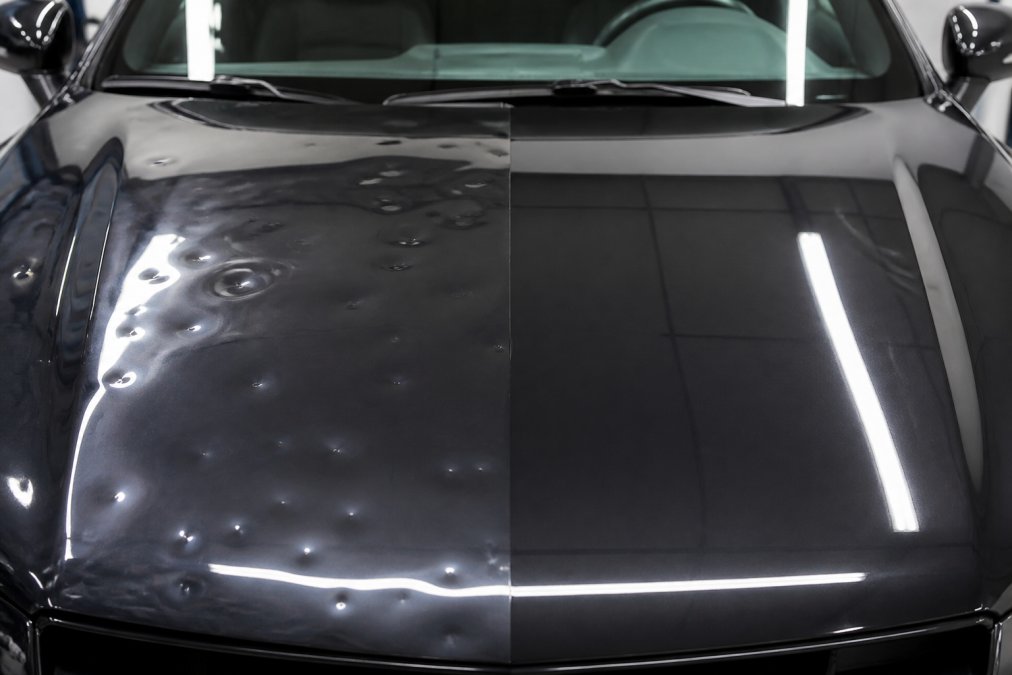
PDR preserves the original factory finish entirely. For vehicles under manufacturer warranty, this is particularly important: repainting panels can void paint-related warranty coverage. For lease vehicles, returning a car with factory-original paint avoids lease-end damage charges. Vehicles with original factory paint consistently appraise higher than those with repainted panels.
DIY vs. Professional Repair: Why the Difference Matters
The DIY hail repair market has produced suction cups, glue kits, and heat-gun methods that work on isolated, shallow dents in accessible locations but not on hail damage. Hail storms produce dozens to hundreds of individual dents across multiple panels, many on curved surfaces with complex contours. Applying a suction cup to a curved panel pulls unevenly and often creates a high spot in the center while leaving the perimeter depressed.
The deeper problem is that amateur tools cannot provide the tactile feedback that experienced PDR technicians rely on. A technician can feel the metal responding through the tool, producing a truly flat result. DIY repairs that damage the paint surface convert a PDR-eligible claim into a conventional body repair claim, which means repainting and lower resale value. roof repair cost estimates.
Auto Hail Damage Insurance Claim Process Explained
Filing an auto hail damage insurance claim is straightforward when you know the process. Most comprehensive auto insurance policies cover hail damage, subject to the deductible. The key is documenting the damage correctly and working with a shop that understands how to communicate with insurance adjusters.
According to the Insurance Information Institute's guidance on auto claims, comprehensive coverage is the policy type that covers weather-related vehicle damage including hail.
Step-by-Step: From First Notice of Loss to Final Payment
Here is how the insurance claim process works when you work with a shop that manages claims directly:
- File the first notice of loss (FNOL): Contact your insurance carrier to report the storm damage with the date, location, and description.
- Schedule your inspection: Bring your vehicle to a certified repair facility where all damage is documented under proper lighting.
- Insurance adjuster appraisal: Your carrier sends an adjuster to inspect the vehicle and produce their own damage estimate.
- Supplement negotiation: If the shop's documented damage exceeds the adjuster's estimate, the shop submits a supplement with supporting documentation.
- Repair authorization: Once the estimate is agreed upon, repairs begin.
- Final inspection and payment: After repairs are complete, the carrier releases the final payment.
The biggest mistake vehicle owners make is accepting the first adjuster estimate without having an independent shop review it. Adjuster estimates are often based on a quick visual inspection and may miss damage that requires proper lighting and a trained eye to identify.
Deductible Assistance and What to Expect
Deductible assistance is a common topic in the hail repair industry. The deductible is the amount the vehicle owner pays out of pocket before insurance covers the rest.
The Texas Department of Insurance consumer guidance on auto repairs provides clear information on your rights as a policyholder and what repair shops are and are not permitted to do in connection with insurance claims.
Paintless Dent Repair Cost: What Drives the Price
PDR pricing for hail damage is not a flat rate. The cost depends on several variables, and any shop quoting a firm price before inspecting the vehicle is guessing.
| Factor | Impact on Cost |
|---|---|
| Number of dents | More dents = higher total; hail repair is priced per panel and per dent count |
| Dent size | Larger dents require more time and technique; deep dents may require multiple passes |
| Panel location | Roofs and hoods are accessible; some pillars and door edges are not |
| Paint condition | Pre-existing paint damage may require conventional body repair on affected panels |
| Vehicle type | Aluminum panels on newer vehicles require different tooling and technique |
| Storm severity | Severe storms produce high-density dent patterns that increase labor significantly |
For insurance claims, the repair cost is negotiated between the shop and the carrier based on documented damage. Vehicle owners with comprehensive coverage pay their deductible; the insurance carrier covers the rest. Contact 888 PDR at (469) 284-0336 to schedule a free assessment.
Hail Damage Repair Timeline: How Long Will It Take?
The hail damage repair timeline depends on the severity of the storm damage and the shop's current workload. A vehicle with moderate damage across four to five panels typically takes three to five business days. Severe damage covering the roof, hood, trunk, and multiple door panels can take seven to ten business days.
After a major hail event, every repair shop in the affected area experiences a surge in volume. For vehicle owners who rely on their car daily, confirm rental coverage under your comprehensive policy before dropping your vehicle off.
What to Expect from 888 PDR's Full-Service Experience
888 PDR is a family-owned auto hail damage repair company operating from a 25,000 square foot facility in Dallas. The shop handles the complete insurance claim process, from the first notice of loss through supplement negotiation and final payment, so vehicle owners don't have to manage back-and-forth with their carrier.
A dedicated team manages insurance communication directly. Customers receive updates throughout the repair rather than having to call in for status. As noted by the National Insurance Crime Bureau's guidance on hail claims, working with a reputable, established repair facility is one of the most effective ways to avoid claim complications and ensure repairs are completed correctly.
Vehicle Pickup, Delivery, and Loaner Vehicle Options
For vehicle owners who can't easily drop their car at the shop, 888 PDR offers vehicle pickup and delivery. A team member retrieves the vehicle from your home or office, completes the repairs, and returns it when finished. Rental vehicle assistance is also available for customers whose comprehensive policy includes rental reimbursement.
Lifetime Warranty on All Repairs
Every repair completed by 888 PDR is backed by a lifetime warranty. The warranty covers the specific dents and dings repaired and holds for as long as you own the vehicle. If a repaired area shows any issue traceable to the repair itself, it gets fixed. There are no annual fees, no registration requirements, and no hidden exclusions for normal vehicle use.
Hail damage repair is one of those situations where the process matters as much as the outcome. A poorly managed claim leaves money on the table. A rushed repair compromises your factory finish and resale value. 888 PDR handles the full process, from free inspection and insurance claim management to PDR repairs backed by a lifetime warranty and vehicle pickup and delivery. Call (469) 284-0336 or get a free quote at 888hailrepair.com to schedule your assessment.
Frequently Asked Questions
Is paintless dent repair better than traditional body shop repair for hail damage?
For hail damage that has not cracked or chipped the paint, PDR is the preferred method. It restores the original metal shape without fillers, primers, or repainting, which means your factory paint stays intact. Traditional body shop repairs involve sanding, filler application, and color-matching paint, which can reduce resale value and void manufacturer paint warranties. PDR is faster, typically costs less, and leaves no trace of the repair when done by certified technicians.
Does insurance cover hail damage repair?
Yes. Hail damage falls under the comprehensive coverage portion of an auto insurance policy, not collision coverage. As long as you carry comprehensive coverage, your insurer is responsible for the repair cost minus your deductible. A reputable hail damage repair shop will work directly with your insurance carrier, prepare the repair estimate, and handle supplements if the adjuster's initial assessment missed damage. You should not need to manage paperwork or negotiate with the insurer on your own.
How long does hail damage repair take?
Repair time depends on the severity of the damage and how many panels are affected. Minor hail with dents on one or two panels can often be completed in one to three days. Moderate to heavy hail damage covering the hood, roof, trunk, and doors typically takes five to ten business days. During hail season, shops may have higher volume, which can extend the timeline. Shops that offer loaner vehicles or rental assistance make the wait considerably easier for daily drivers.
Will hail damage repair affect my vehicle's resale value?
Unrepaired hail damage significantly lowers trade-in and private sale value. Buyers and dealers check vehicle history reports and inspect for dents, and visible damage reduces offers. PDR restores the vehicle to pre-storm condition without adding any record of paint or body work, which protects resale value better than traditional repair methods. A car repaired with PDR by certified technicians shows no signs of prior damage on a visual inspection and retains its original factory finish.
This article was written using GrandRanker