
Last Updated: November 6, 2026
Quick Summary
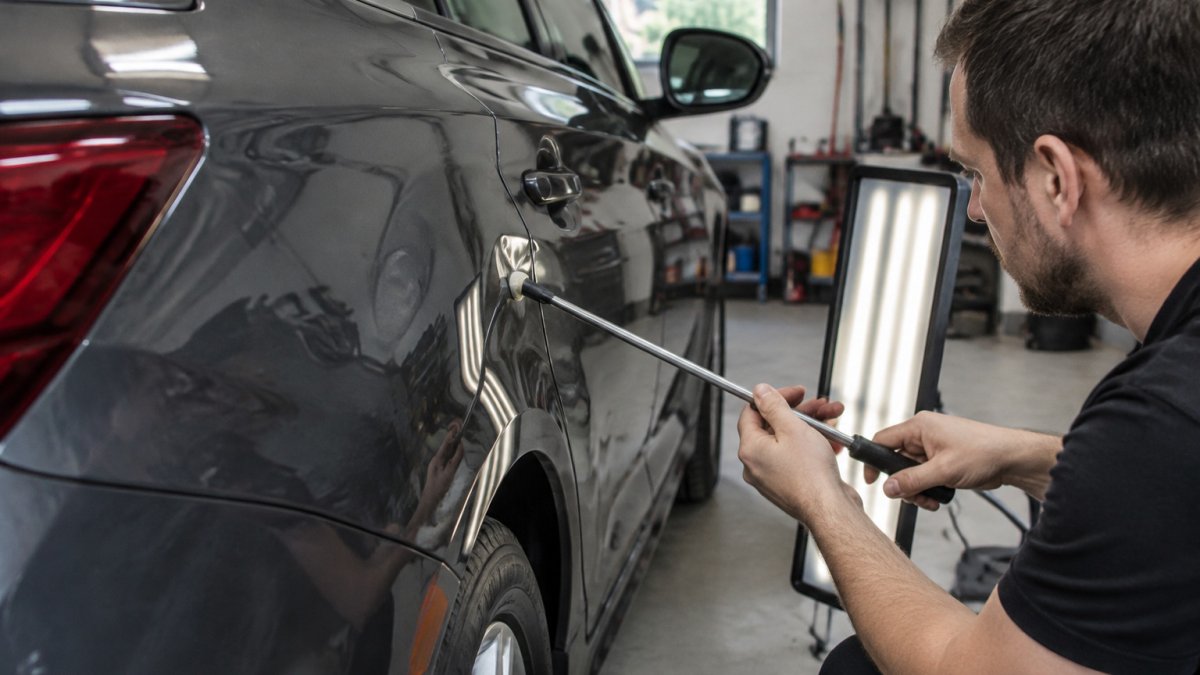
In most cases, paintless dent repair does not damage factory paint. PDR pushes or pulls dents back into shape without sanding, filling or repainting, so the original paint and clear coat are left in place. Risk rises with cracked paint, sharp creases, dents near body lines, cold paint and aftermarket repaints.
- PDR reshapes metal from underneath, so the original paint is never sanded, filled or sprayed.
- Pushing from behind is gentler on the paint bond, but harder on sharp creases.
- Glue pulling puts more direct tension on the finish than pushing does.
- Cracked or chipped paint near a dent can spread if pulled, so check it before work begins.
- PDR does not fix scratches or chips, and dents with cracked paint or stretched metal may need traditional repair.
Table of Contents
- Paintless Dent Repair for Scratched or Chipped Paint
- How Long Paintless Dent Repair Takes From Start to Finish
- Pre-Repair Checklist: Assessing Your Vehicle's Paint and Dent
- Booking Your Free Inspection at 888 PDR
- Frequently Asked Questions
Does paintless dent repair damage factory paint? In most cases, no.
Paintless dent repair is a method of removing dents without body filler or repainting.
(/blog/what-size-dents-can-be-fixed-with-paintless-repair) to compare size and depth limits before booking.- Dents where the paint is cracked, flaking or badly chipped
- Large or deep dents with stretched or torn metal
- Dents on panels with no access from behind
- Dents on aluminum or high-strength steel panels that resist reshaping
- Dents on panels that were already repainted or filled before
In these cases, a body shop may need to use filler and repaint. That is not a failure of PDR. It is simply the right tool for a different kind of damage.
Pricing depends on the size, depth and location of the dent, so please contact 888 PDR or visit our website for a free quote. Compare our paintless dent repair services to see whether they fit your dent.
Paintless Dent Repair for Scratched or Chipped Paint
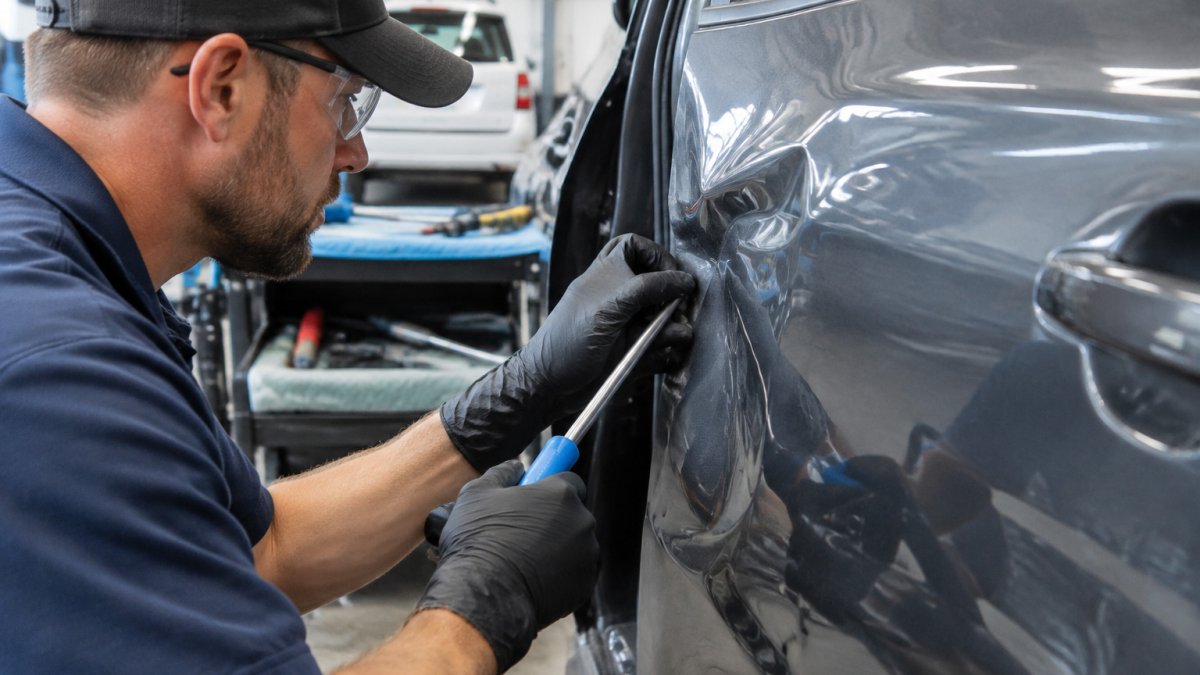
Paintless dent repair does not fix scratches or chips. PDR reshapes metal. It does not repair paint.
Light scratches can sometimes be buffed out at home using a polishing compound and a soft pad. Follow these steps to buff out minor car scratches to see which marks you can handle yourself.
If a dent and a chip appear on the same panel, the technician can often remove the dent first. The chip will then need separate paint work. Ask the shop how they handle both before you book.
How Long Paintless Dent Repair Takes From Start to Finish
Timing depends on how many dents there are, how accessible they are and how much the paint needs checking.
A typical visit includes:
- Inspection and paint check
- Access and reshaping of each dent
- Quality check under bright light
- Final review with the customer
Rental assistance is available with our services, so you can keep driving while your vehicle is being repaired.
Pre-Repair Checklist: Assessing Your Vehicle's Paint and Dent
Before you book PDR, a few minutes of inspection can tell you whether your vehicle is a strong candidate and what to flag for the technician. This checklist covers what to look for and why each item matters.
1. Check the paint around the dent
Look at the dent under bright, angled light, such as sunlight or a phone flashlight held to the side.
- Are there cracks, chips, or flaking near the dent?
- Does the clear coat look cloudy, dull, or peeling at the edges?
- Are there spiderweb scratches or a ring where a previous repair was attempted?
Cracked or flaking paint means the finish is already compromised. PDR can still sometimes work, but the technician needs to know before applying pressure.
2. Judge the dent's shape and depth
- Is the dent round and shallow, or sharp and creased?
- Does the metal feel stretched or oil-can (does it pop in and out when pressed gently)?
- Is the dent on a flat panel or along a body line, edge, or reinforced area?
Round, shallow dents on flat panels are the easiest candidates. Sharp creases, stretched metal, and dents on body lines carry higher paint risk and may need a different approach.
3. Look for signs of prior repair or repainting
- Does the paint color or texture differ from adjacent panels? Use this paint quality checklist to check color match, gloss, texture and overspray after repairs.
- Is there overspray on trim, glass, or rubber seals?
- Are there sanding scratches, tape lines, or a slightly raised edge near the dent?
- Does a magnet stick evenly across the panel, or does it feel weak in spots (a sign of body filler)?
Repainted or filled panels can have weaker paint adhesion and may respond differently to PDR. Tell the technician if you suspect prior work.
4. Check for corrosion
- Is there bubbling, rust staining, or pitting near the dent or along panel edges?
- Is the paint lifting around a stone chip or scratch?
Corrosion means the metal and paint bond are already failing. PDR over active rust is risky, and the area may need treatment before or instead of dent repair.
5. Confirm panel access
- Can you see the back of the panel through a drain hole, seam, or trim opening?
- Is the dent in a location where a tool can reach behind it?
Good access makes pushing from behind possible, which is often gentler on the paint bond. Limited access may push the technician toward glue pulling or may make the dent a poor PDR candidate.
6. Note other damage on the same panel
- Are there scratches, chips, or scuffs on the same panel?
- Is there damage on adjacent panels that might affect the repair plan?
PDR reshapes metal but does not fix paint damage. If a dent and a chip share a panel, the dent can often be removed first, but the chip will need separate paint work. Knowing this upfront helps you plan and budget.
What to do with your findings
If you answered yes to any item in sections 1, 3, or 4, mention it when you book. Those findings affect whether PDR is appropriate and how the technician approaches the repair. A free inspection lets a technician confirm what you found, test the paint, and explain your options before any work starts.
Booking Your Free Inspection at 888 PDR
Not sure whether your dent can be repaired without damaging the factory paint? Our team at 888 PDR offers a free inspection. Call us at (469) 284-0336 or book a free inspection to get started.
Frequently Asked Questions
Does paintless dent repair damaged paint?
Paintless dent repair is designed to leave factory paint intact because the technician reshapes the metal from behind the panel without sanding, filler or repainting. Damage is uncommon when the work is done by a skilled technician, but it can happen if the clear coat is already cracked or if too much force is applied to a sharp crease. A free inspection can confirm whether the paint is stable enough for the repair.
What are the downsides of paintless dent repair?
The main downsides are that PDR cannot fix every dent, it depends on access behind the panel, and results on severe creases or heavily stretched metal may be limited. Repairs can also show minor imperfections if the metal was damaged before the technician started. Owners should ask for an honest assessment before committing to the work.
Can paintless dent repair work if the paint is scratched or chipped?
PDR removes the dent itself, but it does not repair scratches or chips in the paint. Those areas need separate touch-up or refinishing. Because the technique leaves the finish untouched, a scratch that is already present usually stays as it is, so the paint damage should be documented before the repair begins.
How long does paintless dent repair take?
The schedule depends on the number of dents, their location and whether a rental vehicle is needed. Your estimate will give a specific timeframe after the inspection.
