
Table of Contents
- What to Do Immediately After Hail Damage
- How to Document Hail Damage on a Car
- Review Your Policy and File Your Claim
- Understanding Hail Damage Insurance Deductible
- Hail Damage Claim Timeline: What to Expect
- Paintless Dent Repair and Your Insurance Claim
- Handling Claim Disputes and Next Steps
- Frequently Asked Questions
Last Updated: October 14, 2026
What to Do Immediately After Hail Damage
When hail strikes your vehicle, the first hours matter most. Assess the damage: dents, dings, or harm to the roof, hood, and windows.
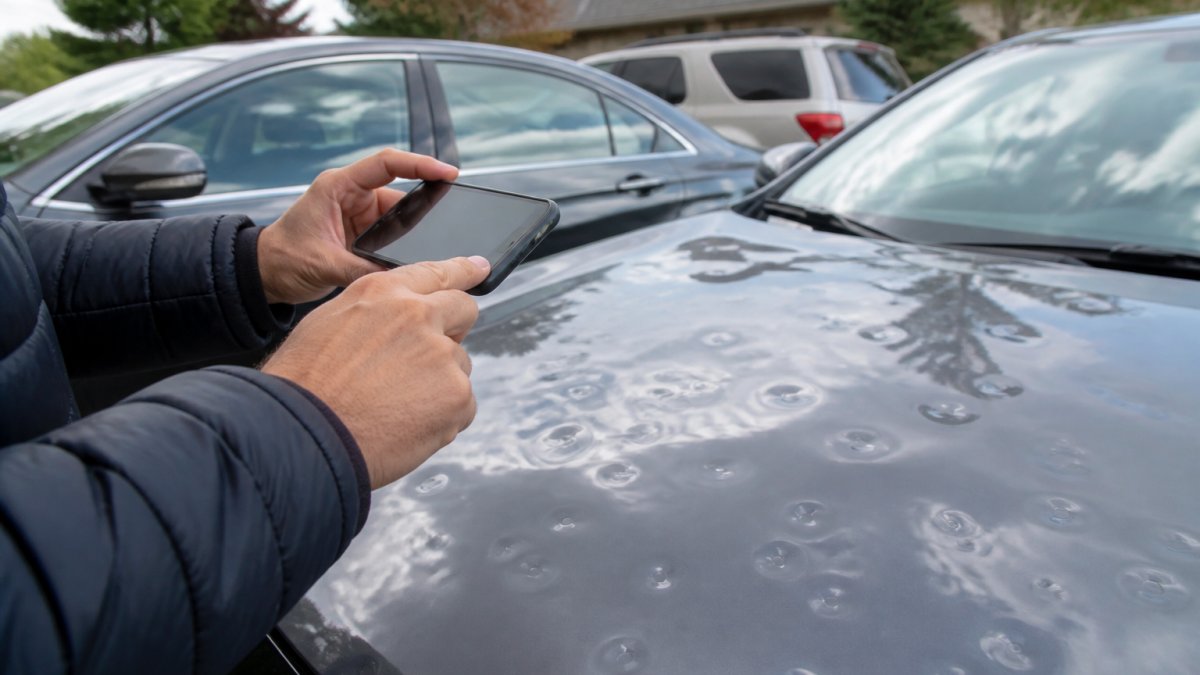
Document everything with photos right away, using your smartphone in natural daylight.
Next, check for safety hazards.
Contact your insurance company within 24 hours to file hail insurance claims.
Key steps to take immediately:
- Document all visible damage with photos and video
- Check for safety hazards like broken glass
- Note the date and time of the hail storm
Once you've reported the damage, your insurer assigns a claim number. Write it down, you'll need it for every conversation.
How to Document Hail Damage on a Car
Proper documentation separates a paid claim from a disputed one. The adjuster wasn't there when the storm hit, so your photos, notes, and timeline tie the damage to a covered event. Most denied hail claims fail on documentation, not coverage.
First, separate hail damage from pre-existing wear
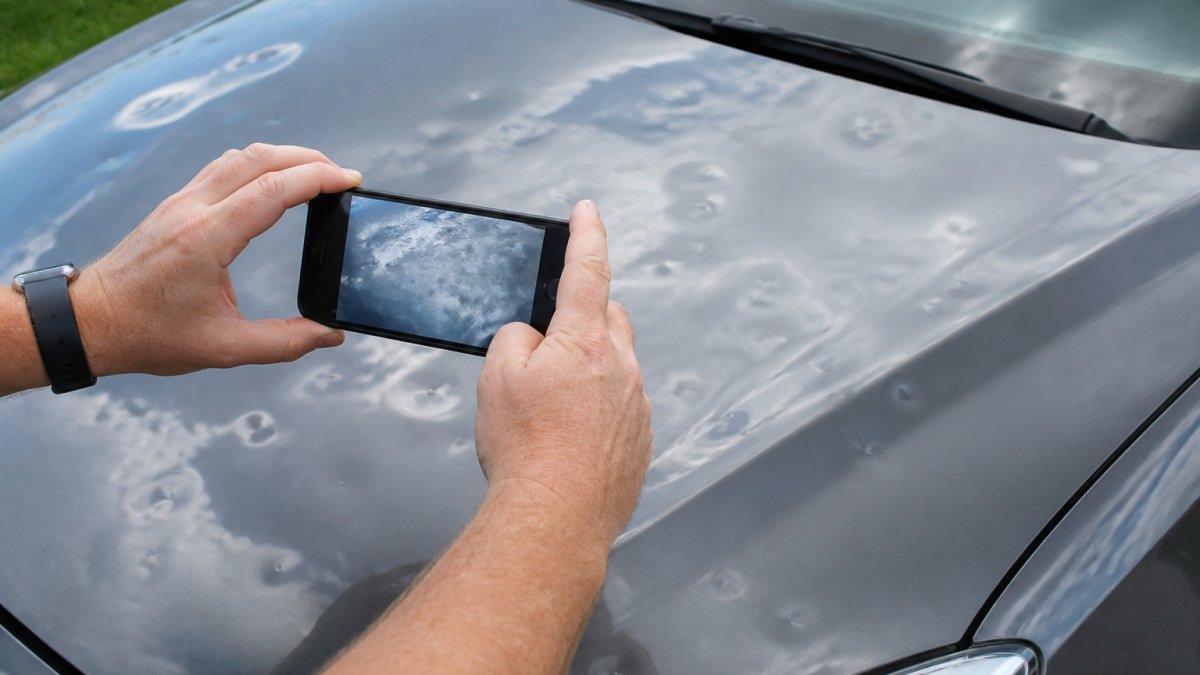
Hail leaves a specific signature; wear leaves a different one. Learn the difference before you photograph anything.
Signs that point to hail:
- Dents with sharp, defined edges and a circular or irregular impact shape
- Damage clustered on horizontal surfaces, roof, hood, trunk lid, that face the sky
- Dents on both metal panels and non-metal parts like plastic trim, which wear cannot dent
Signs that point to pre-existing wear or unrelated damage:
- Dents with soft, gradual edges or a crease that follows a body line
- Damage concentrated on vertical panels, door edges, or bumpers, the areas most exposed to parking-lot contact
- Rust, faded clear coat, or paint checking around the dent, which means it predates the storm
If a dent has rust in it, it didn't happen last week. Adjusters look for exactly this, and mixing old damage with new invites a partial denial. Photograph clean hail dents separately from anything questionable, and note which areas are storm-related.
Photograph the vehicle systematically
Work in a consistent order so you don't miss a panel: start at the front bumper, move clockwise around the vehicle, then photograph the roof from an elevated angle.
- Take wide shots of all four sides first to establish the overall condition
- Move in for mid-range shots showing the damage pattern across a panel
- Finish with close-ups of individual dents, using a coin, a ruler, or your finger for scale
- Photograph the roof, hood, and trunk lid from above, these are the panels hail hits hardest
Use natural daylight. Overcast conditions are ideal because flat light reveals dent edges that harsh sun and shadow hide. Avoid night shots and flash, which flatten the surface and hide dents.
Build a written inventory and a storm record
Photos alone aren't a claim file. Pair them with a written record an adjuster can follow.
- List each damaged panel and describe what you see in plain language
- Estimate dent size and count where you can, 'roughly 20 dents, dime-sized, on the hood' is more useful than 'hood damaged'
- Note the date, time, and location of the storm, and save any weather alerts, news reports, or neighbor reports that confirm hail in your area
- Record the date and time you took each set of photos
Store and back up everything
Keep all photos, video, and notes in one folder and back them up to cloud storage the same day, so lost or damaged devices don't cost you your evidence. Name files by date and panel, for example, '2026-06-12_hood_closeup', so you can resend them quickly.
A quick pre-claim documentation checklist
- Wide shots of all four sides
- Roof, hood, and trunk lid from above
- Close-ups of individual dents with a scale reference
- Photos of glass, trim, and light housings
Review Your Policy and File Your Claim
Before filing, read the hail coverage section of your policy. Most comprehensive auto policies cover hail damage, but details vary between insurers and policy types.
Look for these key details in your policy:
Coverage information to find:
- Hail damage coverage limits
- Your deductible amount
- Whether the policy covers paintless dent repair
- Replacement cost versus actual cash value coverage
Your deductible is what you pay out of pocket before insurance covers the rest.
Once you've reviewed your policy, contact your insurance company to file hail insurance claims. Have ready:
- Your policy number
- The date of the hail storm
- A description of the damage
- Your photos and documentation
Your insurer will assign a claim number and explain next steps, including whether an adjuster will inspect the vehicle or you can proceed directly to repairs.
Understanding Hail Damage Insurance Deductible
Your deductible is only the first number affecting your out-of-pocket cost. The second is how your policy values the loss, replacement cost or actual cash value, and the third is depreciation. Understanding all three lets you predict your real cost.
How the deductible works
The deductible is what you pay before the insurer pays anything: on a $3,000 approved estimate with a $500 deductible, you pay $500 and the insurer pays $2,500. Comprehensive auto deductibles commonly fall in the $250 to $1,000 range, while homeowners policies often use a separate, higher wind-and-hail deductible, sometimes a percentage of the dwelling limit (Understanding your insurance deductibles).
A few practical rules apply to almost every policy:
- The deductible applies once per claim, not once per dent or per damaged shingle
- Separate storms are separate claims, so a second hailstorm means a second deductible
- A repair shop cannot legally absorb or waive your deductible, so-called 'deductible forgiveness' is prohibited in most states and can void your claim
- A higher deductible lowers your premium but raises your cost when you file
Replacement cost versus actual cash value
This is where most cost surprises come from. The two valuation methods produce very different payouts on the same damage.
Replacement cost value (RCV) pays what it costs to repair or replace the damaged property at today's prices, without subtracting for age. On a roof, that means the cost to install new shingles of like kind and quality.
Actual cash value (ACV) pays replacement cost minus depreciation.
How depreciation and recoverable depreciation work
On an RCV policy, the insurer pays in two stages: first the ACV (replacement cost minus depreciation), then, after the work is completed and you submit proof, the recoverable depreciation it withheld, bringing your payout up to full replacement cost.
Here is a worked example on a roof claim:
| Item | Amount |
|---|---|
| Replacement cost of the roof | $18,000 |
| Depreciation withheld (age and condition) | $6,000 |
| Actual cash value paid up front | $12,000 |
| Recoverable depreciation released after completion | $6,000 |
| Deductible you pay | $2,000 |
| Total you receive | $16,000 |
On an ACV-only policy, that $6,000 of depreciation is never recovered. You receive $12,000 minus your deductible and cover the rest yourself, the biggest reason two neighbors with the same damage can receive very different checks.
What this means for your claim
- If you have an RCV policy, complete the repairs and submit your invoices so the recoverable depreciation is released. Do not skip this step, the withheld amount is often thousands of dollars.
- If you have an ACV policy, get repair estimates before you file so you know whether the payout will cover the work.
- Ask your agent whether your policy includes any hail-specific deductible options, and get the answer in writing.
- Keep every receipt and invoice. Recoverable depreciation is released only against documented completed work.
Understanding these mechanics before you call your insurer puts you in a stronger position to evaluate the adjuster's estimate and know whether a settlement offer is fair.
Hail Damage Claim Timeline: What to Expect
The hail damage claim process typically takes 2 to 4 weeks, though the timeline varies with claim complexity, adjuster availability, and your insurer's workload.
Typical hail damage claim timeline:
| Stage | Duration | What Happens |
|---|---|---|
| Report damage | Same day | You call insurer, provide photos, receive claim number |
| Adjuster inspection | 3-7 days | Insurance schedules and conducts vehicle inspection |
| Estimate review | 3-5 days | Adjuster prepares repair estimate, sends to you |
| Approval | 1-2 days | Insurance approves estimate or requests additional info |
| Repair | 5-14 days | Repair shop completes work, you pick up vehicle |
| Final payment | 1-3 days | Insurance pays remaining balance after deductible |
After you report the damage, the insurer schedules an adjuster to inspect your vehicle, usually within a week.
Review the adjuster's estimate carefully and compare it to repair shop estimates.
Once the estimate is approved, schedule repairs with a shop you trust.
After repairs are complete, the insurance company pays the final settlement. This covers the approved repair cost minus your deductible.
Paintless Dent Repair and Your Insurance Claim
Paintless dent repair (PDR) is the preferred method for hail damage because it preserves your vehicle's factory finish and resale value.
Most insurers cover PDR for hail claims because it's faster and often costs less than traditional repair.
When choosing a PDR shop, verify they work directly with insurers. Experienced shops handle the paperwork and communication, keeping the process moving.
Handling Claim Disputes and Next Steps
Sometimes your estimate and the adjuster's don't match.
Request a supplement. Your repair shop can document additional damage found during repairs and submit a supplement request.
If you disagree with the adjuster's assessment, request a second inspection.
If your claim is disputed:
- Request a supplement for additional damage
- Hire an independent appraiser if needed
- Ask your repair shop to document all damage
- Keep detailed records of all communications
Never accept a settlement you believe is unfair. You have the right to dispute the insurer's decision.
Some states allow you to reopen a claim if new damage is discovered after settlement.
Avoid contractor or claim scams.
Frequently Asked Questions
What should I do first after discovering hail damage to my car?
Stop using your vehicle if possible to prevent further damage. Move it to shelter or a safe location. Take photos and video of all visible damage while it's still fresh. Contact your insurance company within 24-48 hours to report the damage and start the claim process. Document the date, time, and weather conditions. Avoid making temporary repairs until the adjuster has inspected the vehicle, as this could complicate your claim.
How does my deductible affect a hail damage claim?
Your deductible is the amount you pay out of pocket before your insurance coverage kicks in. For example, if your deductible is $1,000 and repair costs are $5,000, you pay $1,000 and insurance covers $4,000. Some policies offer lower deductibles for comprehensive coverage (which includes hail). Check your policy to know your exact deductible. Some repair shops and insurers can help you understand how this affects your settlement.
Can I choose my own repair shop for hail damage?
Yes, in most cases you can select your own repair shop. Your insurance company cannot force you to use a specific contractor. Get repair estimates from shops you trust, and provide these to your insurance adjuster. If estimates differ significantly, you can request a second opinion or hire a public adjuster to review the assessment. Choose a shop experienced with hail damage and insurance claims to ensure the work meets your insurer's standards.
What if my insurance estimate doesn't cover all the repairs?
Request a supplement or additional estimate if damage is discovered after the initial adjuster inspection. Provide your repair contractor's detailed estimate and photos of any missed damage. If the adjuster's estimate remains lower than repair costs, you can dispute it, hire a public adjuster, or consult an attorney. Document everything in writing and keep copies of all estimates and correspondence with your insurance company throughout the process.
Filing a hail damage insurance claim doesn't have to be stressful. By documenting damage carefully, understanding your policy, and working with experienced repair professionals, you'll navigate the process smoothly. 888 PDR handles hail damage claims from start to finish, managing all insurance coordination while preserving your vehicle's original finish. Get a free quote today and let us take the complexity out of your claim.