
Table of Contents
- How to File a Hail Damage Claim in Dallas
- Paintless Dent Repair vs Body Shop: Which Fixes Hail Damage Better
- Hail Damage Repair Timeline: What to Expect Week by Week
- What Your Insurance Policy Actually Covers for Hail Damage
- How to Choose a Hail Claim Repair Shop in Dallas
- Common Mistakes Dallas Drivers Make With Hail Claims
- Frequently Asked Questions
Last Updated: September 16, 2026
How to File a Hail Damage Claim in Dallas
Filing an insurance hail claim repair Dallas process starts with one phone call to your insurer, but the photo evidence you gather beforehand often decides how smoothly the entire claim goes. At 888 PDR, we've walked many vehicle owners through this exact sequence, and the pattern is consistent: drivers who document damage before the adjuster arrives get faster approvals and fewer supplement disputes. This guide covers the full process, from first notice of loss to final payment, so you know what to expect at every stage.
Documents and Photos You Need Before You Call
Before you dial your insurance company, gather these items:
- Your insurance policy number and the claim phone number on your card
- Your vehicle registration and driver's license
- A pen and paper for the claim reference number they'll give you
- Your phone, fully charged, for photos
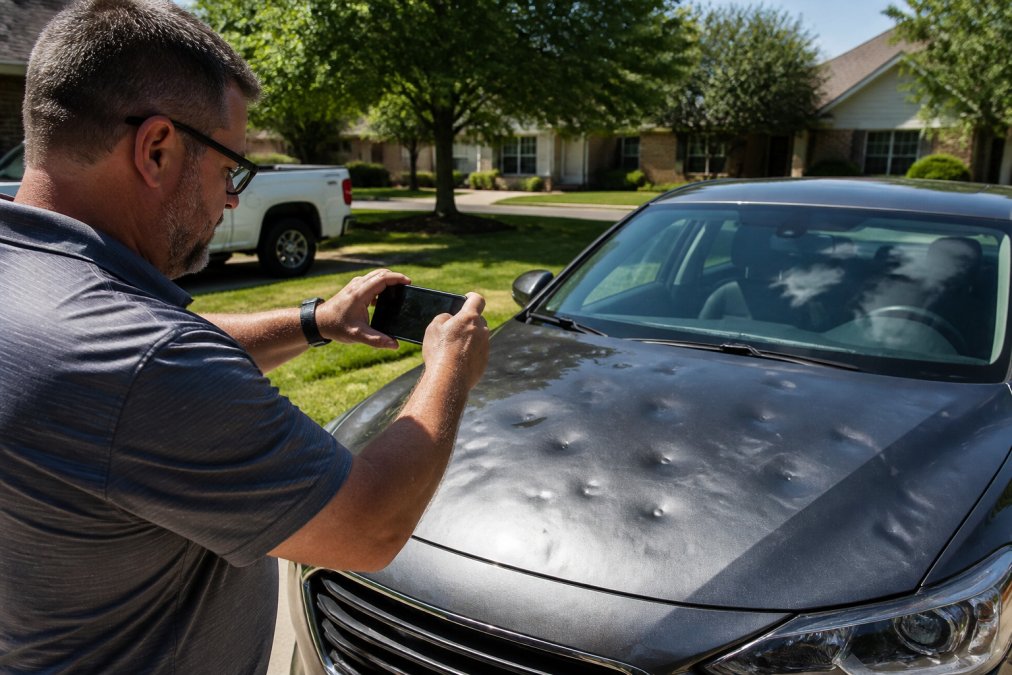
Photograph every panel of your vehicle in daylight. Capture wide shots showing the full car, then close-ups of individual dents with something for scale, like a coin placed beside the damage. Shoot the roof, hood, trunk, and all four doors. Include your license plate in at least one wide shot.
The Texas Department of Insurance consumer guide to auto claims recommends reporting damage promptly, since delays can complicate the claims process. Save your photos to cloud storage before you call, not after. Adjusters work from your images when scheduling, and clear documentation speeds up the inspection.
What Happens After the Adjuster Inspects Your Car
The adjuster writes an estimate based on visible damage. That estimate is a starting point, not a final number.
Hail damage often hides in panel edges, behind trim, and on the roof where the adjuster's angle is limited. If your repair shop finds additional dents the adjuster missed, they file a supplement, which is a request for the insurer to cover the overlooked damage. This is routine, and a shop that handles supplements regularly will manage it for you. Comprehensive inspections are essential because even minor indentations can indicate significant hidden roof hail damage that compromises the structural integrity of your vehicle.
Paintless Dent Repair vs Body Shop: Which Fixes Hail Damage Better
Paintless dent repair wins for most hail damage because it preserves your factory finish, while a body shop is the better call when the damage breaks through paint or stretches metal beyond what PDR can reshape. The choice comes down to what happened to the metal, not how big the dent looks.
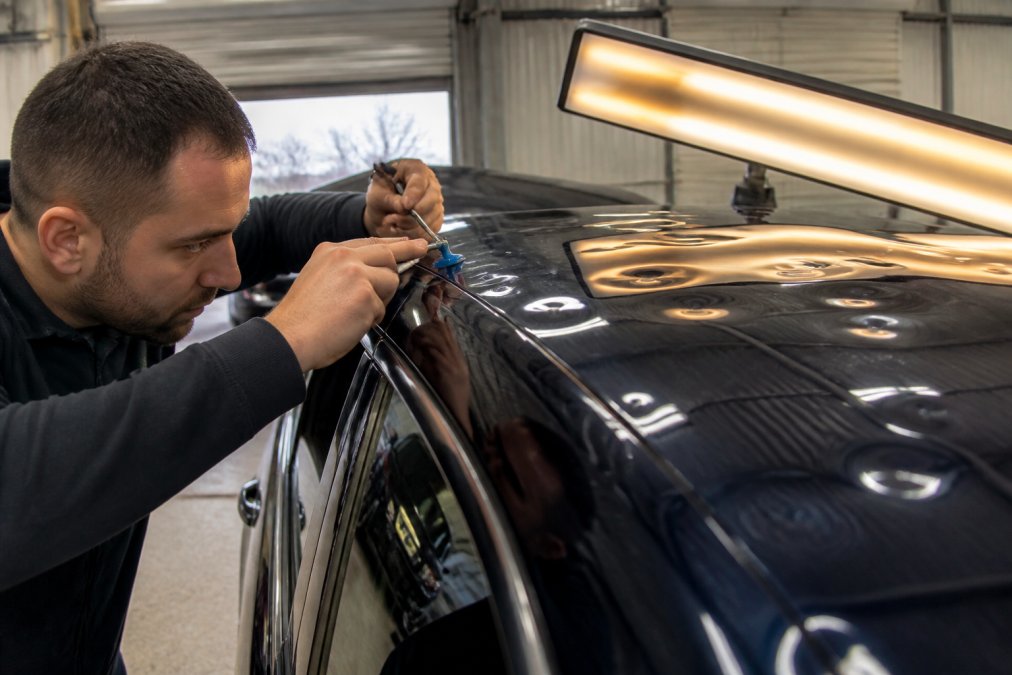
PDR technicians work the metal back to its original shape from behind the panel using specialized rods and tools. No filler, no sanding, no repainting. Your car keeps its original paint, which matters at resale because buyers and inspectors can detect bodywork.
A body shop, by contrast, grinds, fills, and repaints. That's the right approach when paint is cracked, when the dent has sharp creases that have stretched the metal, or when rust has started at the damage site.
When a Body Shop Is the Only Option
Body shop repair becomes necessary in specific situations:
- Paint is cracked, chipped, or flaking at the dent
- The dent has a sharp crease that has stretched the metal past its elastic limit
- Damage sits on a panel edge or body line where PDR tools can't reach
- Previous bodywork or repainting exists on the damaged panel
- Rust is present at the impact point
For the majority of hail claims, though, PDR handles the repair. Hail impacts are typically rounded, not creased, and the paint usually survives. That's why PDR is the standard approach for hail damage across the industry.
Hail Damage Repair Timeline: What to Expect Week by Week
A typical hail damage repair timeline depends on damage severity and parts availability. Here's how the process usually unfolds:
| Phase | What Happens | Typical Duration |
|---|---|---|
| Claim filing and inspection | Report damage, adjuster inspects, initial estimate issued | 2-5 days |
| Shop selection and drop-off | Choose repair shop, schedule drop-off, rental arranged | 1-3 days |
| Repair work | PDR or body work performed, supplement filed if needed | 3-10 days |
| Final inspection and pickup | Quality check, final payment, vehicle returned | 1-2 days |
After a major storm, timelines stretch. When hail hits a metro area, every shop in the region fills up at once, and adjuster schedules back up. Booking your inspection early matters more than anything else you do.
What Your Insurance Policy Actually Covers for Hail Damage
Comprehensive coverage is what pays for hail damage, not collision coverage (Auto Insurance Basics). If you carry comprehensive, your policy covers hail damage minus your deductible, and Texas law requires insurers to handle these claims under the terms of your policy.
What's typically covered:
- Dent repair on all affected panels
- Paint repair where damage broke the finish
- Glass replacement if hail cracked a windshield
- Rental car reimbursement, if your policy includes it
What's not covered: your deductible, and any damage that existed before the storm. Policies vary on rental coverage and on how they handle diminished value claims.
The Insurance Information Institute's guide to auto insurance explains that comprehensive coverage is optional in most states but required by lenders on financed vehicles. Check your declarations page if you're unsure what you carry.
How to Choose a Hail Claim Repair Shop in Dallas
Pick a shop that manages the insurance claim for you, not one that hands you paperwork and wishes you luck. The right shop handles the estimate, communicates with your adjuster, files supplements when needed, and keeps you informed.
Use this checklist when evaluating shops:
- Does the shop work directly with all insurance carriers, or only some?
- Will they handle the supplement process if the adjuster's estimate misses damage?
- Do they offer a written warranty on repairs, and what does it cover?
- Can they arrange a rental vehicle while your car is in the shop?
- Do they offer pickup and delivery, so you're not stranded?
- Are they local with a fixed address, or a storm-chasing crew that leaves after the rush?
That last point matters more than people realize. Out-of-town crews follow hail events, set up temporary operations, and disappear when the work dries up. If something goes wrong with the repair six months later, there's no one to call.
888 PDR operates from a 25,000 sq ft facility at 4707 LBJ Freeway in Dallas and has served more than 3,500 customers since opening in 2022. We work directly with all insurance carriers and manage each claim from first notice of loss through supplement and final payment. Every repair carries a lifetime warranty, and we offer vehicle pickup and delivery plus rental assistance.
Common Mistakes Dallas Drivers Make With Hail Claims
The biggest mistake is waiting. Storm damage claims pile up fast, and the drivers who file first get inspected first, scheduled first, and repaired first. Delay also gives your insurer room to question whether the damage came from the storm you're claiming.
Other missteps we see regularly:
- Washing the car before documenting damage. You lose the visual evidence of fresh impact marks.
- Accepting the first estimate as final. Adjusters miss dents, especially on roofs and lower panels. Supplements exist for this reason.
- Choosing a shop based on the lowest quote alone. Cheap repairs that skip steps show up later as paint failure or missed dents.
- Paying the deductible twice. If you've already met it for the policy period, confirm with your insurer before paying again.
- Ignoring the rental coverage in your policy. Many drivers pay for a rental out of pocket when their policy already covers it.
Hail season in Dallas doesn't wait, and neither should your claim.
Frequently Asked Questions
Does auto insurance cover hail damage in Texas?
Yes, if you carry comprehensive coverage. Texas requires insurers to offer comprehensive coverage, and hail damage falls under it. Liability-only policies will not pay for hail dents. Check your declarations page or call your carrier to confirm. Most Dallas drivers with full coverage can file a hail claim repair request without worrying about whether the damage qualifies, since weather-related damage is a covered peril under comprehensive.
Will filing a hail damage claim increase my insurance premiums in Texas?
Texas law prevents insurers from raising your rate for a single weather-related claim that was not your fault. Hail is classified as a weather event, not an at-fault incident. However, multiple claims in a short period could affect your rate at renewal. One hail claim typically will not spike your premium, but it is worth asking your adjuster directly about how the claim is classified on your record.
How long do I have to file a hail claim after a storm in Dallas?
Texas does not set a fixed deadline, but your insurance policy does. Most carriers require you to file within a reasonable time, often one year from the date of loss. Waiting too long can give the insurer grounds to deny the claim. File as soon as you notice dents, even if you are not ready to schedule the hail damage repair timeline yet.
Is paintless dent repair covered by insurance?
Yes. When comparing paintless dent repair vs body shop methods, insurers pay for the repair approach that restores the vehicle. PDR is often the preferred method because it costs less and preserves your factory finish. Your adjuster may write an estimate based on PDR if the dents are accessible and the paint is not cracked. If the damage requires filler or repainting, the estimate shifts to conventional body work.