
Table of Contents
- Does Insurance Cover Hail Damage
- Comprehensive vs Collision Coverage for Hail
- Understanding Your Deductible and Out-of-Pocket Costs
- Hail Damage Insurance Claim Process 2026
- Does Filing a Hail Claim Increase Premiums
- Paintless Dent Repair Insurance Coverage
- PDR vs. Traditional Body Shop Repair
- Special Considerations for Leased and Financed Vehicles
Last Updated: August 24, 2026
Does Insurance Cover Hail Damage
Whether your auto insurance covers hail damage depends on your coverage type. Most comprehensive policies cover hail damage, but liability-only policies do not. Comprehensive coverage typically handles weather-related incidents without requiring you to prove fault, though you'll pay your deductible before insurance kicks in.
At 888 PDR, we work directly with insurance companies to help vehicle owners navigate hail damage claims. Many drivers are surprised to learn that comprehensive coverage is optional, not mandatory. While your state may require liability coverage, comprehensive and collision coverage are choices you make when purchasing your policy. Understanding what your policy covers is the first step to managing a claim effectively.
Comprehensive vs Collision Coverage for Hail
Comprehensive coverage covers hail damage and other non-collision incidents including weather events, theft, vandalism, and animal strikes. When hail strikes your vehicle, comprehensive coverage pays for repairs minus your deductible.
Collision coverage covers damage from accidents involving other vehicles or objects you hit, but not hail damage. A driver with comprehensive coverage who experiences a major hail storm pays their deductible (typically $500 to $1,000) and insurance covers the rest. A driver with collision-only coverage pays the full repair cost themselves, a difference that can reach thousands of dollars.
If you live in an area prone to hail storms, comprehensive coverage becomes essential protection. Your insurance agent can help you evaluate whether it makes sense for your situation and vehicle value.
Understanding Your Deductible and Out-of-Pocket Costs
Your deductible is the amount you pay out of pocket before insurance coverage begins. Common deductible amounts range from $250 to $1,500 (iii.org). If your hail damage repair estimate is $4,000 and your deductible is $500, you pay $500 and insurance covers the remaining $3,500. If the repair cost is less than your deductible, insurance won't cover any of it.
Some vehicle owners choose paintless dent repair (PDR) specifically because it costs less than traditional body shop repairs, reducing out-of-pocket expenses. If your vehicle has significant hail damage affecting multiple panels, the total repair cost often exceeds your deductible substantially, making filing a claim worthwhile. However, if damage is limited and your deductible is high, you might pay for repairs directly.
Hail Damage Insurance Claim Process 2026
Filing a hail damage insurance claim involves several key steps. The process has become more simplified in 2026, with many insurers offering digital documentation options and faster adjuster response times.
Steps to Take Immediately After a Hail Storm
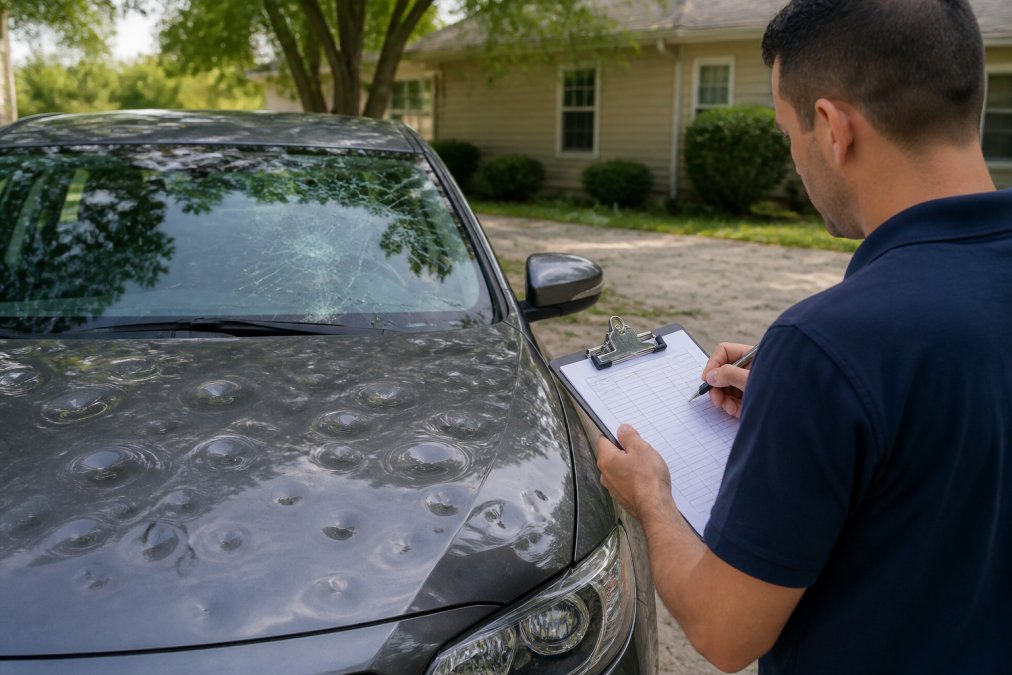
Move your vehicle to a safe location and assess the damage carefully. Take photographs and video of all visible damage from multiple angles. This photographic evidence is crucial for your claim and helps the adjuster understand the extent of damage.
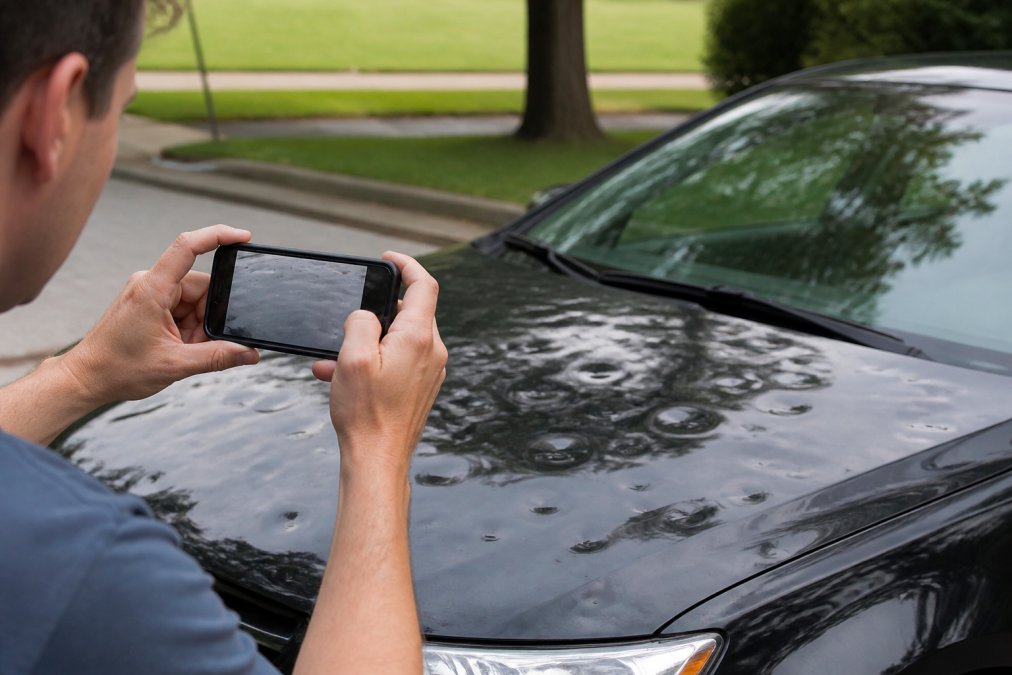
Contact your insurance company as soon as possible after a hail event. When you call, provide your policy number, the date and time of the hail storm, and a brief description of the damage. The insurer will schedule an adjuster to inspect your vehicle, typically within 5-10 business days (naic.org).
Do not begin repairs before the adjuster inspects your vehicle. Insurance companies require documentation of the damage in its original condition. If you need temporary repairs to prevent additional damage, document these with photos and keep all receipts.
Avoid signing paperwork or accepting initial settlement offers until you fully understand the coverage and repair options. You have the right to request a second opinion or hire your own appraiser if you believe the estimate is too low.
How to Document and File Your Claim
Gather documentation including your insurance policy, the date and time of the hail storm, weather reports confirming the event, and any witness statements. Be detailed and specific about the damage: describe exactly which panels are affected and include measurements if possible.
Work with your repair shop to provide a detailed repair estimate itemizing each damaged panel, the repair method, parts costs, and labor costs. If your insurance company's estimate seems low, request a supplemental claim to review additional damage or reconsider their assessment.
Keep copies of all correspondence with your insurance company, including claim numbers, adjuster names, dates of conversations, and email confirmations. This documentation trail protects you if disputes arise. identifying storm damage.
Does Filing a Hail Claim Increase Premiums
Many insurance companies treat comprehensive claims differently from collision or at-fault accident claims. Because hail is considered an "act of God", a non-preventable event where no driver negligence is involved, many insurers do not increase premiums after comprehensive claims (iii.org). However, this varies by insurance company and state.
Contact your insurance company directly and ask about their specific policy on hail damage claims. Some insurers offer accident forgiveness programs that prevent rate increases after the first claim. Consider the math before deciding whether to file: if your repair cost is significantly higher than your deductible and potential premium increase, filing makes financial sense.
Document your conversation with the insurance company about premium implications. This protects you if your premium increases unexpectedly.
Paintless Dent Repair Insurance Coverage
Paintless dent repair (PDR) is a specialized repair technique that removes dents without using fillers or repainting. Most comprehensive policies cover PDR just as they cover traditional body shop repairs. In fact, many insurers prefer PDR when applicable because it costs less, reduces shop time, and preserves the vehicle's original factory finish.
PDR works best for damage that hasn't cracked the paint or damaged the underlying metal structure. Hail dents are often ideal candidates for PDR because the impact creates a depression without breaking the paint surface. The insurance claim process for PDR is identical to traditional repairs: you file your claim, the adjuster inspects the damage, and the repair estimate is submitted.
One advantage of PDR is speed. PDR repairs typically take 1-3 days, whereas traditional body shop repairs can take 1-2 weeks.
PDR vs. Traditional Body Shop Repair
Paintless Dent Repair (PDR) uses specialized tools to access the damaged area from behind the panel and gently massage the metal back to its original shape. No fillers, repainting, or sanding are involved. The original factory paint remains intact, preserving resale value. PDR is faster and costs significantly less than traditional repairs for suitable damage.
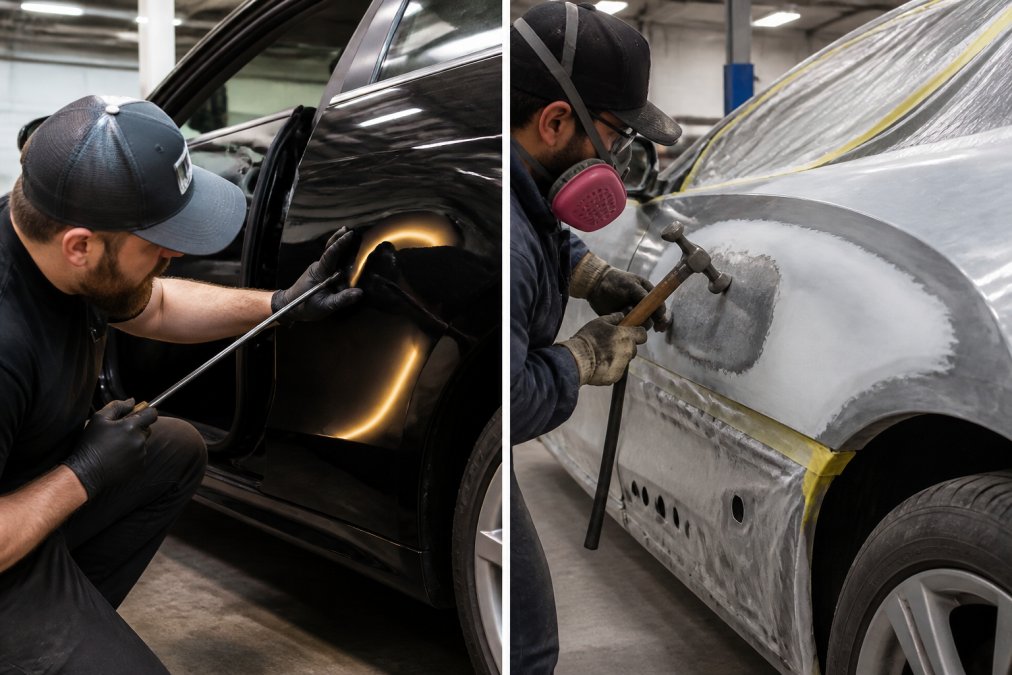
Traditional Body Shop Repair uses body filler to fill dents, sands the filler smooth, and repaints damaged panels. This method works for any type of damage, including creases and broken paint, but typically requires 1-2 weeks for completion. Repainting can affect resale value because it's not factory paint.
For hail damage specifically, PDR is often superior when dents haven't cracked the paint. Cost differences are substantial, PDR typically costs 40-60% less than traditional body shop repairs. Since your insurance covers the approved repair method, choosing PDR can reduce your out-of-pocket deductible contribution significantly.
Insurance adjusters understand these differences and will recommend the appropriate repair method based on damage type. For hail damage that PDR can address, they typically approve PDR.
Special Considerations for Leased and Financed Vehicles
If you lease your vehicle, your lease agreement typically requires comprehensive and collision coverage throughout the lease term. Review your lease agreement to understand any deductible requirements or repair shop restrictions. Many lease agreements require repairs at authorized facilities.
For financed vehicles, your lender usually requires comprehensive and collision coverage as a condition of the loan. You have more flexibility in choosing a repair shop than with leased vehicles. If damage is extensive and repair costs exceed your vehicle's value, the insurance company may declare it a total loss, with the settlement going toward paying off your loan.
Comprehensive claims typically don't affect your personal insurance rates the same way collision claims do, making filing a claim more attractive for leased vehicles.
Filing a hail damage insurance claim is manageable when you understand your coverage and follow proper steps. At 888 PDR, we handle the insurance claim process for you, managing communication with adjusters, providing detailed repair estimates, and ensuring you receive the coverage you're entitled to. Our team works directly with all insurance carriers and manages your claim from initial inspection through final payment. Contact 888 PDR for a free inspection and let us guide you through a hassle-free hail damage repair experience with lifetime warranty protection.
Frequently Asked Questions
Does comprehensive insurance cover hail damage?
Yes, comprehensive coverage protects against hail damage. This coverage is part of your auto insurance policy and covers non-collision incidents including weather-related damage. Hail falls under the 'act of god' clause, meaning it's considered a non-collision incident. Your policy limits and deductible determine what you pay out of pocket. Most comprehensive policies cover the full repair cost minus your deductible, making it the standard coverage type for hail damage claims.
Will my insurance rates go up if I file a hail damage claim?
Filing a hail damage claim typically does not increase your premiums. Most insurance carriers treat hail claims differently than at-fault accidents because hail is a natural disaster beyond your control. However, your claims history and the frequency of claims can affect your rates over time. It's worth contacting your insurance adjuster or agent to understand your specific policy terms and whether your claim will impact your premium before filing.
What is a deductible and how does it apply to hail repairs?
A deductible is the amount you pay out of pocket before your insurance covers the remaining repair costs. For hail damage claims, your deductible is subtracted from the total repair estimate. If your repair estimate is $5,000 and your deductible is $1,000, your insurance covers $4,000 and you pay $1,000. Some policies offer lower deductibles for comprehensive coverage, and you can adjust your deductible amount when renewing your policy to balance your premium and out-of-pocket expenses.
How does the insurance claims process work for hail damage?
The process begins with notifying your insurance company and scheduling a vehicle inspection with their adjuster. The adjuster assesses the damage and creates a repair estimate. You then select an auto body shop or repair facility, which provides a repair estimate to your insurance company. If the estimate matches the adjuster's assessment, your claim is approved. You pay your deductible, and insurance covers the rest. Some repair shops manage the entire claim process on your behalf, handling communication with the adjuster and supplemental claims if additional damage is found during repairs.
Is paintless dent repair (PDR) covered by insurance for hail damage?
Yes, paintless dent repair is covered by comprehensive insurance policies when used for hail damage repair. PDR is often preferred because it preserves your vehicle's original factory finish and resale value without requiring repainting or fillers. Insurance adjusters recognize PDR as a legitimate repair method, and many shops specialize in PDR for hail claims. The repair cost is evaluated the same way as traditional body shop repairs, with your deductible applied to the total estimate regardless of the repair method used.
What should I do immediately after a hail storm damages my car?
First, move your vehicle to a safe location and assess the damage visually. Take clear photographs and videos of all damaged areas from multiple angles, this documentation is critical for your claim. Contact your insurance company within 24-48 hours to report the damage and initiate the claim. Avoid temporary repairs or touching the damaged areas. Do not attempt DIY repairs. Keep all documentation, repair estimates, and communications with your insurance adjuster. Many repair shops offer free inspections and can guide you through the entire claims process.
Can I choose my own repair shop for a hail damage claim?
Yes, you have the right to choose your own repair facility. Your insurance company cannot force you to use a specific shop. However, the shop you select must be approved by your insurance carrier and provide an estimate that aligns with the adjuster's assessment. Some shops have established relationships with insurance companies and handle claims efficiently. When selecting a repair facility, verify they work directly with your insurance carrier, offer a warranty on repairs, and can manage the claims process to minimize your stress and out-of-pocket costs.
This article was written using GrandRanker