
Last Updated: November 19, 2026
Quick Summary
A mobile mechanic wins on convenience and simple jobs like batteries, brakes, belts, and fluid changes, usually with same or next day scheduling. A repair shop wins on diagnostics, engine work, alignment, and anything that needs a lift or full diagnostic equipment. Picking the wrong one for the job is where people get burned.
- Mobile service rarely needs towing, while shops sometimes require it for major failures.
- Ask for the trip charge and diagnostic fee in writing before anyone touches the car.
- A mobile tech needs flat, stable ground and about a full vehicle length of clearance on one side.
- ADAS calibration requires a controlled space, target boards, and a level floor, so most mobile operators won't attempt it.
- Keep the written estimate, final invoice, warranty terms, and proof of insurance after any repair.
Table of Contents
- Mobile Mechanic Versus Repair Shop: The Trade-Offs at a Glance
- Mobile Mechanic Versus Repair Shop Cost: Where the Money Actually Goes
- Mobile Mechanic Repair Limitations You Should Know Before Booking
- How Long Does a Mobile Mechanic Take Compared to a Shop Bay
- What Mobile Mechanic Reviews Reveal About Service Quality
- Warranty, Insurance, and Liability: The Fine Print Nobody Reads
- Cosmetic Damage Is a Different Job: Why Paintless Dent Repair Belongs in a Shop
- Booking a Free Inspection for Hail and Dent Damage
- Frequently Asked Questions
Mobile Mechanic Versus Repair Shop: The Trade-Offs at a Glance
The mobile mechanic versus repair shop decision comes down to one question: does the job need a lift, a scan tool, and a controlled bay, or can it be done in your driveway? Mobile service wins on convenience and simple jobs. A shop wins on diagnostics, heavy repairs, and anything that needs the vehicle raised.
We're 888 PDR, a family-owned paintless dent repair and auto hail damage repair company. Here's the short version before we break down costs.
| Factor | Mobile Mechanic | Repair Shop |
|---|---|---|
| Best for | Batteries, brakes, belts, fluid changes | Diagnostics, engine work, alignment |
| Where work happens | Your driveway or office lot | Fixed service bay with a lift |
| Scheduling | Usually same or next day | Often booked days out |
| Towing needed | Rarely | Sometimes, for major failures |
| Equipment access | What fits in the van | Full diagnostic equipment on site |
| Warranty | Varies by provider | Usually written and posted |
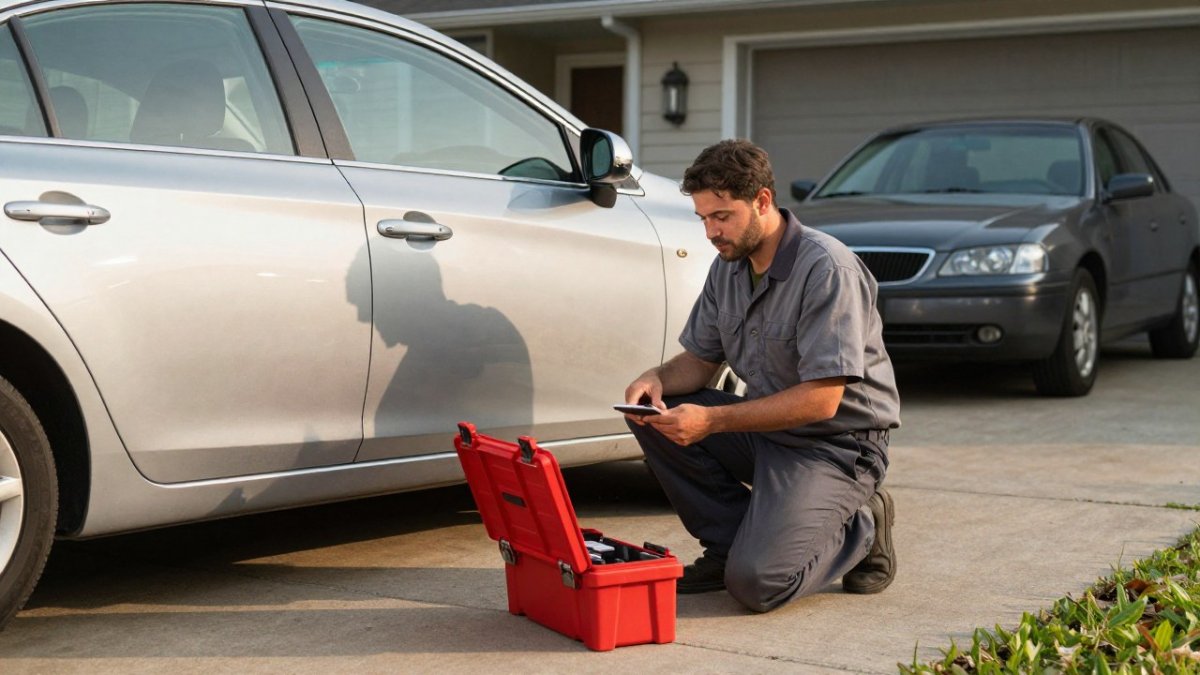
The trade-off cuts both ways: mobile service gives up some capability, while a shop costs you time and convenience. Picking the wrong one for the job is where people get burned.
Mobile Mechanic Versus Repair Shop Cost: Where the Money Actually Goes
Mobile service often costs less per hour on paper, but the gap closes fast once you add towing or a second visit. Shop overhead, labor rates, parts procurement, and the mobile tech's drive time all shape the final bill.
Labor Rates and Overhead
A shop carries rent, a lift, diagnostic equipment, insurance, and staff between jobs, overhead that shows up in the labor rate. A mobile mechanic skips the building but pays for a loaded van, fuel, and travel between calls.
For simple work, the two rates often land close together. Mobile pulls ahead by eliminating the tow; shops pull ahead by doing the job once, correctly, with the right specialized tools on hand.
Hidden Costs on Both Sides
Watch out for these, because they're where budgets break:
- Mobile: trip charges, minimum call-out fees, and a second visit if the first diagnosis was incomplete
- Shop: towing costs, storage fees if the car sits waiting on parts, and diagnostic fees that don't roll into the repair
- Both: parts markup, and labor warranty terms that differ from the parts warranty
Ask for the trip charge and the diagnostic fee in writing before anyone touches the car. That one question prevents most billing surprises.
Mobile Mechanic Repair Limitations You Should Know Before Booking
Mobile repair limitations start with the ground under the car: no lift means no comfortable underside access, and no fixed bay means weather and driveway slope become part of the job. The limits that actually cancel appointments are whether the tech can legally and physically work where you park, and what happens to the waste the job produces.
Vehicle Accessibility Requirements
A mobile mechanic needs flat, stable ground, roughly a full vehicle length of clearance on one side, and room for jack stands and a creeper. A sloped driveway, gravel, soft turf, or a tight apartment carport can make the job unsafe or impossible, and a tech who arrives to those conditions will often decline the work and still charge a trip fee.
HOA rules matter too: many prohibit driveway repairs, some city codes restrict commercial work in residential zones, and leases may ban it outright. Confirm before you book, because a tech asked to leave mid-job by a property manager has still spent the trip.
Garage access is the other variable. An enclosed garage with a standard door gives shelter and a level surface, the best case. A street spot with traffic on one side is the worst. When booking, describe the surface, slope, and overhead clearance, and ask whether the operator has worked that type of location before.
Environmental Disposal Rules
Oil changes, coolant flushes, and brake jobs generate hazardous waste, and handling differs sharply.
A mobile mechanic has no shop to store waste in.
Diagnostic Equipment Limits
Modern vehicles lean on factory-level scan tools and software a van can't always carry. A mobile tech can read codes and handle a lot, but complex electrical faults, module programming, and ADAS calibration usually need a shop, ADAS calibration requires a controlled space, target boards, and a level floor, which is why most mobile operators won't attempt it. When a fault does not require specialized equipment, mobile car maintenance can keep routine service convenient without taking the vehicle away from a shop when deeper diagnostics are needed.
What Sorts Where
If you are unsure how on-site work actually happens, on-site dent removal: step-by-step process walks through inspection, access, and tools, which gives you a feel for what a mobile tech can realistically reach and fix in your driveway.
How Long Does a Mobile Mechanic Take Compared to a Shop Bay
Turnaround time breaks into three parts:
- Booking wait - mobile usually shorter
- Travel and setup - mobile adds a window for arrival and unloading
- Actual repair time - roughly equal for the same job
For drivers who can't lose their car for a day, 7 benefits of mobile dent repair for busy professionals covers why mobile convenience matters so much when work and family schedules are already full.
What Mobile Mechanic Reviews Reveal About Service Quality
Read mobile mechanic reviews for patterns, not stars. The useful signal is repetition: the same complaint across many reviews points to a real weakness, while one angry review is usually about a single bad day.
What we look for when reading reviews for any repair service:
- Arrival reliability - do reviewers mention the tech showing up when promised?
- Written estimates - did the price hold, or did it grow after the work started?
- Cleanup - was the driveway left as found?
- Follow-up - did the provider answer questions after the invoice?
- Warranty handling - did they honor the service guarantee without a fight?
Read a shop's reviews the same way. Service quality shows up in how a business handles the job that went wrong, not in how many five-star ratings it has.
Warranty, Insurance, and Liability: The Fine Print Nobody Reads
Ask two questions before booking either option: who is insured, and what does the warranty actually cover? Most articles on mobile mechanic versus repair shop skip this entirely, which is a mistake, because the legal and financial protection around a repair differs sharply between a van in your driveway and a fixed facility.
Who Is Actually Liable When Something Goes Wrong
Watch out: if a mobile tech is uninsured and damages your property, your own homeowners policy may be the only coverage available, and filing that claim can affect your premium.
What a Warranty Actually Covers
Separate the two halves of any repair warranty. A parts warranty comes from the parts manufacturer and usually covers only the part itself, not the labor to replace it. A labor warranty comes from whoever did the work, and its value depends entirely on whether that business will still be around and willing to honor it. For a closer look at how a written lifetime warranty works, see Hail Damage Repair Lifetime Warranty Explained.
Post-Repair Support and Follow-Up
This is the difference nobody puts in a comparison table. A shop is a place you can return to. If a brake job starts squealing a week later, you drive to the bay, the service writer pulls the ticket, and the tech who did the work looks at it again. The accountability is structural, not personal.
A mobile mechanic has to come back to you, a second scheduling window, sometimes a second travel charge, and another day coordinated around an arrival window. Most mobile operators honor their warranties, but the friction of a return visit is real and is the most common complaint pattern in mobile repair reviews. When you book mobile service, ask how warranty returns are scheduled and whether they are prioritized ahead of new calls.
The Paper Trail to Keep
Whichever option you choose, keep the written estimate, the final invoice, the warranty terms, and the proof of insurance.
Cosmetic Damage Is a Different Job: Why Paintless Dent Repair Belongs in a Shop
Hail dents and door dings are not mechanical repairs, and they don't follow the same rules. Paintless dent repair needs proper lighting and careful hands working the back of each panel.
The reason matters for resale value. Paintless dent repair removes hail dents, door dings, and creases without fillers or repainting, preserving the vehicle's factory finish and resale value.
If you're weighing whether cosmetic repair is worth the money at all, is paintless dent repair worth it? compares PDR against body shop repair and looks at the effect on resale value before you commit.
Booking a Free Inspection for Hail and Dent Damage
A free inspection is available for hail and dent damage, so you can get a clear answer on your damage before you decide.
At 888 PDR, we handle the whole hail claim for you, from first notice of loss through supplement and final payment, and we work directly with all insurance carriers. If you're comparing at-home repair options more broadly, at-home car repair service options compared and explained lays out what each one actually covers.
Hail season doesn't wait, and neither should your inspection. Call (469) 284-0336 or request a free inspection and get a clear answer on your damage before you book anyone.
The hardest part of hail damage isn't the repair.
Frequently Asked Questions
What are the drawbacks of using a mobile mechanic?
The main drawbacks are equipment limits and working conditions. A mobile service unit carries hand tools and a diagnostic scanner, but not an automotive lift, alignment rack, or heavy-duty extraction equipment. Jobs needing a service bay, such as transmission work, frame straightening, or major engine teardown, get referred out. Weather and driveway access also affect turnaround time, and fluid disposal has to be handled on site rather than through a shop's regulated waste system. Ask about warranty protection and insurance coverage before booking.
Is it cheaper to use a mobile mechanic than a repair shop?
Sometimes, but not always. A mobile mechanic skips shop overhead, so labor rates can run lower for simple jobs like battery replacement, brake pads, or a starter swap. That advantage shrinks when the job needs diagnostic equipment or a second visit for parts procurement. Get the out-the-door quote in writing, including any trip fee, and compare it against a shop estimate that already bundles facility costs. For collision or hail damage, a shop with insurance claim handling usually saves more than the hourly difference.
When should I take my car to a repair shop instead of hiring a mobile mechanic?
Cosmetic damage is a separate category: paintless dent repair for hail dents, door dings, and creases removes dents without fillers or repainting, preserving the vehicle's factory finish and resale value.
Are mobile mechanics as reliable as repair shops?
Reliability depends on the individual technician, not the category. Read mobile mechanic reviews for patterns: repeated no-shows, vague pricing, or missing warranty terms are red flags. Confirm the technician holds current certification, carries liability insurance, and offers a written service guarantee. A shop gives you a fixed address, a service bay, and a documented repair process, which makes follow-up easier if something goes wrong. For anything beyond routine maintenance, that accountability matters.
