Table of Contents
- Why Factory Finish Matters After Collision Damage
- Paintless Dent Repair vs Traditional Body Shop Repair
- How to Maintain Car Resale Value After an Accident
- Does Repainting a Car Lower Its Resale Value
- Protecting Your Factory Finish: Paint Protection Film and Ceramic Coatings
- Insurance Claims and Warranty Protection for Your Factory Finish
- Frequently Asked Questions
Last Updated: October 1, 2026
Why Factory Finish Matters After Collision Damage
Understanding factory finish collision damage is critical because your car's factory finish is more than cosmetic. It's a protective layer engineered by manufacturers to shield the metal underneath from rust, UV damage, and environmental contaminants. When collision damage occurs, how you repair it directly impacts your vehicle's resale value, durability, and long-term condition.
The factory finish serves three critical functions: it protects against oxidation and corrosion, it maintains the vehicle's structural integrity by providing a sealed barrier, and it preserves the resale value that buyers expect when purchasing a pre-owned vehicle. At 888 PDR, we work with vehicle owners in the area who prioritize addressing factory finish collision damage through proper repair methods. The difference between repairing damage while maintaining that original finish versus repainting can mean thousands of dollars in lost value down the road.
When a collision occurs, your instinct might be to get the car back on the road as quickly as possible. But the method you choose for repairing that damage, whether paintless dent repair or traditional body shop work, fundamentally determines whether your factory finish remains intact or gets compromised.
Paintless Dent Repair vs Traditional Body Shop Repair
Paintless dent repair (PDR) removes dents without disturbing the original paint, while traditional body shop repair typically involves sanding, filling, and repainting damaged areas. The distinction matters more than most vehicle owners realize.
Paintless dent repair uses specialized tools and techniques to massage dents out from behind the panel, preserving every layer of your factory finish. A trained technician accesses the back of the damaged panel and carefully works the metal back into its original shape. This method works best on dents without paint damage, creases, or sharp impacts. The advantage is clear: your vehicle retains its original factory paint, which means no color matching issues, no risk of paint failure, and no compromise to the clear coat that protects against UV radiation and environmental fallout.
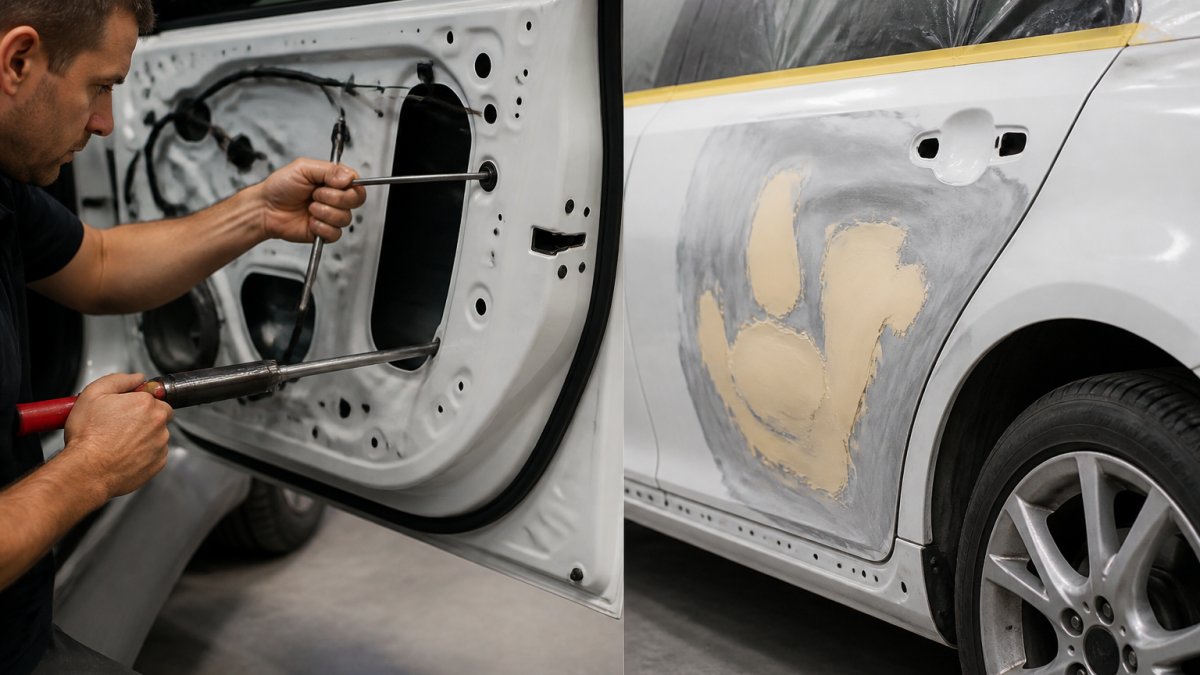
Traditional body shop repair involves removing damaged panels or sections, sanding down to bare metal, applying primer and filler, then repainting and clear coating. This approach is necessary when paint damage is severe, when metal is creased beyond PDR capability, or when the damage involves multiple layers. However, repainting introduces variables that PDR avoids: color matching inconsistencies, paint thickness variations, and the risk that the new paint won't bond as durably as the factory finish.
How to Maintain Car Resale Value After an Accident
Resale value depends on three factors: mechanical condition, overall appearance, and documentation of how damage was repaired. A vehicle with collision damage repaired using paintless dent repair typically retains more resale value than one that required repainting.
Buyers conducting pre-purchase inspections use paint depth gauges to measure coating thickness. Factory finish typically measures between 100-150 microns. Repainted sections often measure 200+ microns because the new paint is applied on top of the existing finish. A savvy buyer will spot this inconsistency and assume the vehicle has hidden damage or poor repair quality. That assumption costs you money at trade-in or private sale. Maintaining the integrity of these original layers remains the most effective way to preserve long-term value, a principle further detailed in our ceramic coating guide.
Documentation matters. Keep records of every repair, including photographs of the damage before and after repair, the repair method used, and any warranty provided. If you used paintless dent repair, that's a selling point, it demonstrates you prioritized preserving the factory finish. If repainting was necessary, documentation showing professional repair and quality workmanship helps offset the value loss.
Insurance claim handling also affects resale value. When an insurance company authorizes repairs, they're making a judgment about the repair method. Insurers increasingly prefer PDR for qualifying damage because it reduces total loss declarations and preserves vehicle value. If your insurance claim specifically approved paintless dent repair, that's documentation that the damage was within PDR capability, another positive signal to future buyers.
The timing of repairs matters too. Addressing collision damage promptly prevents secondary damage. A dent that goes unrepaired allows water to pool in the damaged area, leading to rust formation underneath the paint. Once rust starts, the damage becomes structural and significantly reduces resale value. Quick repair, whether PDR or traditional, prevents that cascade.
Does Repainting a Car Lower Its Resale Value
Yes, repainting a car typically lowers its resale value compared to a vehicle with original factory finish. The amount varies depending on the extent of repainting and the quality of the work, but the impact is measurable and consistent.
A full repaint, covering the entire vehicle, signals to buyers that the car has a hidden history, usually collision damage. Even if the repair was professional and flawless, the fact that repainting occurred creates doubt. Buyers assume the worst: that the damage was severe, that the repair quality might be questionable, or that future issues will emerge. That assumption translates to lower offers.
Partial repainting, touching up a single panel or section, is often more damaging to resale value than full repainting, paradoxically. A partial repaint is visible to anyone with a paint depth gauge or even a trained eye. It signals that damage was isolated but repaired, which raises questions about whether the repair was done correctly and whether the adjacent panels sustained hidden damage.
The resale value loss depends on the vehicle's age and market position. A newer luxury vehicle loses more value from repainting than an older economy car. Over the life of vehicle ownership, that loss compounds, especially if you're trading in or selling privately within a few years of the collision.
This is why preservation of factory vehicle finish for collision damage matters so much. The cost difference between paintless dent repair and repainting is often small, but the long-term resale value impact is substantial. A vehicle owner who invests in PDR to preserve the factory finish is protecting thousands of dollars in future resale value.
Protecting Your Factory Finish: Paint Protection Film and Ceramic Coatings
After collision damage repair, protecting your factory finish from future damage becomes critical. Two technologies dominate the market: paint protection film (PPF) and ceramic coatings.
Paint protection film is a clear, adhesive-backed polyurethane layer applied directly to the paint. It acts as a sacrificial layer, absorbing impact from rock chips, road debris, and minor abrasions. It's particularly valuable for vehicles in high-risk environments where rock chips and road debris are common. The film preserves the factory finish underneath by taking the damage instead.
Insurance Claims and Warranty Protection for Your Factory Finish
Insurance coverage for collision damage typically includes the cost of repairs, but the repair method approved by your insurer and the protective products you apply afterward both affect your factory finish preservation and future claim eligibility. Understanding these interactions protects your interests and prevents costly coverage gaps.
When you file a collision damage claim, the insurance company assigns an adjuster who estimates repair costs and approves a repair method. Insurers have financial incentives to approve the most cost-effective repair: paintless dent repair, when applicable, is cheaper than traditional body shop work. If the damage qualifies for PDR, your insurer will likely approve it. If repainting is necessary, the insurer covers that cost, but the repainting itself still impacts your vehicle's long-term value.
Warranty Protection on Repairs
Warranty protection on repairs varies by shop and repair method. Paintless dent repair typically comes with a workmanship warranty; if the dent reappears within the warranty period, the shop will re-repair it at no cost. Traditional body shop repairs include paint warranties, usually 3-5 years, covering paint failure or delamination. However, a paint warranty doesn't restore the factory finish; it only guarantees the quality of the new paint applied.
A lifetime warranty on PDR work means if a dent reappears years after repair, you're covered. It also protects your factory finish preservation investment, you're guaranteed the repair will hold.
How Paint Protection Film and Ceramic Coatings Affect Manufacturer Warranties
This is where most vehicle owners encounter confusion.
Manufacturer warranties typically cover defects in materials and workmanship on the vehicle itself, the paint, clear coat, and underlying components. Most manufacturers, including those covered under the Magnuson-Moss Warranty Act (federal law governing consumer product warranties), cannot void your warranty simply because you applied a protective film or coating, provided the application was done professionally and didn't damage the underlying paint.
Insurance Claims After Protective Film Application
Deductibles and Repair Decisions
Insurance deductibles affect repair decisions. If your deductible is high, you might hesitate to file a claim for minor damage. However, delaying repair allows secondary damage to develop. Water intrusion, rust formation, and paint oxidation can turn a minor dent into a major problem. Filing a claim promptly and getting professional repair, whether PDR or traditional, prevents that cascade and protects your factory finish long-term.
Frequently Asked Questions
Does paintless dent repair preserve factory finish better than traditional body work?
Yes. Paintless dent repair removes dents without sanding, filling, or repainting, keeping your original factory finish intact. Traditional body shop repairs involve removing damaged paint, applying filler, sanding, and repainting, processes that alter the factory finish and can affect long-term resale value. The factory finish is a carefully applied multi-layer system designed for durability and appearance; preserving it maintains your vehicle's structural integrity and market value.
How does collision damage affect vehicle resale value?
Collision damage that requires repainting or filler work can reduce resale value, depending on the extent of repairs and how well they're documented. Buyers view repainted panels as a red flag for hidden damage or poor repair quality. Vehicles with documented factory finishes command higher prices. Using paintless dent repair to preserve the original finish helps maintain value and buyer confidence when you eventually sell.
Does repainting a car lower its value?
Yes, repainting typically lowers resale value because buyers perceive it as evidence of accident damage or poor repair work. Even high-quality repaints can fail to match the factory finish exactly in color, texture, or durability. Carfax and similar vehicle history reports flag repaints, which discourages buyers. Preserving your original factory finish through paintless dent repair avoids this penalty and protects your investment.
What should I do immediately after a collision to protect my car's finish?
Document the damage with photos and video before any repairs begin. Avoid DIY touch-ups or temporary fixes. Contact your insurance company and request a repair estimate from a shop experienced in paintless dent repair and factory finish preservation. Get a written warranty on all repairs. Prompt, professional action minimizes long-term finish damage and preserves your vehicle's resale value.