Table of Contents
- How Paintless Dent Repair Protects Resale Value
- Paintless Dent Repair vs. Traditional Body Shop Repair
- Paintless Dent Repair Cost vs. Body Shop: Impact on Your Bottom Line
- Does PDR Affect Carfax and Vehicle History Reports?
- PDR for Lease Returns: Meeting Inspection Standards
- What Buyers and Dealers Notice: Factory Finish vs. Repaint
- When PDR Makes the Most Difference to Trade-In Appraisals
- Conclusion
Last Updated: August 25, 2026
How Paintless Dent Repair Protects Resale Value
Paintless dent repair removes dents, dings, and creases without fillers, repainting, or disturbing the vehicle's original factory finish. Preserving that factory paint protects one of the most significant factors determining what a buyer or dealer will pay for your vehicle.
The original factory finish is applied in a controlled manufacturing environment with precision no body shop can replicate. It's thicker, more uniform, and has molecular integrity that signals to buyers your car hasn't been in a collision. A buyer inspecting the vehicle in person or a dealer using a paint depth gauge will immediately detect repainting. That discovery often leads to lower offers or walk-aways.
When you remove a dent without touching the paint, you're telling the market that your vehicle's structural integrity and cosmetic history are intact. A small unrepaired hail dent might cost you a few hundred dollars at trade-in, while a repainted dent can cost thousands. Paintless dent repair for resale value preserves the asset value that factory paint represents.
Paintless Dent Repair vs. Traditional Body Shop Repair
Paintless dent repair (PDR) uses specialized tools to reshape metal from behind the panel, keeping the factory paint intact. Traditional body shop repair involves sanding, filling, matching paint, and repainting, a process that, no matter how skilled the technician, leaves evidence of work.
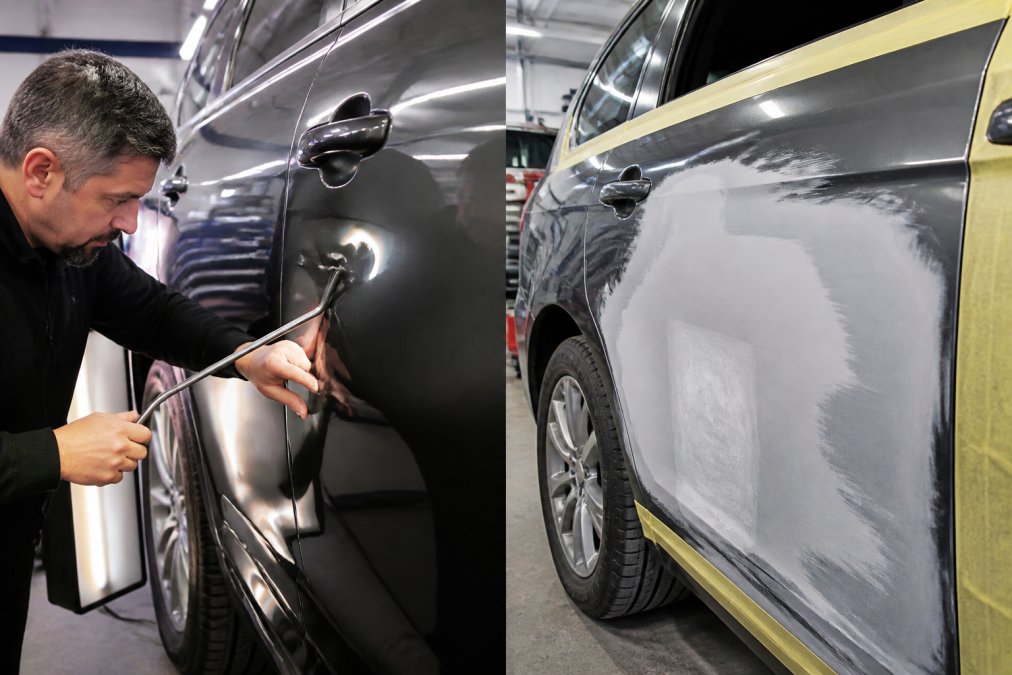
From a resale standpoint, this distinction matters enormously. A paint depth gauge, standard among dealers and appraisers, measures paint thickness on body panels. Factory paint typically measures 100-150 microns; repainting often exceeds 200 microns or shows inconsistency (peer-reviewed research). That reading signals collision or cosmetic repair, immediately affecting market value.
Paintless dent repair leaves no such flag. Paint thickness remains factory standard, the clear coat is unbroken, and under magnification or ultraviolet light, the panel looks original. For minor to moderate dents, dings, and hail damage, PDR preserves the resale value advantage that factory finish provides, the difference between a buyer seeing "original condition" and "this car has been repaired."
Paintless Dent Repair Cost vs. Body Shop: Impact on Your Bottom Line
When evaluating paintless dent repair for resale value, the real financial advantage emerges at trade-in or sale time, not just in immediate repair costs.
Traditional body shop repair for hail damage involves labor for sanding, filling, color matching, and repainting over days or weeks. Paintless dent repair can be completed faster. But the critical advantage continues at resale: a vehicle repaired via traditional body shop and sold six months later faces a discount when a dealer's paint depth gauge reveals repainting. Choosing PDR avoids that discount entirely.
888 PDR manages insurance claims directly, so customers often pay only their deductible. Our lifetime warranty on all repairs means any issues are covered at no additional cost. For lease returns, PDR before lease-end inspection can mean the difference between passing and facing charges running into hundreds or thousands of dollars.
Does PDR Affect Carfax and Vehicle History Reports?
Paintless dent repair doesn't automatically appear on Carfax or AutoCheck because PDR isn't typically reported as a collision or major repair by insurance companies or body shops. If you file an insurance claim and use a traditional body shop, that claim may appear as a "loss event." A minor repair handled outside insurance won't appear.
However, a vehicle history report is only one factor in a buyer's assessment. More important is the physical inspection. A buyer or dealer will visually inspect the vehicle and use paint depth measurement tools. If the paint is original and the dent is gone, the vehicle passes as original condition. The real advantage of PDR is that it leaves no physical evidence for a buyer to find. A claim history plus original paint and no visible damage actually strengthens buyer confidence, showing damage was properly managed without compromising vehicle integrity.
888 PDR works directly with all insurance carriers to manage claims from first notice of loss through final payment, ensuring the repair is documented correctly.
PDR for Lease Returns: Meeting Inspection Standards
Lease-end inspections are critical moments where paintless dent repair for resale value has immediate financial importance. Lease companies charge substantial fees for damage beyond normal wear and tear. A single door ding might cost $150-300 through the dealership's preferred body shop; multiple dings or hail damage can result in charges running into thousands (the FTC).
Normal wear includes minor paint chips and light scratches, not visible dents, dings, creases, or hail damage (the FTC). Choosing PDR before lease return eliminates the risk of lease-end charges. A dent repaired via PDR six months before lease end might cost more when charged by the lease company at lease return.
888 PDR offers vehicle pickup and delivery, making lease damage repair convenient. The repair is completed quickly, often within days, and your vehicle is returned ready for lease-end inspection with lifetime warranty protection.
What Buyers and Dealers Notice: Factory Finish vs. Repaint
When a buyer or dealer inspects a used vehicle, they're looking for evidence of prior damage and repair. The factory finish is their primary indicator of whether the vehicle has been in a collision or undergone significant cosmetic work.
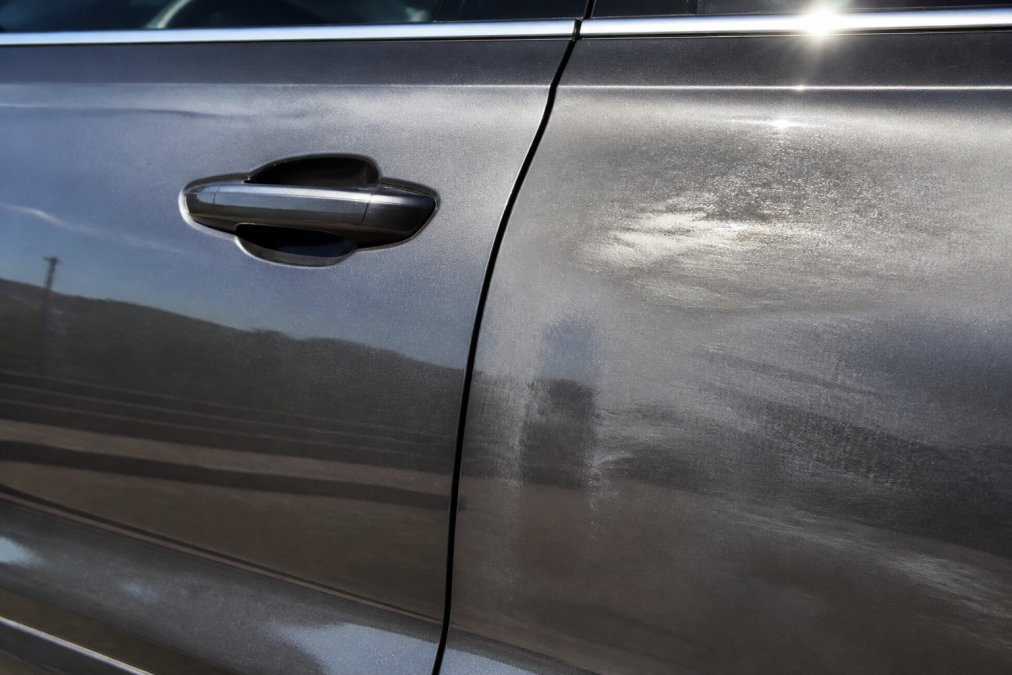
A factory finish has specific characteristics trained inspectors recognize immediately. Paint is applied in multiple thin layers with precise thickness and consistency. Under a paint depth gauge, factory paint reads within a narrow, predictable range. Under ultraviolet light, the finish glows evenly without inconsistencies indicating masking and repainting.
A repainted panel tells a different story. Paint is often thicker due to multiple repair coats. Transitions between repaired and original panels may show gloss or color variation. Overspray is visible on close inspection. Paint depth gauge readings exceed factory standards. Under UV light, the repaired area shows a distinct boundary where masking tape was applied.
Many serious buyers bring paint depth gauges to inspections. When dealers see evidence of repainting, the offer drops and questions arise about damage history. Paintless dent repair for resale value avoids this conversation entirely. The factory finish remains intact, the paint depth gauge reading is original, and the buyer sees a well-maintained vehicle never in a collision.
When PDR Makes the Most Difference to Trade-In Appraisals
Trade-in appraisals are where paintless dent repair for resale value delivers its clearest financial return. Dealers have standardized appraisal processes where visible damage reduces offer price, and repainting reduces it further.
If you're planning to trade in your vehicle within 12-24 months, addressing cosmetic damage now through paintless dent repair is a smart financial decision. A vehicle with visible hail damage might be appraised at less than an identical vehicle in original condition. If repaired via traditional body shop, the paint depth gauge reveals repainting, and the appraiser still deducts for prior repair history. If repaired via PDR, the appraisal shows no deduction because the vehicle appears original.
The break-even point for PDR is typically reached within the first trade-in or sale. Vehicles with original paint command higher prices on dealer lots because buyers perceive them as better-maintained. Dealers know this and will pay more for vehicles with original paint. 888 PDR works with dealerships directly on reconditioning projects, understanding exactly what dealers seek when assessing vehicle condition.
Conclusion
Paintless dent repair for resale value is one of the most overlooked decisions vehicle owners make. The choice between PDR and traditional body shop repair isn't just about repair cost, it's about preserving the asset value that factory paint represents. When you maintain original paint, you protect resale value, pass dealer inspections with higher appraisals, and present buyers with a vehicle that appears original and well-maintained.
888 PDR specializes in this scenario. We remove hail dents, door dings, and creases without fillers or repainting, preserving your vehicle's factory finish and resale value. Our lifetime warranty on all repairs, direct insurance claim management, and vehicle pickup and delivery service make the process hassle-free. Whether you're preparing for trade-in, lease return, or private sale, choosing paintless dent repair for resale value is an investment that pays dividends at appraisal time.
Get a free inspection and quote from 888 PDR today. Call (469) 284-0336 or visit our Dallas-Fort Worth location at 4707 LBJ Freeway to learn how PDR can protect your vehicle's value.
Frequently Asked Questions
Does paintless dent repair really preserve resale value better than traditional body shop repair?
Yes. Paintless dent repair maintains your vehicle's original factory finish and paint thickness, both critical factors in trade-in appraisals and private sales. Buyers and dealers recognize that PDR avoids the structural and cosmetic risks of repainting. A vehicle with factory paint commands higher resale prices than one with visible body filler or repainting, especially for newer cars where original condition is expected.
Does PDR affect Carfax or show up on my vehicle history report?
No. Paintless dent repair does not appear on Carfax or vehicle history reports because it is not a collision repair or body shop claim, it is cosmetic restoration. This is a major advantage for resale value. A vehicle with no collision history on record maintains its market appeal and appraisal value. Insurance claims for PDR may be documented with your insurer, but they do not flag your vehicle as damaged in the way traditional body work does.
Is paintless dent repair worth the investment before selling my car?
It depends on the damage extent and your vehicle's age and market value. PDR is most cost-effective for hail damage, door dings, and creases on vehicles under 10 years old with strong resale demand. For newer vehicles or those with significant cosmetic damage, addressing dents before sale or trade-in can increase appraisal value. Buyers expect factory-condition vehicles, and visible dents reduce negotiating power and final offers significantly.
What is the difference between PDR and traditional body shop repair for lease returns?
Lease return inspections assess wear and damage against manufacturer standards. Paintless dent repair meets these standards without penalty because it restores the original surface without repainting or fillers. Traditional body shop repairs, including repainting, often fail lease inspections or trigger excess wear charges because they deviate from factory specifications. PDR allows you to return your vehicle in factory condition and avoid costly lease-end fees.
This article was written using GrandRanker