
Last Updated: November 4, 2026
Quick Summary
Minor cosmetic repairs can raise your trade-in value when the repair costs less than the deduction an appraiser would take for leaving the damage alone. Small dings and scratches are usually worth fixing, especially with paintless dent repair that keeps the factory paint intact. Compare each repair cost to the likely deduction before booking.
- Dealers base offers on a valuation guide, then subtract condition and reconditioning costs.
- Get at least two quotes for each repair and ask the dealer what deduction they would take.
- Use the formula: likely deduction times share recovered, minus repair cost, equals net gain.
- Paintless dent repair leaves original paint untouched, which buyers and appraisers tend to prefer.
- Skip repairs whose cost exceeds the deduction, such as full panel repaints or cracked bumper covers.
Table of Contents
- How Dealers Calculate Trade-In Value and Where Cosmetic Damage Fits
- Does Body Damage Affect Trade-In Value? Where the Deductions Come From
- Step 1: Get an Honest Baseline Before You Touch Anything
- Step 2: Decide What to Fix Using a Simple ROI Check
- Paintless Dent Repair for Resale Value: Why Original Finish Matters
- The Cost of Minor Cosmetic Car Repairs Compared to the Deduction
- Dealership Reconditioning Standards and Prepping Your Car for the Appraisal
- Booking Your Free Inspection Before Your Trade-In Appointment
- Frequently Asked Questions
How Dealers Calculate Trade-In Value and Where Cosmetic Damage Fits
Most trade-in offers start with a valuation guide number, then get adjusted down by the dealer's appraiser.
The trade-in value of your car is what a dealer will pay you today, not its open-market worth.
Here is what usually goes into a dealer's appraisal:
- Base market value from a pricing guide, based on year, mileage, and trim
- Condition adjustments for dents, paint chips, scratches, and interior wear
- Reconditioning costs the dealer expects to pay to make the car sellable
Because the appraiser adds up every item, a few small flaws can add up to a meaningful deduction. That is why fixing the right items before the appraisal can help.
Does Body Damage Affect Trade-In Value? Where the Deductions Come From
Yes, body damage almost always affects trade-in value, though not always by the amount you expect.
Small dings and scratches are the least costly for a dealer to address. Larger dents, cracked paint, and damaged panels cost more because they may need a body shop, filler, and repainting.
Common sources of deductions include:
- Door dings and shallow dents that can often be removed without repainting
- Hail damage across the roof, hood, and trunk, which affects many panels at once
- Scratches through the clear coat that expose the base color or primer
Remember that the appraiser works from the buyer's side, so a deduction does not always match what a repair would cost you as the owner.
Step 1: Get an Honest Baseline Before You Touch Anything
Before you spend any money, find out where your car stands today so you do not fix things that will not change the offer.
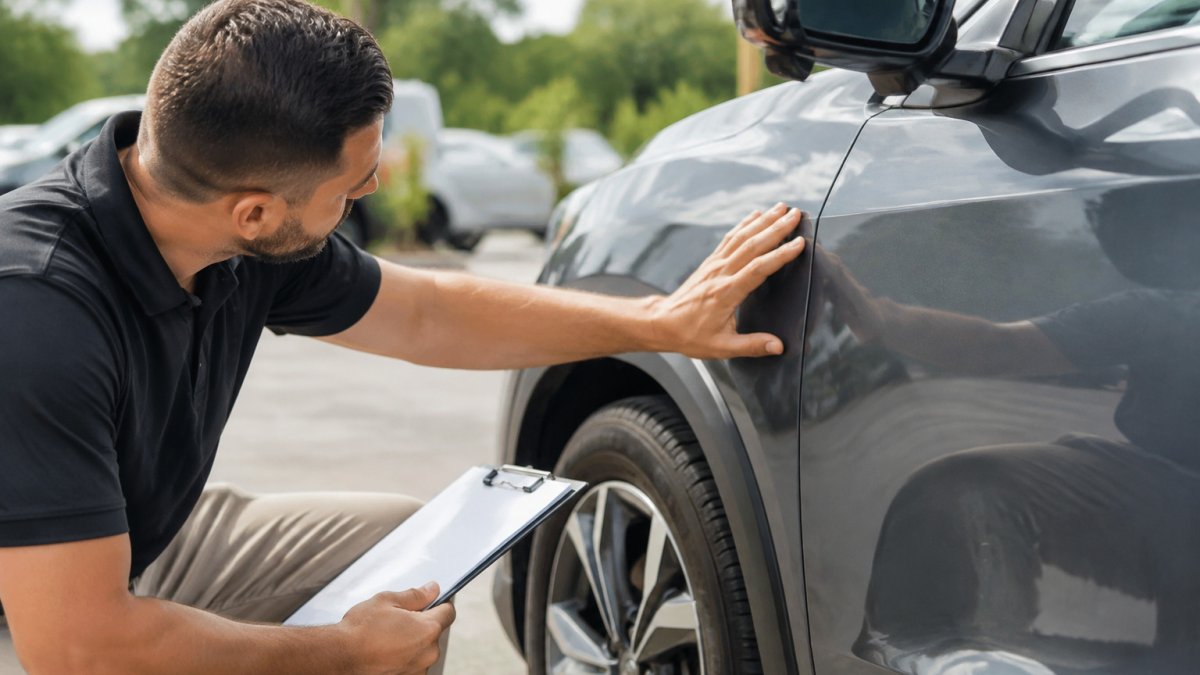
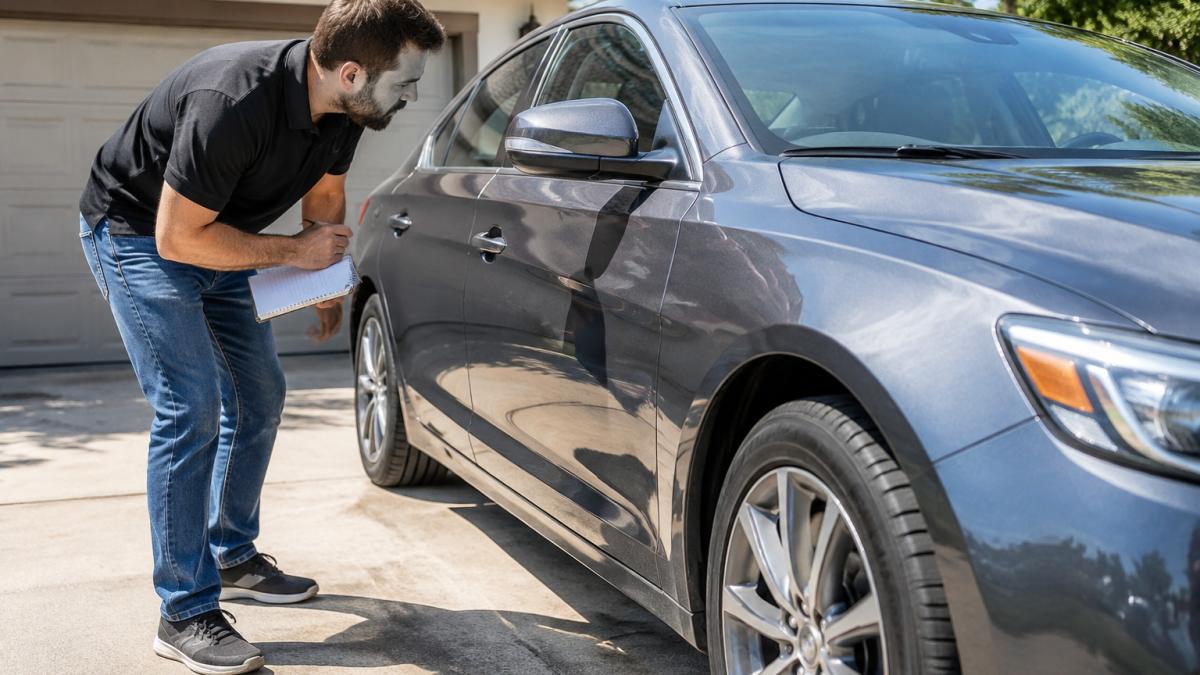
Start with a walk-around in good daylight, standing about six feet from each side. Check for dents, scratches, and paint chips, then the interior for stains, odors, and worn upholstery, and finally the tires, glass, and lights.
Next, get real offers. Visit two or three dealers or use an online offer tool, ask each for a written estimate, and compare them to a valuation guide such as Kelley Blue Book or Edmunds.
Write down every flaw with its size and location; this list feeds the ROI check in the next step.
- Take dated photos of each flaw from several angles
- Note the mileage and any service records you have
- Record the offers you received and who made them
Step 2: Decide What to Fix Using a Simple ROI Check
Not every repair pays for itself. The goal is to spend a small amount to gain a larger increase in the offer. The framework below turns the usual one-line ROI formula into a repeatable worksheet for each flaw.
Use this formula for each repair:
Expected offer increase minus repair cost = net gain
For example, if a $150 paintless dent repair might raise a trade-in offer by $400, the net gain is $250.
The problem is that "expected offer increase" is a guess.
A worksheet you can copy
For each item on your flaw list, fill in these columns:
- Flaw and location, for example, "driver door ding, 2 inches, no paint crack"
- Likely deduction if left as-is, ask the dealer or an independent appraiser for this number in writing
- Repair method and quoted cost, get at least two quotes, one PDR and one body shop where both apply
Rank the rows by net gain, then by time cost. Fix the top rows until the net gain turns negative or the time cost becomes unreasonable.
Worked examples across repair types
These examples use round numbers to show the math, not to quote current market prices. Request written quotes from local providers for your vehicle.
- Door ding, no paint damage. Likely deduction $300. PDR quote $150. Share recovered 100%. Net gain $150. Time cost one visit. Usually worth doing.
- Deep scratch through the clear coat on a rear quarter panel. Likely deduction $500. Body shop repaint quote $700. Share recovered 100%. Net gain negative $200. Usually skip, or ask whether a touch-up blend at a lower cost is acceptable.
- Hail damage across the hood and roof. Likely deduction $1,200. PDR quote $900. Share recovered 90%. Net gain $180. Worth doing if the shop can finish before your trade appointment.
Watch out: "share recovered" is where owners fool themselves. An appraiser who sees a repainted panel may still deduct for paint work even after the dent is gone, so a repair that changes original finish can recover less than 100% of the deduction.
Questions that sharpen the estimate
- Is the flaw large enough that an appraiser will clearly deduct for it?
- Can a low-cost repair remove it completely without changing the factory finish?
- Would a buyer notice it from a few feet away?
Be realistic: your estimate of the offer increase is only a guess, so ask the dealer or an appraiser how much a specific fix would change the number.
Repair thresholds: when a fix pays and when it does not
As a general rule, a repair is worth considering when the cost is well below the likely deduction. Repairs that approach or exceed the deduction rarely pay off.
- Usually worth fixing: door dings, small hail dents, and minor scratches that a low-cost method can address
- Sometimes worth fixing: a single cracked windshield or a broken light, depending on the model and the offer gap
- Usually not worth fixing: full panel replacements, large repaints, and major rust repairs before a trade-in
Many owners find that small cosmetic repairs cost little compared to the deduction they remove, while major structural or mechanical repairs rarely pay back before a trade.
The article's worked examples show how the same flaw can land on either side of the line, depending on repair cost and how much of the deduction it removes.
| Flaw | Likely deduction | Repair quote | Net gain / verdict |
|---|---|---|---|
| Door ding, no paint damage | $300 | $150 PDR | $150, usually worth doing |
| Deep scratch through clear coat | $500 | $700 repaint | -$200, usually skip |
| Hail damage on hood and roof | $1,200 | $900 PDR | $180, worth doing if timely |
| Cracked bumper cover | $600 | $1,100 replace and paint | -$500, skip and disclose |
| Worn driver seat bolster | $250 | $200 interior repair | $0, borderline |
Paintless Dent Repair for Resale Value: Why Original Finish Matters
Paintless dent repair, often called PDR, removes dents by massaging the metal back into shape from behind the panel.
Original paint is a strong signal of a well-kept car. Learn more about what buyers want from PDR-repaired cars and how factory finish affects resale.
PDR tends to help resale value in a few ways:
- The factory finish stays intact, so the panel looks original
- There is no filler used in the repair
- The car keeps its original paint, which buyers tend to prefer
PDR works best on dents where the paint is not cracked or chipped. If the paint is damaged, a traditional repair may still be needed.
The Cost of Minor Cosmetic Car Repairs Compared to the Deduction
Owners often assume any repair is expensive, but a minor cosmetic fix usually costs far less than the deduction an appraiser would take for leaving the damage alone.
When comparing costs, look at three numbers: the repair cost, the likely deduction, and the time involved. A one-visit repair at a modest cost often beats a deduction that stays on the offer for good. To see how PDR vs traditional bodywork compare on cost and method, read our side-by-side comparison.
Keep these points in mind when comparing:
- Ask for an itemized estimate so you can see what each fix costs
- Ask the dealer what deduction they would take for the same damage
- Compare PDR and body shop quotes for the same dent
Pricing varies by vehicle, damage size, and location. Our paintless dent removal pricing guide explains what affects the cost before you book. Request a written quote from a local provider for current figures, and do not rely on estimates from a website alone.
Dealership Reconditioning Standards and Prepping Your Car for the Appraisal
Dealers recondition cars to a standard so they can sell them quickly. Knowing what they check, and how the appraisal walk-around unfolds, helps you prepare your car and reduces surprises at the appointment.
What happens during the appraisal walk-around
Most trade-in appraisals follow a similar pattern and take 15 to 30 minutes. The appraiser is not just looking for flaws; they are building a reconditioning estimate the dealership will use to set your offer.
A common sequence looks like this:
- Paperwork and history first. The appraiser pulls the vehicle identification number, checks the mileage, and may run a vehicle history report. Accident records, title brands, and service gaps shape the rest of the inspection.
- Exterior walk-around. The appraiser circles the car in daylight, often with a paint depth gauge or a magnet to check for body filler. They note panel gaps, paint mismatch, dents, scratches, and rust.
- Glass and lights. Windshield chips, cracked lenses, and burned-out bulbs go on the list because they are cheap to fix but easy to deduct for.
Understanding this sequence matters because it tells you where deductions come from. A flaw the appraiser can fix cheaply in-house, such as a door ding handled by a mobile PDR technician, usually produces a smaller deduction than one requiring an outside body shop.
How reconditioning standards shape the offer
Dealers recondition to a standard that lets the car sell quickly on their lot. That standard varies by brand and by the dealer's volume, but the categories are consistent:
- Safety and mechanical items are usually fixed before resale, so the dealer deducts their full cost.
- Cosmetic items visible at the point of sale are often fixed, so the dealer deducts their cost plus margin.
- Cosmetic items a buyer may accept as-is are sometimes left alone, so the deduction may be smaller than the repair quote.
That last category is where owners often over-invest. A repair the dealer would have skipped does not raise the offer, even if it makes the car look better to you.
Prepping your car for the appraisal
Before the appraisal, you can get the car ready with these steps:
- Wash and wax the exterior so the paint and dents are easy to see and assess
- Clean the interior and remove personal items, stains, and strong odors
- Check the tires for tread depth and proper inflation
A clean, well-documented car often leads to a smoother appraisal. Our guide on how to prepare a car for paintless dent repair walks through cleaning, clearing the work area, and documenting damage.
Avoid common mistakes: do not hide damage, since a skilled appraiser will find it and may lower the offer more; do not spend heavily on cosmetic work the dealer will ignore; and avoid repairs that cost more than the deduction they remove. Prioritizing these strategic cosmetic fixes prevents you from overextending your budget before accounting for the common maintenance costs that inevitably arise during vehicle ownership.
Watch out: cleaning the car is not the same as repairing it. A washed and waxed car with a cracked bumper still gets the bumper deduction, so do not count detailing as a substitute for the repairs your ROI worksheet flagged as worth doing.
Booking Your Free Inspection Before Your Trade-In Appointment
If you want to know which repairs are worth doing, start with an inspection. At 888 PDR, we offer a free inspection so you can see the damage, learn what a repair would involve, and decide what makes sense for your repairs.
To schedule your free inspection, call 888 PDR at (469) 284-0336 or visit our website to request a quote. Booking before your trade-in appointment gives you time to decide which repairs to make and to compare the results against your dealer offers.
Frequently Asked Questions
Does paintless dent repair increase trade-in value?
It can. Paintless dent repair removes dents and door dings without fillers or repainting, so the factory finish stays intact. Appraisers often deduct more for a panel that has been repainted than for a clean dent, because a repaint signals prior damage and can show color mismatch. Keeping the original paint is the main reason a PDR repair tends to hold its value better than a traditional body shop job. Get a written estimate first so you can compare the repair cost with the deduction it might remove.
What is the $3,000 rule for car repairs before trade-in?
The $3,000 rule is a common rule of thumb, not an official standard. It suggests that if a repair costs more than about $3,000 and will not return at least that much in added trade-in value, you should usually skip it and sell the car as-is. Many minor cosmetic fixes cost a few hundred dollars or less, which is why they often pay off. Use the rule as a starting point, then check the repair quote against the deduction an appraiser would likely make.
Can I trade in a slightly damaged car?
Yes. Dealers accept cars with cosmetic damage, dents, and scratches, but they deduct the estimated reconditioning cost from the offer. Mechanical problems and damage that affects safety, such as cracked windshields or broken lights, usually lower the offer more than cosmetic issues do. Disclose known damage up front. Being honest about condition tends to produce a more reliable offer than having the appraiser discover problems during inspection.
