

Table of Contents
- Does Insurance Cover Paintless Dent Repair?
- How to Talk to Insurance Adjusters About PDR
- Hail Damage Insurance Claim Process 2026
- Deductible vs. Repair Cost: Should You File a Claim?
- Dent Repair Claim Denial Reasons and How to Avoid Them
- Filing a Supplemental Claim for Dent Repair
- OEM vs. Aftermarket Parts: What Insurers Prefer for PDR
- Frequently Asked Questions
Last Updated: September 20, 2026
Does Insurance Cover Paintless Dent Repair?
Yes, most insurance policies will insurance approve dent repair when the damage results from a covered peril. The key is understanding your specific coverage type and whether your claim qualifies.
Collision coverage pays for dents from accidents, parking lot damage, and contact with other vehicles. Comprehensive coverage handles hail damage, falling objects, and weather-related dents. If you have either of these, your insurer will likely approve paintless dent repair claims.
The catch is your deductible. You'll pay that amount out of pocket before insurance kicks in. If your repair costs less than your deductible, filing a claim makes no financial sense. Many vehicle owners decide to skip the claim and pay directly when repair costs fall below their deductible threshold.
How to Talk to Insurance Adjusters About PDR
Insurance adjusters assess damage and determine coverage. Your conversation with them shapes whether your claim gets approved or denied.
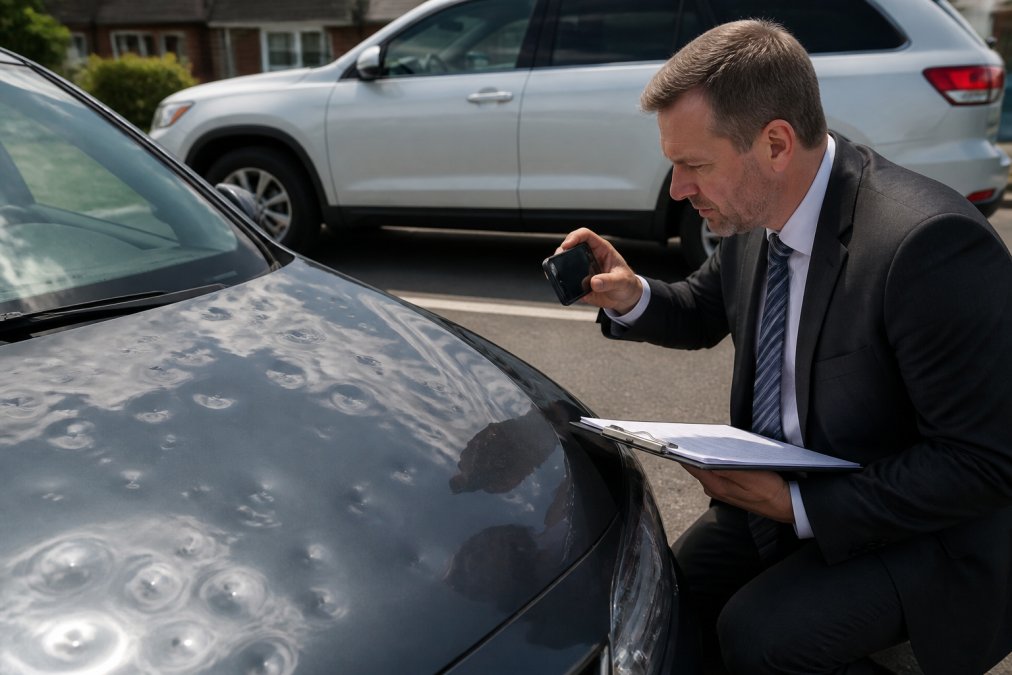
Be specific about the damage. Instead of "my car has dents," say: "I have multiple hail dents across the hood, roof, and doors from the storm on September 15th." Adjusters respond better to clear, factual descriptions.
Mention paintless dent repair explicitly. Say: "I'm getting quotes for paintless dent repair, which preserves the factory finish." This shows you've researched your options.
Provide documentation: photos of the damage, weather reports, and repair estimates. An adjuster with solid evidence will insurance approve dent repair claims faster.
Ask about coverage limits and repair authorization. Understanding your policy helps you anticipate what the adjuster will approve.
Hail Damage Insurance Claim Process 2026
Filing a hail damage insurance claim follows a predictable sequence that speeds up approval.
Step 1: Document Your Vehicle Damage
Documentation is your strongest tool for claim approval.
Take photos from multiple angles in natural daylight: wide shots of the overall damage pattern and close-ups of individual dents. Include the damage location on the vehicle (roof, hood, doors, fenders).
Note the date, time, and weather conditions. For hail damage, record storm details: hail size, duration, and wind speed if observed.
Keep all receipts and estimates. If you paid for temporary repairs or rental cars, save those documents. Insurance may reimburse some expenses depending on your policy.
Step 2: Contact Your Insurance Company
Call your insurer within 24-48 hours of discovering damage.
Have your policy number ready and be specific: "My vehicle sustained hail damage on [date] during a storm. I have multiple dents on the roof, hood, and doors."
Ask for a claim number immediately and use it in all future communications.
Request an adjuster assignment and ask when the inspection can be scheduled.
Step 3: Schedule the Adjuster Inspection
Coordinate a time that works for you. Have your vehicle clean so the adjuster can see all damage.
Gather photos, weather reports, and repair estimates before the inspection.
Be present during the inspection and point out all damage.
Step 4: Obtain a Repair Estimate
Get at least one estimate from a qualified repair facility experienced with paintless dent repair.
Deductible vs. Repair Cost: Should You File a Claim?
The decision to file a claim requires comparing your immediate out-of-pocket cost against the long-term premium impact.
The Basic Math
Calculate: repair estimate minus deductible equals your insurance benefit. A $200 benefit may not justify filing; a $3,000 benefit clearly does.
The Premium Increase Factor
Filing a claim typically raises your insurance rates. A comprehensive claim can increase premiums by 5-15% for three years; a collision claim by 10-25%.
Claims History and Surcharge Stacking
If you've filed a claim in the past three years, a new claim may trigger larger increases or prevent loyalty discounts. Ask your agent how many claims you've filed and whether this claim will stack with existing surcharges.
When Self-Pay Makes Financial Sense
Pay out of pocket if:
- Your repair cost is close to your deductible (within $200-300).
- Your insurance benefit after the deductible is less than the three-year premium increase.
- You've filed a claim in the past 18 months and expect stacked surcharges.
- Your deductible is high ($1,000+) and your repair estimate is modest ($1,500-$2,000).
When Filing Is the Right Choice
File a claim if:
- Your insurance benefit (repair cost minus deductible) exceeds the three-year premium increase by at least $500.
- This is your first claim in three or more years.
- Your repair estimate is significantly higher than your deductible (more than double).
- You have comprehensive coverage and the damage is weather-related (hail, falling objects), which typically triggers smaller surcharges than collision claims.
The Worksheet Approach
Use this simple decision framework:
| Factor | Your Numbers |
|---|---|
| Repair estimate | $ |
| Your deductible | $ |
| Insurance benefit (repair minus deductible) | $ |
| Expected premium increase (%) | % |
| Your annual premium | $ |
| Three-year surcharge cost (annual premium × increase % × 3) | $ |
| Net financial gain (benefit minus surcharge) | $ |
Dent Repair Claim Denial Reasons and How to Avoid Them
Claims get denied for specific, preventable reasons. Understanding these helps you build a stronger claim and dispute denials effectively.
Common Denial Reasons
Insufficient documentation is the most common denial reason. Provide clear photos from multiple angles, showing damage location and close-ups of individual dents.
What to Do If Your Claim Is Denied
A denial is not final. You have multiple escalation paths.
Step 1: Request a Written Denial Explanation
If denied verbally, request written documentation. Call your insurer and ask for a written explanation of the denial reason and specific policy language. Written documentation is essential for any appeal.
Step 2: Review the Denial Letter Against Your Policy
Compare the denial to your actual policy document. Denials often cite policy language incorrectly or selectively, for example, claiming damage is "cosmetic" when your policy covers "physical damage."
Step 3: File a Formal Appeal
Contact your insurer's claims department and request an appeal in writing. Include your claim number, denial date, explanation of why the denial was incorrect, supporting documentation, and a request for supervisory review. The insurer must respond within 30 days in most states.
Step 4: Request an Independent Appraisal
If the dispute centers on repair cost or damage severity, request an independent appraisal. Most policies include an appraisal clause allowing either party to request a neutral third-party assessment. You and the insurer each select an appraiser; if they disagree, they select an umpire who makes a binding decision. Request appraisal in writing.
Step 5: Escalate to Your State Insurance Commissioner
If the insurer denies your appeal, file a complaint with your state's insurance commissioner. Visit your state insurance commissioner's website, complete the complaint form with your claim number and denial date, and attach supporting documentation. Insurers take these complaints seriously, and many denials are overturned after a commissioner complaint.
Prevention: Build a Denial-Proof Claim
To avoid denials altogether:
- Document immediately. Take photos within hours of discovering damage, not days later.
- Report promptly. Call your insurer within 24 hours of discovering damage.
- Be specific. Don't say "hail damage." Say "multiple dents from hail on [date] during a storm with hail size [if known]."
- Provide weather evidence. Include weather reports, photos of hail, or news articles confirming the storm.
- Get professional estimates. Use a repair shop experienced with insurance claims. Their estimate carries more weight than a casual quote.
- Confirm coverage before filing. Call your insurer and ask: "Does my policy cover [type of damage]?" Get the answer in writing via email.
- Use approved repair facilities. Ask your adjuster which shops they prefer and use one of those shops.
A well-documented claim with clear evidence and prompt reporting is rarely denied. If it is, you now know how to fight back.
Filing a Supplemental Claim for Dent Repair
Sometimes the initial estimate misses damage. A supplemental claim covers the additional repairs discovered after the first inspection.
OEM vs. Aftermarket Parts: What Insurers Prefer for PDR
Paintless dent repair doesn't use parts, so this distinction matters less for PDR claims than for traditional body shop repairs. However, understanding parts preferences helps if your claim includes other repairs.
Frequently Asked Questions
Will insurance pay for dent repair?
Yes, insurance will typically pay for dent repair if the damage is covered under your policy. Collision coverage pays for dents from accidents, while comprehensive coverage covers hail damage, weather events, and vandalism. The insurance company will cover repair costs minus your deductible. Whether it makes financial sense to file depends on comparing your deductible against the repair estimate, if the repair costs less than your deductible, you'll pay out of pocket.
What should I avoid saying to my insurance adjuster?
Avoid admitting fault, speculating about the cause of damage, or accepting initial estimates without review. Don't say you've already had repairs done elsewhere, as this complicates claims. Never exaggerate damage or claim pre-existing damage as new. Stick to factual statements about when you discovered the damage and what you observed. Let the adjuster and repair estimate speak to the scope of work needed. Honesty is essential, but volunteering unnecessary information can complicate your claim.
How does paintless dent repair differ from traditional body shop repairs in the eyes of insurers?
Paintless dent repair (PDR) removes dents without fillers or repainting, preserving your vehicle's original factory finish. Insurers recognize PDR as a legitimate repair method that maintains resale value and factory specifications. PDR typically costs less than traditional body shop repairs and has faster turnaround times. However, not all dents qualify for PDR, severe creasing or damage that breaks the paint surface may require traditional repair. When submitting a claim, specify that you're seeking PDR to help the adjuster understand the repair approach and cost estimate.
Will my insurance premiums increase if I file a dent repair claim?
Filing a claim may increase your premiums, though the impact depends on your insurer, policy, and claim history. Comprehensive coverage claims (hail, weather, vandalism) typically have less impact than collision claims. Some insurers offer claim forgiveness or won't raise rates for your first claim. Contact your agent before filing to understand your specific policy's impact. If the repair cost is only slightly above your deductible, paying out of pocket may cost less than a premium increase over time.