Last Updated: November 8, 2026
Quick Summary
Common insurance fraud red flags in auto repairs include vague line items, labor hours exceeding book time, parts listed without a brand or part number, charges that do not match visible damage, and unsupported supplements added after you sign. Watch also for a shop offering to waive your deductible and bury it in the repair bill, which is auto repair fraud you can be pulled into as the policyholder.
- Auto repair fraud is any deliberate misrepresentation of damage, parts, labor, or charges to extract more money from an insurer or owner.
- A legitimate supplement is backed by photos of newly found damage and a revised written estimate sent to the carrier.
- Report suspected fraud to your insurer's claims line or special investigation unit and to your state insurance department.
- Pause before signing a work authorization, direction to pay, or check release while questions are open.
- Ask for part numbers, part categories, labor operations, and teardown photos in writing before you authorize work.
Table of Contents
- Why Auto Repair Fraud Red Flags Matter Before You Sign
- Car Insurance Fraud Examples That Start at the Repair Shop
- Soft Insurance Fraud Examples You Might Not Recognize
- What Makes an Auto Repair Estimate Suspicious
- Deductible Manipulation and Legitimate Supplements
- How to Report Auto Insurance Fraud and Protect Yourself
- Get a Free Inspection Before Your Claim Goes Anywhere
- Frequently Asked Questions
Why Auto Repair Fraud Red Flags Matter Before You Sign
A repair estimate that looks too generous can cost you more than a fair price ever would. Our auto insurance claims step-by-step guide walks through the standard claims process so you know what a normal claim should look like before signing anything.
Auto repair fraud is any deliberate misrepresentation of damage, parts, labor, or charges to extract more money from an insurer or a vehicle owner. The National Insurance Crime Bureau's auto repair scam guide groups these schemes into a handful of recognizable patterns, and once you know the patterns, they are hard to miss.
Below, we walk through the car insurance fraud examples that matter most, how to read an estimate like an adjuster, and what to do when something feels off.
Car Insurance Fraud Examples That Start at the Repair Shop
Most fraud does not begin with a criminal mastermind. It begins with a shop that sees an insurance check as a bigger opportunity than a customer relationship. These are the schemes regulators and insurers warn about most often.
Staged Accidents and Exaggerated Damage
A staged accident is a collision arranged on purpose, often with a target vehicle chosen in advance, to generate a claim.
Watch for a "helpful" stranger who directs you to a specific shop after a minor bump. The North Carolina Department of Insurance guidance on fraud red flags advises consumers to pause and report suspicious activity rather than go along with it.
Airbag, Glass, and Parts Schemes
Airbag fraud is among the most dangerous schemes on this list. A shop bills for a new airbag but installs a salvaged unit, a counterfeit, or nothing at all, leaving you with a vehicle that will not protect you in a crash.
Parts substitution is the umbrella issue. Original equipment parts get billed while salvaged or counterfeit parts get installed. The Allstate guide to types of car insurance fraud flags both overcharging for repairs and installing unsafe parts as classic examples.
Soft Insurance Fraud Examples You Might Not Recognize
Soft insurance fraud examples are the gray-area moves that feel routine until you see the cost. Nobody stages a crash. Instead, the estimate quietly grows.
Some shops may offer to "waive" a deductible and bury the amount in the repair bill, and labor hours can be padded or parts replaced when refinishing would do.
The The Zebra's guide to common car insurance fraud types notes that overstating a vehicle's value or damage to secure a larger payout is one of the most common forms of claim padding.
What Makes an Auto Repair Estimate Suspicious
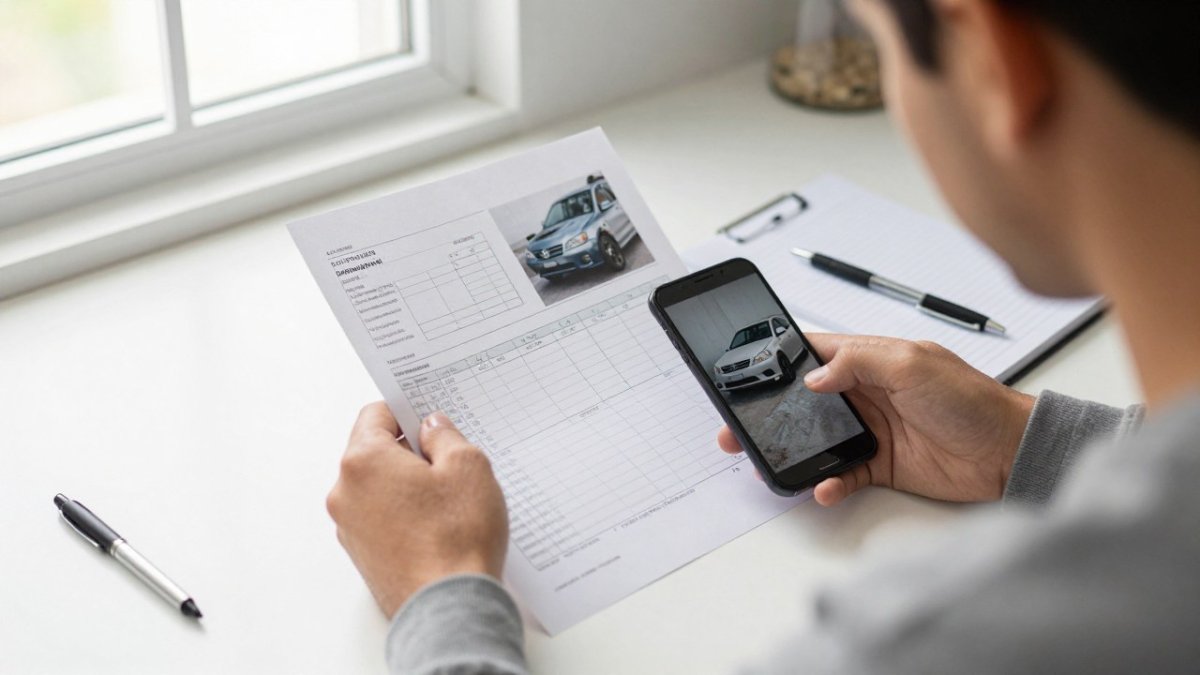
Bring your own photos. Comparing multiple estimates is one of the simplest defenses, and our guide on finding a reliable hail repair shop walks through how to vet technicians and compare quotes side by side.
A Practical Checklist for Reading a Repair Estimate
Use this checklist before you sign anything:
- Every line item names a specific part or procedure, not "misc. repairs"
- Labor hours are listed per operation and look reasonable for the job
- Parts are identified by type (OEM, aftermarket, salvaged) and part number
- The written damage matches your photos and the adjuster's inspection
- No charge appears for pre-existing damage unrelated to the claim
If two or three boxes go unchecked, slow down. A legitimate shop will answer every question without flinching.
How to Compare Line Items, Labor, and Parts
Most insurers apply a labor time guide, often called book time, that assigns standard hours to a specific repair operation. When billed hours do not match the work performed, confirming which repairs are actually necessary can help keep an estimate grounded in the damage, a concern also reflected in Ace Automotive Repair.
On parts, the estimate should state whether each item is original equipment manufacturer (OEM), aftermarket, or salvaged, and carry a part number. A line that says only "bumper" or "headlamp assembly" is a line you cannot verify.
Supplements deserve their own check. Our explainer on what a supplement on a hail claim covers shows how a proper supplement is documented and timed.
Matching the Estimate to the Damage
Take photos of your vehicle from the same angles as the estimate's damage descriptions. If the estimate lists damage to a panel your photos show untouched, ask for the teardown photos that justify it. If the estimate omits damage your photos clearly show, ask why. The goal is not to accuse anyone, it is to make the written estimate and the physical evidence tell the same story before you authorize work.
A suspicious estimate usually shows at least one of these warning signs.
| Red flag | What it looks like |
|---|---|
| Vague line items | Charges listed as "misc. repairs" with no specific part or procedure |
| Padded labor | Labor hours exceeding book time |
| Unidentified parts | Parts listed without a brand or part number |
| Mismatched damage | Charges for work that does not match the visible damage |
| Unsupported supplement | Charge appears after signing, with no photos or revised estimate |
| Buried deductible | Deductible "waived" and quietly added back into the repair bill |
| Refused paperwork | Shop refuses to give a copy of the estimate or supplement |
Deductible Manipulation and Legitimate Supplements
Deductible manipulation is when a shop offers to "waive" your deductible and quietly adds that amount back into the repair bill. Our guide on deductible assistance for auto repair explains how the arrangement works and where the legal lines sit.
A supplement is different, and it is legitimate: a documented correction to an estimate when a real teardown reveals damage the original inspection missed, which is standard practice on hail and collision claims.
How to Report Auto Insurance Fraud and Protect Yourself
Report suspected auto insurance fraud to your insurer's claims line or special investigation unit, and to your state insurance department. The NICB also accepts tips.
How to report auto insurance fraud well comes down to documentation. Before you hand over a claim, our guide on how to find reputable hail repair covers how to spot scams and verify credentials up front.
A Safe Step-by-Step Response
When a repair or claim feels wrong, the order of operations matters more than the accusation. A sensible sequence when a repair or claim feels wrong is:
- Pause before signing. Do not sign a work authorization, a direction to pay, or a check release while questions are open. Ask for the estimate and any supplements in writing and take them home.
- Document what you have. Photograph the vehicle from multiple angles, keep the written estimate, save texts and emails with the shop, and note the date, time, and name of everyone you spoke with.
- Ask the shop for specifics in writing. Request the part numbers, part categories (OEM, aftermarket, salvaged), labor operations, and teardown photos that support each line. A legitimate shop will provide them; a refusal is itself useful evidence.
- Contact your insurer. Ask the claims adjuster to compare the shop's estimate against the insurer's own estimate and to explain any difference. Ask whether a supplement was filed and whether it was supported by photos.
- Get a second opinion. An independent inspection or a second written estimate from a different shop gives you a neutral reference point. Keep that estimate with your file.
- Escalate if needed. If the insurer will not address your concern, ask for the special investigation unit or the claims supervisor. You can also file a complaint with your state insurance department, which regulates insurers and can review claim-handling conduct.
What to Keep in Your File
A dispute is only as strong as the paper behind it. Keep the original estimate, every revised estimate and supplement, the insurer's estimate, your photos, the repair order, parts invoices if you can get them, and a written log of calls and visits. Ask for parts records or at least the part numbers on the final invoice. Digital evidence, time-stamped photos, text threads, and emailed estimates, is often the difference between a concern that gets reviewed and one that gets dismissed.
Consumer Rights and Complaint Options
You have the right to a written estimate in most circumstances, the right to ask your insurer how a claim was evaluated, and the right to complain to your state insurance department if you believe a claim was handled improperly. Rules vary by state, but the path is similar: start with the insurer's internal appeal or complaint process, then escalate to the state regulator if unresolved.
Distinguishing a Legitimate Supplement from a Suspicious Charge
Not every increase in the bill is fraud. Teardown routinely reveals damage that was invisible at the original inspection, and a documented supplement is the normal way to handle it. The difference is evidence: a legitimate supplement is backed by photos of the newly found damage and a revised written estimate sent to the carrier before or during the repair.
Get a Free Inspection Before Your Claim Goes Anywhere
The best defense against fraud is a second set of eyes before you commit. If your estimate feels padded or the paperwork does not add up, get an independent inspection first.
Your car is worth more than a rushed signature. Get a free inspection from 888 PDR and let us review the estimate with you, manage the claim with your carrier, and repair the damage without fillers or repainting.
Frequently Asked Questions
What is the most common type of auto insurance fraud?
Padded repair bills and inflated damage estimates are among the schemes commonly reported. A shop bills for parts or labor that were never performed, or inflates the severity of existing damage. Deductible manipulation and unnecessary repairs are close behind. Because these schemes happen inside a claim you already filed, they are easy to miss unless you compare the estimate line by line against your own photos and the final repair documentation.
How can I tell if a suspicious auto repair estimate is actually fraud?
Look for estimates that bundle vague line items like shop supplies or administrative fees without amounts, charge for parts you can see are still original, or list repairs for panels with no visible damage. Ask for a written breakdown of parts and labor, and compare it to your pre-repair photos. A legitimate shop will explain every line. If the numbers shift after you ask questions, or the shop pressures you to sign before your insurer reviews it, treat that as a red flag and get a second opinion.
What are soft insurance fraud examples I should watch for?
Soft fraud is exaggeration rather than a fully staged event. Examples include claiming pre-existing dents were caused by a new hail storm, inflating the value of a totaled vehicle, or adding unrelated damage to a legitimate claim. A shop might suggest you include old scratches in the estimate since insurance is paying anyway. That suggestion is soft fraud, and agreeing to it can put your claim and your coverage at risk even if the amount seems small.
How do I report auto insurance fraud if I suspect my repair shop?
Start with your insurer's claims department and ask for the special investigation unit. Then file a report with the National Insurance Crime Bureau, which accepts tips online and by phone. You can also contact your state insurance department. Keep copies of the estimate, your photos, texts, and the final invoice. If the shop submitted a claim without your permission, tell your insurer immediately so the claim can be flagged.
