
Table of Contents
- What Is Deductible Assistance for Auto Repair?
- How Deductible Assistance Works in the Claims Process
- Is Waiving Your Insurance Deductible Legal?
- How to File a Hail Damage Insurance Claim and Manage Your Deductible
- Auto Body Shop Deductible Assistance: Pros and Cons
- Insurance Fraud and Deductible Absorption: What You Need to Know
- Legitimate Ways to Manage Your Out-of-Pocket Repair Costs
- Frequently Asked Questions
Last Updated: September 19, 2026
What Is Deductible Assistance for Auto Repair?
Deductible assistance auto repair refers to when a repair shop helps cover your insurance deductible, the amount you pay out of pocket before your insurance kicks in. Instead of you writing a check for your full deductible, the shop absorbs some or all of that cost.
Here's how it typically works: Your car gets hail damage. Your insurance policy has a $1,000 deductible. A repair shop might offer to waive that deductible or reduce it, meaning you pay less upfront. The shop then bills the insurance company for the full repair cost, including what they covered on your deductible.
This practice exists because repair shops want your business. It's their way of making the repair process less painful for customers who are already stressed about damage and out-of-pocket expenses. But there's a catch, and it's an important one.
At 888 PDR, we manage hail damage claims directly with insurance carriers from first notice of loss through supplement and final payment, so you don't have to navigate the insurance process alone. Understanding deductible assistance helps you make informed decisions about how your claim gets handled and what your actual financial responsibility really is.
How Deductible Assistance Works in the Claims Process
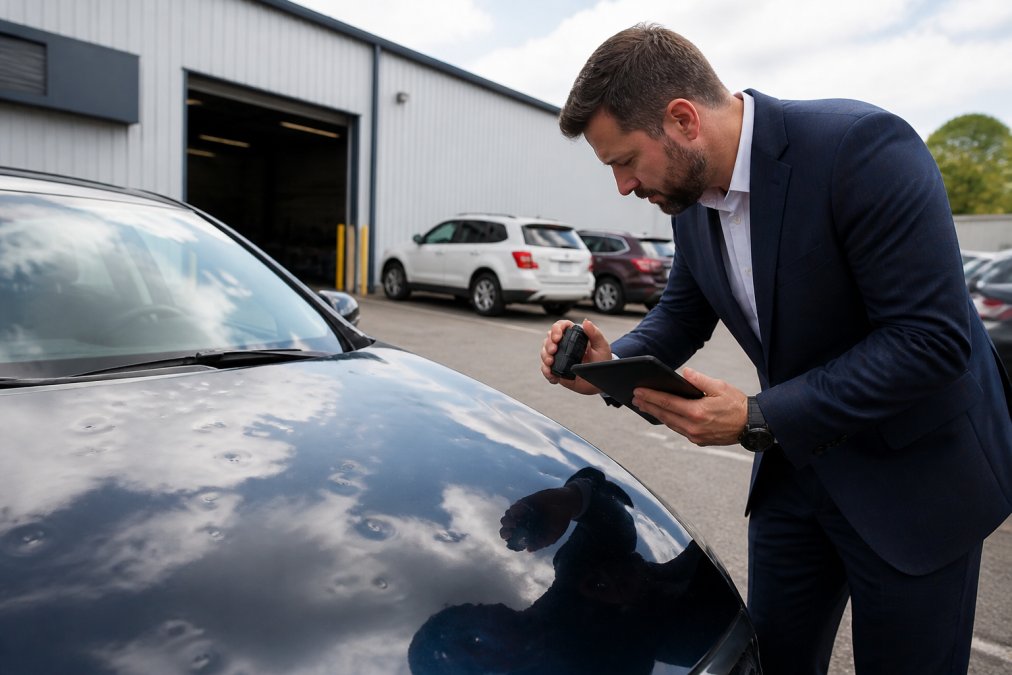
When you file an insurance claim for hail damage, your insurer sends an adjuster to inspect the vehicle. The adjuster writes a repair estimate based on what they find. You're responsible for your deductible, that's your contractual obligation under your insurance policy.
A repair shop offering deductible assistance typically works like this:
- Shop absorbs the deductible cost upfront. You don't pay it. The shop covers it out of pocket.
- Shop bills insurance for the full repair. The estimate includes labor rates, parts markup, and the full scope of repairs.
- Shop gets paid by insurance. The insurance company pays the estimate amount directly to the shop.
- Shop keeps the difference. The shop's payment from insurance covers both the repair work and what they paid on your deductible.
The problem arises when shops inflate repair estimates to hide the deductible assistance. Instead of openly saying "We'll waive your $1,000 deductible," they might inflate the repair estimate by $1,000 and bury that extra cost in labor rates, parts markup, or inflated repair scope. This is where it crosses into falsified documentation and potential insurance fraud.
Some shops call this a "service discount" rather than a deductible waiver. The language matters legally. A discount is transparent. Burying costs in an inflated invoice is not.
Is Waiving Your Insurance Deductible Legal?
The short answer: It depends on how it's done.
A repair shop can legally offer you a discount on repair costs. They can say "We'll reduce your out-of-pocket expense by $500" as a competitive service offer. That's legitimate.
What's illegal is falsifying documentation to hide it. If a shop inflates the repair estimate, adds fake line items, or misrepresents labor costs to cover your deductible without your knowledge, that's insurance fraud. Both the shop and the customer can face legal consequences.
Many states have specific laws about this. Some prohibit any deductible waiver outright. Others allow it only if it's transparent and disclosed to the insurance company. The insurance adjuster reviews the repair estimate and authorization paperwork. If the numbers don't add up or the scope seems inflated compared to the damage, they'll flag it.
Here's what matters for your financial responsibility: Your insurance policy is a contract. You agreed to pay that deductible. When a shop covers it without proper disclosure, they're essentially committing fraud on your behalf, even if you didn't intend it.
The legal risk extends beyond the immediate claim. Insurance companies track this behavior. If they suspect supplemental billing or deductible absorption on your claim, they may:
- Deny the claim outright
- Cancel your policy
- Flag you in the claims system for future scrutiny
- Refer the matter to law enforcement
How to File a Hail Damage Insurance Claim and Manage Your Deductible
Filing a hail damage claim properly protects you legally and ensures you get fair repair authorization.
Step 1: Document the damage immediately Take photos and video of all hail dents from multiple angles. Include close-ups and wide shots showing the full extent of damage. This becomes your evidence if there's a dispute later.
Step 2: Contact your insurance company Call your insurer and file a claim. Give them the date of the hail event, location, and description of damage. They'll assign an adjuster and schedule an inspection.
Step 3: Get a repair estimate from a qualified shop Choose a repair facility that specializes in your type of damage. For hail dents, paintless dent repair preserves your factory finish and resale value. Get a detailed written estimate that lists every repair item, labor hours, and parts costs separately.
Step 4: Understand your deductible obligation Know your exact deductible amount before the adjuster arrives. This is YOUR responsibility. Don't let a shop convince you they'll "handle it" without being explicit about what that means.
Step 5: Request the insurance adjuster review The adjuster inspects the vehicle and compares damage to the repair estimate. They may approve the full estimate, reduce it, or request additional repairs (a supplement). This is where inflated estimates get caught.
Step 6: Authorize repairs in writing Once insurance approves the estimate, you sign a repair authorization. This is your agreement with the shop. Make sure it matches the insurance estimate exactly. Don't sign anything with inflated line items or vague descriptions.
Step 7: Pay your deductible directly to the shop When repair is complete, you pay your deductible to the shop. The insurance company pays the rest directly to the repair facility. This is the transparent, legal way it works. Disputes regarding these payment obligations or concerns about potential insurance fraud often necessitate a formal legal consultation process to clarify your rights and responsibilities.
If a shop asks you not to pay your deductible, or says they'll "handle it" without explaining how, that's a red flag. Legitimate shops are transparent about costs and don't ask you to sign false documentation.
Auto Body Shop Deductible Assistance: Pros and Cons
Pros of deductible assistance:
- Reduces your immediate out-of-pocket cost
- Makes the repair process feel more convenient
- Competitive shops use it to win business
- Addresses customer frustration about high deductibles
Cons of deductible assistance:
- Often involves inflated repair estimates (invoice inflation)
- Creates legal liability for insurance fraud
- Can trigger claim denial or policy cancellation
- Damages your insurance history and future premiums
- Repair quality may suffer if shops cut corners elsewhere to absorb costs
- You lose negotiating power, the shop controls the repair scope
The real cost of "free" deductible assistance isn't what you save upfront. It's the risk you take on.
When a shop absorbs your deductible through inflated estimates, insurance adjusters often catch it during review.
Insurance Fraud and Deductible Absorption: What You Need to Know
Here's how it typically occurs:
Scenario 1: The inflated estimate A shop writes an estimate for $5,000 in repairs. The actual cost is $4,000. They inflate labor rates or add unnecessary repairs to create the extra $1,000. They tell you "Your deductible is waived." In reality, they've hidden it in the estimate. When insurance reviews it, they see inflated line items and deny the claim or reduce payment.
If fraud is suspected, the insurance company:
- Denies the claim or reduces payment to what they believe is legitimate
- Investigates further by reviewing all documentation and interviewing parties
- Cancels the policy if fraud is confirmed
- Reports to authorities in cases of significant fraud
- Adds you to a fraud database that other insurers can access
Legitimate Ways to Manage Your Out-of-Pocket Repair Costs
If you're worried about your deductible, there are legal ways to reduce your out-of-pocket expense.
Frequently Asked Questions
Is it legal for a body shop to waive my insurance deductible?
No. Most states prohibit repair shops from waiving or absorbing your deductible as a condition of service. Doing so violates insurance regulations and constitutes fraud. However, shops can offer legitimate discounts unrelated to your deductible, or you can negotiate the repair estimate itself. Always verify your state's rules and work with your insurance adjuster to understand what's permissible.
How does deductible assistance work for hail damage claims?
Deductible assistance typically involves a repair shop offering to cover part or all of your out-of-pocket deductible cost. While this sounds helpful, it's illegal in most states because it constitutes insurance fraud. Instead, legitimate options include negotiating the repair estimate with the shop, requesting your insurer review the estimate, or exploring service discounts that don't directly waive your deductible obligation.
What are the risks of using a shop that offers to cover my deductible?
Shops offering to absorb your deductible may engage in invoice inflation, falsified documentation, or supplemental billing schemes to recover the cost. This exposes you to insurance fraud liability, potential claim denial, premium increases, or policy cancellation. You could also face legal consequences. Work with reputable shops that handle claims transparently and communicate directly with your insurance adjuster throughout the repair process.
Can I deduct car repair costs from my taxes?
Personal vehicle repairs are not tax-deductible. However, if you use your vehicle for business purposes, you may deduct actual repair expenses or claim a standard mileage deduction. Consult a tax professional to determine what qualifies. Insurance deductibles themselves are also not deductible, though some business vehicle expenses may be if properly documented and business-related.