
Table of Contents
- Understanding Your Hail Deductible
- Hail Damage Repair Cost vs. Deductible: What You Actually Owe
- Filing a Comprehensive Insurance Hail Damage Claim
- Hail Damage Claim Estimate and Supplement: Closing the Gap
- Paintless Dent Repair Insurance Claim: A Cost-Effective Path
- Legal and Ethical Ways to Minimize Your Financial Burden
- Step-by-Step Workflow: From Damage to Final Payment
- Frequently Asked Questions
Last Updated: October 7, 2026
Understanding Your Hail Deductible
A hail deductible is the amount you pay out of pocket when you file a comprehensive insurance claim for hail damage to your vehicle. It's separate from your regular collision deductible and applies specifically to weather-related losses.
Your insurance policy spells out two key numbers: your deductible amount and your vehicle's insured value. These two figures determine exactly what you'll owe when hail strikes. The gap between repair costs and your deductible is where real decisions get made.
Fixed-Dollar vs. Percentage-Based Deductibles
Most policies use one of two deductible structures. A fixed-dollar deductible is a flat amount, like $500 or $1,000. You pay that exact number regardless of repair costs. This approach is straightforward and predictable.
A percentage-based deductible works differently. It's calculated as a percentage of your vehicle's insured value, typically between 1% and 5%.
Here's why this matters: percentage deductibles hit harder on newer, more valuable vehicles. A $50,000 car with a 2% deductible means a $1,000 out-of-pocket cost.
How Your Vehicle's Insured Value Affects Your Deductible Amount
Your vehicle's insured value is what your insurance company will pay up to for a total loss.
When you have a percentage-based hail deductible, a higher insured value automatically means a higher deductible. This creates a real financial burden for owners of newer or luxury vehicles.
Fixed-dollar deductibles avoid this escalation. They stay the same whether your car is worth $20,000 or $80,000. That's why many drivers prefer them, especially if they own higher-value vehicles.
Hail Damage Repair Cost vs. Deductible: What You Actually Owe
The real financial picture emerges when you compare repair costs to your deductible. This is where strategy matters.
When Repair Costs Exceed Your Deductible
If hail damage repair costs $2,500 and your deductible is $1,000, you owe the deductible. Insurance pays the remaining $1,500.
This is the scenario where filing a claim makes sense. You're using your insurance to cover a significant portion of repairs. The insurer's payment substantially exceeds your out-of-pocket cost.
Document everything before you file. Take photos of all damage from multiple angles and in good lighting. This documentation strengthens your claim and helps if the insurance company disputes the damage assessment.
When Repair Costs Fall Below Your Deductible
If hail damage costs $800 to repair but your deductible is $1,000, filing a claim makes no financial sense.
Many hail damage situations fall into this category. Minor dents and dings are common after hailstorms, and the cost to fix them often sits right below the deductible threshold. You're better off paying directly and keeping your claim history clean.
This is where paintless dent repair becomes valuable. It typically costs less than traditional repair methods, which means more damage falls below your deductible.
Filing a Comprehensive Insurance Hail Damage Claim
When repair costs justify filing, the process has clear steps. Understanding each one helps you avoid delays and complications.
Document Everything Before Filing
Start immediately after the storm. Photograph every dent, ding, and damaged area. Use natural lighting and take photos from multiple angles.
Write down the date and time of the hailstorm. Note any weather reports or news coverage. This documentation supports your claim if the insurance company questions the damage source.
Get a professional damage assessment. A qualified repair shop will document damage systematically and provide a detailed estimate. This estimate becomes the foundation for your claim amount.
What to Expect During the Claims Process
Call your insurance company within 24-48 hours of the storm. Provide your policy number, the date of loss, and a brief description of damage.
The adjuster inspects your vehicle and writes an estimate. This is not the same as a repair shop estimate. Adjusters work for the insurance company and may underestimate damage or exclude certain repairs.
If you disagree with the adjuster's estimate, request a supplement. This is a formal review process where additional damage can be added to the claim.
Hail Damage Claim Estimate and Supplement: Closing the Gap
The estimate-to-supplement process is where many claims get resolved fairly, or where they stall.
Understanding Initial Estimates and Hidden Damage
An insurance adjuster's initial estimate often falls short of actual repair needs. Adjusters work quickly and may not catch every dent. They sometimes underestimate the cost of repairs or exclude damage they deem "pre-existing."
Hidden damage emerges during repairs. Once a shop removes trim, opens doors, or begins actual repair work, additional dents and damage become visible.
This is where the supplement process matters. A supplement is a formal request to add costs to the original claim.
How Supplements Work and Why They Matter
After repairs begin, your repair shop documents additional damage and submits a supplement request to the insurance company.
Supplements typically get approved when the damage is clearly hail-related and wasn't visible during initial inspection. Insurance companies expect this process. They build it into claim handling procedures.
Working with a repair shop experienced in insurance claims accelerates supplements. At 888 PDR, we manage the entire supplement process on your behalf. We document damage professionally, submit supplements promptly, and communicate directly with insurers.
Paintless Dent Repair Insurance Claim: A Cost-Effective Path
Paintless dent repair changes the financial equation for hail damage claims.
Why Paintless Dent Repair Reduces Out-of-Pocket Costs
Paintless dent repair removes dents without fillers, sanding, or repainting. The process is faster and less expensive than traditional collision repair. Lower repair costs mean more hail damage falls below your deductible threshold.
Consider this scenario: traditional repair estimates $1,200 for hail damage, but your deductible is $1,000. You'd pay the full deductible. Paintless dent repair for the same damage might cost $700.
The financial benefit compounds. Multiple hail events throughout the year add up. Paintless repair keeps cumulative costs manageable.
Preserving Your Vehicle's Factory Finish and Resale Value
Paintless dent repair preserves your vehicle's original factory finish. No fillers. No repainting. No risk of color mismatch or paint thickness variation. Your car maintains its factory specifications.
This matters for resale value. Buyers and dealers check paint thickness with meters. Repainted panels register differently and reduce vehicle value. Factory-original paint commands higher resale prices.
Insurance companies recognize this benefit. Many insurers now prefer paintless dent repair for hail claims because it costs less and preserves vehicle value.
Legal and Ethical Ways to Minimize Your Financial Burden
Several legitimate strategies reduce what you pay out of pocket for hail damage.
Deductible Waivers and Deductible Absorption Programs
Some insurance companies offer deductible waiver programs for weather-related claims. These programs eliminate or reduce your deductible under specific conditions. Ask your insurer whether this option exists on your policy.
Deductible absorption is different. Some repair shops absorb your deductible as a courtesy or competitive offer. This is a legitimate business practice.
At 888 PDR, we work directly with all insurance carriers and manage claims from first notice of loss through final payment.
Working With a Repair Shop That Manages Your Claim
The right repair shop becomes your advocate throughout the claim process. Experienced shops document damage thoroughly, submit supplements promptly, and communicate directly with insurers. This professional management often results in higher claim approvals.
A shop that manages your claim handles the paperwork, follows up on supplements, and ensures nothing gets overlooked. You avoid the stress of navigating insurance processes alone.
Step-by-Step Workflow: From Damage to Final Payment
The path from hail damage to completed repair follows a predictable sequence. Understanding each step helps you stay on track.
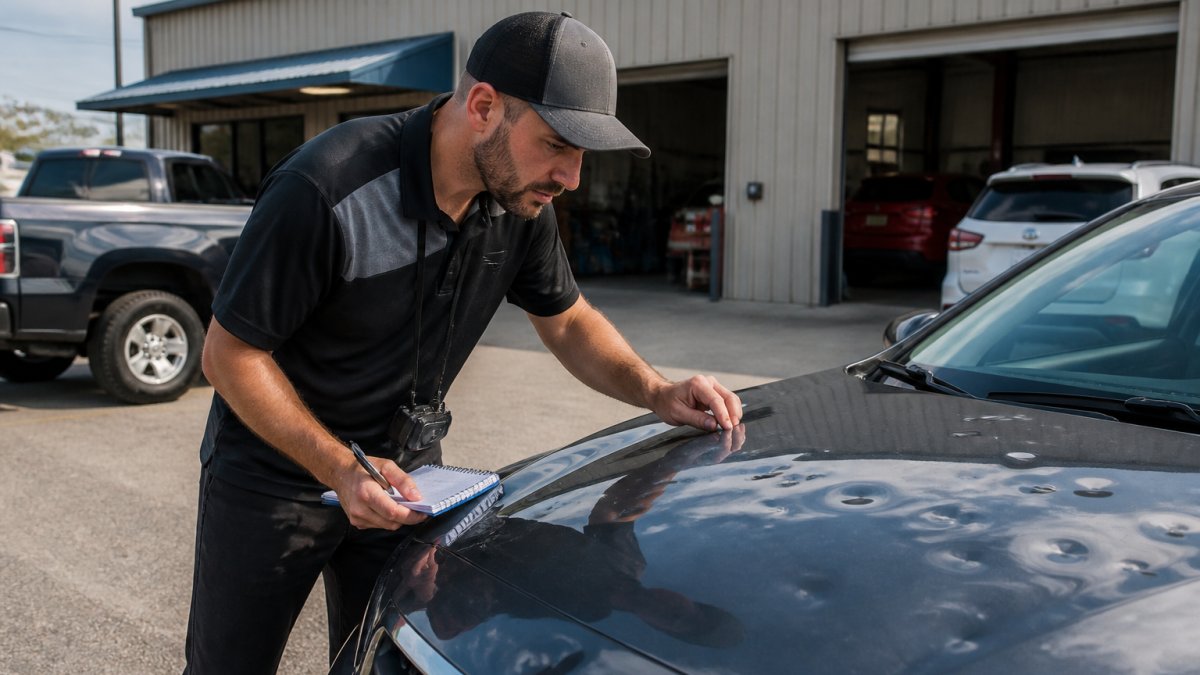
Immediate Actions After Hail Damage
First, ensure safety. Check for broken glass, hazardous debris, or structural damage that makes the vehicle unsafe to drive. Move the vehicle to shelter if possible to prevent additional damage.
Take photographs immediately. Document damage while it's visible. Use your phone camera to capture wide shots and close-ups. Date your photos if possible.
Contact your insurance company within 24-48 hours. Provide your policy number and the date of loss. Request a claim number and the name of your assigned adjuster.
Managing the Claim and Repair Timeline
Schedule the adjuster inspection at a time convenient for you. Be present during the inspection if possible. Point out damage you've documented.
Once you have an estimate, get competitive bids from repair shops. Share the insurance estimate with shops you're considering.
Choose a shop experienced with insurance claims.
Repairs typically begin once you approve the shop estimate. Expect the repair shop to submit supplements as additional damage becomes apparent. This is normal and expected.
Handling Depreciation and Partial Damage Settlements
Insurance companies sometimes offer partial damage settlements. If repair costs exceed a certain percentage of your vehicle's value, insurers may declare the vehicle a total loss and pay the insured value instead.
Depreciation is built into insurance valuations. Your vehicle's insured value decreases annually. This affects total loss calculations and the amount insurance pays.
If you receive a settlement offer, compare it to actual repair costs before accepting. Sometimes repairs cost less than the settlement offer, and you keep the difference.
Ask your repair shop to review settlement offers.
Frequently Asked Questions
Can you avoid paying a hail deductible on an insurance claim?
You cannot legally avoid your deductible obligation, it's a contractual part of your policy. However, you can reduce what you pay out of pocket. Some repair shops participate in deductible waiver or absorption programs where they cover your deductible as part of their service. Additionally, if the repair shop's estimate uncovers additional damage through supplements, the insurance payout may increase, potentially covering your deductible and more. Working with a shop experienced in hail damage claims management ensures you capture all eligible coverage.
Is it better to file a hail damage insurance claim or pay for repairs out of pocket?
File a claim if repair costs exceed your deductible. For example, if your deductible is $1,000 and repairs cost $3,500, the insurance pays $2,500, you save money overall. If repairs cost less than your deductible, paying out of pocket avoids a claim record that might affect future premiums. However, consider your long-term insurance costs: frequent claims can raise your rates, while one significant claim may be worth the rate bump depending on the damage severity and your coverage limits.
How does paintless dent repair help reduce out-of-pocket hail damage costs?
Paintless dent repair typically costs less than traditional repair methods that use fillers and repainting. Additionally, paintless dent repair preserves your vehicle's factory finish and resale value, providing long-term financial benefit. When filing a claim, a lower repair estimate still results in an insurance payout, but your deductible remains fixed.
What should you ask your insurance company before filing a hail damage claim?
Ask about your deductible amount, whether it applies to comprehensive coverage (which typically covers hail), and if your policy includes any deductible waiver programs. Inquire about the claims process timeline, what documentation you'll need, and whether the insurer has preferred repair shops. Ask if there are any state-specific rules affecting your claim, and clarify how depreciation and partial damage are handled. Finally, ask whether supplements are available if additional damage is discovered during repairs, this can significantly increase your payout.
Hail damage claims don't have to leave you financially devastated. Understanding your deductible, documenting damage professionally, and working with a shop that manages claims on your behalf makes a real difference. At 888 PDR, we handle the entire process, from initial inspection through final payment, so you can focus on getting your vehicle back in shape. Get a free quote and let our team manage your hail damage claim from start to finish.