Table of Contents
- Why a Professional Hail Damage Assessment Matters
- What a Professional Hail Damage Assessment Includes
- The Paintless Dent Repair Process Explained
- Hail Damage Insurance Claim Tips: From Adjuster to Settlement
- When to Repair vs. File a Claim: DIY Thresholds and Total Loss
- Protecting Resale Value: Why Factory Finish Matters
- How to Choose a Certified Luxury Car Dent Specialist
- Final Steps: Getting Your Free Hail Damage Assessment
- Frequently Asked Questions
Last Updated: September 9, 2026
Why a Professional Hail Damage Assessment Matters
A professional hail damage assessment is the systematic process of documenting and evaluating every dent, ding, and crease a storm leaves behind, and it is the single most important step in protecting both your vehicle's condition and your financial recovery. Most car owners underestimate how much damage a hailstorm actually causes, what looks like a few minor dents often hides dozens of impacts only visible under specialized lighting.
Skipping this step is where owners get into trouble. Without a thorough inspection, you risk missing damage that worsens over time, filing an incomplete insurance claim, or paying out of pocket for repairs that should have been covered. Skipping this step is where owners get into trouble. Without a thorough inspection, you risk missing damage that worsens over time, filing an incomplete insurance claim, or paying out of pocket for repairs that should have been covered.
The stakes go beyond cosmetics. Hail impacts can compromise body panels and expose bare metal, creating a pathway for corrosion. This guide walks you through what a proper hail damage assessment covers, how the repair process works, and how to navigate your insurance claim.
What a Professional Hail Damage Assessment Includes
A thorough professional hail damage assessment follows a documented procedure designed to catch damage that the naked eye routinely misses. The process begins with a wash and detailed inspection under controlled lighting, because clean surfaces reveal imperfections that dirt and wax conceal.
The core of the assessment relies on two tools: LED inspection lights and a shadow board. The technician moves a bright LED light across each panel at a low angle, watching for the telltale shadows that dents cast. A shadow board makes subtle distortions visible by reflecting a pattern that bends around each depression, how professionals identify hail impact patterns that owners and general body shops overlook.
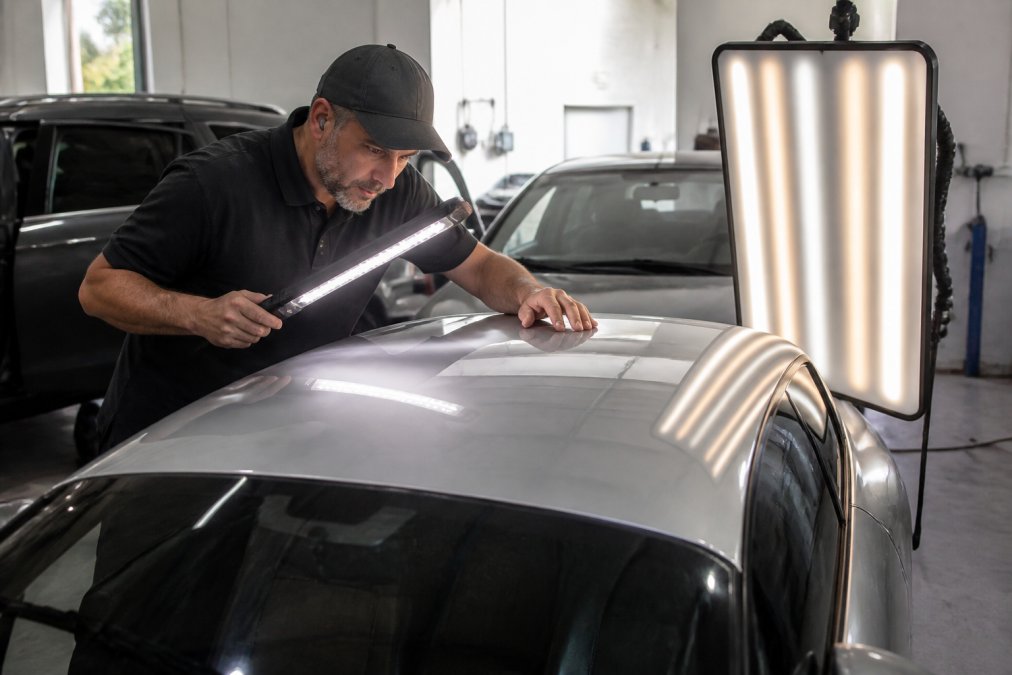
The assessment also includes a full vehicle appraisal that documents every affected panel, photographs each area for your claim file, and checks for related issues like cracked glass, damaged trim, and compromised seals. Many shops provide a detailed damage map that itemizes each panel and the recommended repair method.
Beyond the Shadow Board: Advanced Imaging and 3D Scanning
While the LED light and shadow board remain the industry standard for initial detection, a new tier of assessment is emerging at high-end facilities: advanced imaging that creates a quantifiable, digital record of the damage, a significant upgrade for both the repair process and your insurance claim.
- 3D Optical Scanning: Systems like the GOM ATOS or similar structured-light scanners project a fringe pattern onto the vehicle's surface. High-resolution cameras capture how that pattern deforms over each dent. The software then generates a precise 3D point cloud of the panel, showing the exact depth, diameter, and volume of each depression to within a fraction of a millimeter. This is not a visual guess; it is a measurement.
- How 3D Data Changes the Repair: With a 3D model, a technician can identify the precise high and low spots of a dent before touching the panel. This reduces the risk of over-working the metal and allows for a more efficient, targeted PDR process. For complex damage on body lines, the scan helps the technician plan the tool access and pressure points, leading to a more flawless result.
- The Advantage for Your Claim: A 3D scan provides undeniable, objective evidence of the damage's extent. When you submit a claim with a 3D damage map, you are not relying on a subjective visual interpretation. You are providing the insurer with a quantifiable dataset that is difficult to dispute. This can significantly streamline the supplement process and reduce the likelihood of a lowball initial estimate.
This combination of traditional visual inspection and advanced digital measurement is what separates a basic estimate from a true professional hail damage assessment. The visual inspection catches the damage; the 3D scan quantifies it, giving you the strongest possible documentation for your claim.
The Paintless Dent Repair Process Explained
Paintless dent repair (PDR) is the process of gently massaging dents out from behind the panel so the original factory paint remains fully intact. Unlike traditional bodywork that uses filler and repainting, PDR preserves the original finish, a major advantage for resale value and color matching.
The process works because hail dents stretch the metal without cracking the paint. A trained technician accesses the back of the panel, then uses specialized tools to apply controlled pressure, coaxing the metal back to its original shape while monitoring the surface to avoid overworking it.
PDR is not a universal fix. It works best on dents where the paint is undamaged and the metal hasn't been creased too sharply; large dents with torn paint, severe creases, or damage along sharp body lines may require traditional repair. This is where the assessment matters: knowing which dents qualify determines both your repair cost and how well the factory finish is preserved.
Hail Damage Insurance Claim Tips: From Adjuster to Settlement
Navigating a hail damage claim comes down to documentation and timing. The most practical hail damage insurance claim tips start with one rule: get your professional assessment before the adjuster inspects your vehicle, giving you a documented baseline to compare against the insurer's estimate. preventing roof damage.
Your comprehensive coverage typically handles hail damage, but you'll pay your deductible as part of the settlement. A common misconception is that the repair shop's quote must match the adjuster's estimate exactly. In practice, the initial estimate often misses damage that only becomes visible during disassembly, so your shop submits a supplement request and the insurer issues a second payment.
Why Claims Get Denied During the Assessment Phase
A significant number of hail damage claims are not flat-out rejected; they are underpaid or denied because of specific failures during the assessment and documentation phase (iii.org).
-
Insufficient Photo Documentation: The most common reason for a denied or reduced claim is a lack of clear, high-resolution photos. A photo taken from five feet away does not prove a dent exists. Insurers require close-up shots with a scale reference (like a coin or ruler) and a light source that casts a shadow to show the dent's depth. A professional assessment includes this level of photographic evidence, which is often the deciding factor in a claim's approval.
-
Pre-Existing Damage Confusion: If your vehicle had prior dings or dents, the adjuster may attribute new hail damage to old wear and tear. Without a prior inspection report or a detailed damage map that isolates the new storm's impact pattern, you leave room for the insurer to undervalue your claim. A professional assessment taken immediately after a storm creates a clear, timestamped record that separates new damage from old.
-
Missed Hidden Damage: Adjusters often perform a visual inspection without the benefit of a shadow board or disassembly. Damage along roof pillars, under the rubber seals of doors, or on the undersides of panels is routinely missed. When your repair shop later discovers this damage, it must file a supplement. If the initial claim was already settled, getting that supplement approved becomes a more complex negotiation.
The Appeal and Supplement Process
If your claim is denied or the initial estimate is far lower than the professional repair quote, you have the right to appeal. The process is not adversarial if you are prepared.
- File a Supplement: Your repair shop submits a formal supplement request to the insurer. This includes the new damage documentation, the specific repair procedure required (PDR vs. traditional bodywork), and a line-item cost breakdown. This is a standard process, not a special favor.
- Request a Re-Inspection: If the adjuster's initial assessment missed a panel, you can request a re-inspection. Having your technician present during this re-inspection is critical. They can point out the subtle damage under the LED light that the adjuster might otherwise overlook.
- Know Your Policy's Appraisal Clause: Most standard auto insurance policies include an appraisal clause. If you and the insurer cannot agree on the repair cost, either party can invoke this clause. You each hire an independent appraiser, and those two appraisers select a neutral umpire. The umpire makes a binding decision on the repair cost. This is a powerful tool that many policyholders are unaware of.
Working with a shop that manages claims directly can streamline the experience. Instead of coordinating between the adjuster and the repair facility yourself, such a shop can handle the paperwork, submit supplements, and communicate with the carrier on your behalf.
When to Repair vs. File a Claim: DIY Thresholds and Total Loss
Not every hail dent requires an insurance claim, and not every claim results in a repair. Understanding the thresholds helps you avoid unnecessary premium increases and unexpected outcomes.
If your deductible is higher than the repair cost, filing a claim only raises your premiums without financial benefit. A professional assessment gives you the repair estimate you need to make this call.
At the other extreme sits the total loss threshold. When repair costs approach a certain percentage of your vehicle's actual cash value, typically set by your state's regulations, the insurer declares the vehicle a total loss. A professional assessment that documents the full extent of damage helps you understand whether your vehicle is approaching this threshold before the insurer makes that determination.
Protecting Resale Value: Why Factory Finish Matters
A vehicle's resale value depends heavily on its paint. Factory finishes are applied in controlled conditions with baked-on clear coat that aftermarket repainting rarely matches exactly; once a panel is repainted, discerning buyers and appraisers notice, and the value drops.
Paintless dent repair protects resale value by keeping the original finish intact. Because no filler is used and no repainting occurs, there's no risk of color mismatch, clear coat failure, or the telltale signs of bodywork that trigger lowball offers at trade-in time.
Guidance on vehicle valuation and resale considerations consistently shows that original paint and a clean body history command higher resale prices than vehicles with repainted panels. For owners of newer vehicles or those with desirable color options, preserving the factory finish is often the difference between a strong resale price and a noticeable discount.
How to Choose a Certified Luxury Car Dent Specialist
Luxury vehicles demand a higher level of precision, and how to choose a certified luxury car dent specialist comes down to technique, experience, and facility standards. The wrong technician can turn a repairable hail dent into a panel that needs replacement.
European and high-end domestic vehicles use aluminum panels, advanced driver assistance systems, and specialized paints that require different handling than standard steel bodies. A technician who only works on mainstream vehicles may not have the training or tooling for these materials.
Facility standards matter too. A reputable specialist operates in a controlled environment with proper lighting, not a mobile setup working in a parking lot. Ask about their warranty coverage and whether the shop manages insurance claims directly. A lifetime warranty on repairs, for example, signals confidence in the workmanship and protects you if an issue surfaces years later.
Final Steps: Getting Your Free Hail Damage Assessment
The path from storm damage to a repaired vehicle starts with a single step: scheduling a professional hail damage assessment. Most reputable PDR shops, including 888 PDR, offer this inspection at no cost, with no obligation to proceed with repairs.
The technician will document every affected panel, provide a repair estimate, and explain your options, including whether PDR applies or if traditional repair is necessary. If you plan to file an insurance claim, bring your policy information so the shop can explain how the process will work with your carrier.
Consumer guidance on auto insurance claims and repairs recommends getting multiple assessments when damage is significant, which is sound advice for understanding your options. For vehicle owners in the Dallas-Fort Worth area and western Nebraska, 888 PDR provides free inspections at our Dallas facility at 4707 LBJ Freeway and our Scottsbluff location, with vehicle pickup and delivery available.
Getting a professional hail damage assessment is the difference between a smooth repair process and a drawn-out headache. The documentation, the repair plan, and the insurance strategy all start with knowing exactly what the storm did to your vehicle. At 888 PDR, we manage the entire process, from the free inspection through the supplement and final settlement, with a lifetime warranty on all repairs and rental assistance. Get started with 888 PDR and schedule your free hail damage assessment today.
Frequently Asked Questions
How do professionals identify hidden hail damage on a vehicle?
Professionals use focused LED inspection lights at low angles to cast shadows across body panels, making dents visible. A shadow board helps spot subtle imperfections. They also inspect trim lines, roof rails, and panel edges where damage is often missed. This method reveals dings that are invisible in normal sunlight, ensuring a complete damage map before any repairs begin.
Does paintless dent repair (PDR) affect a vehicle's resale value?
PDR preserves the vehicle's original factory finish, which is a major factor in retaining resale value. Unlike traditional bodywork that uses filler and repainting, PDR removes the dent without altering the paint. This prevents issues like color mismatch and premature clear coat failure. A car with its original paint and a documented PDR repair history often appraises higher than one with repainted panels.
What should I look for during a DIY hail damage inspection?
Park in a well-lit area and walk around the vehicle. Look for circular dents or creases on horizontal surfaces like the hood, roof, and trunk lid. Check sharp panel edges and the area around the windshield pillars. Hail damage often leaves a distinctive impact pattern. If you can see more than a few dents, or if any dent has a crease or cracked paint, a professional assessment is the next step for an accurate repair estimate.
How does an insurance adjuster calculate hail damage costs?
The adjuster maps the damage and estimates repair hours using industry-standard software. They consider the number and location of dents, the need for panel replacement versus paintless dent repair, and local labor rates. If the repair cost approaches a certain percentage of the vehicle's actual cash value, the car may be declared a total loss. A professional repair shop can provide a detailed estimate to support your claim.
Is it necessary to get a professional assessment before filing an insurance claim?
Yes. A professional hail damage assessment documents the full extent of the damage, including hidden dents on roof rails and panel edges. This report gives you leverage when negotiating with the insurance adjuster. It ensures the initial claim includes all necessary repairs, reducing the chance of a low settlement or the need for a lengthy supplemental claim process later.
What happens if the insurance adjuster misses some hail damage?
This is common. If you or your repair shop finds additional damage after the initial inspection, you can file a supplemental claim. A professional repair shop will document the newly discovered dents and submit the supplement to the insurance company for approval. This is a standard process, and working with a shop experienced in hail claims makes it smoother.