
Table of Contents
- What Hail Damage Actually Looks Like on Your Car
- How Paintless Dent Repair Preserves Your Factory Finish
- Understanding the Auto Hail Insurance Claim Process in Texas
- Paintless Dent Repair Costs and What Affects Your Price
- Hail Damage Repair Timeline: How Long Does It Actually Take
- Why Your Deductible Doesn't Have to Come Out of Your Pocket
- Getting Your Car Back Fast: Rental and Pickup Services
- Frequently Asked Questions
Last Updated: September 21, 2026
What Hail Damage Actually Looks Like on Your Car
Hail damage repair in Dallas starts with understanding what you're actually looking at. Hail creates a distinctive pattern of small dents across your vehicle's exposed surfaces, and the damage varies dramatically depending on stone size, impact angle, and your car's material composition. Most hail damage appears as shallow depressions in the metal, sometimes barely noticeable from a distance, sometimes covering a significant portion of your hood and roof.
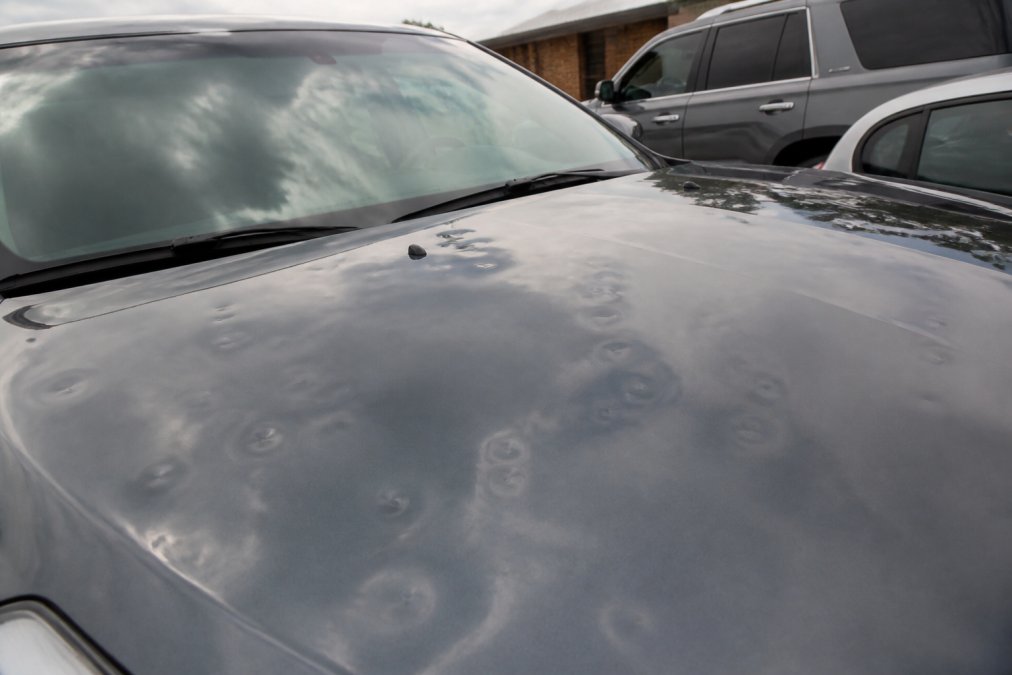
The pattern tells you something important. Hail doesn't create isolated dents, it creates clusters. You'll see dozens or even hundreds of small depressions, usually concentrated on the top-facing surfaces of your vehicle. The windshield, sunroof, and side mirrors often sustain damage too, though glass typically cracks rather than dents. Door panels and sides show damage only if the hail was severe or came at an angle.
What makes hail damage different from a parking lot ding is the sheer volume and randomness. A shopping cart hit creates one or two dents in a predictable location. Hail creates a chaotic topography across your entire roof and hood. This matters because it changes how repair shops approach the work.
How Paintless Dent Repair Preserves Your Factory Finish
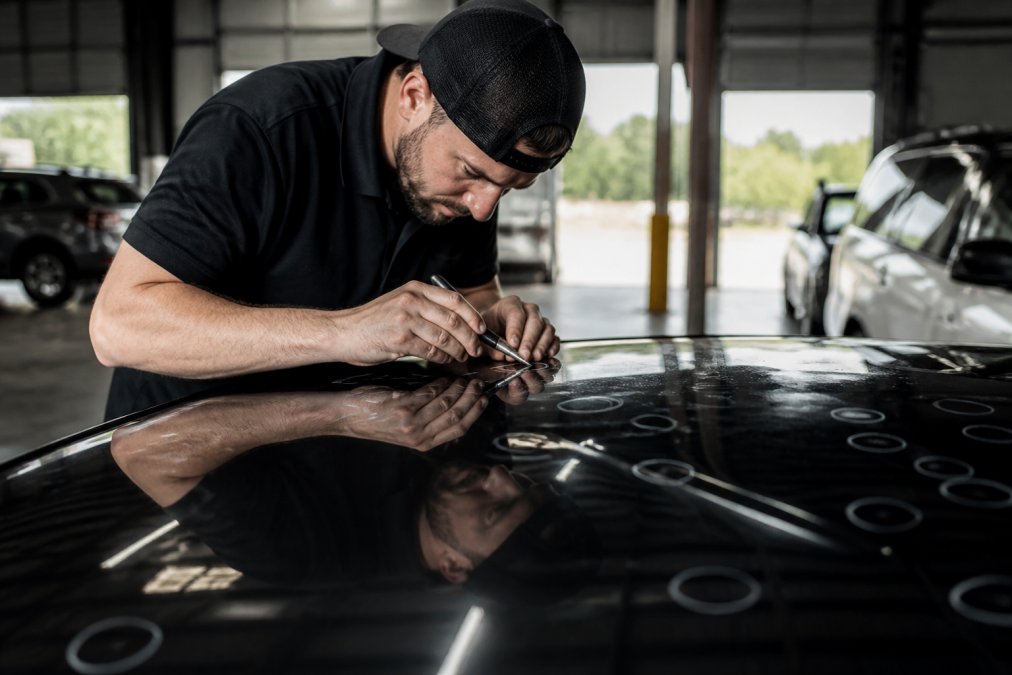
Paintless dent repair (PDR) works by accessing the back side of a dent and carefully manipulating the metal back to its original shape without removing paint or using fillers. This technique preserves your factory finish entirely, the paint never gets sanded, primed, or reapplied. For hail damage repair Dallas owners, this distinction matters enormously for resale value.
Traditional dent repair involves sanding out the damaged area, applying body filler, priming, and repainting. That process removes the factory paint layer and introduces new paint that, while cosmetically matched, is technically different from the original. Buyers and appraisers know this. A car with a repainted panel shows as "repaired damage" in vehicle history reports and can reduce resale value.
Paintless dent repair avoids this problem entirely. The technician uses specialized tools, metal rods, hooks, and tap-down implements, to work from behind the panel. They gently push and manipulate the metal back into shape while monitoring progress from the front. The factory paint flexes and returns to its original position without any paint application. The finish remains completely original.
This approach has real limitations, though. It works best on shallow to moderate dents in areas where technicians can access the back of the panel. Deep creases, damage near edges, or dents in areas with limited access sometimes require traditional repair. Hail damage typically falls into the sweet spot for PDR, numerous shallow dents across accessible surfaces like hoods and roofs.
Understanding the Auto Hail Insurance Claim Process in Texas
The auto hail insurance claim process in Texas follows a fairly standard sequence, but knowing what to expect helps you avoid common pitfalls. Most insurers have specific procedures for hail damage claims, and understanding these procedures protects you from being pressured into quick settlements that don't cover your full damage.
When you file a claim, your insurer assigns an adjuster. That adjuster inspects your vehicle and estimates the repair cost. Here's where many people make mistakes: they accept the adjuster's initial estimate without getting a separate assessment from a repair shop. Adjusters work for the insurance company, not for you. Their estimate may not capture all the damage, especially subtle hail damage that becomes apparent during the repair process.
The process typically involves three stages. First, the initial inspection and estimate. Second, the repair authorization, where your insurer approves the repair shop and the estimated cost. Third, the supplement stage, which happens when repair work reveals additional damage not visible during the initial inspection. Hail damage often reveals hidden damage, dents in areas that weren't immediately obvious, damage to trim pieces, or paint damage that only shows up once the initial dents are repaired.
Many repair shops, including those specializing in hail damage repair Dallas, work directly with insurance companies to manage this process. They handle the paperwork, communicate with adjusters, and submit supplements when additional damage surfaces. This removes the burden from you and ensures your claim is properly documented.
Paintless Dent Repair Costs and What Affects Your Price
Paintless dent repair costs depend on several factors that vary significantly from vehicle to vehicle. The number of dents, their size, their location, and your vehicle's construction all influence pricing. The best approach is to get a free inspection from a qualified repair shop that can assess your specific damage and provide an accurate quote.
What you should understand is that hail damage repair cost varies based on the extent of damage. Minor hail damage affecting a small portion of your vehicle's surface costs less than extensive damage covering a significant portion. The type of vehicle matters too, as complex panel designs and specialized materials sometimes require different techniques.
The location of damage affects repair complexity. Dents on flat surfaces like hoods and roofs are typically easier to access and repair than dents near edges, corners, or around trim pieces. Dents near windows, door handles, or other components may require additional work. Some areas of your vehicle are simply harder to access from behind the panel, which can increase labor time.
Your insurance deductible plays a major role in your out-of-pocket cost. If your deductible is $500 and repair costs $1,200, you pay $500 and insurance covers $700. However, many repair shops have programs to help with deductible management, which we'll cover in the next section.
Hail Damage Repair Timeline: How Long Does It Actually Take
The hail damage repair timeline depends primarily on the extent of damage and your shop's current workload. After major hail storms in the Dallas area, repair shops often have weeks or months of backlog. A vehicle with minor hail damage might be ready in a few business days. Extensive damage can take longer.
The actual repair work itself moves faster than many people expect. A technician working on moderate hail damage might complete repairs in a few days of focused work. The time constraints come from scheduling, workload, and the supplement process. If your initial inspection reveals additional damage during repair, the timeline extends while your insurer processes the supplement and approves additional work.
Some repair shops prioritize vehicles based on urgency. If you need your car for work, communication with your repair shop about timeline expectations is essential. Many shops can provide rental vehicles or pickup and delivery services to minimize disruption while your car is being repaired.
The insurance approval process also affects timeline. If your insurer is slow to approve supplements or if there's any dispute about coverage, your repair timeline extends. Shops that manage claims directly with insurers typically expedite this process, getting approvals faster than customers could on their own.
Why Your Deductible Doesn't Have to Come Out of Your Pocket
Many people don't realize they have options regarding their insurance deductible. Some repair shops, particularly those experienced with hail damage repair Dallas, offer deductible assistance programs. These programs work in different ways, but the goal is the same: reduce or eliminate your out-of-pocket cost.
One common approach involves the repair shop absorbing part or all of your deductible as part of their service offering. Another approach involves working with your insurance company to negotiate the deductible as part of the repair agreement.
The key is asking about these options when you contact a repair shop.
This doesn't mean deductibles disappear entirely. It means there are legitimate ways to minimize your financial burden beyond simply paying the full amount. Understanding these options before you commit to a repair shop puts you in a stronger negotiating position.
Getting Your Car Back Fast: Rental and Pickup Services
While your vehicle is being repaired, you need transportation. Many repair shops offer solutions that minimize disruption to your daily life. Rental vehicle assistance and pickup and delivery services are increasingly standard in the hail damage repair industry.
Rental vehicle programs work in different ways.
Frequently Asked Questions
Does insurance cover hail damage repair in Dallas?
Most comprehensive auto insurance policies cover hail damage, but you'll need to file a claim with your insurance carrier. Your deductible applies, though many insurers waive it for hail claims in certain situations. At 888 PDR, we handle the entire claim process for you, from the initial inspection through final payment, so you don't have to manage the paperwork yourself. Contact your insurer or our team to confirm your specific coverage.
How is paintless dent repair different from traditional body work for hail damage?
Paintless dent repair removes dents by accessing the underside of the panel and gently massaging the metal back into shape, without filler, sanding, or repainting. Traditional body shops use filler and repainting, which can affect resale value and doesn't match your factory finish perfectly. Paintless repair preserves the original paint and structural integrity of your vehicle, keeping your car's value intact and maintaining that factory-quality appearance buyers expect.
How long does hail damage repair typically take?
Most hail damage repairs take a few business days, depending on the extent of the damage and current shop volume. We provide a free inspection and timeline estimate upfront. During your repair, we offer vehicle pickup and delivery, plus rental assistance if you need transportation while your car is in the shop.
What does the lifetime warranty on hail damage repairs actually cover?
Our lifetime warranty covers the workmanship on repairs we complete, if a dent we fixed reappears or if you experience any issues with our repair work, we'll fix it for free, even years later. The warranty covers the specific panels and dents we repaired, not future damage from other causes. This gives you peace of mind knowing your investment is protected and that we stand behind the quality of our work.