Table of Contents
- Paintless Dent Repair vs. Conventional Body Repair for Hail Damage
- Hail Damage Repair Cost: What to Expect
- When to Replace a Hail-Damaged Car Panel
- How Long Does Paintless Dent Repair Take?
- Hail Damage Insurance Claims and Deductibles
- Panel-by-Panel Decision Guide for Common Hail Damage
- Frequently Asked Questions
Last Updated: October 15, 2026
Paintless Dent Repair vs. Conventional Body Repair for Hail Damage
When a hailstorm strikes, vehicle owners face a critical decision: pursue paintless dent repair (PDR) or opt for traditional body repair and panel replacement. The choice determines not just repair cost and time, but whether your car's original factory paint survives intact.
PDR removes dents by carefully manipulating metal from behind the panel, restoring the original shape without filling, sanding, or repainting. Traditional body repair uses filler, primer, and paint to repair damaged areas. The distinction matters because it affects your final bill, how quickly you get your vehicle back, and whether your resale value stays intact.
How PDR Works and When Paint Condition Matters
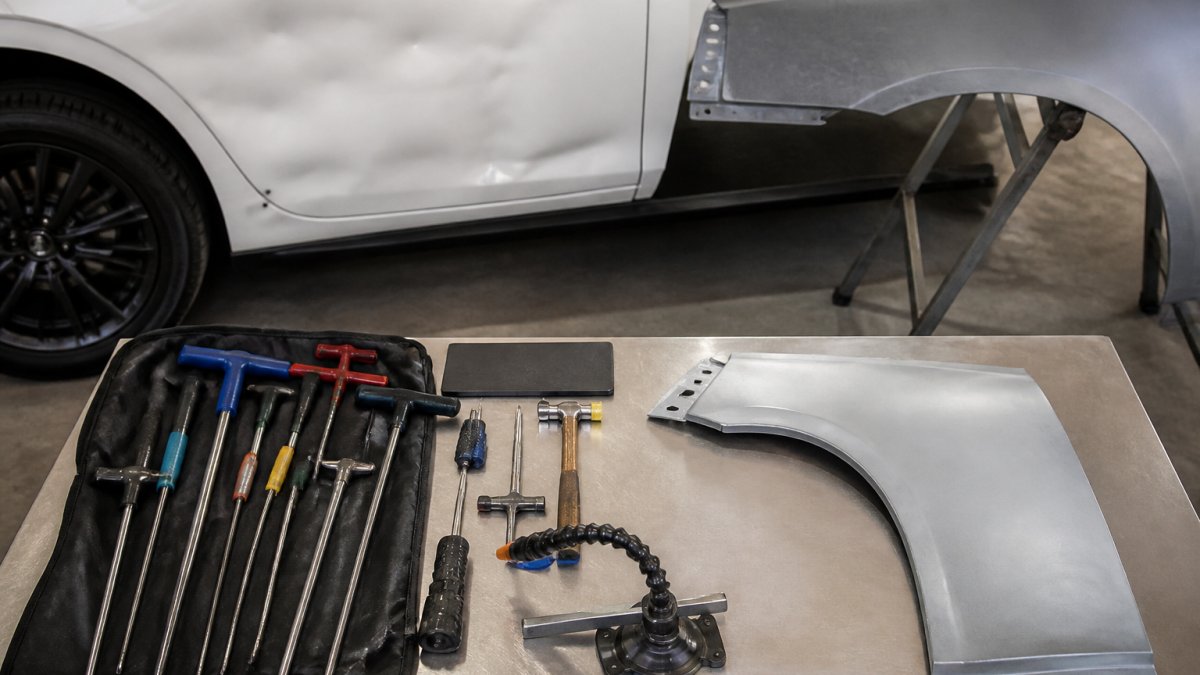
Paintless dent repair succeeds when the metal underneath remains structurally sound and the paint surface hasn't cracked or chipped. A technician accesses the dent from behind the panel using specialized tools, gently pushing or tapping the metal back into its original contour.
Paint condition is the deciding factor. If hail has left the paint intact, even with small creases, PDR works beautifully. The moment paint cracks, chips, or shows stress fractures, PDR becomes impossible.
The repairability matrix depends on dent severity, size, and depth. Small, shallow dents (under half an inch deep) respond well to PDR. Medium dents with intact paint are still candidates. Deep creases, sharp folds, or stretched metal often exceed PDR's reach.
When Traditional Repair or Panel Replacement Is Necessary
Traditional body repair becomes necessary when paint has failed, metal is severely stretched, or damage is too deep for PDR. A body shop technician sands the damaged area, applies filler to build up the contour, primes the surface, and repaints to match the factory finish.
Paint matching is an art. Modern vehicles have metallic, pearl, and color-shift finishes that are extremely difficult to replicate perfectly. A repaint may look identical under shop lights but show color variation in sunlight.
Panel replacement becomes the choice when damage is so severe that repair costs approach replacement cost, or when structural integrity is compromised.
Hail Damage Repair Cost: What to Expect
Repair cost depends on damage extent, repair method, and your vehicle's specific panels. Understanding the cost drivers helps you evaluate insurance estimates and decide whether repair or replacement makes financial sense.
Factors That Drive Repair Estimates
Dent count and severity set the baseline. A vehicle with 20 small dents across the hood and roof requires more time than one with 3 dents on a single panel.
Panel material affects labor time and method choice. Steel panels are forgiving; aluminum panels (common on newer vehicles) are stiffer and harder to manipulate without cracking.
Dent location and panel access matter significantly. Dents on flat surfaces like hoods and roofs are easier to access from behind and repair faster.
Paint condition determines method choice entirely. If paint is compromised, PDR is off the table regardless of dent severity. You're committed to body shop work, which carries higher labor costs and longer turnaround times.
Panel Replacement Costs and When They Apply
Panel replacement costs more than repair because you're purchasing new parts plus installation labor. OEM panels (factory original) carry the highest cost. Aftermarket panels cost less but may have fit or finish variations.
Panel replacement makes sense when the damage-to-replacement cost ratio favors replacement. If repairing a hood costs nearly as much as replacing it, replacement is the rational choice.
Insurance companies often prefer panel replacement for severe damage because it guarantees a like-new result. Your deductible applies regardless of repair method chosen, so the insurance company's preference doesn't affect your out-of-pocket cost, only your final vehicle condition.
When to Replace a Hail-Damaged Car Panel
The decision to replace rather than repair hinges on three factors: repairability, cost efficiency, and structural integrity.
Dent Severity, Size, and Depth: The Repairability Matrix
Small dents (under 1 inch diameter, under half inch deep) with intact paint are excellent PDR candidates. Medium dents (1-3 inches, half to one inch deep) may be PDR-eligible depending on location and metal condition. Large dents (over 3 inches) or deep creases typically exceed PDR reach.
Stretched metal, where the hail impact has actually expanded the metal rather than just denting it, cannot be corrected by moving metal around. Stretched areas require filler or panel replacement.
Sharp creases are PDR's worst enemy. A crease is a fold in the metal that creates a hard edge. Unfolding that crease without cracking the paint is extremely difficult. Many creases require conventional repair or replacement.
Panel Material and Location: Steel vs. Aluminum
Steel panels are more forgiving. Steel can be manipulated repeatedly without losing structural integrity. Most older vehicles use steel hoods, doors, and fenders.
Aluminum panels (increasingly common on modern vehicles for weight reduction) are stiffer and more prone to cracking during PDR manipulation. An aluminum hood dented by hail may be repairable, but the technician must work more carefully to avoid paint cracking. Some aluminum damage tips the cost-benefit analysis toward replacement.
Panel location affects both repairability and replacement cost. Hood and roof damage is usually repairable via PDR because these panels are flat and accessible from behind.
How Long Does Paintless Dent Repair Take?
PDR turnaround time is one of its major advantages. A vehicle with moderate hail damage (20-40 dents) typically takes 2-5 business days. A vehicle with severe damage (100+ dents) might take 1-2 weeks.
The timeline depends on shop capacity and damage extent. During hail season, shops are overwhelmed with incoming vehicles, which can extend wait times even though individual repair time hasn't changed. Out of season, a moderately damaged vehicle might be completed in 2 days.
Vehicle pickup and delivery services eliminate the need to arrange alternative transportation, which speeds your overall timeline. You drop off your car and pick it up when repairs are complete, no rental car logistics, no trip to the body shop.
Hail Damage Insurance Claims and Deductibles
Insurance claims for hail damage typically fall under comprehensive coverage (not collision) (Am I Covered?). Your deductible applies regardless of repair method chosen. If your deductible is $1,000 and repairs cost $3,000, you pay $1,000 and insurance covers $2,000.
How Repair Method Affects Your Claim and Deductible
Your choice of repair method doesn't change your deductible, but it can affect whether your claim is approved and how much insurance will cover. Insurance companies have preferred repair shops and preferred methods.
The key is transparency with your insurance company. Get a written estimate from your repair shop and submit it with your claim. Let insurance know whether the estimate recommends PDR, conventional repair, or panel replacement, and why.
Deductible waivers are sometimes available if you use an insurer's preferred shop or if you're in a declared disaster area. After a major hailstorm, some insurers waive deductibles temporarily to speed claims processing. Ask your agent whether a waiver applies to your situation.
Preserving Factory Paint and Resale Value
Factory paint is a selling point. Buyers know that original paint means the vehicle hasn't been in a major accident.
PDR preserves factory paint entirely. Conventional body repair repaints the damaged area, and even expert color matching can show slight variations under certain lighting.
If resale value is a priority, PDR is the clear winner. The cost difference between PDR and conventional repair often pays for itself through better resale value.
Documentation matters. Keep records of all PDR work, including before-and-after photos and written estimates. When you sell, these records prove that the vehicle was repaired professionally and that the factory finish was preserved.
Panel-by-Panel Decision Guide for Common Hail Damage
Different panels present different repair challenges. Understanding what works best for each helps you evaluate estimates and make informed decisions.
Hoods, Roofs, and Doors: Where PDR Works Best
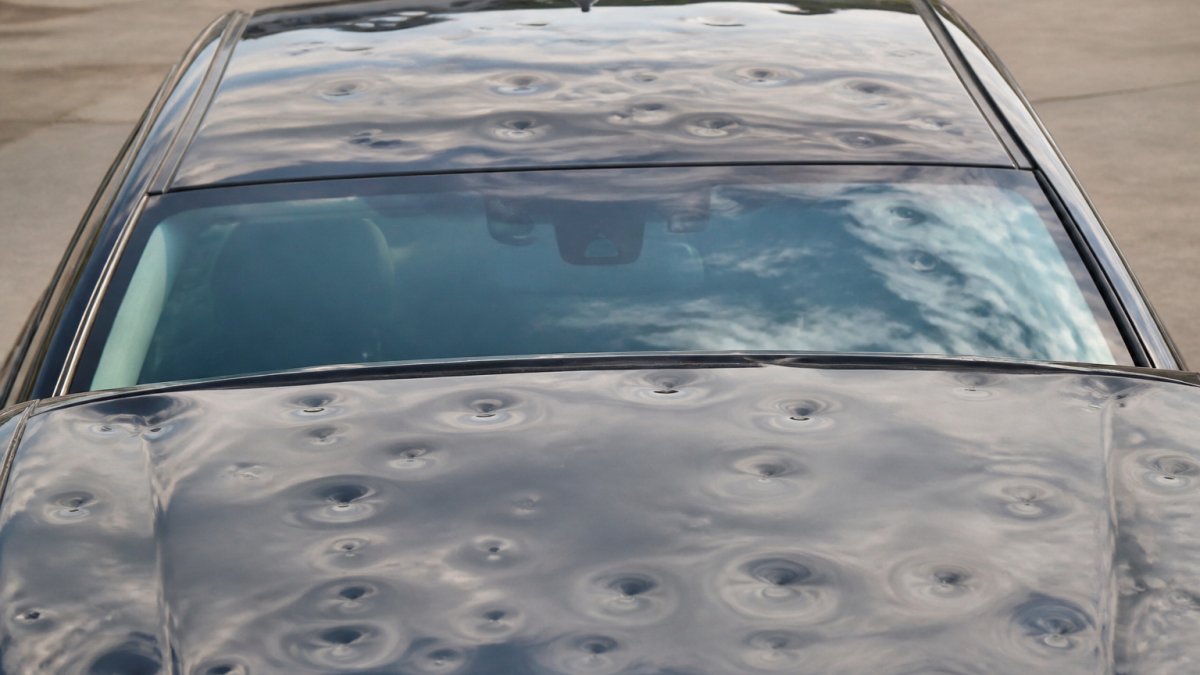
Hoods and roofs are ideal PDR candidates. These panels are flat, accessible from behind, and rarely have structural complexity. Hail damage to a hood or roof with intact paint is almost always repairable via PDR.
Doors are slightly more complex because they contain windows, locks, and handles, which limit access from behind. However, most door damage can still be accessed and repaired via PDR. The exception is damage directly around the handle or window frame, which may require conventional repair.
Repair time for hoods and roofs typically runs 1-3 days, depending on dent count. Insurance companies readily approve PDR for these panels because the success rate is high and the cost is predictable.
Fenders, Doors, and Quarters: Mixed Repair Approaches
Fenders are more challenging than hoods because they're curved and have less flat surface. Small dents on flat fender sections respond to PDR.
Quarter panels (the rear section between the rear door and trunk) are the most difficult to repair via PDR.
Doors combine flat sections with complex curves around windows and handles. Flat door sections are PDR-friendly. Damage near edges, handles, or windows usually requires conventional repair.
Mixed repair approaches are common for hail-damaged vehicles.
Hail damage repair decisions come down to paint condition, dent severity, and panel location. PDR preserves your factory finish and costs less when damage profiles support it.
At 888 PDR, we manage the entire process, from damage assessment through insurance claim handling to final delivery. We offer a free inspection to evaluate your specific damage, a lifetime warranty on all repairs, and vehicle pickup and delivery to eliminate stress. Contact 888 PDR for a no-obligation quote and let us show you how to get your vehicle back to factory condition.
Frequently Asked Questions
Is paintless dent repair better than replacing a panel for hail damage?
PDR is usually better when hail dents have not broken the paint and dents are shallow to moderate. It preserves your factory finish and resale value without repainting or body filler. Panel replacement becomes necessary when the paint is cracked, metal is severely stretched or creased, or structural integrity is compromised. Your repair method depends on dent severity, panel material, and whether the paint remains intact.
How much does hail damage repair cost compared to panel replacement?
Your actual cost depends on damage extent, vehicle type, and repair method. Contact 888 PDR for a free inspection and accurate estimate.
When does hail damage require replacing a car panel?
Replace a panel when dents are sharp, deep creases, the paint is broken or cracked, metal is severely stretched or deformed, or the panel cannot be accessed from behind for PDR. Aluminum panels in newer vehicles may require replacement if deformation is severe. Structural panels like doors and quarters may need replacement if damage affects alignment or safety. A professional inspection determines whether repair or replacement is appropriate for your specific damage.
How long does paintless dent repair take for hail damage?
Single dents or small hail damage can be repaired in hours. Moderate multi-panel hail damage typically takes 1-3 days depending on the number of dents and dent severity. Severe hail damage affecting the entire vehicle may take 1-2 weeks. Turnaround time also depends on shop capacity and whether your vehicle requires supplemental estimates for insurance. 888 PDR offers vehicle pickup and delivery to minimize your downtime while repairs are underway.
Does hail damage repair affect my insurance claim or deductible?
Paintless dent repair typically costs less than panel replacement, which can help keep your total claim below your deductible threshold. Your insurance company covers hail damage as a comprehensive claim (not a collision), and you pay only your deductible once. Choosing PDR over panel replacement may reduce your out-of-pocket cost. 888 PDR handles all insurance paperwork and works directly with your carrier to manage the claim from start to finish, ensuring you understand deductible responsibility.