
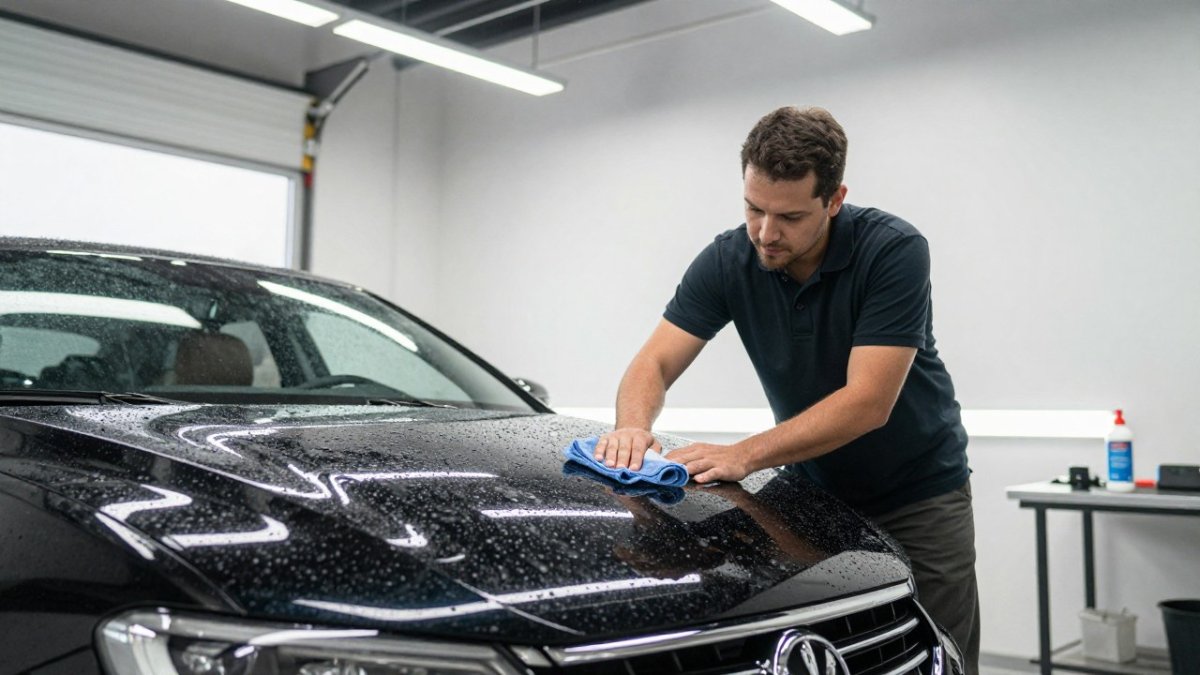
Last Updated: November 13, 2026
Quick Summary
A ceramic coating is a liquid polymer that cures into a hard, glass-like layer on top of your clear coat, forming a chemical bond with the paint. It acts as a sacrificial layer that absorbs UV energy and gives contaminants like bird droppings, tree sap, and road salt less to grip, buying you time to wash them off.
- A coating locks in whatever is underneath it, so swirl marks and scratches must be polished out first.
- Coated paint sheds water in tight beads, but hard water minerals still leave rings if left to dry.
- Ceramic coating is not scratch-proof; shopping carts, rock chips, and keys still cut through it.
- Paint protection film stops rock chips while ceramic coating wins on chemical resistance and ease of cleaning.
- Wash every two to four weeks with a coating-safe shampoo and skip automatic brush washes entirely.
Table of Contents
- How Ceramic Coating Bonds to and Protects Factory Paint
- Contaminant-by-Contaminant: What Ceramic Coating Repels and What It Doesn't
- The Disadvantages of Ceramic Coating You Should Know
- Ceramic Coating vs. Paint Protection Film: Which Protects Better?
- How to Apply Ceramic Coating for Lasting Results
- Ceramic Coating Durability: What Affects How Long It Lasts
- Maintaining Coated Paint and Knowing Its Protection Limits
- Book a Free Paint Inspection with 888 PDR
- Frequently Asked Questions
How Ceramic Coating Bonds to and Protects Factory Paint
A ceramic coating is a liquid polymer that cures into a hard, glass-like layer on top of your clear coat. It does not replace your paint; it sits on top as a sacrificial layer that takes the hits your factory finish would otherwise absorb.
Your car leaves the factory with a clear coat, a thin protective layer sprayed over the color. Ceramic coating adds a second, harder layer on top. The clear coat stays intact underneath.
The Chemistry of the Bond: Silica and Clear Coat
Many ceramic coatings are built on silica, or silicon dioxide, suspended in a carrier solvent that evaporates as the coating cures.
That film forms a chemical bond with the clear coat. It is not glue. It is closer to a very thin glass shell that clings to the surface at a molecular level.
The bond is what separates ceramic coating from car wax. Wax washes away in weeks; a cured coating stays put for months or years.
Why Surface Preparation and Paint Correction Matter First
A coating locks in whatever is underneath it. That is the part most guides skip.
If your paint has swirl marks, water spots, or light scratches, a coating will seal them in rather than hide them, making them permanent until the coating is stripped off.
Proper preparation means:
- A full wash and chemical decontamination to strip old wax and road film
- Clay bar treatment to pull embedded grit from the clear coat
- Paint correction to polish out swirl marks and light defects
Skip any of these steps and the coating bonds to dirt instead of paint, failing early and unevenly. If you are worried about protecting factory paint that has already been repaired, our guide on how to inspect vehicle paint quality after repairs walks through what to check.
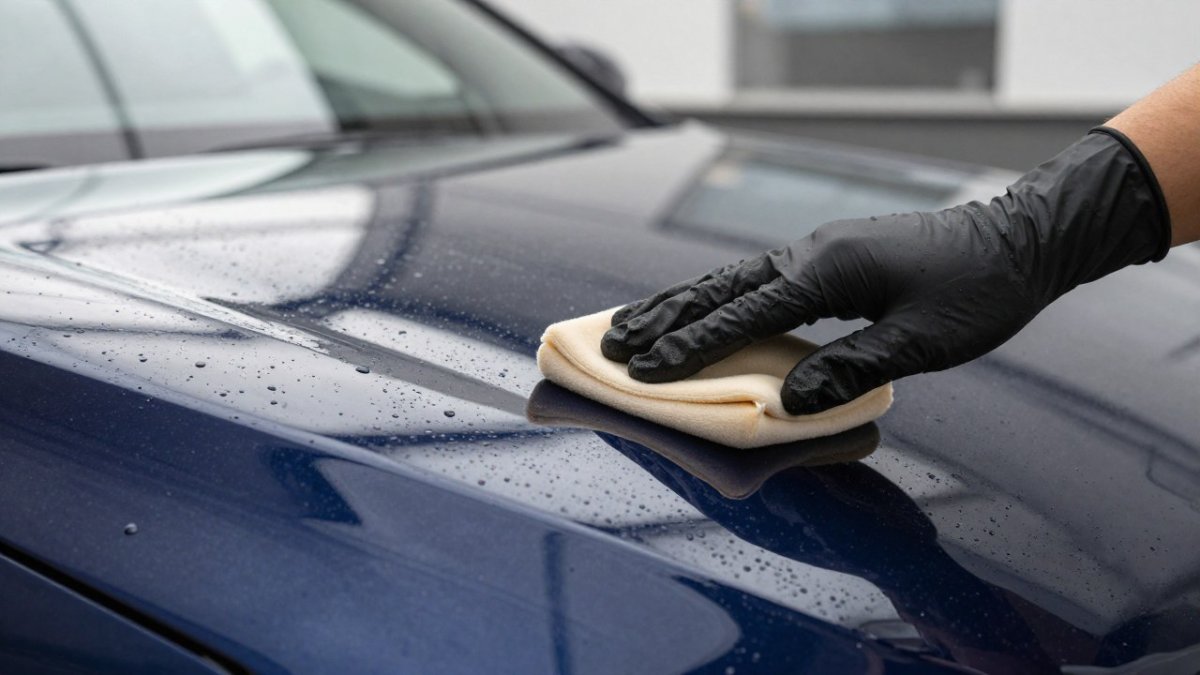
Contaminant-by-Contaminant: What Ceramic Coating Repels and What It Doesn't
Ceramic coating handles some threats well and others poorly. Knowing which is which saves you from expecting too much. The table below summarizes what a cured coating changes for each common exposure. Because a coating’s protection depends on how long it remains intact, an honest guide to ceramic coating longevity helps set realistic expectations for each exposure.
| Contaminant | What the coating does | Time before damage on bare clear coat | Time before damage on coated paint | What still gets through |
|---|---|---|---|---|
| UV rays | Absorbs and reflects a share of UV energy | Months to years of cumulative exposure | Slowed, not stopped | Long-term oxidation still occurs; coating does not restore faded paint |
| Bird droppings | Gives acid less to grip; sits on top | Etching in 1-2 days of summer sun | Etching in several days to a week if left | Acid still etches if left long enough; fresh droppings still need removal |
| Tree sap | Reduces bonding strength | Bonds hard; can pull clear coat if scraped | Releases more easily with solvent | Sap still bonds; scraping still risks marring |
| Road salt | Limits adhesion and dwell time | Corrosive over repeated winter exposure | Slower buildup; washes off more completely | Salt still accumulates in seams and undercarriage |
| Water spots | Sheds water in beads; fewer mineral deposits | Spots form quickly in hard water | Fewer spots; existing minerals still deposit | Hard water minerals still leave rings if left to dry |
| Dirt and grime | Releases more easily; less mechanical washing | Requires more wash passes | Washes faster with fewer passes | Abrasive grit still causes swirls if washed carelessly |
| Light abrasion | Resists light marring | Swirls from washing and wiping | Reduced but not eliminated | Shopping carts, keys, and rocks still cut through |
UV Rays, Oxidation, and Color Fading
Ultraviolet light breaks down clear coat over time, showing up as oxidation: a chalky, dull look and slow color fade. A cured coating absorbs and reflects a share of UV energy before it reaches the clear coat, slowing oxidation but not stopping it, and doing nothing for paint already oxidized.
Bird Droppings, Tree Sap, Road Salt, and Chemical Stains
Bird droppings are acidic and can leave a permanent mark in a day or two of summer sun. Tree sap bonds hard and pulls off with the clear coat if you scrape it.
A hydrophobic coating gives these substances less to grip. They sit on top instead of biting in. That buys you time to wash them off. It does not make your car immune.
Hydrophobic Behavior, Water Spots, and Dirt Resistance
Water beading is the visible payoff. Coated paint sheds water in tight beads that roll off as you drive, so less standing water means fewer water spots and less mineral deposit.
The matrix above is the honest version: a coating changes how long you have to react and how easily contaminants release, not whether they can eventually cause damage.
The Disadvantages of Ceramic Coating You Should Know
Ceramic coating has real drawbacks most sales pages leave out.
- It is not scratch-proof. It resists light marring. A shopping cart, a rock chip, or a key will still cut through it and into the paint.
- It does not stop dents. Hail, door dings, and creases pass straight through any coating. A coating protects the surface, not the metal.
- It needs maintenance. Coated paint still needs regular washing with the right products. Neglect it and the coating clogs and stops beading.
If your goal is resale value, small cosmetic fixes often matter more than a coating. Our breakdown of minor cosmetic repairs that raise trade-in value covers which fixes pay off and which do not.
Ceramic Coating vs. Paint Protection Film: Which Protects Better?
Paint protection film wins on impact protection. Ceramic coating wins on chemical resistance and ease of cleaning. They solve different problems.
Paint protection film is a thick urethane sheet applied to the paint and can absorb impacts that a thin chemical layer cannot.
| Feature | Ceramic Coating | Paint Protection Film |
|---|---|---|
| Stops rock chips | No | Yes |
| Repels water and dirt | Yes, strong | Yes, moderate |
| UV and chemical resistance | Yes | Yes |
| Adds gloss | Yes | Yes |
| Thickness | Microscopic | Several mils |
| Best for | Whole-car chemical protection | High-impact zones |
If you want a film service you can actually book, our paint protection film in Dallas page covers self-healing clear and color film, full front coverage, and the film warranty.
How to Apply Ceramic Coating for Lasting Results
Application is simple in steps and unforgiving in execution.
- Wash and decontaminate. Strip old wax, then clay bar the paint.
- Correct the paint. Machine polish out swirl marks and defects.
- Wipe down with IPA. Remove all polishing oils so the coating can bond.
- Apply in small sections. Work a panel at a time, usually a half hood or one door.
- Level the coating. Wipe off the residue before it flashes, following the product's timing.
- Let it cure. Keep the car dry and out of rain for the full cure window.
- Avoid washing too soon. Wait the full period the maker specifies.
Watch out: applying coating in direct sun or on a hot panel causes it to flash too fast. That leaves streaks you cannot wipe out without polishing.
Ceramic Coating Durability: What Affects How Long It Lasts
Durability depends far more on prep and care than on the brand on the bottle. A well-prepped, well-maintained coating outlasts a premium product applied badly, and most manufacturers' claimed durations assume ideal conditions few cars see.
The factors that matter most:
- Prep quality. Coating over defects or oils fails early. A coating applied after full decontamination and paint correction bonds to clean clear coat.
- Curing conditions. Cool, dry, shaded space gives the best cure. Direct sun or a hot panel causes the coating to flash too fast, leaving streaks and a weaker film.
- Washing habits. Touchless or two-bucket washes preserve the layer; automatic brush washes chew it up. The difference between a careful owner and a brush-wash regular can be years of coating life.
How These Factors Combine
The same coating on two identical cars can last very differently. A garaged car washed every two weeks with coating-safe shampoo and a topper might reach the top of the maker's range; a car parked outside, washed at a brush tunnel, and exposed to road salt might stop beading in half that time. Prep and maintenance usually matter more than the product tier.
Warranty Terms and What They Actually Cover
Warranty terms vary widely by product and installer, so read the fine print on what is covered, what voids it, and who honors it.
Maintaining Coated Paint and Knowing Its Protection Limits
- Wash every two to four weeks with a coating-safe shampoo
- Use the two-bucket method or a touchless wash
- Dry with a clean microfiber towel or forced air
- Remove bird droppings and tree sap as soon as you spot them
For safe washing habits that keep a protective finish lasting, see our paintless dent repair aftercare steps.
Know the limits too. A coating will not stop a hail dent, a door ding, or a deep scratch. When damage does get through, paintless dent repair can often fix it without fillers or repainting, keeping your factory finish intact. Our article on whether paintless dent repair damages factory paint explains how that works.
Book a Free Paint Inspection with 888 PDR
Protecting original paint starts with knowing what condition it is in right now. At 888 PDR, we offer a free inspection so you can see what your paint needs.
Your paint is only original once. Once it is corrected, repainted, or filled, that factory finish is gone for good. Get a free inspection with 888 PDR and find out whether a coating, paintless dent repair, or both will keep your car looking right and holding value.
Frequently Asked Questions
Does ceramic coating actually protect your paint?
Yes, but within limits. A cured ceramic coating forms a sacrificial silica-based layer over your clear coat. It does not make paint bulletproof: it will not stop rock chips, deep scratches, or hail dents. Think of it as added chemical and environmental protection that buys your factory finish time, not a replacement for physical protection like paint protection film.
What are the disadvantages of ceramic coating on a car?
The main downsides are surface preparation demands and maintenance. A quality coating typically requires paint correction and decontamination first. Coated paint still needs regular washing with appropriate products. It also will not prevent scratches, swirl marks, or hail damage. If your car has existing dents, address those before coating so the finish is uniform.
How long does ceramic coating last on a car?
Ceramic coating durability depends on the product tier, preparation quality, and how the car is stored and washed. Durability depends on the product, preparation quality, and how the car is stored and washed. Daily sun exposure, automatic brush washes, and harsh chemicals can shorten lifespan.
Does ceramic coating prevent scratches, chips, or hail damage?
No. A ceramic coating adds a thin, hard layer that resists light chemical staining and makes washing easier, but it cannot absorb the impact of rock chips, door dings, or hail. Those are physical damage events that require paintless dent repair or bodywork. If your car has hail dents or parking lot damage, consider having them repaired first so the surface is smooth.
