
Table of Contents
- Typical Hail Dent Repair Timeline
- Factors Affecting Hail Repair Duration
- Paintless Dent Repair vs. Traditional Body Shop Methods
- Hail Damage Insurance Claim Timeline
- Rental Car Coverage for Hail Damage Repairs
- Post-Repair Inspection and Quality Assurance
- How to Minimize Repair Downtime
- Conclusion
Last Updated: August 21, 2026
Typical Hail Dent Repair Timeline
When hail strikes, most vehicle owners ask: how long does hail dent repair take? A straightforward hail dent repair typically takes between three to seven business days from start to finish. Minor damage affecting a handful of panels may be ready in three to four days, while extensive hail damage involving dozens of dents across multiple panels can stretch to two weeks or longer, depending on technician availability and work complexity.
At 888 PDR, we've managed thousands of hail damage claims. A single door ding might be resolved in an afternoon, while a vehicle hit by severe hail across the roof, hood, doors, and fenders requires significantly longer. The real variables are the accessibility of each dent, damage depth, and whether your insurance claim requires supplements or additional approvals before work begins.
Understanding this timeline matters because it affects your daily life. You need to know whether you're looking at three days or three weeks without your vehicle, and you need to plan for a rental car and coordinate work schedules accordingly. This guide breaks down exactly what happens during each phase of the repair process and what factors can speed up or delay your situation.
Factors Affecting Hail Repair Duration
Your hail dent repair timeline isn't fixed. Several concrete factors determine whether you're looking at a quick turnaround or a longer wait.
Damage Severity and Panel Count
The number of dents directly correlates with repair time. A vehicle with ten dents across two panels moves through the repair process much faster than one with fifty dents across five panels. Light hail damage, typically affecting fewer than 25% of the vehicle's body panels, usually resolves within three to five business days (peer-reviewed research). Moderate damage spanning 25-50% of the vehicle typically requires five to ten business days. Heavy damage affecting more than half the vehicle's surface can take two to four weeks, particularly if the hail also damaged the paint finish.
Dent Location and Accessibility
Not all dents are created equal. A dent on a flat hood panel is straightforward to access and repair. A dent on a door crease, near a window frame, or in a corner where multiple panels meet creates technical challenges that add repair time. Dents on curved surfaces like fenders and doors take longer than dents on flat panels because the technician must account for the panel's contour while manipulating the metal back into shape.
Hail damage clustered in easily accessible areas, like the roof and hood, typically processes faster than damage scattered across hard-to-reach spots like door jambs and roof edges. A technician might repair fifteen hood dents in a single day but spend that same day on just five dents distributed across multiple difficult-to-access locations.
Vehicle Material and Paint Condition
Modern vehicles use different materials and paint systems that affect repair approach and timeline. Aluminum, common in newer vehicles for weight reduction, requires different tools and more careful handling than steel because the metal has less "memory" and doesn't spring back as readily (nist.gov).
Pre-existing paint damage or clear coat issues influence the repair timeline as well. A vehicle with factory paint in excellent condition might qualify for full paintless dent repair. A vehicle with compromised paint might require traditional body shop methods, using body filler, sanding, and repainting, which adds significantly to the timeline. What could be a five-day paintless repair becomes a ten-day traditional repair when paint condition dictates the approach.
Paintless Dent Repair vs. Traditional Body Shop Methods
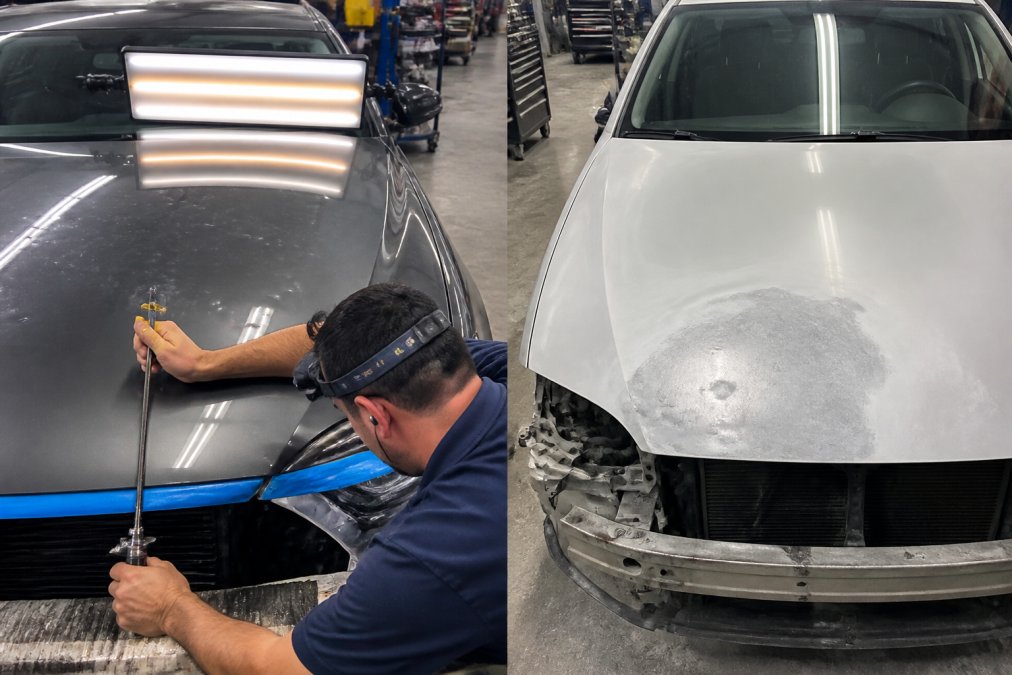
Paintless dent repair and traditional body shop repair represent fundamentally different approaches with enormous implications for your timeline.
Paintless dent repair preserves the vehicle's factory finish by carefully manipulating the metal back into its original shape using specialized tools and techniques. No fillers, no sanding, no repainting. A skilled technician with access to the panel's rear can often complete this process in hours rather than days.
The catch: paintless dent repair only works when the paint hasn't cracked or chipped. If hail damage includes paint damage, the dent can be fixed paintlessly, but the paint still needs attention. Some shops combine paintless repair with targeted paint touch-ups, still faster than full repainting but slower than pure paintless work.
Traditional body shop repair uses body filler to rebuild the panel's shape, then sands, primes, and repaints the entire panel. This approach works on any damage, regardless of paint condition, but it's inherently slower. Each step requires time and often sequential work rather than parallel processing. A traditional repair typically takes 50-100% longer than paintless repair for comparable damage.
For hail damage specifically, paintless dent repair is almost always the preferred approach because hail creates numerous small dents without necessarily breaking the paint. This makes PDR the faster path: most hail damage can be addressed in days rather than weeks. However, if the hail was severe enough to crack or chip paint on multiple panels, your repair timeline extends because you'll need paint work alongside the dent removal.
Hail Damage Insurance Claim Timeline
Your repair timeline is directly linked to your insurance claim timeline. Many vehicle owners underestimate how much of their total downtime comes not from the actual repair work, but from claim processing delays.
From First Notice of Loss to Supplement Approval
The insurance claim process typically follows this sequence: you report the damage, the insurance company assigns an adjuster, the adjuster inspects your vehicle, the adjuster issues an estimate, the repair shop begins work, and the insurance company approves payment. This sequence alone can take five to ten business days before repair work even starts.
First notice of loss can be filed by phone or online in minutes. The adjuster assignment and inspection scheduling typically takes one to three business days. The adjuster's inspection itself takes a few hours, but scheduling adds time. The adjuster then prepares an estimate, which can take another one to three business days.
The adjuster's estimate often differs from what the repair shop actually finds once work begins. This triggers a "supplement", an additional estimate for damage the adjuster missed or underestimated. Supplements are common in hail damage claims because adjusters inspect vehicles in parking lots without removing trim pieces or checking panel accessibility. Once repair work begins and the technician discovers additional damage, a supplement request goes back to the insurance company, which can take another five to ten business days for approval.
At 888 PDR, we manage this entire process directly with insurance carriers. We submit supplements immediately when we discover additional damage and maintain ongoing communication with adjusters to keep approvals moving.
How Claim Processing Delays Affect Your Repair Schedule
If your claim takes ten business days to process before repair work begins, and the actual repair takes five business days, your total timeline is fifteen business days. But if claim processing extends to fifteen business days due to supplements or adjuster delays, you're looking at twenty business days, four weeks, before your vehicle is ready. filing insurance claims.
The most common delays occur when the adjuster's initial estimate significantly underestimates damage, multiple supplements are needed, the insurance company requests a second opinion, or the adjuster is backlogged due to high claim volume after a major hail event.
Working with a repair shop that handles insurance claims directly makes a measurable difference. The shop can submit detailed photos and documentation that help adjusters understand the full scope of damage upfront, reducing the likelihood of supplements.
Rental Car Coverage for Hail Damage Repairs
Most comprehensive auto insurance policies include rental reimbursement coverage, typically reimbursing you for a rental vehicle while your car is being repaired, up to a daily limit (commonly $30-$50 per day) and a total limit per claim (iii.org).
If your repair takes ten business days and your rental reimbursement covers $40 per day, you're looking at $400 in rental costs. Some policies cap total reimbursement at $1,000-$1,500 per claim, which covers roughly two to four weeks of rental car costs.
Rental car logistics add time to your overall experience. You need to arrange the rental and coordinate drop-off and pick-up. If your repair shop offers pickup and delivery service, which 888 PDR does, you eliminate this friction entirely. The shop picks up your vehicle, provides a loaner or rental coordination, and delivers your vehicle back when it's ready. This service saves you not just time but also the hassle of managing transportation logistics while dealing with an insurance claim.
Post-Repair Inspection and Quality Assurance
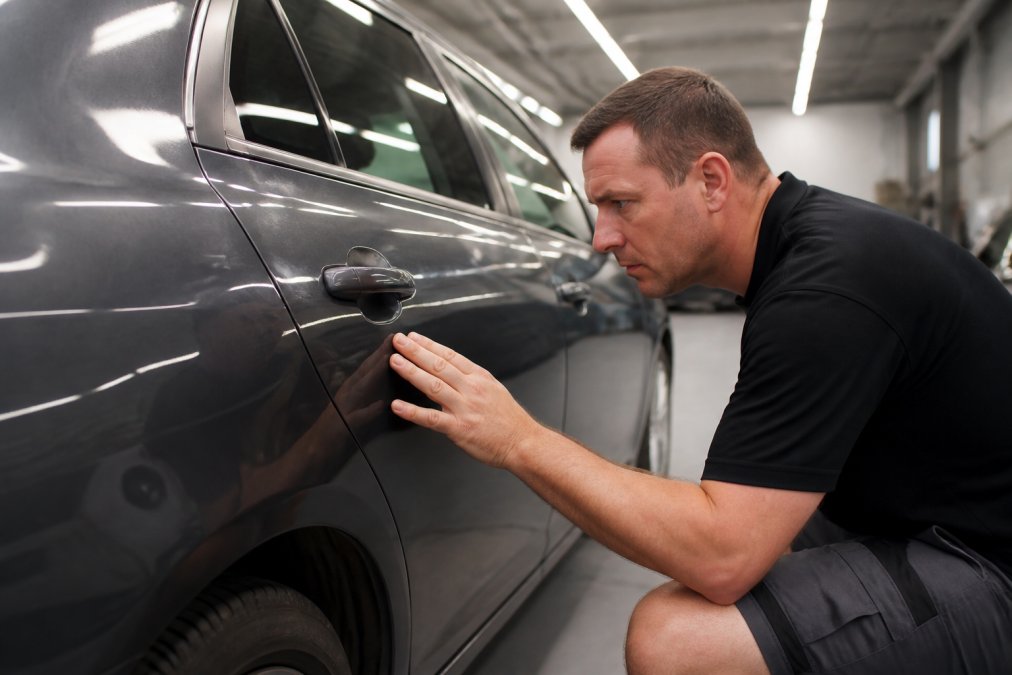
Once repair work is complete, quality assurance inspection is essential. This phase typically adds one to two business days to your timeline, but it's time well spent. A thorough post-repair inspection catches issues before you take delivery and prevents the frustration of discovering problems later.
A quality inspection checks whether all dents are removed or minimized to acceptable levels, the paint finish is intact, there are no swirl marks or scratches introduced during repair, panel alignment matches original specifications, and all trim pieces and weatherstripping are properly reinstalled.
For paintless dent repair, the inspection verifies that dents have been successfully manipulated back to their original contour. For traditional body shop repairs, the inspection checks paint color matching, clear coat thickness, and the absence of paint defects.
Reputable repair shops build quality assurance time into their timeline estimates. A shop that promises a five-day turnaround but doesn't include inspection time is cutting corners. A shop that quotes six to seven days and includes thorough inspection is being realistic about the full process.
At 888 PDR, every repair includes a detailed post-repair inspection with written documentation. We also provide a lifetime warranty on all repairs, which means any issues that emerge later are covered at no cost.
How to Minimize Repair Downtime
While many factors affecting repair timeline are outside your control, several strategies can meaningfully reduce your total downtime.
Start the insurance claim immediately. File your first notice of loss as soon as possible. The earlier the claim process begins, the earlier the adjuster inspection happens, and the sooner repair work can start.
Provide detailed documentation to your repair shop. Take photos of all damage from multiple angles and different lighting conditions. This documentation helps the repair shop submit a comprehensive initial estimate to the insurance company, which reduces the likelihood of supplements and delays.
Choose a repair shop that manages claims directly. This is perhaps the single most impactful decision. A shop that handles insurance coordination, submits supplements promptly, and maintains communication with adjusters keeps the process moving.
Arrange rental car coverage or pickup/delivery service in advance. Confirm your insurance covers rental reimbursement before you need it. If your repair shop offers pickup and delivery, arrange this upfront.
Prioritize shops with availability. After major hail events, repair shops fill up quickly. A shop with multiple technicians and bays can often accelerate your timeline compared to a smaller shop with limited capacity.
Understand your deductible and coverage limits. Clarifying these details upfront prevents delays caused by coverage disputes or payment issues.
The timeline for hail dent repair depends on damage severity, panel accessibility, your vehicle's material and paint condition, and how efficiently your insurance claim processes. Most repairs take between three to seven business days of actual work, but insurance claim processing can extend your total downtime to two to four weeks. The fastest path to getting your vehicle back involves starting your claim immediately, providing detailed damage documentation, and working with a repair shop like 888 PDR that manages insurance coordination directly.
Get a free inspection from 888 PDR and let our team handle your insurance claim from start to finish. We offer vehicle pickup and delivery, work directly with all insurance carriers, and back every repair with a lifetime warranty. Call us at (469) 284-0336 or visit our Dallas location to get started.
===
Frequently Asked Questions
Q: How long does hail dent repair typically take?
A: Most hail dent repairs take 2-7 working days, depending on damage severity and panel count. Minor damage affecting a few panels may finish in 2-3 days, while extensive hail damage covering many panels can take 5-7 days or longer. Insurance claim processing can add 1-2 weeks to the overall timeline before repair work begins.
Q: What factors affect hail repair duration the most?
A: The number of damaged panels, dent location accessibility, vehicle material type, and existing paint condition all influence repair time. Dents in hard-to-reach areas take longer to access and repair. Insurance claim approval and supplement processing timelines also significantly impact when your vehicle can actually go into the shop, even if the repair itself would be quick.
Q: Does insurance cover a rental car while my vehicle is being repaired?
A: Most comprehensive and collision insurance policies include rental reimbursement coverage, typically $30-60 per day depending on your policy. However, coverage limits and deductibles vary. Check your policy details or contact your insurance agent to confirm your specific coverage before scheduling repairs.
Q: Why does paintless dent repair take longer than traditional body shop work?
A: Paintless dent repair preserves your factory finish by carefully manipulating metal back to its original shape using specialized tools and techniques. This precision work is often faster than traditional methods using body filler and repainting. The payoff is that your vehicle retains its original paint, factory finish quality, and resale value without the risk of paint mismatches or adhesive residue issues.
This article was written using GrandRanker