Table of Contents
- How to Compare Hail Repair Shops in Dallas
- Key Differences Between Liberty Hail and DFW Hail Repair
- PDR vs Traditional Body Shop Repair for Hail Damage
- The Hail Damage Insurance Claim Process Explained
- Realistic Hail Damage Repair Timeline
- What to Check Before You Choose a Repair Shop
- Conclusion
- Frequently Asked Questions
Last Updated: September 6, 2026
How to Compare Hail Repair Shops in Dallas
Finding the right shop for hail repair in Dallas starts with understanding that not all repair methods are equal. The choice between paintless dent repair and traditional body shop methods affects your vehicle's factory finish and long-term resale value.
At 888 PDR, we help Dallas-Fort Worth drivers navigate hail damage claims.
Key Differences Between Liberty Hail and DFW Hail Repair
Repair Methods and Facility Size
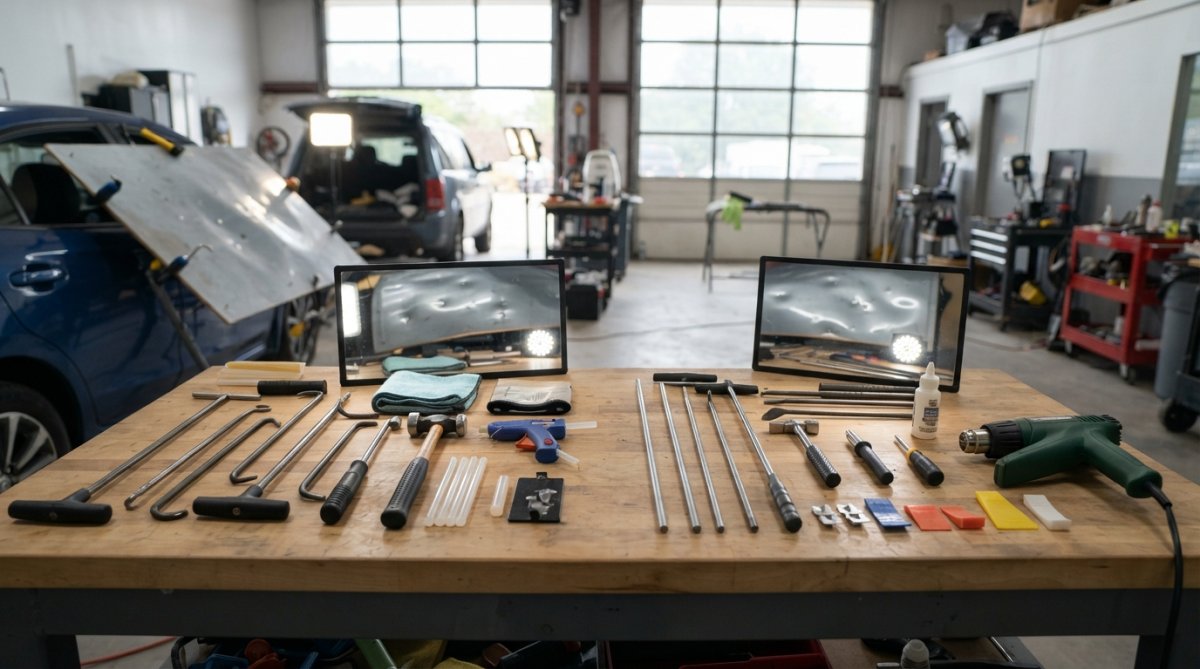
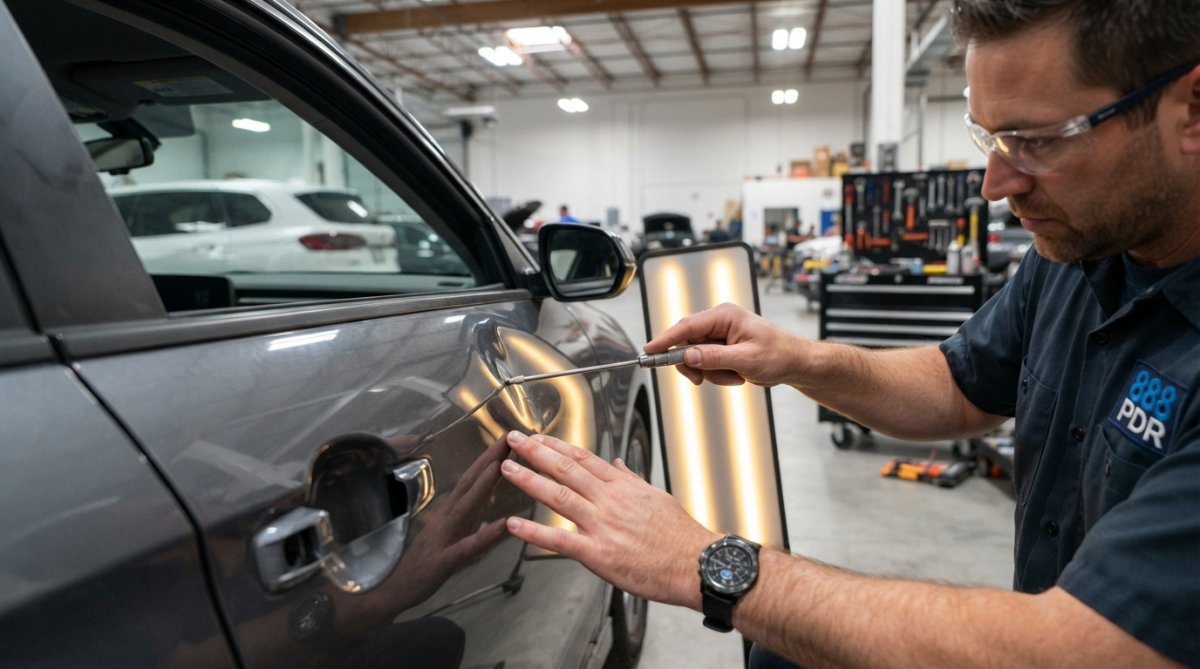
PDR requires specialized lighting, tools, and technicians who understand how metal reacts to pressure. A 25,000 sq ft facility allows for proper staging of vehicles, speeding up turnaround times.
Warranty and Customer Support
| Comparison Point | Liberty Hail | DFW Hail Repair | What to Look For |
|---|---|---|---|
| Repair Method | PDR and traditional | PDR and traditional | PDR for factory finish preservation |
| Facility Size | Varies | Varies | Large facility for faster turnaround |
| Insurance Handling | Claim assistance | Claim assistance | Full claim management from start to finish |
| Warranty | Limited | Limited | Lifetime warranty on repairs |
| Customer Support | Standard | Standard | Direct communication and pickup/delivery |
PDR vs Traditional Body Shop Repair for Hail Damage
Choosing between paintless dent repair (PDR) and traditional body shop repair isn't about which method is 'better' in the abstract, it's about which is correct for the specific damage on your vehicle.
When PDR Is the Right Call
PDR is preferred when the paint is still intact and the metal hasn't been creased or stretched beyond its elastic limit. Technicians use specialized tools to access the backside of the panel and gently massage the metal back to its factory contours.
PDR is ideal for:
- Small to medium dents where the paint isn't cracked, chipped, or scratched
- Damage on accessible panels like the hood, roof, doors, and quarter panels
- Multiple dents across a panel, a skilled technician can often remove 20-30 dents in a single session
- Vehicles with factory paint in good condition, the original finish is worth preserving for resale
When Traditional Body Shop Repair Is Necessary
Traditional repair becomes necessary when hail damage compromises the paint or metal. If a hailstone cracks the paint, moisture can reach bare metal and begin corrosion, so the damaged paint must be removed and the panel refinished (autobodynews.com).
Traditional body shop repair involves:
- Metal work, pulling or hammering the dent out from the backside
- Body filler application, filling low spots to create a smooth surface
- Primer and paint, refinishing the panel to match the surrounding color
- Clear coat, sealing the repair and providing UV protection
A vehicle with hail damage often has a mix of both types. The roof might have 40 dents with intact paint (PDR candidates), but the hood edge might have three dents with cracked paint (traditional repair candidates).
The Hidden Costs of Repainting
Repainting a panel is rarely as good as the factory finish. Factory paint is applied in a controlled environment with electrostatic application and baked at high temperatures, while aftermarket paint is sprayed in a booth and cured at lower temperatures (autobodynews.com). The result is often:
- Color mismatch, especially with metallic, pearlescent, or tri-coat paints
- Reduced durability, aftermarket paint is more prone to chipping and fading
- Lower resale value, a Carfax or similar vehicle history report will show the repaint, and appraisers typically discount vehicles with multiple repainted panels
- Overspray risk, adjacent panels and trim can be affected if masking isn't meticulous
How to Determine Which Method Your Vehicle Needs
Before authorizing any repair, ask the shop to perform a damage assessment and provide a written breakdown of which panels will be repaired with PDR versus traditional methods.
Red flags that suggest a shop is cutting corners:
- Recommending repaint without inspecting the vehicle in person
- Suggesting PDR on damage where the paint is clearly cracked
- Quoting a single method for the entire vehicle without panel-by-panel assessment
- Being unable to explain why one method is preferred over the other for your specific damage
The Cost and Time Difference
PDR is typically less expensive because it requires less labor and no paint materials. PDR can often be completed faster than traditional repair, which requires multiple days for paint to cure.
If a shop quotes an unusually low price for PDR, ask how many dents they're including and whether they'll redo the work if you're not satisfied.
Making the Final Decision
The decision between PDR and traditional repair should be based on the damage assessment, not on what the shop prefers. A PDR specialist will recommend traditional repair when necessary.
Your vehicle's factory finish is a one-time asset. Once it's sanded and repainted, you can't get it back.
The Hail Damage Insurance Claim Process Explained
Most standard auto policies cover hail under comprehensive coverage, meaning your insurance pays for repairs minus your deductible (iii.org).
The claim process typically follows these steps:
- Document the hail storm damage with photos of all affected panels
- File a claim with your insurance carrier
- Schedule a hail inspection with an adjuster or a repair shop that works with insurers
- Receive an adjuster estimate for the repair cost
- Choose a repair shop and authorize the work
- Allow the shop to handle supplemental claims if additional damage is found during disassembly
The key is asking upfront what your total financial exposure will be.
What Happens When the Adjuster's Estimate Falls Short
The most common problem in hail claims isn't a flat denial, it's an estimate that undervalues the damage. Adjusters often write estimates based on a quick visual inspection that misses dents hidden in shadows or along body lines. insurance claims process.
A supplemental claim documents damage discovered after the initial estimate. The shop photographs the additional damage, provides a revised estimate, and submits it to the carrier for approval.
A shop experienced in hail claims will handle this process for you. Without that advocacy, you could end up paying out of pocket for repairs your policy should cover.
When Your Claim Is Denied or Undervalued
Insurance claim denials happen more often than they should, usually because the initial estimate missed damage only visible during disassembly. If your claim is denied or undervalued, you have the right to appeal.
Here's a practical approach to fighting an undervalued or denied claim:
- Get a second opinion from a repair shop, Ask for a detailed damage report that documents each hail impact point with photos and measurements. This becomes your evidence.
- Request a re-inspection, If the shop's assessment differs significantly from the adjuster's, ask your insurance company to send a different adjuster or a field appraiser for a second look.
- Review your policy language, Understand what your comprehensive coverage includes and excludes. Hail damage is almost always covered, but some policies have specific provisions about repair methods or depreciation.
- File a formal appeal, If the re-inspection doesn't resolve the issue, file a written appeal with your insurance company. Include the shop's damage report, photos, and any correspondence with the adjuster.
- Contact your state's department of insurance, If the insurance company still won't budge, your state's insurance regulator can intervene. Most states have a consumer complaint process that insurance companies take seriously.
The Appraisal Clause: Your Last Resort
Most standard auto policies include an appraisal clause providing a formal dispute resolution process. If you and the insurance company can't agree on the repair cost, either party can invoke it. Each side hires an independent appraiser, and the two select a neutral umpire who makes the final decision if they can't agree.
The appraisal clause is powerful, but rarely needed if you choose a shop that documents damage properly.
How a Repair Shop Can Protect Your Claim
A shop that handles hail claims regularly will:
- Document damage before any repair work begins, Photos, measurements, and written notes create a record you can use if disputes arise
- Communicate directly with the adjuster, A shop that has relationships with insurance carriers can often resolve issues faster than a customer navigating the process alone
- Identify hidden damage during disassembly, Experienced shops know where hail damage hides and will check those areas proactively
- Provide a written estimate before work begins, You should never authorize repairs without a clear understanding of the costs and what your insurance will cover
The Deductible Question
Your comprehensive deductible is your financial responsibility in a hail claim. If your deductible is $500 and the repair costs $3,000, your insurance pays $2,500 and you pay $500.
Ask the shop upfront whether they offer deductible assistance.
What to Do If Your Claim Is Denied Entirely
A complete denial is rare for hail damage under a comprehensive policy, but it happens. Common reasons include:
- The damage is deemed pre-existing rather than from the recent storm
- The policy lapsed or was canceled before the storm
- The damage is excluded under a specific policy provision
If your claim is denied entirely, ask for the denial in writing and request the specific policy language the insurance company is relying on. Then follow the appeal steps above.
Realistic Hail Damage Repair Timeline
A realistic hail damage repair timeline depends on the severity of the damage and the shop's current workload. Most hail repairs take between a few days and two weeks.
The assessment phase typically takes one day. The shop inspects the vehicle, documents the damage, and submits the estimate to your insurance company.
PDR work is meticulous. A technician may spend hours on a single panel, working out dozens of dents one at a time.
Ask about rental assistance during the repair period. Many shops can help arrange a rental vehicle so you're not without transportation.
What to Check Before You Choose a Repair Shop
Before committing to any hail repair shop in Dallas, verify these specific items:
- Does the shop specialize in paintless dent repair, or is it a general collision repair shop?
- Will the shop handle the insurance claim process directly with your carrier?
- What does the warranty cover, and is it transferable if you sell the vehicle?
- Does the shop offer vehicle pickup and delivery?
- How many hail repair jobs has the shop completed in the past year?
Vehicle resale value is directly tied to repair quality. A repainted car will appraise lower than one with its factory paint intact.
Unrepaired hail damage extends beyond appearance. Dents can lead to metal fatigue over time, and cracked paint allows moisture to reach bare metal, causing rust.
Conclusion
Choosing a hail repair shop in Dallas comes down to understanding what your vehicle needs and which shop can deliver it without compromising your factory finish.
At 888 PDR, we combine all three. Our family-owned shop in Dallas handles hail damage with specialized PDR techniques, manages your insurance claim from first notice of loss through final payment, and backs every repair with a lifetime warranty.
Get started with 888 PDR and protect your vehicle's factory finish with hail repair done right the first time.
Frequently Asked Questions
What is the difference between traditional body shops and paintless dent repair?
Traditional body shops use body filler and repaint the damaged panel, which can affect the factory finish and lower resale value. Paintless dent repair (PDR) preserves the original paint by gently massaging the dent out from behind the panel. PDR is often faster and more cost-effective for hail damage, but it requires specialized training and is not suitable for every type of damage, such as cracked paint.
Do car insurance rates go up after hail damage?
Filing a comprehensive claim for hail damage, which covers events outside your control like storms, typically does not cause your rates to increase the way an at-fault accident claim might. Your insurance company will assess the claim and your deductible applies. It is a good idea to get a free damage assessment and an estimate before filing to understand the full scope of the repair.
How do I verify a hail repair company's reputation?
Start by checking for a physical facility, not just a mobile operation, and ask about their warranty. A strong sign is a written lifetime warranty on repairs. Look for a company that works directly with all insurance carriers and manages the claim process for you. Reading customer reviews and asking about their experience with your specific insurance provider can also give you confidence in your choice.
What should I look for in a hail damage repair estimate?
A detailed estimate should list the specific panels needing repair and the repair method proposed. It should reflect the insurance adjuster's findings. A reputable shop will handle the supplement process with your insurer if additional damage is found during the repair. Ask if the estimate includes a rental car and whether the shop offers a lifetime warranty on the work performed.