
Table of Contents
- How Paintless Dent Repair Works
- Paintless Dent Repair Reviews: What Local Customers Say
- Understanding Paintless Dent Repair Cost
- Mobile Dent Repair: Convenience and Speed
- Paintless Dent Repair and Insurance Claims
- PDR vs. Traditional Body Work: Why It Matters
- Getting Started with Your Repair
- Frequently Asked Questions
Last Updated: October 6, 2026
How Paintless Dent Repair Works
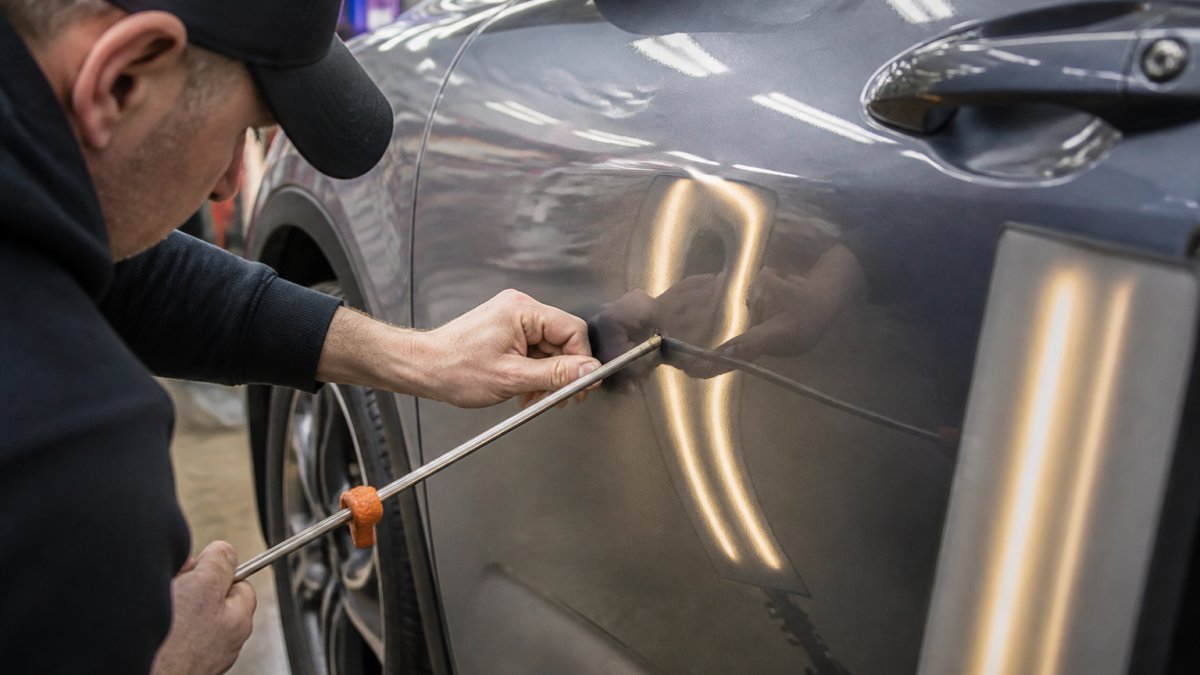
Paintless dent repair removes dents, dings, and creases from vehicle panels without fillers, sandpaper, or repainting. Technicians access the back of the panel and massage the metal back into shape with specialized rods, preserving your car's factory finish, which matters if you plan to sell or trade in later.
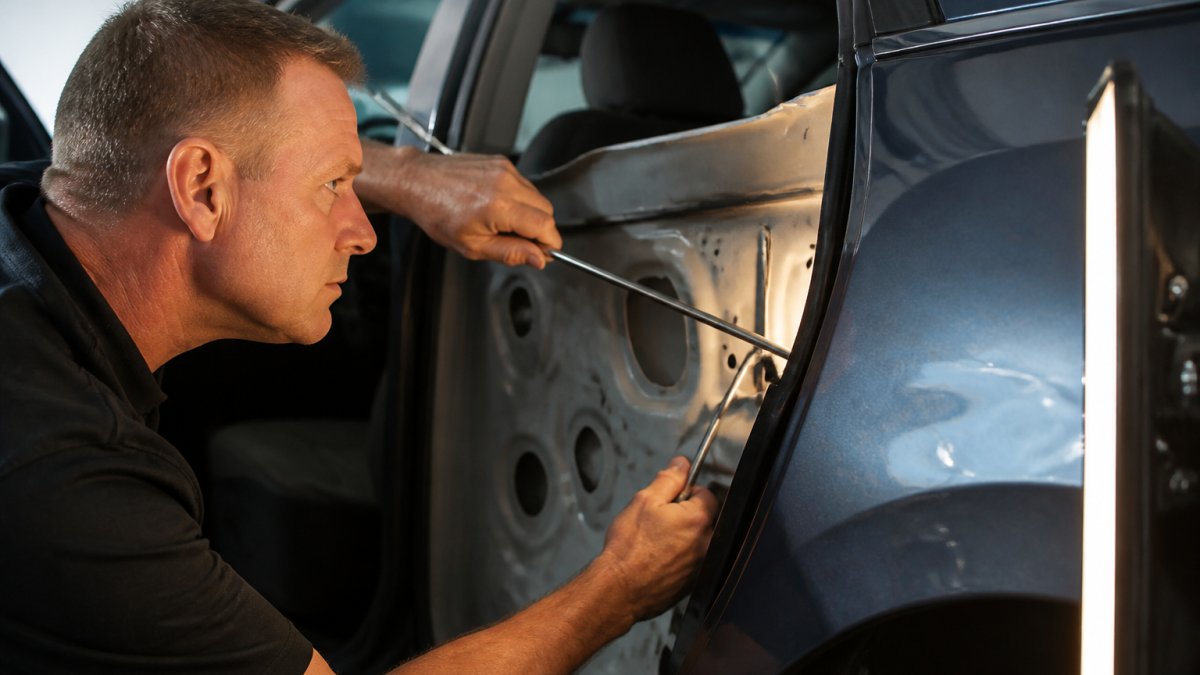
It works best on dents without sharp creases, paint damage, or stress fractures, door dings, hail damage, and minor creases are ideal. Unlike traditional body work, paintless dent repair takes hours instead of days and skips the cost of paint matching, curing, and finishing.
At 888 PDR, we've handled many hail damage claims and parking lot dings. Not all dents respond equally to PDR, larger panels with multiple dents, sharp-angled creases, or damage near panel edges may need traditional body work, so a proper inspection matters before you commit.
Paintless Dent Repair Reviews: What Local Customers Say
Most local PDR listings show a star rating and a few short quotes, which tells you almost nothing. A narrower set of signals actually predicts whether you'll be happy with a repair.
The three signals that matter most. Across the feedback patterns customers leave for dent repair shops, three themes repeat:
- Honest assessment of what can and cannot be fixed. The best-reviewed shops tell customers when a dent is not a PDR candidate and needs traditional body work. A shop that promises to fix everything is a warning sign, not a selling point.
- Clear communication during the repair. Customers consistently mention being told what was happening, when the car would be ready, and whether the price changed, and being told before pickup, not at pickup.
- Insurance handling without surprises. For hail and collision claims, the reviews that matter describe whether the shop dealt with the adjuster, filed supplements, and kept the customer out of the paperwork loop.
What a strong review pattern looks like. A healthy review history shows a mix of job types, door dings, hail claims, lease returns, with specifics: the panel, turnaround time, whether the estimate held. All-five-star reviews with no detail, posted in clusters, are less useful than a four-star review explaining what went right and what was slow.
How to verify a shop before you commit. Reviews are a starting point, not a substitute for diligence. Before handing over your keys:
- Ask whether the shop carries general liability and garage-keepers coverage. A legitimate repair facility will have both, and asking is normal.
- Ask whether technicians are trained and certified in PDR methods, and whether the shop uses glue-pull, rod-push, or both. A shop that only owns one technique will turn away work it cannot do well.
- Ask what warranty backs the repair and whether it is written. A lifetime warranty that exists only in a verbal promise is not a warranty.
- Ask how the shop handles a supplement if the adjuster's initial estimate misses damage. The answer tells you whether you will be chasing the insurer or the shop will.
The insurance-claim angle most listings skip. The most common source of customer frustration in dent repair isn't the repair, it's the claim. A shop that manages the claim from first notice of loss through final payment removes the worst part: waiting on an adjuster, resubmitting photos, and wondering whether the approved amount covers the work.
888 PDR manages insurance claims from start to finish, first notice of loss, estimates, supplements, and final payment, and backs every repair with a written lifetime warranty.
Understanding Paintless Dent Repair Cost
Paintless dent repair pricing is not a flat rate, and any shop quoting a single number over the phone without seeing the vehicle is guessing.
A single shallow door ding the size of a quarter sits at the low end; a hail event leaving dozens of dents across the hood, roof, and both sides pushes toward the high end.
Here is how a legitimate estimate is actually built:
- Panel-by-panel dent count. The technician counts and marks every dent, then groups them by panel. Hail damage is priced per panel, not per dent, because the tools and access are shared across the panel.
- Access assessment. Some panels can be reached from behind through an existing opening; others require removing interior trim, taillights, or wheel liners. That removal and reinstallation is labor that shows up in the quote.
- Metal and paint condition. If the paint is cracked or the metal is creased, PDR may not be viable and the estimate should say so rather than pad a PDR quote.
- Glue-pull vs. push tools. Dents in areas with no back access are often repaired with glue-pull tabs and a slide hammer rather than rods pushed from behind. That changes the technique and the time required.
How insurance changes the math. With comprehensive coverage, hail damage and many collision dents are covered, and your out-of-pocket cost is your deductible, not the full repair price. Your deductible is your responsibility: on an approved repair, you pay your deductible, and the insurer covers the remaining amount to the shop. The estimate still matters: the insurer pays based on the approved amount, and if the shop finds more damage once panels are opened, it files a supplement.
A common point of confusion is the deductible itself. Some shops advertise covering your deductible or zero out-of-pocket on approved claims.
When you are paying out of pocket. For parking lot dings, shopping cart hits, and minor creases where you skip a claim (often because the repair costs less than your deductible), you pay the shop directly.
888 PDR provides free inspections and written estimates before any work begins, and we work directly with all insurance carriers. We understand claim limits, the supplement process, and what your policy covers, so the number you're quoted is the number you can expect to pay.
Mobile Dent Repair: Convenience and Speed
Mobile dent repair brings the technician to you instead of requiring a shop drop-off.
Mobile repair is fastest for small jobs: single door dings, minor creases, or light hail damage on one or two panels. The technician needs direct access and room to work safely, so tight parking spaces or covered structures complicate things, and rain, snow, or extreme cold can affect quality.
For extensive hail damage or complex multi-panel repairs, a fixed shop offers better lighting, climate control, and full equipment access without space constraints, producing better results on severe damage.
888 PDR offers both options: a full shop facility for major repairs and vehicle pickup and delivery for customers who can't easily get to us. For Scottsbluff customers, that removes the friction of arranging transportation or taking time off work.
Paintless Dent Repair and Insurance Claims
Insurance claims for hail damage or collision dents follow a set process. You report the damage and request a claim number; the insurer assigns an adjuster who inspects the vehicle and approves coverage based on your policy.
The shop provides an estimate to the insurer. If damage is more extensive than initially assessed, the shop submits a supplement with photos and documentation. Shops that submit supplements promptly with clear evidence reduce stress on your end.
Your deductible is your responsibility: on a $3,500 repair with a $1,000 deductible, you pay $1,000 and insurance covers $2,500. Some shops negotiate to waive or reduce deductibles, but this varies, ask directly whether they handle deductible assistance.
888 PDR manages the entire claim process: we submit estimates, handle supplements when damage exceeds initial assessments, and coordinate with adjusters to get your claim approved and paid. We work with all insurance carriers and know how to navigate their process efficiently.
PDR vs. Traditional Body Work: Why It Matters
The difference between paintless dent repair and traditional body work affects cost, time, and your vehicle's long-term value. Paintless dent repair preserves the original factory finish; traditional body work involves sanding, filler, priming, and repainting, taking longer, costing more, and leaving a repair that's technically a repaint rather than original factory paint.
Resale value matters here. Buyers and trade-in appraisers prefer original factory finishes: a car with a PDR repair history shows no paint work, so no risk of peeling, color mismatch, or durability concerns.
PDR works on dents without paint damage or sharp creases. If the paint is cracked, the dent has a sharp fold in the metal, or the damage is near panel edges where access is impossible, traditional body work becomes necessary.
Cost and time also differ. PDR typically costs less and finishes faster: traditional body work takes multiple days of assessment, grinding, filling, sanding, priming, painting, and curing, while PDR completes many jobs in hours. For hail damage with dozens of dents across multiple panels, the difference is significant.
888 PDR assesses every vehicle honestly. If your damage qualifies for PDR, we explain why it's the better choice; if traditional body work is necessary, we'll tell you that too. We don't push PDR on damage that needs body work or recommend unnecessary repainting.
Getting Started with Your Repair
Start with a free inspection. Call 888 PDR at (469) 284-0336 or visit our Scottsbluff location to schedule an appointment. We'll assess your damage, explain what can be fixed with PDR and what might require traditional body work, and provide a written estimate, no obligation, no pressure.
Bring your insurance information if you have a claim, we work directly with adjusters and handle the paperwork, so having policy details ready speeds things up. If you're unsure whether your damage qualifies for coverage, we can help you understand what your policy includes.
Once you approve the estimate, we schedule the repair. Minor damage is often same-day or next-day; extensive hail damage may take a few days. We offer vehicle pickup and delivery so you don't have to arrange transportation or take time off work, and we assist with rental vehicles if you need one.
Every repair comes with a lifetime warranty. If anything goes wrong, even years later, we'll fix it at no charge, a guarantee that reflects our confidence in the work.
Frequently Asked Questions
What is paintless dent repair and how does it work?
Paintless dent repair removes dents by carefully massaging the metal back into its original shape using specialized tools inserted behind the damaged panel. The process preserves your vehicle's factory finish entirely, no fillers, sanding, or repainting required. Technicians access the dent from the inside of the panel and use precision leverage and tapping to restore the metal. This method works best on dents without paint cracking or creasing.
How much does paintless dent repair cost?
Paintless dent repair pricing depends on the dent's size, depth, location, and whether the paint is damaged. Pricing depends on the specific damage. Get a free inspection and estimate from a local shop, most offer quotes with no obligation. Insurance often covers hail damage repair, which may reduce your out-of-pocket cost significantly.
Does insurance cover paintless dent repair for hail damage?
Most comprehensive auto insurance policies cover hail damage, including paintless dent repair. File a claim with your insurer after hail damage occurs. The repair shop can work directly with your insurance adjuster to handle the estimate and claim process. Your deductible applies, but many shops help manage the paperwork so you understand what your insurance covers and what you owe.
Can paintless dent repair fix all types of dents?
Paintless dent repair works best on dents without paint damage, creasing, or sharp edges. Hail damage, door dings, and minor creases are ideal candidates. If the paint is cracked, scratched, or the metal is creased severely, traditional body work may be necessary. A professional inspection determines whether your damage qualifies for PDR or requires additional repair methods.
Paintless dent repair is the smart choice for preserving your vehicle's factory finish and resale value. It's faster and less expensive than traditional body work, and when done right, it's invisible. 888 PDR specializes in hail damage, door dings, and creases using proven PDR techniques. We handle insurance claims from start to finish, offer vehicle pickup and delivery, and back every repair with a lifetime warranty. Get a free inspection and estimate by calling (469) 284-0336 today.