
Table of Contents
- Sign 1: Cracked, Chipped, or Scratched Paint
- Sign 2: Deep or Severe Dents That Affect Panel Alignment
- Sign 3: Multiple Dents or Hail Damage Across Your Vehicle
- Sign 4: Sharp Creases or Fold-Like Damage
- What Dents Can Be Removed with Paintless Dent Repair
- Paintless Dent Repair vs. Traditional Dent Repair: Which Is Right for Your Damage
- How Long Does Paintless Dent Repair Take and What to Expect
- Understanding Paintless Dent Repair Cost and Your Insurance Options
- Frequently Asked Questions
Last Updated: October 20, 2026
Sign 1: Cracked, Chipped, or Scratched Paint
Cracked, chipped, or scratched paint is one of the clearest indicators your car needs professional dent removal. Paint damage exposes the metal underneath, leaving your vehicle vulnerable to rust and corrosion.
Once bare metal shows through, oxidation begins, faster in humid conditions or near salt water. What starts as cosmetic becomes an expensive structural repair within months if untreated.
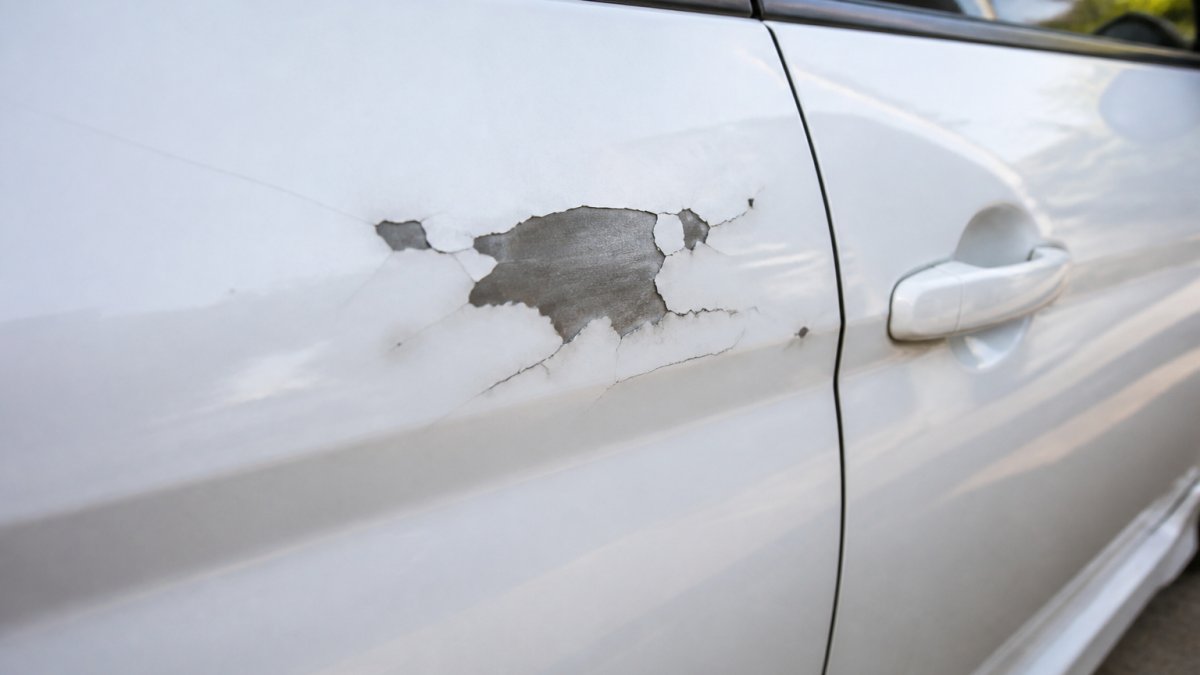
Paint damage also signals a dent may be deeper than it appears, often substantial enough to require professional attention, though traditional body shops would recommend repainting the entire panel, which is expensive and often unnecessary.
This is where paintless dent repair becomes valuable. If the dent hasn't cracked the paint severely, PDR specialists can often work from the back side of the panel to restore its shape while preserving the original finish. If paint damage is extensive, a professional assessment determines your best path forward.
Sign 2: Deep or Severe Dents That Affect Panel Alignment
Deep dents that push a panel out of alignment require immediate professional attention. They affect not just appearance but how doors close, how panels fit together, and your vehicle's structural integrity and resale value.
Panel misalignment is easy to spot. Open your door and look at the gap between the door and the frame. The gap should be consistent from top to bottom.
Severe dents also create safety concerns. Misaligned panels can affect how your vehicle absorbs impact in a collision; modern vehicles rely on precise panel alignment to protect occupants. A dent that shifts a door panel by even a quarter inch changes how forces distribute through the frame.
Deep dents often involve creasing, where the metal folds rather than dents inward. Creases require specialized techniques to restore the panel's original shape, and many traditional body shops resort to costly panel replacement, unnecessary when expert PDR technicians are available.
Professional assessment is essential: not every deep dent requires panel replacement. Experienced technicians can evaluate whether the damage suits paintless dent repair or traditional methods, and the difference in cost and timeline is significant.
Sign 3: Multiple Dents or Hail Damage Across Your Vehicle
Multiple dents scattered across your vehicle, especially in a pattern, typically indicate hail damage. Hail creates numerous small to medium dents across panels, the hood, the roof, and sometimes the bumper. With dozens of dents rather than one or two isolated dings, professional repair becomes essential.
Hail damage is common after severe storms, a single hailstorm can impact hundreds of vehicles, leaving owners with the same decision: repair or accept diminished resale value. Insurance often covers hail damage, making professional repair more accessible than you might think.
The challenge with multiple dents is coverage and consistency. Repairing each individually would be time-consuming and expensive. Professional hail damage repair assesses all the damage at once, creates an efficient plan, and ensures every dent is addressed for a uniform result.
Your insurance company will likely require a professional assessment before approving hail repair. That assessment determines the scope of damage and the appropriate method. Most hail damage suits paintless dent repair, which preserves your factory finish and is faster than traditional methods.
Sign 4: Sharp Creases or Fold-Like Damage
Sharp creases are among the most challenging dent damage. Unlike rounded dents that compress metal inward, creases involve folded metal, often creating a sharp line across a panel. They typically result from direct impact, another vehicle, a pole, or a sharp object.
Creases demand specialized technique. The metal is stressed along a fold line, and restoring it requires careful manipulation to gradually unfold it back to shape, a delicate process because the metal is already compromised along the crease.
Many traditional body shops won't attempt crease repair with PDR, recommending instead panel replacement or extensive body work with fillers and repainting. These approaches are expensive and unnecessary when experienced PDR technicians are available.
Location and severity are key. A crease on a flat panel is more repairable than one on a curved section, and a crease along a body line requires different technique than one mid-panel. Professional assessment determines whether a specific crease suits paintless repair or needs alternative methods.
What Dents Can Be Removed with Paintless Dent Repair
Paintless dent repair suits many dent types, but not every dent qualifies. Knowing which dents PDR can treat helps you avoid unnecessary traditional body work and preserve your factory finish.
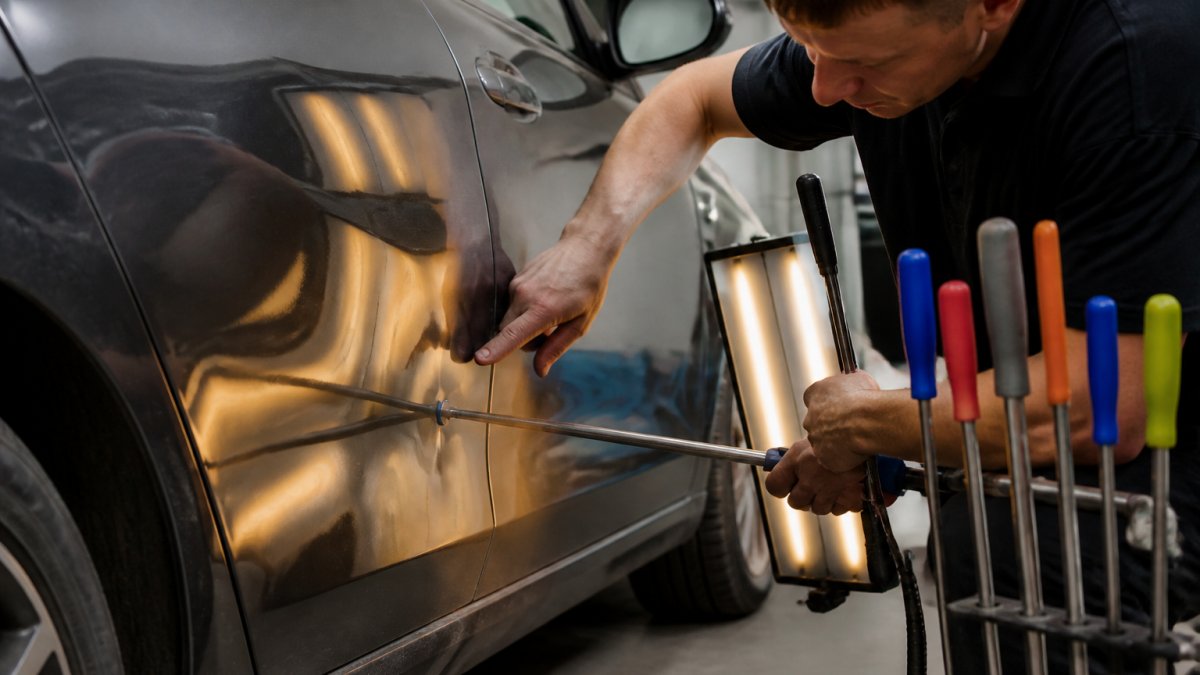
Shallow to moderate dents are ideal candidates. They haven't cracked the paint or significantly altered panel alignment, door dings, shopping cart hits, and minor fender benders typically fall here. PDR specialists access the back side of the panel and gradually massage the dent out, restoring the original shape without filler or repainting.
Small hail dents are excellent PDR candidates. When hail creates numerous small dents without paint damage, paintless repair is often preferred, faster and less expensive than traditional body work, and it preserves your factory finish completely.
Dents on flat or gently curved panels suit PDR better than those on sharp curves or edges, since panel shape affects how technicians access the damage and manipulate the metal.
Dents on aluminum panels, increasingly common on newer vehicles, require specialized PDR technique. Aluminum behaves differently than steel and doesn't respond to the same manipulation; improper handling can cause permanent damage. Experienced technicians know how to work with aluminum without compromising its integrity.
According to automotive industry standards on vehicle repair methods, paintless dent repair is most effective on dents that haven't compromised the paint layer and haven't caused panel misalignment. Dents that meet these criteria can typically be restored to near-original condition without additional body work.
Paintless Dent Repair vs. Traditional Dent Repair: Which Is Right for Your Damage
The choice between paintless dent repair and traditional dent repair depends on the type and severity of your damage. Both methods have distinct advantages.
Paintless dent repair preserves your vehicle's original factory finish, no fillers, no sanding, no repainting. That matters for resale value: buyers and dealers recognize factory finishes as higher quality than repainted panels, so a factory finish commands better value at trade-in.
The process is also faster. Most PDR work is completed within days rather than weeks. Your vehicle is ready to drive sooner, which matters if you need it for daily transportation or work.
Traditional dent repair involves filling the dent with body filler, sanding it smooth, and repainting the panel.
Traditional repair is also more versatile. Dents near panel edges, sharp creases on highly curved sections, or damage combined with paint damage often require traditional methods. Experienced body shops can handle nearly any dent using traditional techniques, but the cost and timeline are typically higher.
| Repair Method | Best For | Advantages | Disadvantages |
|---|---|---|---|
| Paintless Dent Repair | Minor to moderate dents without paint damage | Preserves factory finish, faster, more cost-effective | Not suitable for severe damage or paint cracking |
| Traditional Dent Repair | Severe dents, paint damage, panel misalignment | Handles complex damage, versatile | Requires repainting, longer timeline, affects resale value |
The decision often comes down to damage assessment. A professional inspection determines which method is appropriate for your specific dent. At 888 PDR, we assess your damage and recommend the most effective approach.
How Long Does Paintless Dent Repair Take and What to Expect
Paintless dent repair timelines vary based on damage complexity and the number of dents requiring repair. Understanding the process helps you plan for vehicle downtime and set realistic expectations.
Simple single dents, like a door ding or small fender crease, typically take a few hours to a full day.
Multiple dents or hail damage take longer. A vehicle with dozens of hail dents might require two to three days of repair work.
The repair process itself involves several steps. First, the technician assesses the damage and determines the repair approach.
Quality takes priority over speed. Rushing the process risks incomplete repair or damage to the panel. Professional technicians work methodically to ensure every dent is properly restored and the panel is left in excellent condition.
Insurance claims can affect timeline. When your repair is covered by insurance, the claim process adds time. Documentation, approval, and coordination with your insurance company may add several days to the overall timeline.
Understanding Paintless Dent Repair Cost and Your Insurance Options
Paintless dent repair cost depends on several factors: the number of dents, their size and location, and the complexity of the repair. Understanding these cost factors helps you anticipate expenses and evaluate whether insurance coverage applies.
Single dents typically cost less than multiple dents. A small door ding might be in one price range, while hail damage affecting the entire vehicle would be in another.
Insurance coverage is available for most hail damage and many collision-related dents. Your comprehensive or collision coverage typically includes dent repair, though your deductible applies.
The key to managing costs is professional assessment. A technician evaluates your damage and provides an estimate. This estimate includes labor, any necessary materials, and timeline. When insurance is involved, the estimate is submitted to your insurance company for approval. The insurer may approve the full estimate or request additional documentation.
Direct communication with your insurance company is critical. Many vehicle owners are uncertain about coverage or worry about claim denials.
According to consumer guidance on vehicle insurance claims, understanding your coverage and working with repair professionals who communicate directly with insurers significantly improves claim outcomes and reduces your out-of-pocket costs.
At 888 PDR, we handle the insurance process for you. We assess your damage, prepare documentation, submit claims, and manage all communication with your insurance company.
If your vehicle shows any of these seven signs, professional dent removal isn't just about appearance, it's about protecting your investment and preserving resale value.
Frequently Asked Questions
How do you know if a car dent needs professional repair?
A dent needs professional dent removal if it has cracked or chipped paint, affects panel alignment, is deeper than a quarter-inch, or involves creases. If the dent is accessible, visible from normal viewing distance, or part of hail damage, professional assessment is recommended. Dents near ADAS sensors, door edges, or in areas where paint has failed also require professional attention to prevent rust and preserve resale value.
What dents cannot be removed with paintless dent repair?
Paintless dent repair cannot address dents with cracked, chipped, or deeply scratched paint, dents in areas where the metal is creased or folded, damage to door edges or sharp corners, and dents involving structural damage. If the paint finish is compromised or the dent is extremely deep, traditional body shop repair with repainting may be necessary. A professional inspection determines whether your specific dent qualifies for paintless repair.
How long does paintless dent repair take?
Paintless dent repair timelines vary based on damage complexity and the number of dents requiring repair. Exact timelines depend on dent size, location, accessibility, and your vehicle's panel type.
Is it worth fixing a small dent on a car?
Yes, fixing even small dents is worth it to protect your vehicle's resale value, prevent rust from forming around exposed areas, and maintain your car's appearance. Small dents can worsen over time if left untreated, especially if paint is chipped. Paintless dent repair offers a cost-effective option for minor damage. Professional assessment helps you understand whether a dent will affect value or safety before deciding.
Can a dent damage a car's paint?
Yes, dents can crack, chip, or scratch paint, especially if the impact is sharp or the dent is deep. When paint is damaged, exposed metal underneath becomes vulnerable to rust and corrosion. This is why timely professional dent removal is important, repairing dents before rust develops preserves your vehicle's finish and resale value. Paintless dent repair avoids additional paint damage by restoring the dent without repainting.