
Table of Contents
- Why Choosing the Right PDR Technician Matters
- Verify Credentials and PDR Technician Experience
- Understanding the Paintless Dent Repair Process
- Key Questions to Ask a PDR Technician
- Evaluating a Paintless Dent Repair Estimate
- Assessing Facility Quality and Equipment
- Red Flags When Choosing a PDR Technician
- Frequently Asked Questions
Last Updated: October 13, 2026
Why Choosing the Right PDR Technician Matters
When you choose PDR technician services, you're making one of the most important decisions for your vehicle's cosmetic restoration.
Not all PDR technicians are equal. Some have years of hands-on training and certifications. Others have minimal experience and outdated techniques.
At 888 PDR, we work with vehicle owners every day who've had bad experiences with other shops.
This guide walks you through every step of vetting a PDR technician. We'll show you how to verify credentials, ask the right questions, evaluate estimates, and spot red flags before they become expensive mistakes.
Verify Credentials and PDR Technician Experience
The foundation of how to choose PDR technician professionals starts with confirming they actually know what they're doing. This means checking for formal training, certifications, and a track record of successful repairs.
Check for Certification and Training
Look for technicians who've completed formal PDR training programs. Legitimate training comes from recognized schools and certification bodies, not just "years of experience" claims.
Ask these specific questions:
- What PDR school did you attend and when?
- Do you hold any current certifications?
- How many hours of hands-on training have you completed?
- Are you a member of any professional PDR associations?
A qualified technician should be able to name the school, describe the curriculum, and provide dates. If they give vague answers or claim they're "self-taught," that's a red flag. Self-taught technicians may have picked up bad habits that damage panels or create weak repairs.
The best technicians invest in continuing education. PDR techniques evolve. New vehicle materials require different approaches. Ask whether they've attended refresher courses or advanced training in the last two years.
Review Repair Examples and Before-and-After Photos
Seeing actual work is non-negotiable. A quality PDR technician will have a portfolio of before-and-after photos showing real repairs they've completed.
When reviewing photos, look for:
- Clear visibility of the damage before repair
- Professional lighting in the after photos
- Multiple angles showing the repaired panel
- Variety of damage types (hail, door dings, creases)
- Recent repairs, not just old work from years ago
Ask to see photos of repairs similar to your damage. If your car has hail damage, don't accept photos of only door dings. Different damage requires different skill levels.
Pay attention to the quality of the repairs. The panel should look factory-smooth with no paint overspray, no visible dents remaining, and no signs of rough work.
Request references from recent customers. A technician confident in their work will happily provide names and phone numbers of people who had similar repairs done recently. Call these references and ask about their experience.
Understanding the Paintless Dent Repair Process
Knowing how PDR actually works helps you evaluate whether a technician is doing the job correctly. Paintless dent repair removes dents without repainting, which preserves your vehicle's factory finish and resale value.
The PDR process typically follows these steps:
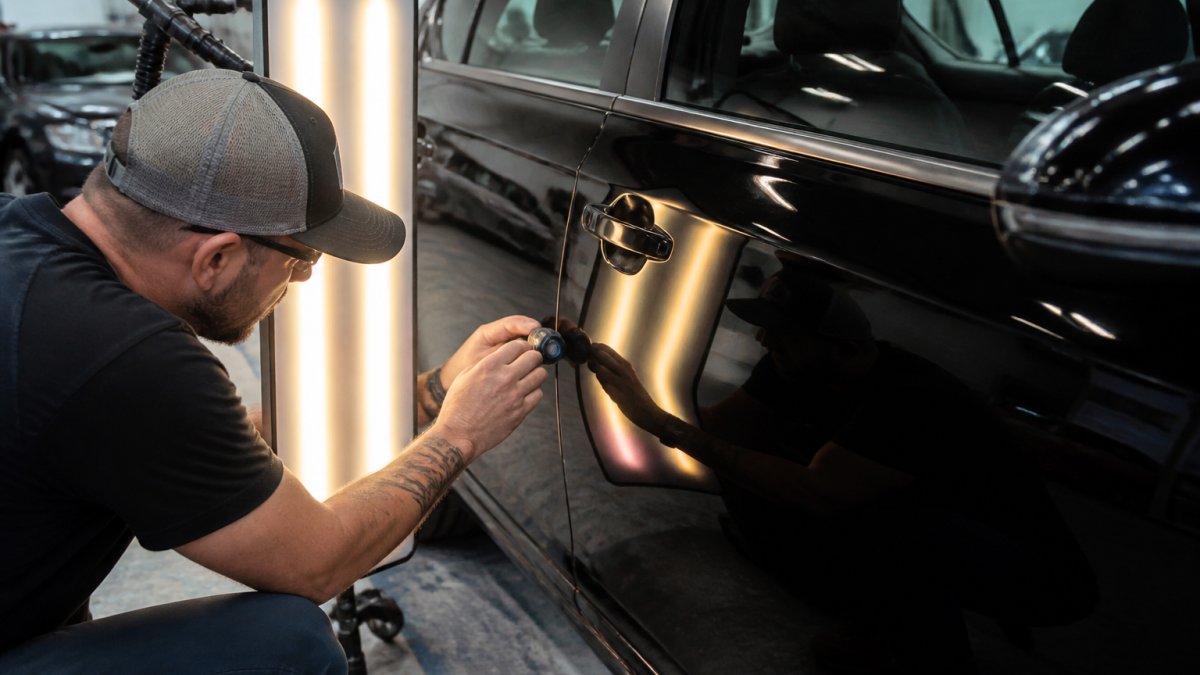
- Inspection, The technician examines the damage under bright lighting to assess dent size, depth, and location
- Panel access, They remove trim or access panels to reach the back side of the damaged area
- Tool selection, They choose specialized rods and tools based on the damage type
- Manipulation, Using use and precision, they work the dent out from behind the panel
- Finishing, They use glue tabs and suction tools to remove any remaining minor imperfections
- Final inspection, The panel is inspected under bright light to confirm the repair matches factory standards
The entire process preserves the original paint. No fillers, no repainting, no compromises to your vehicle's integrity.
A good PDR technician will walk you through this process and explain what they're doing at each stage. If they rush the explanation or seem annoyed by your questions, that's not a good sign.
Key Questions to Ask a PDR Technician
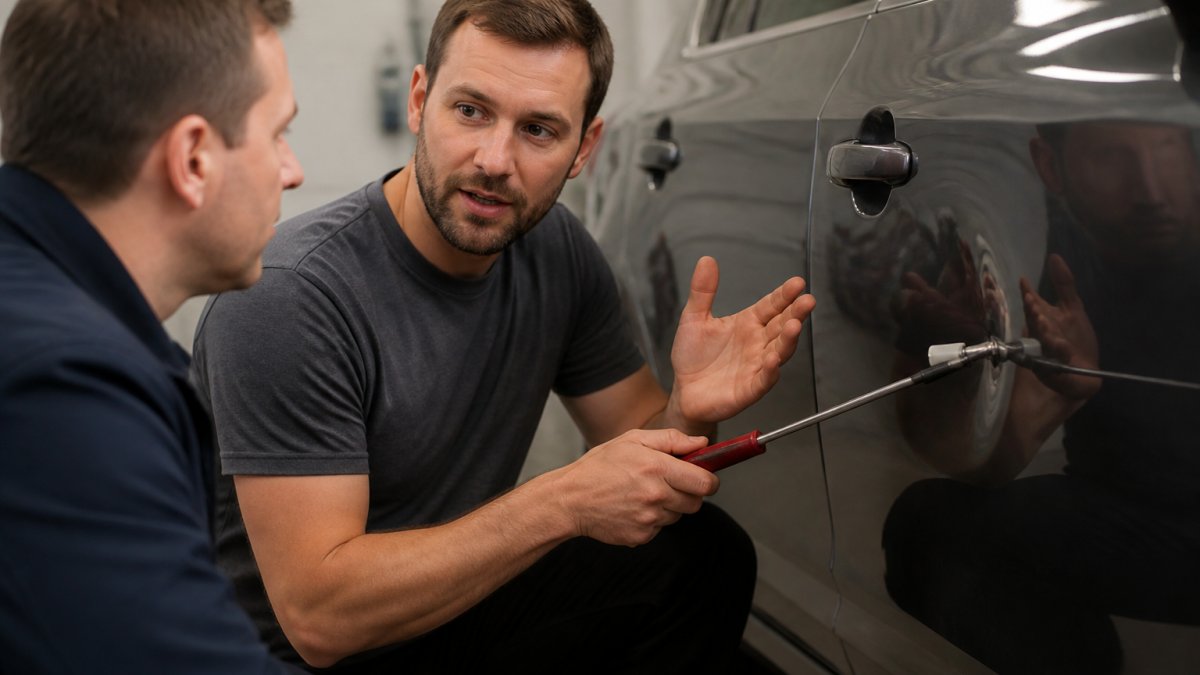
Before committing to any repair, have a conversation with the technician. The questions you ask reveal whether they're thorough, transparent, and genuinely qualified.
Process and Timeline Questions
Ask these specific questions about how they'll handle your repair:
-
How long will the repair take? A realistic answer depends on damage severity. Small door dings might take 30 minutes. Extensive hail damage could take days. If they give you a time without seeing the damage in person, they're guessing.
-
Will you need to remove any parts? Some repairs require removing trim, bumpers, or lights to access the damaged area. This adds time but is sometimes necessary for quality work.
-
What happens if the dent doesn't come out completely? A honest technician will admit that some damage is beyond PDR capability. Very deep creases, sharp folds, or damage on edges sometimes require traditional repair methods.
-
Can I watch the repair? Some shops allow customers to observe. Others don't. Either is acceptable, but transparency about their policy matters.
-
How will you handle my insurance claim? This is critical. Ask whether they'll work directly with your insurance company, handle paperwork, manage supplements if needed, and communicate on your behalf.
Warranty and Guarantee Questions
Every reputable PDR technician stands behind their work with a written warranty.
Ask specifically:
-
What does your warranty cover? A quality warranty covers the repaired panel against defects in workmanship for a specific period.
-
How long is the warranty? Look for at least one year. Lifetime warranties are even better, they show confidence in the work.
-
What's excluded? Most warranties exclude damage from accidents, further impacts, or weather events after the repair. That's normal.
-
How do I claim the warranty if something goes wrong? Get the process in writing. You should be able to contact them, bring the vehicle back, and have any defects fixed at no cost.
At 888 PDR, every repair comes with a lifetime warranty. That's the standard you should expect from any quality technician.
Evaluating a Paintless Dent Repair Estimate
A complete estimate tells you exactly what you're paying for and protects you if disputes arise later. Don't accept vague estimates or verbal quotes.
What a Complete Estimate Should Include
A professional estimate should contain:
- Detailed damage description, Specific locations and types of dents (hail, door ding, crease, etc.)
- Repair method, Whether they'll use PDR, traditional repair, or a combination
- Labor cost, The cost for technician time
- Materials cost, Any supplies needed (glue tabs, suction cups, etc.)
- Timeline, When the repair will be completed
- Warranty details, What's covered and for how long
- Insurance information, Whether they work with your insurance company and how claims are handled
- Total cost, A clear final number with no hidden fees
Ask for the estimate in writing. Don't accept a quote scribbled on a napkin or given over the phone. Written estimates protect both you and the technician.
Compare estimates from multiple technicians, but don't choose based solely on price. The cheapest estimate often comes from someone cutting corners. A realistic estimate reflects the actual work required.
Insurance Claims and Out-of-Pocket Costs
If your vehicle has hail damage or collision damage, your insurance likely covers repairs. Understanding how claims work prevents surprises.
Ask your technician:
- Do you work directly with insurance companies? Quality shops handle claim communication on your behalf.
- Will you manage supplements? Insurance adjusters sometimes underestimate damage. Good technicians submit additional requests for coverage as needed.
- How is my deductible handled? You'll owe your deductible to the insurance company, not the repair shop. The shop should clarify this upfront.
- What if insurance denies coverage? Get clarity on what happens and what you'd owe out of pocket.
A technician experienced with insurance claims will guide you through the process and advocate for complete coverage. That's a major value-add compared to shops that leave you to navigate claims alone.
Assessing Facility Quality and Equipment
Where a technician works and what tools they use directly impact repair quality. Visit the facility in person if possible.
Look for these signs of a professional operation:
-
Clean, organized workspace, Cleanliness indicates attention to detail. A messy shop often produces messy work.
-
Proper lighting, PDR requires bright, specialized lighting to see dents clearly. Shops with poor lighting produce poor repairs.
-
Specialized equipment, Look for PDR rods, glue tabs, suction cups, and reflection lights. Budget shops sometimes cut corners on tools.
-
Climate control, Temperature and humidity affect how metal responds to repair. A professional facility maintains consistent conditions.
-
Customer waiting area, If they have customers, is there a comfortable place to wait? This shows they respect your time.
-
Insurance certifications, Some shops carry certifications from major insurance companies, indicating they meet professional standards.
Ask about their facility directly. How long have they been in business? How many technicians do they employ? What brands do they work with (insurance companies, dealerships, rental agencies)?
A 25,000 square-foot facility with advanced equipment, and long-term relationships with major insurance carriers signals stability and professionalism.
Red Flags When Choosing a PDR Technician
Certain warning signs indicate you should look elsewhere. Trust your instincts.
Avoid technicians who:
-
Won't provide references or work samples, If they refuse, they have something to hide.
-
Pressure you to decide immediately, Quality work doesn't require rushed decisions. A technician pushing you to commit on the spot is not acting in your interest.
-
Quote prices without seeing the damage, Accurate estimates require in-person inspection. Phone quotes are guesses.
-
Guarantee perfection, Some damage genuinely cannot be fully repaired with PDR alone. A technician claiming 100% success on all damage is lying.
-
Avoid discussing insurance, If they're evasive about how they handle claims, that's a major red flag. Insurance claim management is a core service.
-
Have no online presence or reviews, Modern shops have websites and customer feedback. Complete absence of online information is suspicious.
-
Won't provide a written estimate, Verbal quotes leave no protection for either party. Always get it in writing.
-
Claim they're "too busy" to answer questions, A professional technician makes time for customer communication.
-
Have vague warranty terms, If they can't explain their warranty clearly, it's probably weak or non-existent.
-
Won't let you inspect the vehicle during or after repair, Transparency builds trust. Shops that hide their work have reason to.
If a technician exhibits any of these behaviors, move on. Plenty of qualified professionals exist who will treat you with respect and transparency.
Choosing a PDR technician deserves serious thought. Your vehicle's finish, your insurance claim, and your peace of mind all depend on this decision. Look for someone with certified training, a portfolio of quality work, clear communication, and a commitment to handling your insurance claim properly. Contact 888 PDR for a free inspection and lifetime warranty on all repairs.
Frequently Asked Questions
What questions should I ask a PDR technician before hiring one?
Ask about their certification, years of experience, and how they'll handle your specific dent. Request details on the paintless dent repair process, repair timeline, warranty coverage, and whether they work directly with insurance companies. Ask to see before-and-after photos of similar repairs and inquire about their facility's equipment and lighting setup. Understanding their approach helps you verify they're qualified and that PDR is suitable for your vehicle's damage.
How can I tell if a dent is suitable for paintless dent repair?
PDR works best on dents without paint damage, creases in accessible areas, and damage on metal panels like doors, fenders, and hoods. A qualified PDR technician can assess suitability during a free inspection. Large creases, sharp dents in tight corners, or damage with paint chips may require conventional repair instead. The technician should explain whether your specific dent is a good candidate and why, helping you understand the limitations of the paintless dent repair process.
What should a paintless dent repair estimate include?
A complete estimate should detail the scope of damage, repair method, labor costs, timeline, and warranty terms. It should specify whether the technician will handle your insurance claim and explain deductible coverage. The estimate should be in writing and include any additional services like vehicle pickup and delivery if offered. Ask if the estimate is binding or if costs could change based on further inspection, and clarify what happens if supplemental damage is discovered during repair.
How long does paintless dent repair typically take?
Timeline depends on dent size, depth, location, and the number of dents. Minor door dings may take 1-2 hours, while hail damage affecting multiple panels can require several days. A qualified PDR technician should provide a realistic estimate during your initial assessment. Factors like panel access, paint preservation requirements, and whether repairs need insurance coordination affect the schedule. Ask your technician for a specific timeline and whether they offer rental vehicle assistance while your car is being repaired.