
Last Updated: November 6, 2026
Quick Summary
Direct claim management keeps you in charge of your own insurance claim, so you talk to the insurer, approve the repair, and see every document before it goes out. You keep the final say on repair decisions and avoid signing away your policy rights to a third party.
- An auto hail claim moves through five stages: filing, documentation, inspection, evaluation, and settlement.
- Hail damage is typically covered under comprehensive coverage, not collision, and liability-only policies generally will not pay.
- Do not authorize repairs before the insurer approves its estimate, or you may pay the difference yourself.
- Assignment of benefits transfers your right to collect claim payments to a third party such as a shop.
- Skip direct management if you have filed multiple hail claims, the damage is complex, or you are short on time.
Table of Contents
- Why Direct Claim Management Beats Handing Over Control
- How the Auto Hail Damage Insurance Claim Process Works
- Your Insurance Claim Documentation Checklist
- Understanding the Insurance Claim Repair Timeline
- Assignment of Benefits in Insurance: What You Are Signing
- When Direct Claim Management Works Against You
- Get a Free Hail Damage Inspection Before You File
- Frequently Asked Questions
Why Direct Claim Management Beats Handing Over Control
The benefits of direct insurance claim management start with one simple fact: you stay in charge of your own claim. You talk to the insurer. You approve the repair. You see every document before it goes out. At 888 PDR, we work directly with all insurance carriers and manage claims from first notice of loss through supplement and final payment.
Direct claim management is the process of handling your own insurance claim from start to finish, including filing, documentation, and repair approval, without signing your rights over to a third party.
Here is why that matters:
- You keep the final say on repair decisions
- You see every settlement offer before you accept it
- You avoid signing away your policy rights
- You can ask questions at any stage
The catch? Direct management takes some work. Below, we show you exactly how to do it, and when it makes sense to let a shop handle the paperwork for you instead.
How the Auto Hail Damage Insurance Claim Process Works
An auto hail damage insurance claim moves through five main stages: filing, documentation, inspection, evaluation, and settlement. What separates a clean claim from a contested one is how well each stage is executed, so here is the sequence with the mechanics that actually matter at each step.

Here is the sequence in plain terms:
- Claim submission (first notice of loss). You call your insurer, use the mobile app, or file online and describe the damage. This is the date the insurer will treat as the start of the claim, so note it. Most policies require prompt notice, and a delay can give the insurer grounds to question the loss.
- Claim intake and adjuster assignment. The insurer opens a file, assigns a claim number, and routes it to an adjuster. Ask for the claim number and the adjuster's direct contact in writing. Confirming assignment is a sensible first follow-up you should make.
- Coverage and policy verification. Before anyone inspects the car, the insurer confirms the policy was in force on the storm date, checks your deductible, and reviews whether comprehensive coverage applies. Hail damage is typically covered under the comprehensive portion of an auto policy, not collision, and liability-only coverage generally will not pay for it. Confirm which coverage line the claim is being opened under.
- Damage assessment and inspection. An adjuster inspects the vehicle, photographs panels, and writes an estimate. The estimate is the insurer's opening position, not a final number. Hidden damage, dents under trim, damaged seals, cracked glass, often surfaces later and is handled through a supplement.
- Claim evaluation and settlement. The insurer applies your deductible, subtracts any prior payments, and issues an approval, a denial, or a payment offer. Review the estimate line by line before you accept. If the number is short, you can request a re-inspection or submit your own written estimate for comparison.
Two mechanics drive most of the outcome. First, coverage verification happens before inspection, so a coverage dispute stalls everything downstream, clarify it early. Second, communication is not a stage but a thread running through all five: every phone call should be followed by a written summary, and every document should be saved with the date it was sent.
You can read a fuller walkthrough of each stage in this guide to the hail damage insurance claim process. The key point: every stage builds on the one before it. A weak start usually means a weak settlement.
Watch out: do not authorize repairs or sign a repair authorization before the insurer's estimate is approved. If you do, you may be accepting the insurer's number as final and paying any difference yourself.
Here is the five-stage sequence every auto hail claim moves through.
| Stage | What happens | Key point |
|---|---|---|
| Claim submission (first notice of loss) | You call, use the app, or file online | Note the date; prompt notice is required |
| Claim intake and adjuster assignment | Insurer opens a file and assigns an adjuster | Get claim number and adjuster contact in writing |
| Coverage and policy verification | Insurer confirms policy in force and deductible | Hail is typically covered under comprehensive, not collision |
| Damage assessment and inspection | Adjuster inspects, photographs panels, writes an estimate | Estimate is an opening position, not final |
| Claim evaluation and settlement | Insurer applies deductible and issues approval, denial, or offer | Review the estimate line by line before accepting |
Your Insurance Claim Documentation Checklist
Good documentation is the difference between a smooth claim and a fight. Insurers decide claims on evidence, so give them clear evidence from day one.
Use this checklist before you file:
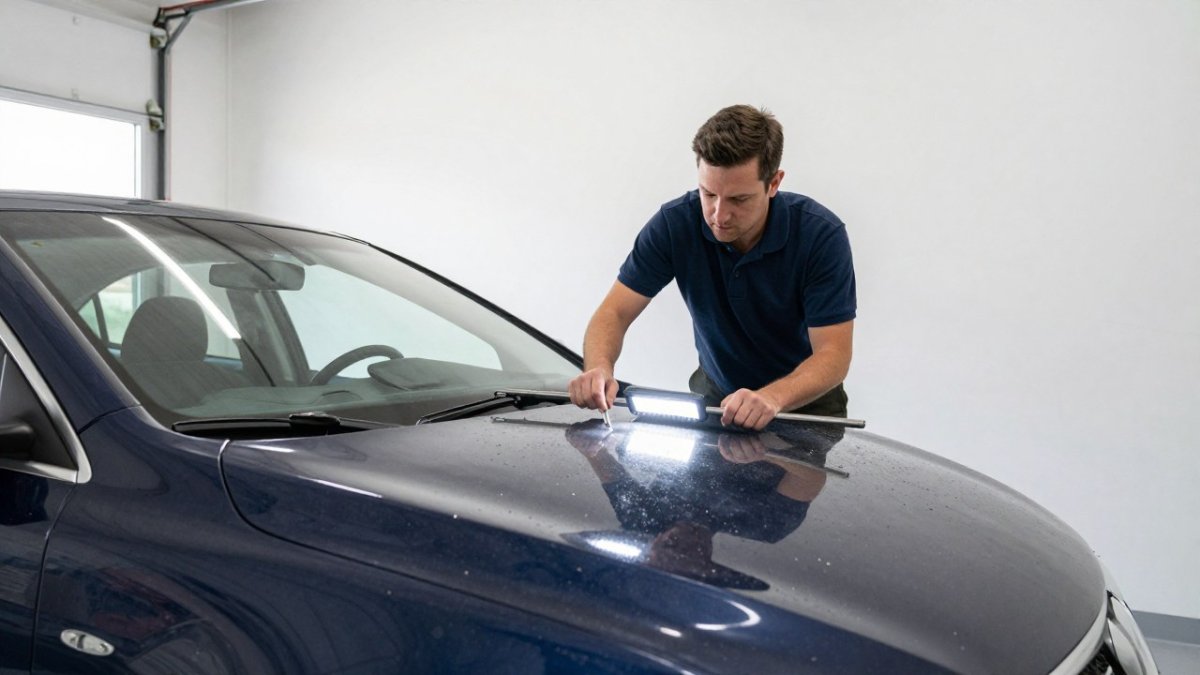
- Photos of every damaged panel in raking light
- A wide shot of the whole car for context
- Close-ups with something for scale, like a coin
- Your registration and proof of insurance
- A written incident report with the storm date
- Any repair estimates you have collected
- Notes on where the car was parked during the storm
Clean, dry panels matter. Dirt and water hide dents and can make an adjuster's damage assessment less accurate. For a step-by-step photo method, see this guide on how to document hail damage for insurance.
Understanding the Insurance Claim Repair Timeline
Most hail claims take longer than drivers expect, and the repair itself is only part of it. The insurance claim repair timeline usually includes waiting for an adjuster visit, approval, parts, and shop scheduling. Storm events make it worse, because every shop in the area fills up at once.
Here is what typically drives the timeline:
- Adjuster availability. After a big storm, inspections back up fast.
- Supplement approvals. Hidden damage often needs a second approval.
- Parts and scheduling. Busy shops book out quickly.
- Payment release. Some insurers pay the shop directly, others reimburse you.
Watch out: don't authorize repairs before the insurer approves the estimate. If you do, you may end up paying the difference yourself.
A shop that manages claims in-house can often speed up the supplement stage, because they know what adjusters need to see.
Assignment of Benefits in Insurance: What You Are Signing
Assignment of benefits in insurance is a legal agreement that transfers your right to collect claim payments to a third party, such as a repair shop or contractor. Once you sign, that party can deal with your insurer, negotiate the settlement, and receive payment directly. You are no longer the one in control of the claim.
That is not automatically bad. It can save you time and remove paperwork. But it also means:
- You may lose the right to dispute the settlement yourself
- The third party, not you, decides how the claim is handled
- Disputes between the shop and insurer can delay your repair
Read every line before you sign. If a document transfers your benefits, ask what you give up. A shop can manage your claim alongside you without taking your rights, and that is the model we prefer.
When Direct Claim Management Works Against You
Managing your own claim is not always the best call. There are real situations where it works against you, and the decision is easier when you weigh four factors instead of guessing: claim complexity, severity, your available time, and your comfort with the process.
Use this framework before you decide:
- Complexity. A single-panel dent is simple. Damage across multiple panels, damaged glass, compromised seals, or a dispute over cause (hail versus prior damage) is not. Complex claims involve supplements, re-inspections, and sometimes a second adjuster, and each step is a place to lose ground.
- Severity. A high-dollar loss raises the stakes on every estimate line. If the repair estimate is large relative to your deductible, the cost of a mistake is higher, and a line-by-line review matters more.
- Time. Direct management means tracking deadlines, returning calls, scheduling the inspection, and following up on supplements. If you travel, work long hours, or are managing the claim for someone else, the paperwork can slip.
- Expertise. You do not need to be a body technician, but you do need to read an estimate and spot when a line is missing. If you are not comfortable asking an adjuster to justify a number, professional support is worth considering.
Skip direct management if:
- You have filed multiple hail claims. Repeat claims can raise premiums or affect renewal. Understand how multiple hail claims affect your policy before you file again.
- The damage is complex. Structural damage or disputed cause needs expert handling.
- You are short on time. Missed deadlines can weaken or sink a claim.
- The insurer disputes liability. A disputed claim is easier with professional support.
If you do manage the claim yourself, know the escalation routes before you need them.
Managing a claim yourself also means tracking deadlines, calls, and paperwork. Miss one step and the process stalls. If you want a step-by-step walkthrough of doing it solo, this guide to managing hail claims covers the full process.
Get a Free Hail Damage Inspection Before You File
Before you call your insurer, know what you are claiming. A free inspection gives you a clear picture of the damage and a starting point for your documentation.
Here is how to use it:
- Book a free inspection with a shop that works with insurers.
- Get a written damage report you can attach to your claim.
- Compare it to the adjuster's estimate later.
- Decide whether to file, wait, or handle repairs yourself.
You can also check your car first with this plain-language guide to spotting hail damage on your car. It walks you through raking light, clean panels, and the spots dents hide.
Hail season does not wait, and neither should your claim. If you want the benefits of direct insurance claim management without the paperwork stress, 888 PDR can help. We work directly with all insurance carriers and manage your claim from first notice of loss through final payment. You get a free inspection, vehicle pickup and delivery, rental assistance, and a lifetime warranty on every repair.
Frequently Asked Questions
Is it ever worth using a claims management company?
It depends on how much time and confidence you have. A claims management company or public adjuster can handle paperwork and negotiations for a fee, often a percentage of your settlement. If your claim is straightforward hail damage with clear coverage, direct claim management through a repair shop that works with your insurer usually costs you nothing extra and keeps you informed. Complex or disputed claims are where paid help can make sense.
Can a repair shop communicate with my insurer on my behalf?
Yes. Many shops, including 888 PDR, work directly with all insurance carriers and manage the claim from first notice of loss through supplement and final payment. You still authorize the work and stay informed, but the shop handles adjuster scheduling, photo documentation, and supplement requests. Ask for direct communication updates so you are never guessing where your claim stands.
How long does an auto insurance claim and repair usually take?
Timelines vary with carrier workload, damage severity, and parts availability. A typical hail claim moves through filing, adjuster inspection, approval, and repair. Ask your shop for a realistic estimate after inspection, and confirm whether rental assistance is available while your car is in the shop.
Can paintless dent repair preserve a vehicle's factory finish and resale value?
Paintless dent repair removes dents by working the metal back from behind, with no fillers or repainting. That keeps your original factory finish intact, which matters at resale because buyers and inspectors can detect body filler and repainted panels. For hail damage on modern vehicles with accessible panels, it is often the preferred method. Ask the shop to confirm your specific dents qualify.
