
Last Updated: November 1, 2026
Quick Summary
Auto hail damage in Texas is caused by severe thunderstorms where warm Gulf moisture collides with dry western air, producing hailstones. Hail size sets impact force, wind direction sets the angle, and storm duration sets how many hits land. Hail season generally runs from spring through early summer, with a smaller fall window.
- A slow-moving storm lingering 20 minutes does far more damage than a fast cell passing in three.
- The roof, hood, and trunk lid absorb the most hits because they are flat and fully exposed.
- Run your palm flat across the hood and roof to feel dents your eyes skip.
- Hail damage is typically covered under the comprehensive portion of an auto policy, not collision.
- A garage is the best protection, since no hail reaches the car.
Table of Contents
- Why Texas Storms Cause So Much Auto Hail Damage
- The Common Types of Hail Damage on Vehicles
- Which Vehicle Panels Take the Brunt of a Hailstorm
- Signs of Hidden Hail Damage Most Owners Miss
- How to Protect a Car From Hail Before the Next Storm
- Hail Damage Insurance Coverage and Your Claim
- Book a Free Hail Damage Inspection With 888 PDR
- Frequently Asked Questions
Why Texas Storms Cause So Much Auto Hail Damage
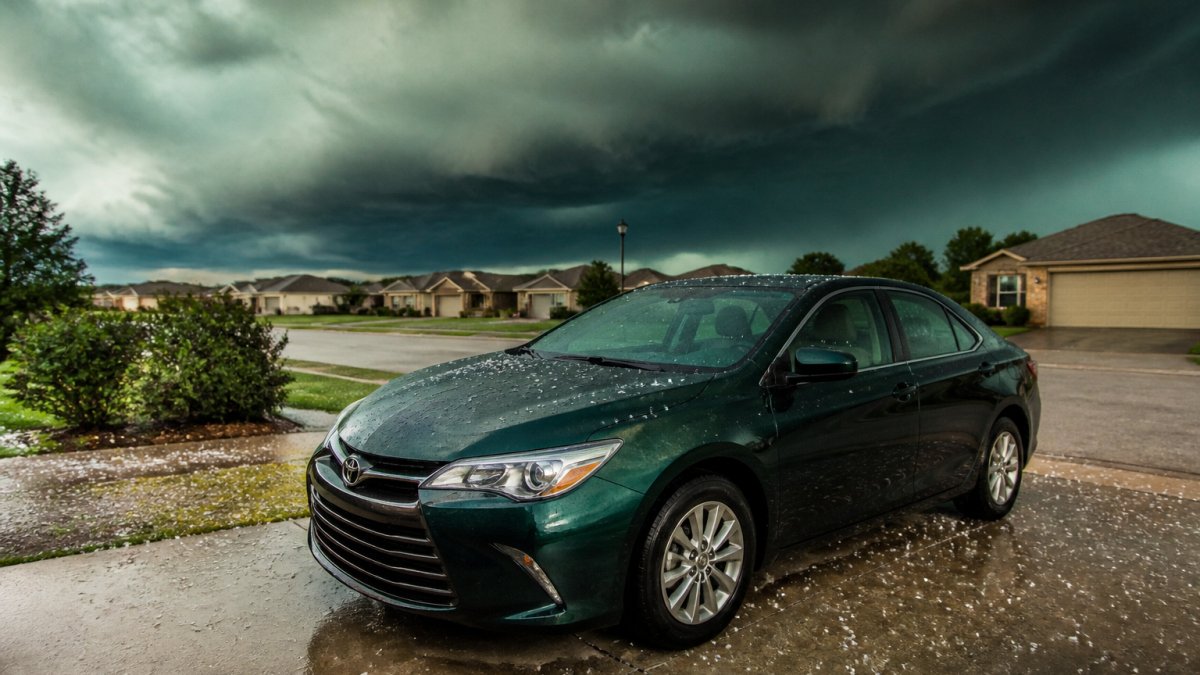
Texas sits in a sweet spot for severe weather. Warm Gulf moisture collides with dry air from the west, and that clash builds the towering thunderstorms that drop hailstones across the state. This guide explains what causes auto hail damage in Texas, how to spot it, and how to protect your car. Hail damage is any dent, crack, or paint failure caused by hailstones striking a vehicle during a storm. The size of the stones matters, but so does the angle they fall and how long the storm sits over your car.
Below, we break down the storm mechanics that matter, the panels that take the worst hits, and a simple inspection routine you can run in your driveway.
How Hail Size, Wind Direction, and Storm Duration Combine
Three factors decide how bad the damage gets. Hail size sets the impact force. Wind direction sets the angle, which is why one side of a car can look fine while the other looks like a golf ball. Storm duration sets how many hits land before the storm moves on.
A slow-moving storm that lingers over a parking lot for 20 minutes does far more damage than a fast cell that passes in three. Wind-driven hail also reaches places gravity alone would miss: side pillars, mirrors, and the lower body panels.
Where and When Hail Hits Hardest Across the State
Hail season in Texas generally runs from spring through early summer, with a smaller window in the fall. Storm frequency and severity vary by region across the state.
Vehicle position and exposure matter just as much as geography. A car parked under a tree canopy or a carport catches fewer direct hits than one sitting in an open lot.
The Common Types of Hail Damage on Vehicles
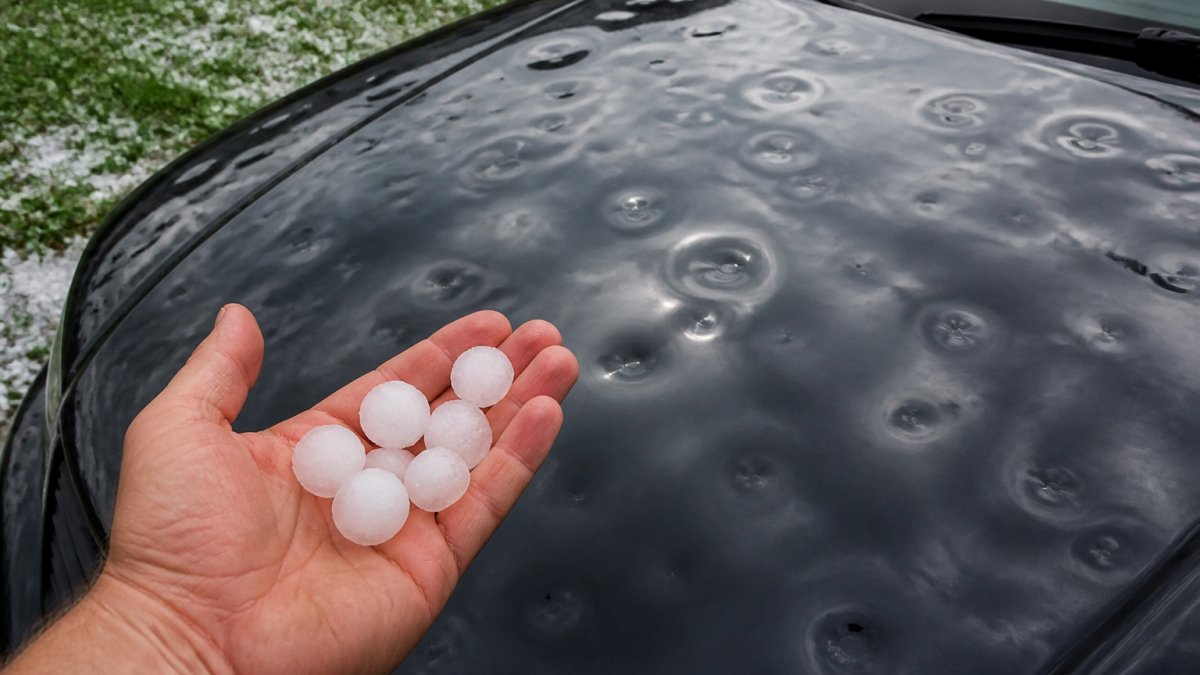
The common types of hail damage fall into four groups: round dents with intact paint, shallow dimples, paint cracks, and broken glass. Most hail damage is cosmetic, meaning the metal is pushed in but the paint stays sealed. That is the good news, because cosmetic dents are exactly what paintless dent repair is built for. While these repairs are often straightforward, complications frequently arise when navigating the complexities of hail damage insurance claims.
Paint damage is the more serious category. When a stone hits hard enough to crack the clear coat, moisture can reach bare metal and rust starts. Glass damage shows up as chips or star cracks in the windshield, and trim pieces like chrome strips or plastic moldings can crack outright.
Cosmetic Dents Versus Paint and Glass Damage
- Cosmetic dents: round or shallow, paint intact, no rust risk. These are the best candidates for paintless dent repair.
- Paint damage: cracked clear coat or chipped paint, rust risk over time. These need paint work, not just dent removal.
- Glass damage: chips and cracks in the windshield or side windows. Safety issue, not cosmetic.
- Trim damage: cracked plastic or bent metal trim. Usually replaced, not repaired.
For a full walkthrough of repair options and how they interact with a claim, see our guide to hail damage repair and insurance claims.
Hail damage on vehicles falls into four main categories, each with its own repair path.
| Damage type | What it looks like | Repair approach |
|---|---|---|
| Cosmetic dents | Round or shallow, paint intact, no rust risk | Best candidates for paintless dent repair |
| Paint damage | Cracked clear coat or chipped paint, rust risk over time | Needs paint work, not just dent removal |
| Glass damage | Chips and cracks in windshield or side windows | Safety issue, not cosmetic |
| Trim damage | Cracked plastic or bent metal trim | Usually replaced, not repaired |
Which Vehicle Panels Take the Brunt of a Hailstorm
The roof, hood, and trunk lid absorb the most hits. They are flat, horizontal, and fully exposed to the sky. The roof is the worst offender because it is the largest horizontal surface and the hardest to see from the driver's seat.
Quarter panels and side pillars catch angled hail driven by wind. Body lines are tricky: a dent that crosses a crease is harder to remove cleanly than one on a flat panel. This is where paintless dent repair technique matters, and it is why a proper assessment comes before any work starts.
Signs of Hidden Hail Damage Most Owners Miss
Hidden hail damage can be easy to miss. Small dents on a light-colored roof may be hard to see in flat daylight, and they often show up when light rakes across the panel at a low angle.
Here is how to check:
- Park in direct sun and look at the roof from a low angle.
- Run your palm flat across the hood and roof. You will feel dents your eyes skip.
- Check the side pillars and the area around the windshield trim.
- Look at the trunk lid and the top edges of the doors.
- Photograph anything you find before you call your insurer.
For a deeper roof-specific method using angled light, read our guide on how to identify hidden hail damage on a car roof.
How to Protect a Car From Hail Before the Next Storm
Protection comes down to blocking the sky. Ranked by effectiveness and practicality:
- Garage: the best option, full stop. No hail reaches the car.
- Carport or covered parking: blocks direct hits from above.
- Hail-resistant car cover: padded covers absorb impact and work well for short storms.
- Parking strategy: park close to a building on the windward side, or under a sturdy overhang.
- Moving blankets or floor mats: a last-minute layer over the roof and hood helps in a pinch.
A common mistake is trusting a thin cover to stop large hail. It will not. Compare your options in our guide to 7 ways to prevent hail damage on your car.
Hail Damage Insurance Coverage and Your Claim
Hail damage is typically covered under the comprehensive portion of an auto policy, not collision. Check your policy documents or call your carrier, since terms and deductibles vary by policy.
Documentation wins claims. Photograph every dent with a reference object for scale, note the date and location of the storm, and file promptly. A professional assessment helps here, because an adjuster works from a documented inventory of dents.
At 888 PDR, we work directly with insurance carriers and handle hail claims from first notice of loss through final payment. For the full process, see our step-by-step hail insurance claim guide.
Book a Free Hail Damage Inspection With 888 PDR
A free inspection tells you what you are dealing with before you commit to anything. Learn what a professional hail damage assessment includes, from documentation to repair options. Our team inspects your vehicle, documents what we find, and walks you through repair options. Paintless dent repair keeps the original paint intact, helping preserve the factory finish.
We are family-owned, we back our repairs with a lifetime warranty, and we offer vehicle pickup and delivery plus rental assistance. Get started with 888 PDR for a free inspection of your hail damage.
Frequently Asked Questions
What part of Texas gets the most hail?
The Dallas-Fort Worth metroplex and the surrounding North Texas corridor sit in one of the busiest hail zones in the country. Warm Gulf moisture collides with drier air from the west, and the resulting thunderstorms regularly drop hailstones across the region. Spring and early summer bring the most frequent events, though storms can produce hail well into fall. Hail size and frequency can vary across the metro area from one storm to the next.
How can you tell if hail damage is hidden?
Hidden hail damage usually shows up on surfaces you do not look at straight on. Check the roof by viewing it from a low angle in direct sunlight, since shallow dimples only appear when light rakes across the panel. Run your palm slowly over the hood, trunk, and side pillars with your eyes closed. Look for cracked trim, fogged light housings, or water spots inside the cabin, which point to damage around seals and glass that is easy to miss.
Does auto insurance cover hail damage?
Hail damage is typically covered under the comprehensive portion of an auto policy, which handles weather events and other non-collision losses. Liability-only policies do not include it. Your deductible applies, and the amount varies by policy. Report the claim promptly, document the damage with photos before any repair work, and keep the vehicle available for the adjuster's inspection. A repair shop that works directly with carriers can manage the paperwork from first notice of loss through final payment.
Can hail crack a windshield or damage a car's paint?
Yes to both. Large hailstones or stones driven by strong wind can chip or crack windshields, especially at the edges where glass is most vulnerable. Paint damage appears as small chips, crazing, or spiderweb cracks in the clear coat, often around the hood and roof edges. Paint damage matters more than dents in some cases because exposed metal can corrode. Have any chip or crack checked along with the body panels after a storm.
Hail season does not wait for a convenient moment. If a storm just passed over your car, book a free inspection with 888 PDR and let our team document the damage, handle your insurance claim, and restore your vehicle's factory finish. Call (469) 284-0336 to get started.
