
Last Updated: October 25, 2026
Quick Summary
You can prevent hail damage on your car by parking under a rigid roof first, such as a garage, carport, or parking structure, then adding a fitted, multi-layer padded cover if no shelter exists. Move the car before the storm hits, not during it, and never shelter under a tree.
- A fitted, multi-layer cover with sewn-in straps is the best single purchase for drivers without a garage.
- Moving blankets soften pea-to-marble hail but are not enough against golf-ball hail on their own.
- Standard car covers under $100 protect against dust and sun, not impact.
- Never shelter under a tree, because falling branches cause more damage than hail.
- During an active hailstorm, stay inside and do not run out to move a cover or reposition the car.
Table of Contents
- How to Protect Your Car From Hail Without a Garage
- Hail Protection Car Cover: What Works and What Doesn't
- Will Moving Blankets Protect a Car From Hail?
- Best Place to Park Car During Hail
- How to Secure a Temporary Cover Without Causing Damage
- Safe Actions During an Active Hailstorm
- After the Storm: When to Call 888 PDR for Hail Damage Repair
- Frequently Asked Questions
How to Protect Your Car From Hail Without a Garage
You can protect your car from hail without a garage by layering shelter, padding, and timing. Park under a sturdy structure first, then add a padded cover if none exists.
At 888 PDR, we repair hail damage across the Dallas-Fort Worth area every storm season. Most of the dents we fix come from cars left in the open during a 15-minute hailstorm.
Below, we'll show you exactly how to prevent hail damage on your car using seven methods ranked by cost, effort, and real protection. The best part: most cost under a few hundred dollars and take minutes to set up.
Prioritize by Hail Size, Forecast Lead Time, and Available Shelter
Match your method to the threat. Small hail with hours of warning gives you time to move the car. Golf-ball hail with 20 minutes of warning means you grab the thickest cover you own.
Use this simple decision guide:
| Hail Size | Lead Time | Best Move |
|---|---|---|
| Pea to marble | 2+ hours | Covered parking or a fitted hail cover |
| Quarter to golf ball | 1 hour | Sturdy carport, then moving blankets |
| Golf ball to baseball | Under 30 minutes | Get under a structure, any structure |
| Baseball or larger | Any | Shelter first; no cover beats a solid roof |
The rule is simple. The bigger the hailstone, the more you need a rigid roof over the car. Soft padding helps against small stones. It fails against large ones.
Hail Protection Car Cover: What Works and What Doesn't
A hail protection car cover works when it is thick, multi-layered, and fitted tight. Thin covers and loose tarps offer little to no protection against real hailstones. But "buy a hail cover" is not a complete answer, because the options on the market differ sharply in setup time, cost, storage, and how much hail they actually stop. Use the comparison below to match the cover to your situation.
Compare the main options
| Option | Typical setup time | Typical cost | Storage | Wind resistance | Realistic protection |
|---|---|---|---|---|---|
| Multi-layer padded cover | 5-10 minutes | A few hundred dollars | Trunk or shelf | Good when fitted and strapped | Pea to golf ball, depending on thickness |
| Inflatable hail cover | 10-20 minutes plus inflation | Several hundred dollars and up | Bulky; needs space | Good when anchored | Small to moderate hail; air buffer absorbs impact |
| Standard car cover | 2-5 minutes | Under $100 | Small bag | Poor in wind | Dust and sun only; little impact protection |
| Plastic tarp | 5 minutes | Under $50 | Small | Poor; flaps badly | Minimal; can scratch paint |
| Moving blankets | 5-10 minutes | Low | Moderate | Poor unless tucked and weighted | Small hail only |
Costs vary by vehicle size and brand, so treat the ranges as planning figures rather than quotes.
What separates a real hail cover from a lookalike
- Layers and thickness. Foam or quilted layers absorb impact. A single-layer fabric does not.
- Fit. A snug fit stops wind from getting under the cover. A cover one size too big looks protective until the wind picks up and the fabric slaps the panels.
- Straps and anchor points. Sewn-in straps or bungee hooks at the wheel wells are the difference between a cover that stays on and one that ends up in the neighbor's yard.
What does not work
- Basic dust covers. They protect against sun and dirt, not impact.
- Cheap plastic tarps. They flap, trap grit, and can scratch paint.
- Loose covers in high wind. A flapping cover can do more harm than good.
Matching the cover to the forecast
- Hours of warning, small hail expected: a fitted padded cover is enough.
- Short warning, larger hail expected: skip the cover and get under a rigid roof. No fabric cover reliably stops golf-ball hail.
- No warning at all: do not install a cover during the storm. Shelter the car if you can, and document any damage afterward.
A common mistake is buying a cover one size too big or trusting a standard cover to do a hail cover's job. Fit and thickness matter as much as the label.
Will Moving Blankets Protect a Car From Hail?
Moving blankets protect a car from small hail, not large stones. They add a padded physical barrier over the roof, hood, and trunk. Against pea-to-marble hail, a thick layer of blankets can soften the blow.
Here is how to use them well:
- Use heavy, thick moving blankets, not thin sheets.
- Layer two or three across the roof, hood, and trunk.
- Tuck edges under the wipers and into door gaps so wind can't grab them.
The catch: blankets soak up rain and get heavy. Once wet, they can trap moisture against the paint. Pull them off as soon as the storm passes.
Best Place to Park Car During Hail
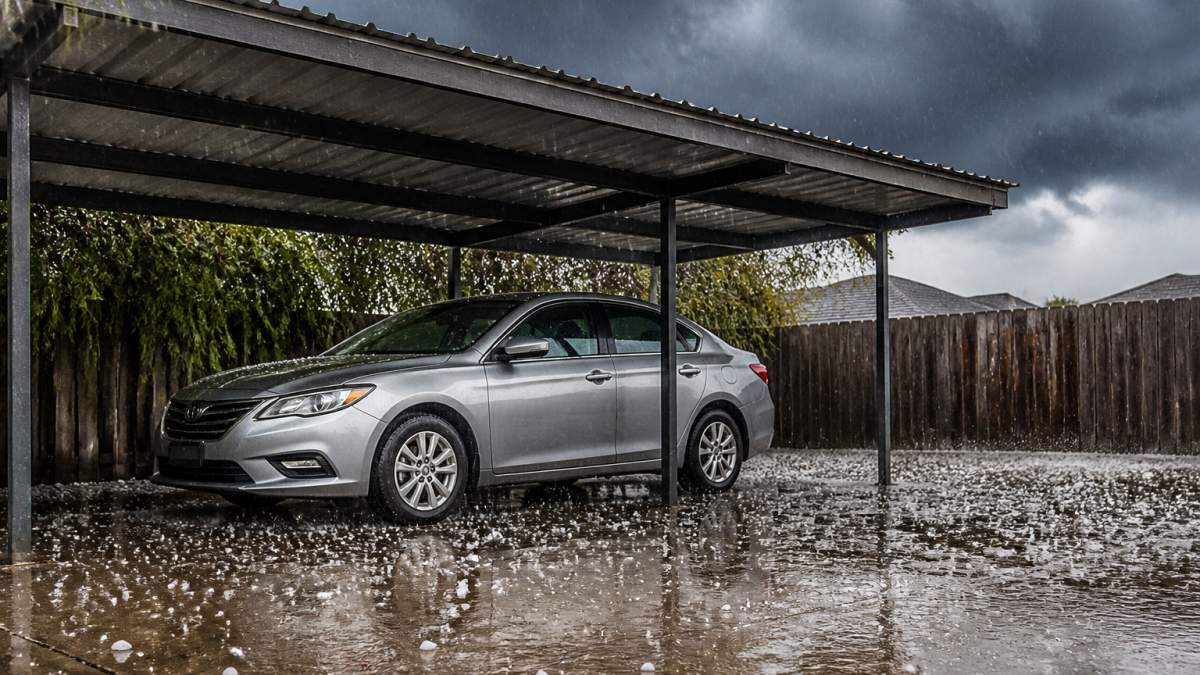
The best place to park during hail is under a solid roof: a garage, a carport, a parking structure, or a bank drive-through canopy. Any rigid overhead cover beats open sky.
Rank your options like this:
- Your own garage. The gold standard. Fully enclosed and wind-proof.
- A parking garage or structure. Multiple levels of concrete overhead.
- A sturdy carport. Good overhead cover if it is anchored well.
- A gas station canopy or bank drive-through. Short-term shelter during the worst of it.
- Beside a tall building, away from trees. Reduces direct hits but does not stop them.
Watch out: never shelter under a tree. Falling branches cause more damage than hail, and leaves hide the stones until it's too late.
How to Secure a Temporary Cover Without Causing Damage
Secure a temporary cover with straps and soft weights, not rope pulled tight against the paint. The goal is a cover that stays put without rubbing or trapping grit. Most hail damage that happens after a cover is installed comes from wind, not stones, so treat wind resistance as the primary design problem.
Why covers fail in wind
A loose cover behaves like a sail. Wind gets under an edge, lifts the fabric, and then drops it back onto the panel hundreds of times per hour. Each impact drags microscopic grit across the clear coat. The result is a dull, scratched finish that looks worse than a few small dents. The fix is to eliminate lift, not to add more weight on top.
Three failure modes to design against:
- Edge lift. Wind enters at the bumper, rocker panels, or mirror pockets. Any opening larger than a hand's width will catch air.
- Flapping. Fabric that is tight at the center but loose at the corners slaps the roof and hood.
- Grit trapping. Dirt, pollen, or leaves under the cover turn into an abrasive slurry once rain starts.
A secure setup, step by step
- Wash and dry the car first. Dirt under a cover acts like sandpaper. If you cannot wash it, at least rinse the roof, hood, and trunk and let them dry.
- Lay the cover from front to back. Let it settle before you strap anything. Pulling it tight from one corner creates wrinkles that flap.
- Use the cover's own straps or bungee cords hooked to the wheel wells or tow hooks. Route straps under the bumpers, not across the hood or trunk lid.
- Add soft weights at the corners, not on the roof. Sandbags or water weights at the four corners stop edge lift without pressing grit into the paint.
- Close the mirror pockets and tuck loose fabric. Any loose flap will find the wind.
- Skip rope tied across the hood. Rope vibrates in wind and scuffs clear coat, and it does not stop edge lift.
Materials that hold up vs. materials that do not
- Fitted hail covers with sewn-in straps are the most wind-resistant option because the fit itself limits lift.
- Inflatable hail covers stay put when anchored correctly, but they need a power source and must be deflated before you drive.
- Moving blankets work only when tucked and weighted; loose blankets slide off in wind and soak up rain.
What to do if wind is already strong
If gusts are already pushing the car around, do not climb on the roof or chase a flapping cover. Wait for the wind to ease, or leave the cover off and accept the hail risk. A person on a ladder in a thunderstorm is a bigger hazard than a dented hood.
Safe Actions During an Active Hailstorm
During an active hailstorm, stay inside and do not run out to move a cover or reposition the car. Your safety comes first. Hailstones can cause serious injury.
If you are driving when hail starts:
- Pull off the road under an overpass or into a parking structure.
- Stay in the car with your seatbelt on.
- Angle the car so hail hits the windshield, not the side glass.
If you are home, leave the car where it is. Do not dash outside to throw a blanket over the roof. A wet blanket tossed on in a panic usually causes more problems than it solves.
After the Storm: When to Call 888 PDR for Hail Damage Repair
Call for hail damage repair once the storm passes and you spot dents, cracked glass, or damaged mirrors. Quick action protects your car's value and your insurance claim.
Start by checking the car in good light. Our guide on how to spot hail damage on your car walks you through a proper inspection with raking light and clean, dry panels.
Found damage? Our article on how to document hail damage for insurance covers the photos and records to keep. Then read what happens if hail damage isn't repaired quickly, because rust and water intrusion get worse over time.
If you're ready to file, our hail damage insurance claim process 2026 guide explains each step. And local drivers can see hail damage repair in Dallas to learn how paintless dent repair works.
Here is why speed matters. Paintless dent repair pushes dents back from behind the panel. It keeps your factory finish and resale value.
At 888 PDR, we handle the whole claim for you, from first notice of loss to final payment.
Frequently Asked Questions
How big does hail need to be to damage a car?
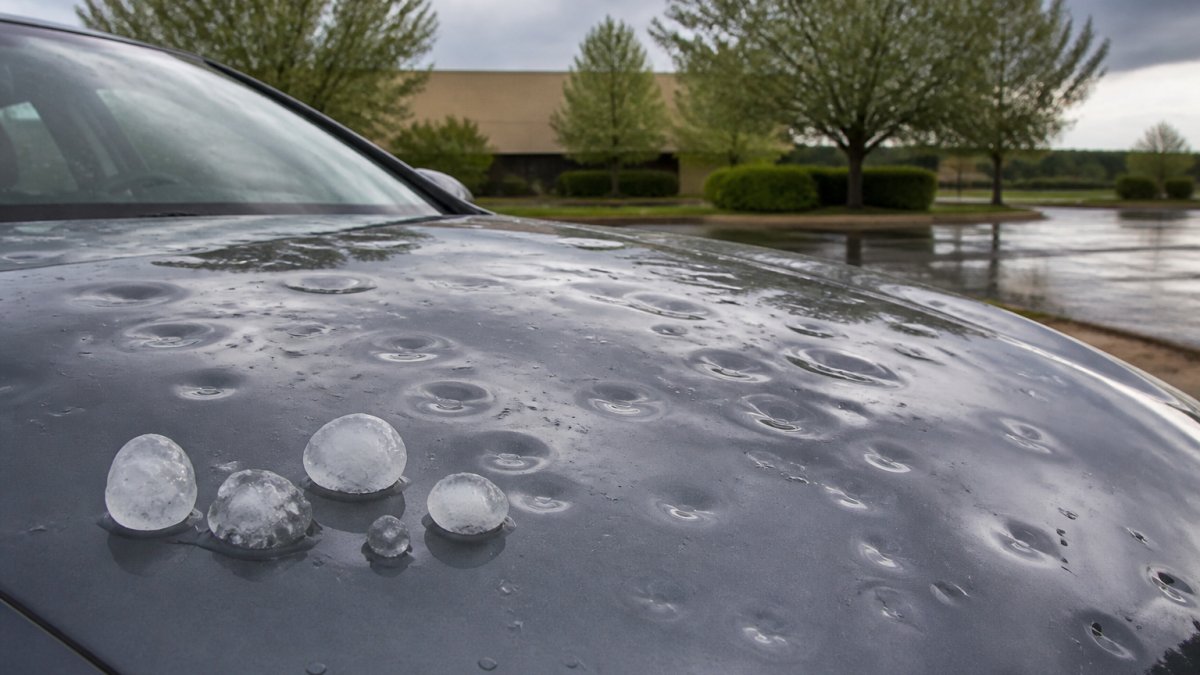
Hailstones around 1 inch in diameter, roughly the size of a quarter, can begin denting body panels and cracking windshields. Smaller stones may only scuff paint, while stones 2 inches or larger can cause significant hail damage to the roof, hood, and side mirrors. The risk also depends on the angle of impact, wind speed, and how long the storm lasts. If a severe weather forecast calls for quarter-size hail or larger, move your vehicle under cover before the storm arrives.
Do hail protection car covers really work?
A hail protection car cover made with thick, impact-absorbing foam or padded layers can reduce or prevent damage from small to moderate hailstones. A standard cloth or thin waterproof car cover offers almost no protection against impact. Inflatable protection systems create an air buffer that can deflect larger stones, but they require setup time and a power source. No cover guarantees zero damage in extreme hail, so pair a cover with covered parking whenever possible.
Will moving blankets protect a car from hail?
Moving blankets can soften the blow from small hailstones, but they are not a reliable barrier against larger stones. A single blanket adds only a thin layer of padding, so you would need several thick blankets layered across the roof, hood, and windshield to make a meaningful difference. Secure them tightly with straps or rope so wind does not blow them off or whip the edges against the paint. For anything above pea-size hail, a padded hail cover or covered parking is a safer choice.
What should I do if a hailstorm is forecast?
Check the weather forecast early and move your car into a garage, carport, or parking structure before the storm starts. If no shelter is available, fit a hail protection car cover or layer padded blankets and tie them down securely. Bring in loose objects that wind could turn into projectiles, and avoid parking under trees that could drop branches. After the storm, inspect the roof, hood, and windshield for dents or cracks and document any damage with photos before contacting your insurance carrier or a paintless dent repair shop.
Hail season does not wait, and neither should your repair. If a storm left dents on your car, get ahead of the damage before it spreads. 888 PDR offers full insurance claim management, a lifetime warranty on every repair, and free pickup and delivery to make the process easy. Get started with 888 PDR and protect your car's finish and resale value today.
