
Table of Contents
- When to Fix a Dent on Your Car
- DIY Car Dent Removal Tools and Methods
- Paintless Dent Repair Explained
- Professional vs DIY Dent Repair: Which Is Right for You
- Paintless Dent Repair Cost 2026
- Post-Repair Paint Protection and Factory Finish Preservation
- Frequently Asked Questions
Last Updated: September 22, 2026
When to Fix a Dent on Your Car
A dent on your car isn't just a cosmetic issue, it affects resale value and can lead to rust if left untreated. Before deciding how to fix dent on car damage, you need to assess whether the repair is urgent and which method suits your situation. Not all dents are created equal, and the right approach depends on location, severity, and whether the paint is compromised.
Dent Location and Severity
The location of your dent determines which repair method will work best. Dents on body panels like doors, fenders, and quarter panels respond differently to repair techniques than dents on hood or roof areas. A shallow ding on a flat surface is easier to address than a crease along a body line where the metal is already stressed.
Severity matters just as much. Minor dents smaller than a few inches often respond well to paintless dent repair, which preserves your factory finish. Larger dents or those with sharp creases may require body filler or professional intervention. The depth of the dent also affects your options, a dent that's only slightly raised from the surface behaves differently than one that's deeply indented.
Paint Damage Assessment
Before you fix dent on car damage, inspect whether the paint is intact. Run your hand gently over the dent, if the paint feels smooth and uncracked, you have more options. If the paint is chipped, cracked, or scraped away, you'll need repainting regardless of which repair method you choose.
Paint damage matters because it determines whether paintless dent repair is viable. This method works only when the paint surface is undamaged. If the metal is exposed, you'll need body filler, primer, and clear coat to prevent rust and restore appearance. A small paint chip might seem minor, but ignoring it invites corrosion that spreads underneath the surrounding paint.
DIY Car Dent Removal Tools and Methods
Removing a dent yourself is possible for minor damage, but it requires the right tools and realistic expectations. The most common DIY approaches are the suction cup method, the heat and compression technique, and the hammer and dolly method. Each has specific applications and limitations.
Suction Cup and Heat Gun Method
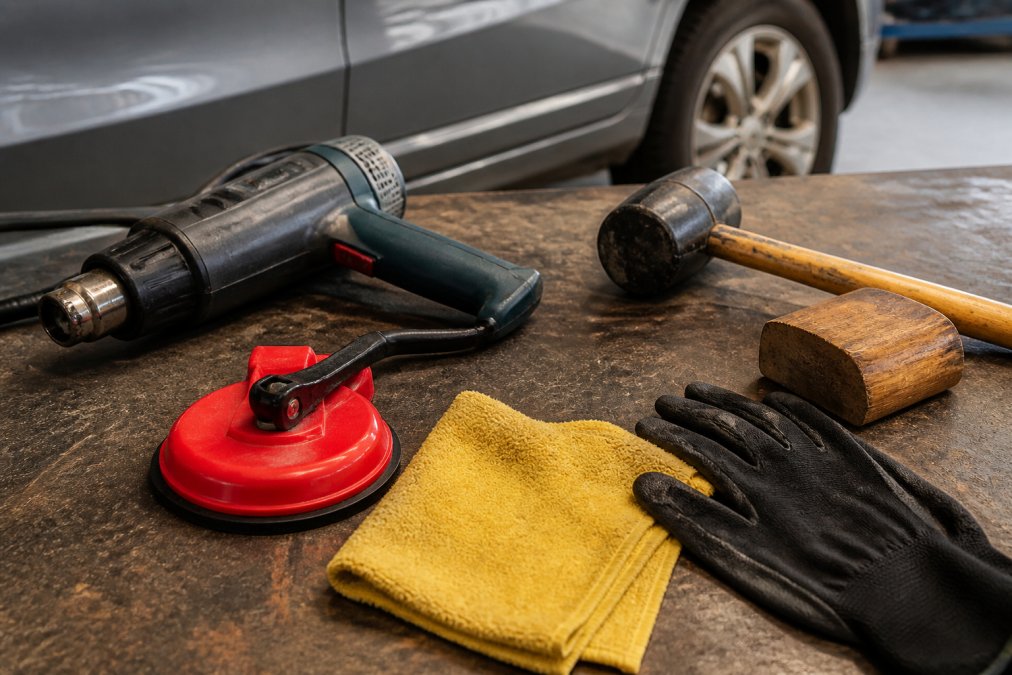
The suction cup method is the simplest DIY approach to fix dent on car surfaces. A dent puller or suction cup creates pressure that pulls the metal back into shape. This works best on shallow dents on flat surfaces where the metal hasn't been creased or severely deformed. You attach the cup to the center of the dent and pull steadily until the dent pops out.
Many people combine this with a heat gun to soften the metal slightly, making it more pliable. Apply heat for 30-60 seconds, then use the suction cup while the metal is still warm. The heat reduces metal fatigue and helps the dent release more easily. This method typically takes 15-30 minutes per dent and requires minimal tools.
The limitation is obvious: it only works on certain dent types. Deep dents, creased dents, or damage on curved surfaces often won't respond. If the suction cup doesn't work after 2-3 attempts, move on to another method, repeated pulling can damage the paint or stretch the metal further.
Hammer and Dolly Technique
The hammer and dolly method is more aggressive and requires more skill. A dolly is a smooth metal block placed behind the dent, and you tap the dent with a rubber hammer while supporting it from behind. This gradually reshapes the metal back to its original form.
This technique works well for creases and dents on body panels where you can access both sides. You position the dolly behind the dent and strike the raised area with controlled taps, working from the edges toward the center. Each tap should be light and deliberate, heavy blows can stretch the metal or create new dents.
The challenge is accessing the back of the panel. On doors, you may need to remove interior panels. On fenders, access is often limited. This method also demands practice to avoid creating hammer marks or uneven surfaces. Most DIYers find this frustrating without experience.
Body Filler and Bondo Application
Body filler, commonly called Bondo, is a putty that hardens and can be sanded smooth. It's used to fill dents after the metal has been partially reshaped or when minor imperfections remain. This method is necessary when the paint is damaged or the dent is too severe for paintless repair.
Applying body filler requires preparation. Clean the damaged area with a degreaser to remove dirt and surface residue. Rough the surface with coarse abrasive paper so the filler adheres properly. Mix the filler according to package directions, usually a putty mixed with a hardener. Spread it over the dent, overfilling slightly so you have material to sand down.
Once hardened, sand the filler smooth using progressively finer abrasive paper, starting with 80-grit and finishing with 220-grit or higher. The goal is a smooth surface that matches the surrounding panel. This takes time and patience. After sanding, apply primer to seal the filler, then paint and clear coat to match your car's finish.
The downside is obvious: this method requires painting. If your car's paint is original factory finish, body filler work will alter that finish permanently, affecting resale value. For newer vehicles where preserving the factory finish matters, this approach should be a last resort.
Paintless Dent Repair Explained
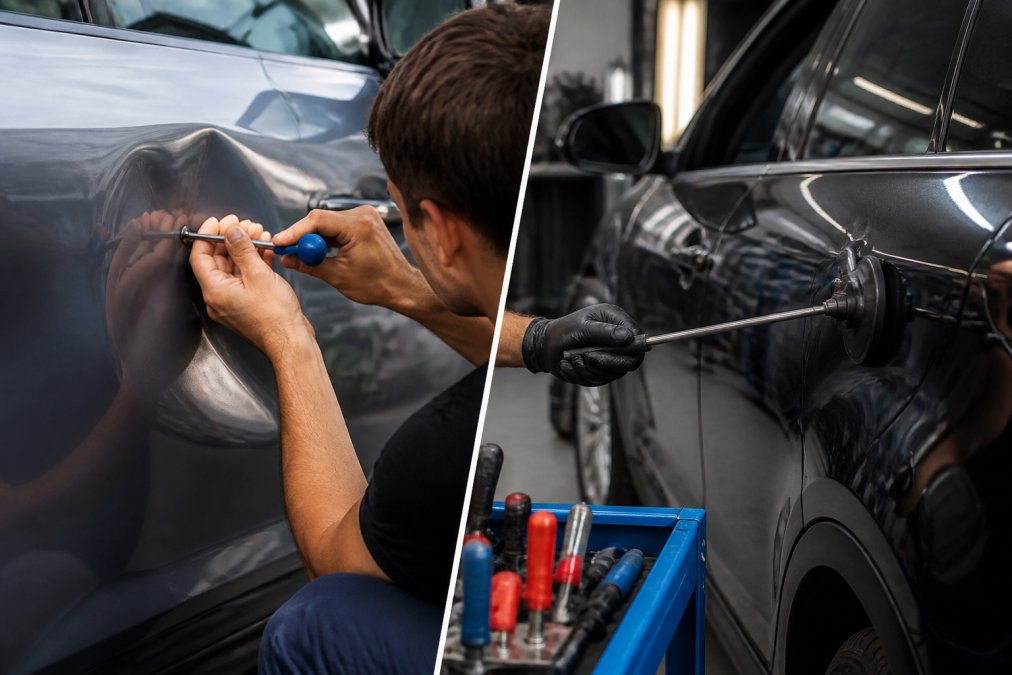
Paintless dent repair (PDR) is a technique that removes dents without filler, repainting, or damaging the original factory finish. Technicians use specialized tools to access the back of the panel and carefully massage the metal back into shape. The paint surface remains untouched, preserving the vehicle's original finish and resale value.
PDR works by applying pressure from behind the dent, using tools that reach through access points like gaps in the frame or by removing trim pieces.
Professional vs DIY Dent Repair: Which Is Right for You
Deciding whether to fix dent on car damage yourself or hire a professional depends on dent severity, your skill level, and how much the original finish matters to you. Simple shallow dents on flat surfaces are reasonable DIY projects. Anything more complex usually benefits from professional expertise.
Pros and Cons of Each Approach
DIY Repair:
Pros:
- Lower out-of-pocket cost
- Work on your own schedule
- Learn a new skill
- Control over the process
Cons:
- Risk of creating new damage
- Time-intensive (several hours per dent)
- May not achieve professional results
- Requires tool investment
- Mistakes are expensive to fix
Professional Repair:
Pros:
- Guaranteed quality results
- Faster turnaround
- Access to specialized equipment
- Expertise in assessing damage
- Warranty on work performed
Cons:
- Higher upfront cost
- Scheduling around shop availability
- Less control over timeline
- May require deductible payment if insurance is involved
For minor dents where paint is intact, DIY with a suction cup is worth attempting. For anything involving creases, paint damage, or large dents, professional repair is the smarter investment. The difference in quality and durability usually justifies the cost.
Paintless Dent Repair Cost 2026
The cost to fix dent on car varies widely depending on method, location, and severity. Paintless dent repair typically ranges from affordable to moderate, while traditional body work with filler and repainting costs significantly more. Insurance often covers hail damage and collision dents, which changes your out-of-pocket expense.
Post-Repair Paint Protection and Factory Finish Preservation
After you fix dent on car damage, protecting the repair is essential for longevity. If paintless dent repair was used, the original finish is already protected. If body filler and repainting were necessary, the new paint needs proper care to blend with the surrounding factory finish.
Frequently Asked Questions
Can you fix car dents yourself?
Yes, minor dents without paint damage can often be fixed at home using suction cups, heat guns, or specialized dent removal tools. However, success depends on dent location, depth, and whether the paint is intact. Dents on body lines, creases, or panels with existing paint damage are much harder to repair yourself and typically require professional help. Complex damage or hail dents affecting multiple panels almost always need a professional to preserve your factory finish and resale value.
How much should it cost to fix a dent in a car?
Professional paintless dent repair pricing depends on dent quantity, location, severity, and whether hail damage or multiple panels are involved. For accurate pricing, contact 888 PDR for a free inspection and quote. Insurance may cover hail damage and collision-related dents depending on your policy and deductible.
When should you choose professional paintless dent repair over DIY?
Choose professional repair if the dent is on a body line, quarter panel, or fender; if paint is chipped or cracked; if you have multiple dents from hail; or if you want to preserve your factory finish and resale value. Professional paintless dent repair removes dents without fillers or repainting, maintaining your vehicle's original condition. DIY methods work best for small, shallow dings on flat surfaces with no paint damage. When in doubt, get a free professional estimate to compare your options.
What's the difference between paintless dent repair and traditional body shop repairs?
Paintless dent repair removes dents by carefully massaging the metal back into shape from behind the panel, preserving your factory finish completely. Traditional repair uses body filler, sanding, primer, and repainting, which can affect resale value and durability. Paintless repair is faster, cheaper for most dents, and maintains the vehicle's original paint and structural integrity. It's ideal for hail damage, door dings, and creases where the paint is intact.