
Last Updated: November 7, 2026
Quick Summary
Minor dents on new vehicles usually come from parking lot door dings, shopping carts, hail and severe weather, road debris kicked up by trucks, or low-speed collisions. A vehicle can also be dented during transport, unloading, and dealership storage before you ever see it. Most of this damage is cosmetic and can be fixed without repainting.
- Parking lots cause more minor dents than anything else, often leaving shallow, round dents with no paint damage.
- A hailstorm can put dozens of small dents across a hood and roof in minutes.
- Inspect the car panel by panel in good daylight before you sign the delivery paperwork.
- Paintless dent repair works the dent out from behind the panel with no filler and no repainting.
- A small dent is often below the deductible, so compare repair cost against your deductible before filing a claim.
Table of Contents
- What Causes Tiny Dents in Cars and New Vehicles
- Damage During Transport, Unloading, and Dealership Storage
- How to Inspect a New Car for Dents Before You Drive Off
- How to Fix a Small Dent in Car Panels
- Paintless Dent Repair and Why It Preserves Your Finish
- What Dents Cannot Be Removed and When a Body Shop Is Needed
- Found a Dent After Delivery? Your Warranty and Insurance Options
- Book a Free Dent Inspection With 888 PDR
- Frequently Asked Questions
What Causes Tiny Dents in Cars and New Vehicles
Minor dents on a new vehicle usually come from a short list of everyday events: a door swung open in a parking lot, a shopping cart rolling free, a hailstorm, road debris kicked up by a truck, or a bump in slow traffic.
Below, we break down each cause, then cover the causes most owners never think about: damage that happens before the car ever reaches your driveway.
The short version: a new car is most vulnerable in the first few months, and the biggest risks are parking lots, weather, and the delivery process itself.
Parking Lot Door Dings and Shopping Carts
Parking lots cause more minor dents than anything else. An adjacent car door opening into your panel, a shopping cart rolling downhill into a fender, or a careless swing of a door in a tight space all leave the same signature: a shallow, round dent with no paint damage.
These door dings are frustrating because they happen when your car is parked and you are not there to prevent them. If a ding has already happened, our guide to fixing parking lot dings compares doing it yourself with professional paintless dent repair.
Hail, Severe Weather, and Falling Debris
A hailstorm can put dozens of small dents across a hood and roof in minutes. Inclement weather also brings falling objects: a tree branch in high wind, debris blown loose from a roof, or a falling object in a storm.
If you park outside, covered parking or a garage during storm season is the simplest prevention. After a hailstorm, inspect the horizontal surfaces first, since the hood, roof, and trunk take the most hits.
Road Debris, Stones, and Minor Collisions
Driving causes its own share of small dents. A stone thrown up by a truck can chip paint or leave a tiny dent. Road debris kicked into a panel, a minor collision in a parking structure, or a low-speed fender bender can all leave impact damage.
Here are the everyday causes of minor dents on new vehicles, from parking lots to weather.
| Cause | How it happens | Typical result |
|---|---|---|
| Parking lot door dings | Adjacent car door opening into your panel | Shallow, round dent with no paint damage |
| Shopping carts | Cart rolling downhill into a fender | Shallow, round dent with no paint damage |
| Hail and severe weather | Hailstorm, falling branch, wind-blown debris | Sharper, deeper dents, often multiple panels |
| Road debris and stones | Stone thrown up by a truck, debris kicked into a panel | Tiny dent or chipped paint |
| Minor collisions | Low-speed fender bender, bump in parking structure | Impact damage, often smaller than it looks |
Damage During Transport, Unloading, and Dealership Storage
Here is the cause most new-car owners overlook: a vehicle can be dented before you ever see it.
A few mechanisms can cause pre-delivery damage:
- Loading and unloading. Straps, tie-downs, ramps, and equipment used to secure a vehicle on a carrier can contact a panel if something slips. A strap that touches a fender or roof line under tension can leave a shallow dent or a scuff.
- Rail and truck transport. Vehicles are parked close together on rail cars and carriers. A door opened during loading, unloading, or repositioning can strike the adjacent vehicle, which is the same door-ding mechanism you see in a parking lot, just earlier in the car's life.
- Tight inventory storage. Dealership lots often park cars nose-to-tail and door-to-door. When a salesperson moves one car, a door can swing into the next. Detail and prep areas add another round of close-quarters movement.
- Wash and prep bays. Cars are washed, dried, and prepped before delivery. A hose nozzle, a drying tool, or a piece of equipment bumped against a panel can leave a mark.
This matters because you have options. The key is to separate a delivery issue from damage that happened after you took the keys.
Inspect the vehicle and document anything you find before you sign the delivery paperwork.
If you spot a dent after you get home, contact the dealer promptly, keep photos with timestamps, and describe exactly where and when you first noticed it.
How to Inspect a New Car for Dents Before You Drive Off
Walk around the vehicle in good daylight before you accept delivery, and check it panel by panel. Use this checklist:
- View the car at an angle in direct sun so dents and paint defects show as shadows
- Check the hood, roof, and trunk first, since these take hail and falling-object hits
- Look along each door and fender for door dings from adjacent cars
- Run a hand lightly over suspicious spots to feel for a dip
- Check panel gaps and edges for paint scratches or chips
- Photograph any dent with a timestamp before you sign
- Note findings in writing with the salesperson present

Telling a Dent Apart From a Paint or Manufacturing Defect
Not every flaw is a dent. A dent is a physical depression in the metal or panel. A paint defect, by contrast, is a flaw in the finish itself: a run, a thin spot, or uneven color. A manufacturing defect usually appears as a paint or panel issue rather than a smooth depression. If you are unsure whether a flaw needs professional attention, these signs your car needs professional dent removal help you decide.
How to Fix a Small Dent in Car Panels
Most small dents on a new vehicle can be repaired, and the right method depends on whether the paint is intact. If the paint is unbroken, paintless dent repair is usually the best choice because it works the dent out from behind the panel without fillers or repainting.
DIY kits exist for very shallow dents, but results vary and a poor attempt can make the dent harder to fix. Owners of new vehicles can read more on how paintless dent repair protects a new car's finish.
Paintless Dent Repair and Why It Preserves Your Finish
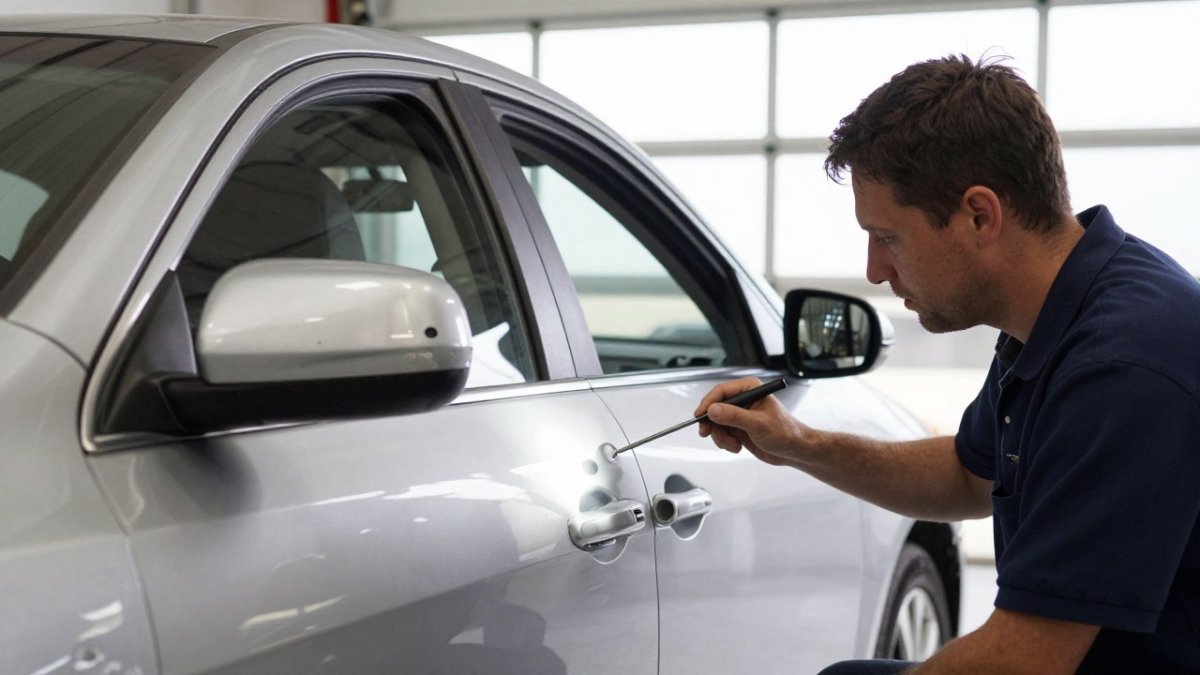
Paintless dent repair, or PDR, is a method of removing dents by gently massaging the metal back into shape from behind the panel, with no filler and no repainting (Northwest Paintless Dent Removal). Because the original factory paint stays untouched, the finish and resale value are preserved.
That is the core advantage for a new vehicle. Skeptical owners often ask whether the process harms the paint; our explanation of whether PDR damages factory paint covers when it is safe and when a scratch changes the answer.
What Dents Cannot Be Removed and When a Body Shop Is Needed
PDR is not right for every dent. A body shop is the better choice when:
- The paint is cracked, chipped, or scratched through to the metal
- The dent sits on a sharp body line or crease that cannot be worked out cleanly
- The panel is stretched or the metal is torn
- The dent is over a structural area or a panel with limited rear access
In these cases, repairing the finish or the panel matters more than preserving the original paint. A free inspection tells you which category your dent falls into.
Found a Dent After Delivery? Your Warranty and Insurance Options
If you find a dent after you get home, act quickly.
Start by sorting the dent into one of three buckets:
- A delivery or transport issue. If the dent was likely present before you accepted the car, the dealer is the first call. Report it promptly, send dated photos, and ask the dealer to inspect the panel. Keep your delivery paperwork and any photos you took at pickup.
- A manufacturing or paint defect. A flaw in the finish, a panel misalignment, or a repeated mark in the same spot may be a defect rather than impact damage. Ask the dealer whether the issue falls under the new-vehicle limited warranty, and get the answer in writing.
- Damage that happened after delivery. A door ding in a parking lot, a shopping cart, or hail after you took ownership is generally your responsibility. That is where insurance and out-of-pocket repair come in.
Warranty coverage for cosmetic damage depends on the manufacturer and the specific terms of your paperwork, so confirm coverage before assuming a dent is covered.
On the insurance side, a small dent is often below the deductible, which means filing a claim may not be worth it. Comprehensive coverage is the part of a policy that typically applies to damage not caused by a collision, such as hail or a falling object, but the details depend on your policy (Auto Insurance Basics). Our guide to door ding insurance claims versus comprehensive coverage walks through that decision.
At 888 PDR, we work with insurance carriers and can help manage a hail claim so you are not left handling the paperwork alone.
Book a Free Dent Inspection With 888 PDR
A small dent on a new car is easy to ignore until it costs you at resale. The smart move is a quick professional look before a minor dent becomes a bigger repair. 888 PDR offers a free inspection, a lifetime warranty on repairs, and vehicle pickup and delivery, and can help with your insurance claim.
A new vehicle deserves a careful eye, and the causes of minor dents are mostly preventable once you know where to look.
Frequently Asked Questions
Can a new car arrive with dents or cosmetic damage?
Yes. New vehicles pass through rail yards, transport trucks, and dealership storage lots before delivery, and minor dents can happen at any of those stages. Door dings from tight parking, hail during transport, and debris kicked up on the haul can all leave small marks. That is why you should inspect the vehicle carefully before signing and note any damage on the delivery paperwork so it is documented from day one.
Can a small dent on a new car be repaired without repainting?
In most cases, yes. Paintless dent repair works on minor dents where the paint is intact, using specialized tools to massage the metal back to its original shape from behind the panel. Because nothing is sanded, filled, or repainted, the factory finish stays untouched. Dents with cracked paint, sharp creases, or damage along panel edges may need traditional bodywork instead, so a free inspection is the fastest way to know which category yours falls into.
How can I prevent door dings and other minor dents?
Park away from other cars when you can, choose end spots with extra room, and avoid tight spaces near shopping cart corrals. Use a car cover or garage when possible, and stay alert to falling branches and hail forecasts. No method removes all risk, but these habits cut down on the parking lot incidents that cause most minor dents on new vehicles.
What is considered a minor dent in a car?
A minor dent is typically small, shallow, and free of cracked or chipped paint, often the size of a coin or a fist. Door dings, small hail hits, and light shopping cart impacts usually qualify. Dents that crease a body line, stretch the metal sharply, or sit on a panel edge are harder to remove and may need a body shop rather than paintless dent repair.
